Liber XI · Herbal Magick · Chapter I: Cannabis in Religion & Magic
The Assassins and the Hashish Legend: History Behind a Myth
The Assassins and the hashish legend: who the Nizari Ismailis were, Marco Polo's garden of paradise, and how 'hashishi' became the word 'assassin'.

The "Assassins" were the Nizari Ismailis, a Shi'i Muslim community that held a network of mountain castles in Persia and Syria from 1090 until the Mongol and Mamluk conquests of the thirteenth century. The legend that their leader drugged young men with hashish, showed them a false paradise and sent them out to kill is a medieval fiction built from hostile Muslim polemic and Crusader rumour; the word assassin does derive from the Arabic hashishi, but modern historians agree that it began as an insult, not as a description of a ritual drug.
Who Were the Nizari Ismailis?§
Ismailism is a branch of Shi'i Islam that recognises a line of Imams descended from the Prophet Muhammad through his daughter Fatima and his cousin and son-in-law Ali, continuing through Isma'il, son of the sixth Imam Ja'far al-Sadiq. In the tenth century an Ismaili dynasty, the Fatimids, founded a caliphate in North Africa and then in Egypt, where they built Cairo and its al-Azhar mosque.
When the Fatimid caliph al-Mustansir died in 1094, the succession was disputed between his sons Nizar and al-Musta'li. The court in Cairo installed al-Musta'li; Nizar was imprisoned and died. Ismailis in Persia and Syria who upheld Nizar's claim broke away and became known as the Nizaris. Their leader in Persia was Hasan-i Sabbah (d. 1124), a learned missionary (da'i) who had seized the castle of Alamut in the Alborz mountains in 1090. Within the Nizari tradition he is remembered as an austere scholar and organiser; Persian chroniclers report that he lived in near-seclusion at Alamut for more than thirty years and had one of his own sons executed for drinking wine.
The Nizaris survive today as a worldwide community of several million, led by a living hereditary Imam who bears the title Aga Khan. Their own historians, and modern scholarship since the mid-twentieth century, have done much to separate their history from the legend told by their enemies.
Alamut, Masyaf and the Politics of Assassination§
The Nizari state was unusual: not a single territory but a chain of fortified strongholds and dependent villages scattered across the Seljuk lands of Persia and, later, the mountains of Syria. Lacking large armies, the Nizaris defended themselves against the Seljuk sultans and local lords with a weapon of the weak: the targeted killing of prominent enemies by devoted agents called fida'is, "those who offer their lives." The murder of the Seljuk vizier Nizam al-Mulk in 1092 was attributed to them, and over the following century they were credited, sometimes wrongly, with the deaths of viziers, emirs, judges and at least one Crusader lord, Conrad of Montferrat, killed in Tyre in 1192.
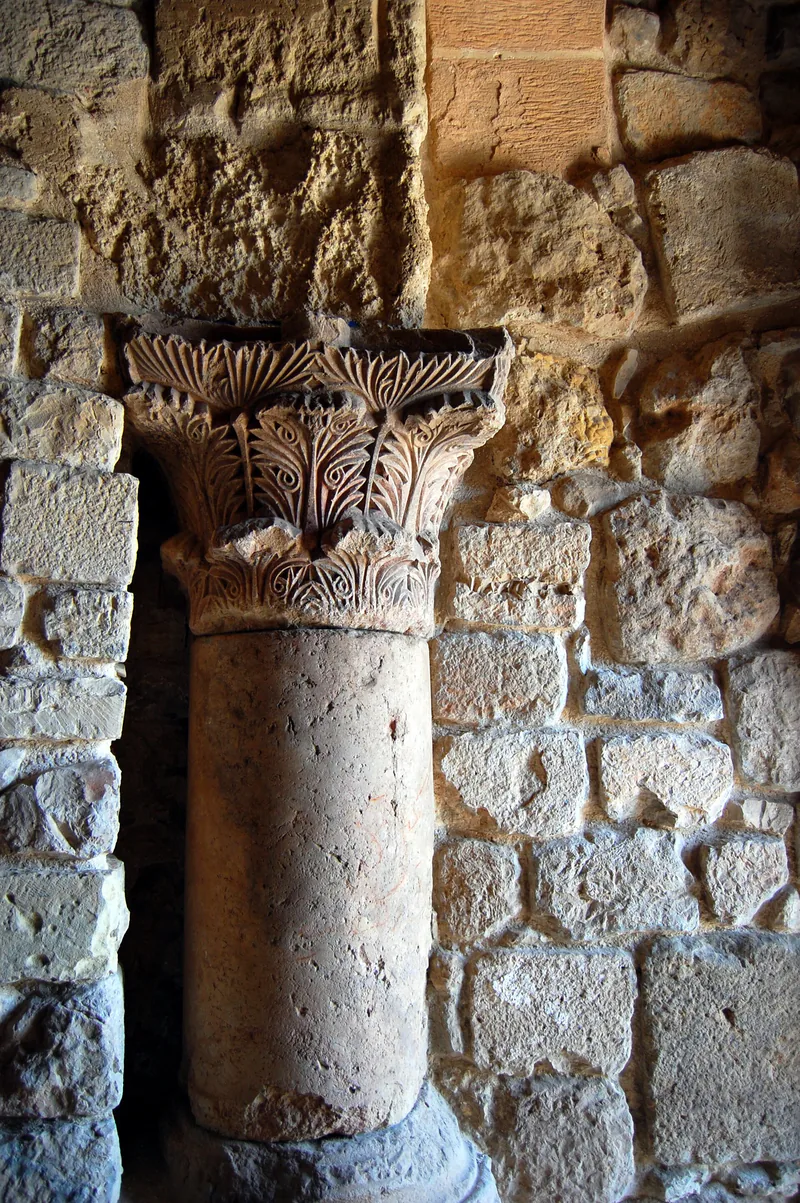
In Syria the most famous Nizari leader was Rashid al-Din Sinan (d. 1193), who governed from the castle of Masyaf and is the figure Crusaders called the "Old Man of the Mountain," a rendering of the Arabic shaykh al-jabal. Sinan negotiated with Crusaders and Muslim rulers alike, and two attempts on the life of Saladin in the 1170s are attributed to his men.
Political murder was common in the medieval Islamic world and in Christian Europe, but the Nizaris' use of it was public and deliberate, and the fida'is rarely expected to escape. This made them terrifying to their enemies and invited explanations. Why would young men walk calmly to a certain death? For hostile observers the answer had to be deception, madness or drugs.
Crusader Chronicles and Marco Polo's Garden of Paradise§
European writers first encountered the Syrian Nizaris in the twelfth century. The envoy Burchard of Strasbourg, who travelled to Syria in 1175 for the emperor Frederick Barbarossa, and the chronicler William of Tyre described a people in the mountains whose master could command his followers to kill or to die. Arnold of Lübeck, writing in the early thirteenth century, added that the Old Man gave his young men a potion that sent them into an ecstasy in which they glimpsed delights, and promised them eternal enjoyment of these if they obeyed.
The most influential version came from Marco Polo. In the account of his travels dictated around 1298, Polo describes a valley that the Old Man had turned into a garden of paradise, with fountains running with wine, milk and honey and beautiful women in pavilions. Young men were given a sleeping drink, carried into the garden, and later drugged again and returned to the castle; believing they had tasted paradise, they would undertake any mission to return. Polo places this at Alamut and dates its end to the Mongol conquest. Notably, he never names hashish; the drug in his story is an unspecified potion.
Historians treat the garden as a literary motif rather than a report. Alamut is a narrow rock with no room for such a valley, Polo passed through Persia decades after the castles had fallen, and the story echoes Qur'anic images of paradise read through the lens of Christian fantasies about Muslim sensuality. Nizari and other Persian sources say nothing of it.
Hashishiyya: An Insult Becomes an Etymology§
The word that links the Nizaris to cannabis comes from their Muslim opponents. A polemical letter issued around 1122 in the name of the Fatimid caliph al-Amir, attacking the Nizari schism, refers to them as hashishiyya, and some later Syrian chroniclers use the same name. In medieval Arabic, hashish was a slang word for cannabis, but calling someone a hashishi was also an all-purpose insult implying low social status, loose morals and irreligion, much like calling someone a vagabond or a degenerate. Persian sources and the Nizaris' own writings do not use the term, and no surviving text describes hashish use in Nizari ritual or training.
Crusaders heard the Syrian name and turned it into Heyssessini, Assissini and similar forms. By the time of Dante, writing in the early fourteenth century, assassino in Italian had come to mean a hired murderer of any kind, and from Italian and French the word entered the other languages of Europe.
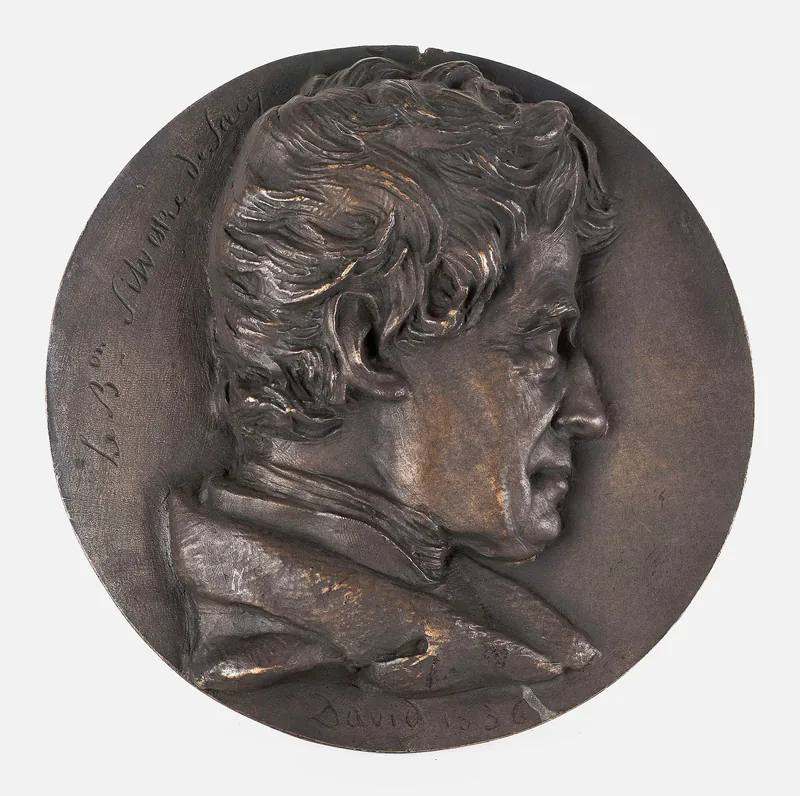
The explicit connection between the word, the drug and the murders was made in 1809, when the French orientalist Antoine-Isaac Silvestre de Sacy read a memoir to the Institut de France (published in 1818) arguing that assassin came from hashishi and that the Old Man's potion in Polo's story must have been hashish. The etymology was correct; the inference about the drug was not. The scholars who reconstructed Nizari history from their own texts in the twentieth century, notably Marshall Hodgson, Bernard Lewis and Farhad Daftary, concluded that the "hashish eaters" were a creation of hostile labelling, Crusader rumour and orientalist imagination.
The Herb in Medieval Islam: Hashish, Sufis and the Law§
The legend nevertheless reflects a real history of cannabis in the medieval Islamic world, explored in the wider guide to cannabis in religion and magic. Hashish appears in Arabic literature from about the twelfth century, often in association with wandering dervishes and antinomian ascetics on the fringes of Sufi orders. A later tradition credited its discovery to a Persian Sufi named Shaykh Haydar, and hashish became linked in popular imagination with the Qalandars and Haydaris who rejected social convention.
Jurists debated whether hashish fell under the Qur'anic prohibition of intoxicating wine. Many condemned it, the Hanbali scholar Ibn Taymiyya (d. 1328) vehemently, and Mamluk authorities periodically destroyed cannabis crops and punished users, while poets wrote both praise and satire of the "green herb." Franz Rosenthal's study The Herb (1971) gathered this literature. In such a climate, hashishi was an effective slur: it marked the Nizaris as both heretics and degenerates.
The Legend in Modern Europe: From Hammer-Purgstall to Video Games§
The Austrian orientalist Joseph von Hammer-Purgstall published Die Geschichte der Assassinen in 1818 (English translation 1835). Writing in the age of the French Revolution's aftermath, he presented the Nizaris as a murderous secret order and explicitly compared them with the Templars, the Jesuits, the Bavarian Illuminati and revolutionary societies of his own day. His book turned the Assassins into an archetype of the conspiratorial brotherhood, a theme taken up in later conspiracy myths and in speculative histories that link them with the Templars.
The hashish element fed nineteenth-century literary fascination with the drug. Alexandre Dumas retold the Old Man's garden in The Count of Monte Cristo (1844), whose hero offers his guest hashish; the Parisian Club des Hashischins and writers such as Charles Baudelaire and Fitz Hugh Ludlow invoked the Assassins as their legendary predecessors. In the twentieth century the Slovene writer Vladimir Bartol's novel Alamut (1938) and, much later, the video game series Assassin's Creed (from 2007) gave the legend new audiences.
Modern scholarship has moved in the other direction, publishing Nizari texts, studying their theology of the Imamate and the proclamation of the spiritual "Resurrection" (qiyama) at Alamut in 1164, and documenting their survival after the Mongols took Alamut in 1256. The Assassin legend is now studied chiefly as a case of how one community's enemies wrote its story.
Frequently asked questions§
Did the Assassins really use hashish?§
There is no reliable evidence that they did. The name hashishiyya was applied to them by hostile Muslim writers as an insult, and the drugged-paradise stories come from Crusader chroniclers and Marco Polo, not from Nizari or most Persian sources.
Where does the word "assassin" come from?§
It comes from the Arabic hashishi (plural hashishiyya), a derogatory name for the Syrian Nizari Ismailis, which Crusaders carried into European languages. By the fourteenth century the Italian assassino meant any hired killer.
Who was the Old Man of the Mountain?§
The phrase translates the Arabic shaykh al-jabal and was used by Crusaders for the head of the Syrian Nizaris, especially Rashid al-Din Sinan of Masyaf (d. 1193). Marco Polo applied the title to the lord of Alamut in Persia.
Do the Nizari Ismailis still exist?§
Yes. The Nizari Ismailis are a living Shi'i Muslim community spread across Central and South Asia, the Middle East, Africa, Europe and North America, led by an Imam known as the Aga Khan.
Sources and further reading§
- The Travels of Marco Polo — Marco Polo, c. 1300
- Die Geschichte der Assassinen aus morgenländischen Quellen — Joseph von Hammer-Purgstall, 1818
- The Order of Assassins: The Struggle of the Early Nizari Isma'ilis against the Islamic World — Marshall G. S. Hodgson, 1955
- The Assassins: A Radical Sect in Islam — Bernard Lewis, 1967
- The Herb: Hashish versus Medieval Muslim Society — Franz Rosenthal, 1971
- The Isma'ilis: Their History and Doctrines — Farhad Daftary, 1990
- The Assassin Legends: Myths of the Isma'ilis — Farhad Daftary, 1994