Liber X · Herbal Magick · Chapter I: Cannabis in Religion & Magic
Cannabis in Religion and Magic: From the Scythians to Rastafari
Cannabis in religion and magic: Scythian burials and Herodotus, bhang and Shiva in India, Daoist lore, hashish and the Sufis, the Hashischins, Crowley, Rastafari and the law.
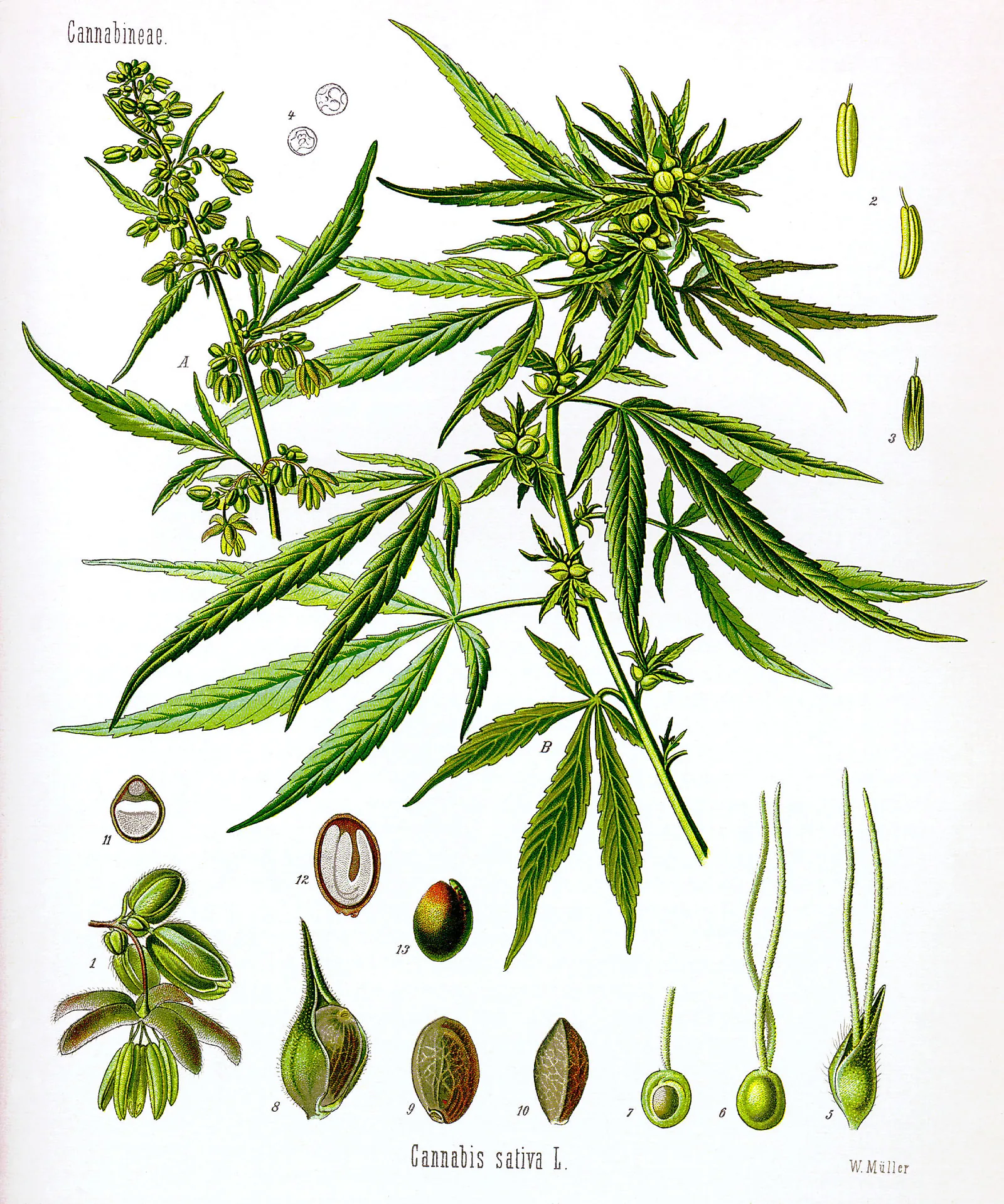
Cannabis has been used in religious and magical contexts for at least two and a half thousand years: burned in funerary rites by the steppe peoples of Central Asia, offered to Shiva as bhang in India, mentioned in Daoist lore, associated with wandering Sufis in the medieval Islamic world, explored by nineteenth-century writers and occultists, and taken as a sacrament by Rastafari. Its religious history is inseparable from its long history as a fibre, food and medicinal plant, and from changing laws.
Cannabis on the Ancient Steppe: Herodotus and the Archaeology§
The Greek historian Herodotus, writing in the fifth century BCE, describes how the Scythians purified themselves after a funeral: they built small tents of felt, threw hemp seeds onto red-hot stones inside, and bathed in the resulting vapour, crying out with delight. For a long time this was the only evidence, but archaeology has since confirmed the picture. Frozen tombs at Pazyryk in the Altai mountains, excavated by Sergei Rudenko in the mid-twentieth century and dated to around the fourth century BCE, contained braziers with stones and cannabis seeds, and felt-covered frames.
More recent studies have added chemical proof. Wooden braziers from the Jirzankal cemetery in the Pamir mountains of western China, dated to around 500 BCE, retain residues of cannabis with relatively high levels of psychoactive compounds, suggesting deliberate use in funerary ritual. In 2020 researchers reported cannabis residue on an altar in an eighth-century BCE Judahite shrine at Tel Arad, in what is now Israel. A burial at Yanghai near Turpan, about 2,700 years old, contained a large cache of cannabis plant material. Together these finds show that the psychoactive use of cannabis in ritual contexts is ancient, although its meaning for those who practised it can only be inferred.
Cannabis in India: Bhang, Shiva and the Atharvaveda§
India has the longest continuous tradition of religious cannabis use. The Atharvaveda, a Vedic collection of hymns and charms, names bhanga among five sacred plants, though whether this was the psychoactive cannabis plant is debated. By the medieval period cannabis was firmly associated with Shiva, the ascetic god who wanders the mountains and cremation grounds, and with the yogis and sadhus who imitate him. Today it is consumed as bhang, an edible or drinkable form made from the leaves, at the spring festival of Holi and at Mahashivaratri, the great night of Shiva, and many Shaiva ascetics smoke it as an act of devotion.
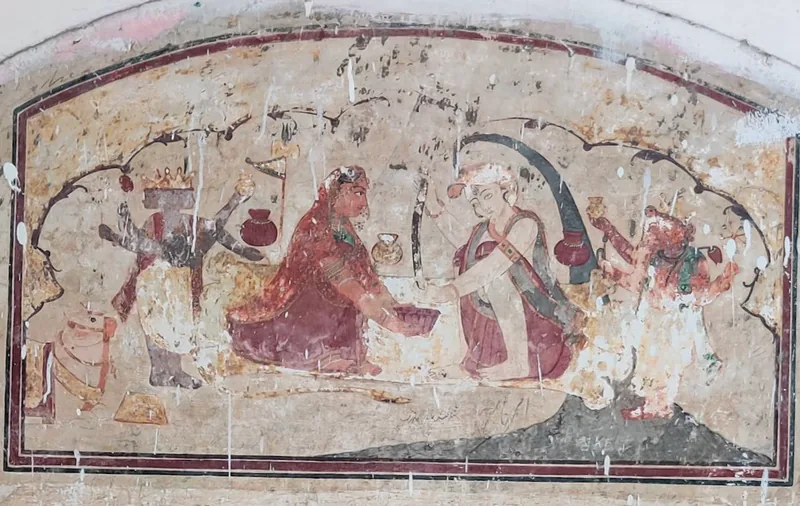
The British colonial Indian Hemp Drugs Commission (1893–1894) produced a massive report concluding that moderate use was largely harmless and deeply embedded in custom, and advising against prohibition. Modern Indian law reflects this history: the Narcotic Drugs and Psychotropic Substances Act of 1985 prohibits ganja and charas (resin) but excludes the leaves used for bhang, which is regulated by individual states. The guide to entheogens and sacred plants places these traditions alongside the debated identity of soma.
Cannabis in Ancient China and Daoist Lore§
In China, hemp (ma) was one of the earliest cultivated plants, grown for fibre, oil and seed. The Shennong bencao jing, the classic pharmacopoeia compiled around the first or second century CE, describes the effects of the plant's flowers and seeds, noting that taken in excess they make one "see demons." A passage attributed to the Daoist scholar Tao Hongjing (456–536), cited by Joseph Needham, says that "necromancers" used it with ginseng to foresee future events. These references suggest some visionary or divinatory use, but cannabis never became central to Chinese religion, and its role in Daoist practice remains a matter of scholarly interpretation.
Hashish in the Islamic World: Sufis and the Assassins Legend§
Hashish, the resin of the cannabis plant, appears in Arabic sources from about the twelfth century in Egypt and Syria. Medieval authors linked it with certain Sufi groups, especially antinomian dervishes such as the qalandars, and a legend credited its discovery to a Persian Sufi named Shaykh Haydar. Jurists and moralists condemned it, and Franz Rosenthal's study The Herb (1971) shows how vigorously its use was debated. Most Sufi orders, however, rejected intoxicants; the mainstream path described in Sufism: history, masters and practices relied on remembrance, music and discipline.
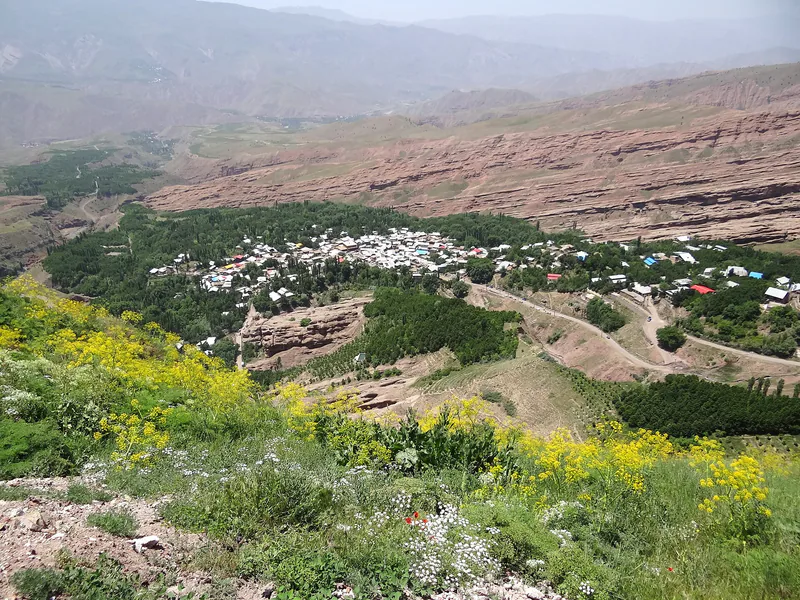
The most famous story, that the Nizari Ismaili "Assassins" of Alamut were drugged with hashish and shown a false paradise before being sent on missions, comes from hostile sources and from Marco Polo's travel account. The term hashishiyya was a term of abuse used by their enemies, and the historian Farhad Daftary has shown that there is no reliable evidence that the Nizaris used hashish in this way.
Cannabis in Western Literature and Occultism§
Nineteenth-century Europe discovered hashish through colonial contact with Egypt and North Africa. In Paris, the psychiatrist Jacques-Joseph Moreau de Tours studied its effects and hosted the Club des Hashischins in the 1840s, frequented by Théophile Gautier and Charles Baudelaire, whose Les Paradis artificiels (1860) explored and ultimately criticised its "artificial paradise." In the United States, Fitz Hugh Ludlow's The Hasheesh Eater (1857) described visionary experiences in mystical terms. The American occultist Paschal Beverly Randolph promoted hashish as a means of clairvoyance, and Aleister Crowley published "The Psychology of Hashish" in his journal The Equinox in 1909, presenting it as a possible aid to mystical states while insisting on its limits.
In British and Irish folk magic, by contrast, it was hemp seed rather than its drug effects that mattered: young women sowed hemp seed in a churchyard on Midsummer or Halloween night, reciting a rhyme, in the hope of seeing a vision of a future husband.
Rastafari, Modern Religions and the Law§
The best-known modern religious use of cannabis is in the Rastafari movement, which arose in Jamaica in the 1930s. Many Rastafari regard ganja, the "holy herb," as a sacrament that aids meditation and "reasoning," the communal discussion of scripture and life, and cite biblical verses about the herbs of the field. In 2015 Jamaica amended its law to permit sacramental use by Rastafari. Some modern Pagans, magicians and new religious movements also use cannabis ritually, though it is not a standard element of Wicca or ceremonial magic.
Internationally, cannabis is controlled under the 1961 United Nations Single Convention on Narcotic Drugs, though countries such as Uruguay and Canada, and many U.S. states, have legalised it for adults, and others permit medical use. Religious-freedom claims to use cannabis have usually failed in court. Cannabis can cause anxiety and psychotic episodes in vulnerable people and impairs driving. This article describes its religious history only and offers no guidance on use.
Frequently asked questions§
Is cannabis used in magic?§
Historically, cannabis has appeared in some magical and religious contexts: Scythian funerary rites, Shaiva devotion, hints in Daoist lore, Sufi fringes, nineteenth-century occultism and Rastafari. It is not a standard ingredient of Western ceremonial magic or traditional witchcraft, where its seed figured mainly in love divination.
What did Herodotus say about the Scythians and cannabis?§
He described Scythians purifying themselves after funerals by throwing hemp seeds onto hot stones inside felt tents and enjoying the vapour. Archaeological finds at Pazyryk and Jirzankal have confirmed the ritual burning of cannabis in the region.
Why is cannabis associated with Shiva?§
In Hindu tradition Shiva is the great ascetic and lord of yogis, and cannabis became associated with his wild, renunciant character and with the sadhus who follow him. Bhang is offered and consumed at festivals in his honour, especially Mahashivaratri, and at Holi.
Is religious cannabis use legal?§
It depends on the country. Jamaica permits Rastafari sacramental use, and India allows regulated bhang, but most countries make no religious exemption. Readers should check current local law, which changes frequently.
Sources and further reading§
- The Histories — Herodotus, c. 430 BCE
- Report of the Indian Hemp Drugs Commission — Indian Hemp Drugs Commission, 1894
- The Herb: Hashish versus Medieval Muslim Society — Franz Rosenthal, 1971
- The Assassin Legends: Myths of the Isma'ilis — Farhad Daftary, 1994
- The Hasheesh Eater — Fitz Hugh Ludlow, 1857
- Les Paradis artificiels — Charles Baudelaire, 1860
- Cannabis: Evolution and Ethnobotany — Robert C. Clarke & Mark D. Merlin, 2013
- Cannabis: A History — Martin Booth, 2003