Liber XI · Herbal Magick · Chapter II: Entheogens & Sacred Plants
Entheogens and Sacred Plants: Soma, Kykeon, Peyote, Ayahuasca
Entheogens and sacred plants in religious history: the term, Vedic soma, the Eleusinian kykeon, sacred mushrooms, peyote, ayahuasca churches and modern law and research.

An entheogen, literally "that which generates the divine within," is a psychoactive plant or substance used in a religious or ritual context to induce states believed to bring contact with the sacred. The term covers sacraments as different as the Vedic soma, the mysterious kykeon of the Eleusinian Mysteries, the sacred mushrooms of Mesoamerica, the peyote cactus of the Native American Church and the ayahuasca of Amazonian and Brazilian religions, several of whose identities and effects remain debated.
What Is an Entheogen? The Word and Its Debates§
In 1979 the classicist Carl Ruck, the ethnomycologist R. Gordon Wasson, Jeremy Bigwood, Danny Staples and Jonathan Ott proposed the word entheogen, from Greek entheos, "god within" or "inspired," and -gen, "producing." They wanted a term free of the countercultural associations of "psychedelic," a word coined by the psychiatrist Humphry Osmond in 1957, and of the clinical, faintly pathological "hallucinogen." The new term emphasises the ritual setting and religious meaning rather than the pharmacology.
The word has critics. Some scholars argue that it presupposes what it should demonstrate, namely that the experience is genuinely divine, and that it encourages speculative readings of ancient religions as drug cults. Others note that many cultures used the same plants for healing, divination or sorcery as much as for worship. It remains useful, however, as a neutral label for a well-documented phenomenon. For the wider place of plants in ritual, see what is herbal magic?.
Soma and Haoma: The Vedic Mystery§
More than a hundred hymns of the Rigveda, including the whole ninth book, are devoted to Soma, a god and a plant whose pressed juice was offered in the sacrifice and drunk by priests. The hymns describe its exhilarating effects: the drinkers feel immortal, see the gods and gain inspiration. The Iranian Avesta knows the same plant as haoma. Yet by the time of the later Vedic texts the original plant seems to have been replaced by substitutes, and its identity was forgotten.
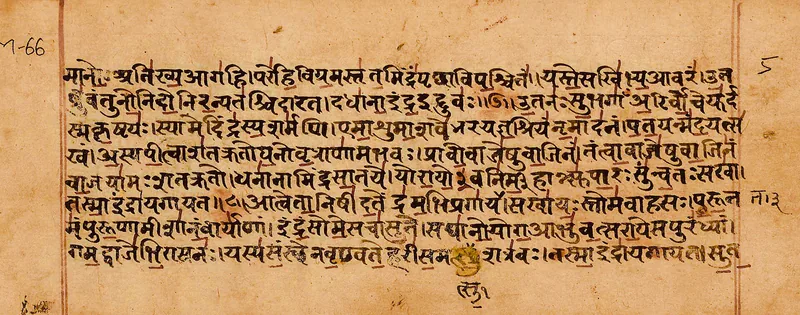
Many candidates have been proposed. Wasson's Soma: Divine Mushroom of Immortality (1968) argued for the fly agaric mushroom (Amanita muscaria); others have favoured ephedra, Syrian rue (Peganum harmala), cannabis or psilocybin mushrooms, and the Soviet archaeologist Viktor Sarianidi claimed to find ephedra and other plant traces in Bronze Age Central Asian temples. None of these theories has won general acceptance. The question matters for the history of Indian religion described in Hinduism and Vedanta, but the hymns are poetry, not botany.
The Eleusinian Mysteries and the Kykeon§
For nearly two thousand years, initiates gathered at Eleusis near Athens for the Mysteries of Demeter and Persephone. Before the climactic revelation in the Telesterion, they drank the kykeon, which the Homeric Hymn to Demeter describes as made with barley, water and pennyroyal. Ancient writers describe the initiation as life-changing, but the secret of what was shown was kept so well that it remains unknown; in 415 BCE Alcibiades and others were accused of profaning the Mysteries by imitating them at private parties.
In The Road to Eleusis (1978), Wasson, the chemist Albert Hofmann, who had synthesised LSD, and Carl Ruck argued that the kykeon contained ergot, a fungus of grain containing alkaloids related to LSD. The theory has been influential and widely disputed: critics point to the toxicity of ergot, the lack of direct evidence and the possibility that the Mysteries' power lay in ritual, drama and expectation. Scholars such as Walter Burkert treated the drug hypothesis with caution.
Sacred Mushrooms and Peyote in the Americas§
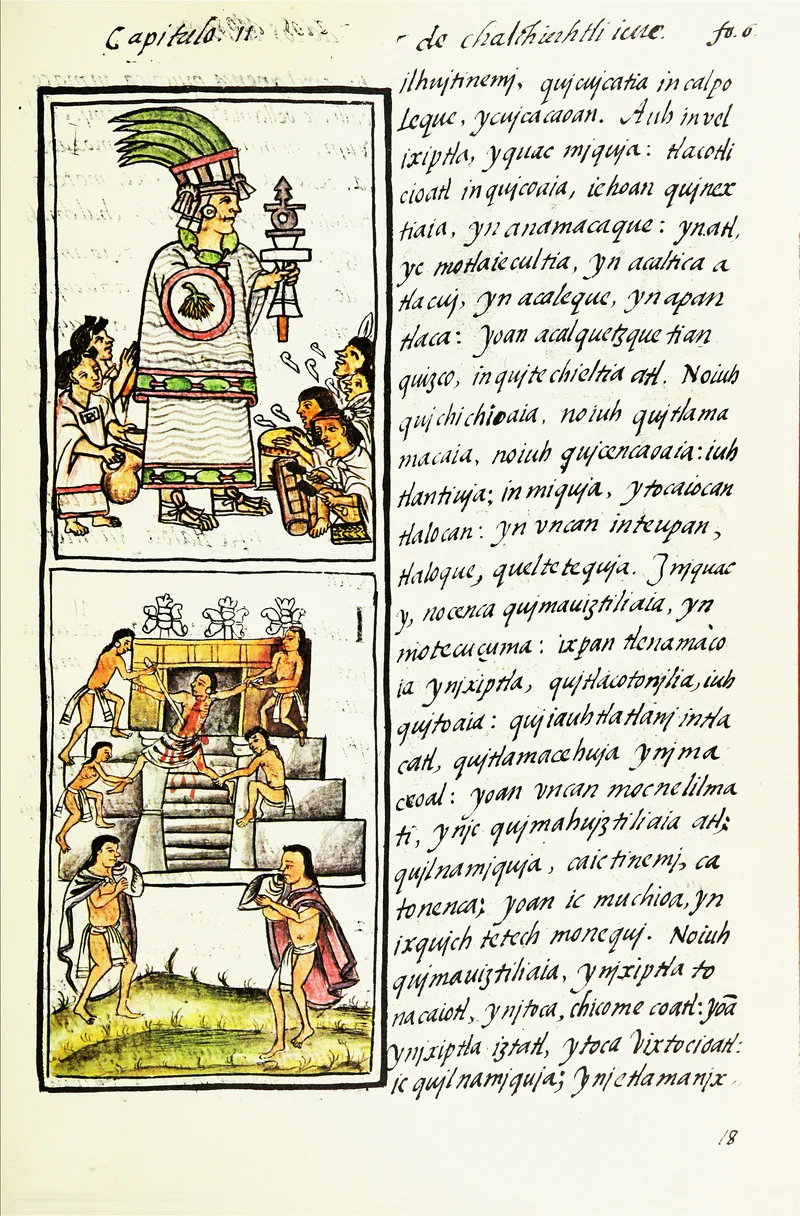
Spanish chroniclers of sixteenth-century Mexico, including Bernardino de Sahagún, describe Aztec use of mushrooms called teonanacatl, often translated "flesh of the gods," eaten at feasts and producing visions. Mushroom-shaped stone sculptures from the Maya region, much older, are sometimes interpreted as evidence of mushroom cults, though their meaning is uncertain. The practice survived among the Mazatec of Oaxaca, where the healer María Sabina held night vigils with mushrooms; Wasson's 1957 article in Life magazine about attending one made her famous and brought unwanted crowds of foreigners to her village.
Peyote (Lophophora williamsii), a small cactus of northern Mexico and southern Texas, is central to the religion of the Wixárika (Huichol), who make annual pilgrimages to the desert of Wirikuta to gather it. In the nineteenth century peyote ceremonies spread among Native American nations of the southern Plains, combining indigenous and Christian elements, and in 1918 the Native American Church was incorporated in Oklahoma. After the U.S. Supreme Court's 1990 decision in Employment Division v. Smith denied constitutional protection, Congress amended the American Indian Religious Freedom Act in 1994 to protect the sacramental use of peyote by members of federally recognised tribes. Peyote is slow-growing and its wild populations are under pressure from overharvesting.
Ayahuasca and the Brazilian Ayahuasca Religions§
Ayahuasca, a Quechua name often translated "vine of the souls" or "vine of the dead," is a brew made from the Banisteriopsis caapi vine, usually combined with the leaves of other plants, long used by indigenous peoples of the western Amazon and by mestizo healers (vegetalistas) for healing, divination and contact with spirits. In the twentieth century it became the sacrament of new Brazilian religions: Santo Daime, founded in the 1930s by Raimundo Irineu Serra in Acre, which blends Christian, indigenous and African-Brazilian elements, and the União do Vegetal, founded in 1961 by José Gabriel da Costa. In 2006 the U.S. Supreme Court ruled in favour of the UDV's right to use its sacrament under the Religious Freedom Restoration Act.
Ayahuasca can interact dangerously with many medications and is unsafe for people with certain heart or psychiatric conditions; deaths and abuses have been reported at unregulated "retreats" catering to tourists. Similar concerns surround iboga, the root bark used in the Bwiti religion of Gabon, which carries a significant risk of cardiac complications.
Entheogens in Modern Esotericism, Science and Law§
Aldous Huxley's The Doors of Perception (1954), describing his experience of mescaline, framed psychedelic experience in the language of mysticism and the perennial philosophy, and the 1960s brought experiments such as Walter Pahnke's "Good Friday Experiment" (1962), which gave psilocybin to divinity students during a church service. A wave of countercultural use led to prohibition: most psychedelic substances were placed in the most restrictive categories under national laws and the 1971 UN Convention on Psychotropic Substances. Some occultists, chaos magicians and modern Pagans have since incorporated entheogens into ritual, while many others reject them; see also flying ointments for the European folklore of visionary salves.
Since the early 2000s, clinical trials of psilocybin and other substances for depression and addiction have renewed scientific interest, and some jurisdictions have relaxed laws. These substances can nonetheless cause severe psychological distress, trigger psychosis in vulnerable people and lead to dangerous behaviour. This article offers no guidance on use; legal status varies by country and changes often.
Frequently asked questions§
What is an entheogen?§
An entheogen is a psychoactive plant or substance used in a religious or spiritual context to produce experiences regarded as encounters with the divine. The term was coined in 1979 to replace "psychedelic" and "hallucinogen" when discussing ritual use.
What was soma?§
Soma was a sacred plant and god of the Rigveda, whose pressed juice was offered and drunk in Vedic rituals. Its botanical identity is unknown; fly agaric, ephedra, Syrian rue and other plants have been proposed, but none is proven.
Did the Eleusinian Mysteries use a psychedelic drink?§
Initiates drank the kykeon, described in ancient sources as barley, water and pennyroyal. The theory that it contained ergot was proposed in 1978 by Wasson, Hofmann and Ruck, but it remains speculative and is disputed by many classicists.
Is religious use of peyote or ayahuasca legal?§
In the United States, peyote use by members of the Native American Church from federally recognised tribes is protected by federal law, and the União do Vegetal won a Supreme Court case in 2006. Brazil permits ayahuasca for religious use. Elsewhere, the laws vary widely and most countries provide no exemption.
Sources and further reading§
- Plants of the Gods — Richard Evans Schultes & Albert Hofmann, 1979
- Soma: Divine Mushroom of Immortality — R. Gordon Wasson, 1968
- The Road to Eleusis: Unveiling the Secret of the Mysteries — R. Gordon Wasson, Albert Hofmann & Carl A. P. Ruck, 1978
- Eleusis: Archetypal Image of Mother and Daughter — Carl Kerényi, 1967
- Peyote Religion: A History — Omer C. Stewart, 1987
- The Antipodes of the Mind: Charting the Phenomenology of the Ayahuasca Experience — Benny Shanon, 2002
- The Doors of Perception — Aldous Huxley, 1954