Liber XI · Herbal Magick · Chapter II: Entheogens & Sacred Plants
Soma and Haoma: The Sacred Drink of the Vedas and the Avesta
Soma and Haoma: the sacred plant-drink of the Rigveda and Avesta, its pressing rite, Zoroastrian worship today and the long debate over which plant it was.

Soma (in Sanskrit) and Haoma (in Avestan) are two names for the same sacred plant, the drink pressed from it, and the god who embodied both, inherited by the Vedic Indians and the ancient Iranians from a common Indo-Iranian past. The Rigveda devotes more than a hundred hymns to Soma as the drink that inspired poets and strengthened the gods, and Haoma remains part of Zoroastrian worship today; but which plant the original Soma was has been debated for two centuries without agreement.
Soma in the Rigveda: God, Plant and Drink§
The Rigveda, the oldest collection of Sanskrit hymns, is usually dated to roughly 1500–1000 BCE, though its chronology is debated. Soma is one of its three most-praised deities alongside Indra and Agni, and in Soma the boundaries between god, plant and drink dissolve. The whole ninth book (mandala) of 114 hymns addresses Soma Pavamana, the god in the very moment of flowing through the ritual filter, and further hymns are scattered elsewhere. These hymns belong to the wider corpus described in the Vedas and Upanishads.
The poets describe a plant growing on the mountains, sometimes associated with a mountain called Mujavant, and a myth in which a falcon stole Soma from heaven and brought it to earth. The hymns dwell on the sound of the pressing stones, the stream passing through a fleece of sheep's wool, and the drink's mingling with water and milk, images that the poets compare to a bull bellowing, a king advancing and the sun crossing the sky. Drunk by Indra, Soma gives the strength to slay the serpent Vritra and release the waters; drunk by priests and poets, it brings mada, an exhilaration linked with inspiration, wakefulness and insight.
One famous verse (8.48.3), in Ralph Griffith's translation of 1889, declares: "We have drunk Soma and become immortal; we have attained the light, the Gods discovered." Whether such lines describe a pharmacological experience, a ritual ideal or a poetic metaphor for the sacrifice is itself part of the scholarly debate.
Haoma in the Avesta and Zoroastrian Worship§
In the Iranian tradition preserved in the Avesta, Haoma is both a divine being (yazata) and a plant described as golden-green, fragrant and growing on the mountains. The Hom Yasht, which forms chapters 9 to 11 of the Yasna liturgy, tells how Haoma appeared to Zarathustra at dawn as he tended the sacred fire and was praised as a giver of healing, strength, victory and good offspring. Haoma is called the "averter of death," and later Zoroastrian texts speak of a white Haoma, growing in the cosmic sea, from which the drink of immortality will be prepared at the renovation of the world.
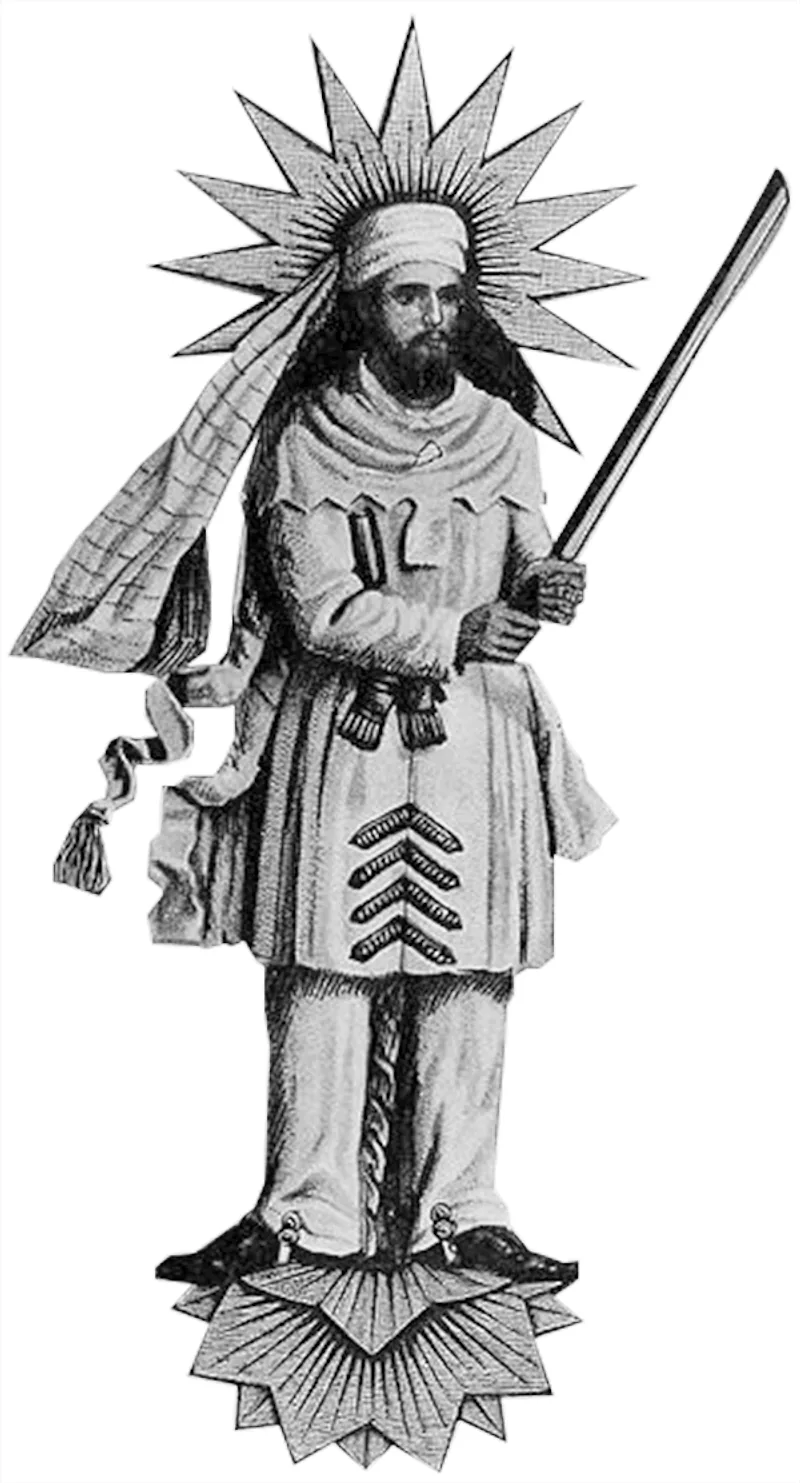
The relation of Zarathustra himself to Haoma is uncertain. Two passages in the Gathas, the hymns attributed to him, condemn an intoxicating drink and those who use it in a cult of the daevas; some scholars read these as a rejection of Haoma or of its misuse, others as attacks on a different practice. In any case Haoma kept a central place in later Zoroastrianism.
In the Yasna ceremony still performed by Zoroastrian priests in Iran and among the Parsis of India, the hom plant is honoured as the liturgy's focus. Twigs of ephedra, imported for the purpose, are ritually pounded in a metal mortar, the ringing of the pestle marking stages of the recitation, and the consecrated liquid, parahom, is offered as part of the act of worship. The rite is described in the context of Zoroastrian fire temples and ritual; it is a priestly act of worship rather than an occasion for any altered state.
The Pressing Rite in Vedic Sacrifice§
In the later Vedic ritual manuals, the Brahmanas and Shrauta Sutras, the Soma sacrifice (somayaga) became the most elaborate of the solemn rites. The basic form, the agnishtoma, involved the purchase of Soma stalks from a seller in a mock bargain, a royal procession bringing "King Soma" to the sacrificial ground, three pressings in the morning, midday and evening, and offerings to Indra and other gods, with priests reciting, singing and performing in strict coordination.
These texts already show that the original plant had become difficult to obtain. The Shatapatha Brahmana and other manuals list approved substitutes when true Soma cannot be found, and in later Indian practice a variety of plants were used, most commonly a leafless climbing plant usually identified as a species of Sarcostemma, none of them psychoactive. When the Dutch Indologist Frits Staal documented a twelve-day Agnicayana fire-altar ritual performed by Nambudiri Brahmins in Kerala in 1975, the Soma rites were carried out with such a substitute.
Why Soma Faded: Moon, God and Memory§
By the late Vedic period Soma was increasingly identified with the moon, whose waxing and waning were understood as the gods drinking and replenishing the heavenly drink. In the Puranas, Soma or Chandra is the lunar deity, married to the twenty-seven daughters of Daksha who personify the lunar mansions, and the word soma became a name of the moon in classical Sanskrit.

The great gods of later Hinduism, Vishnu and Shiva, took the place of the Vedic pantheon in popular devotion, as described among the Hindu gods and goddesses. The Upanishads interiorised the sacrifice, teaching that the true offering was knowledge and the breath. Soma survived as a memory and an image: the elixir of immortality, the nectar (amrita) churned from the cosmic ocean, and in some yogic and tantric texts an inner nectar said to flow from the head in meditation.
The Search for the Soma Plant: Fly Agaric, Harmel and Ephedra§
Since the nineteenth century scholars have tried to identify the plant behind the hymns. Proposals have ranged from wild rhubarb and honey to cannabis, but four candidates dominate:
- Fly agaric (Amanita muscaria). The American banker and ethnomycologist R. Gordon Wasson argued in Soma: Divine Mushroom of Immortality (1968) that the red-and-white mushroom fitted the hymns' colours, their silence about roots, leaves and flowers, and a verse that he read as describing ritual urine-drinking. The Sanskritist John Brough published an influential critique in 1971, and most Vedic specialists have remained unpersuaded.
- Harmel or Syrian rue (Peganum harmala). David Stophlet Flattery and Martin Schwartz, in Haoma and Harmaline (1989), argued from Iranian evidence and folklore that harmel was the Indo-Iranian plant.
- Ephedra. Because ephedra is the plant used by Zoroastrians and has local names derived from hom in parts of Iran and Afghanistan, many Iranianists and some Indologists, including Harry Falk, have favoured it. The Soviet archaeologist Viktor Sarianidi reported traces of ephedra and other plants in vessels at Bronze Age sites in Turkmenistan, though the identification and interpretation of those remains have been contested.
- Psilocybin mushrooms, proposed by Terence McKenna among others, in a popular rather than scholarly line of argument.
Each theory explains some features of the texts and leaves others unexplained. A number of scholars think that the hymns are too poetic and too far removed from the original rite to settle the question, and that substitution may have begun before the Rigveda was composed. Wider debates on the use of psychoactive plants in religion are surveyed in the guide to entheogens and sacred plants. Several of the candidate plants are toxic, and this article treats them only as history.
Soma in Modern Esotericism and Popular Culture§
Soma passed into Western imagination long before Wasson. Theosophical writers such as Helena Blavatsky treated it as a drink of initiation whose secret had been lost, and Aldous Huxley borrowed the name for the state-issued tranquilliser of Brave New World (1932). Wasson's book made the Soma question a cornerstone of the 1960s debate about psychedelics and religion, and it inspired a literature of alternative identifications, from Irish legend in Peter Lamborn Wilson's Ploughing the Clouds to cannabis in other writers. For Hindu and Zoroastrian practitioners, by contrast, Soma and Haoma are matters of liturgy and sacred tradition rather than botany.
Frequently asked questions§
What was soma?§
Soma was a plant, the drink pressed from it and the god identified with both in the Rigveda. It was central to Vedic sacrifice, but the identity of the original plant is unknown and remains one of the oldest debates in religious studies.
Are soma and haoma the same thing?§
Yes, in origin. The two words descend from a shared Indo-Iranian term meaning "the pressed," and both traditions describe a mountain plant crushed to make a sacred drink with divine status. Their later histories diverged in Hinduism and Zoroastrianism.
Is haoma still used today?§
Yes. Zoroastrian priests use twigs of ephedra, called hom, in the Yasna liturgy, where the plant is pounded and consecrated during the recitation. It is an act of priestly worship, not a public sacrament.
Was soma a mushroom?§
R. Gordon Wasson argued that it was the fly agaric, and the idea became widely known. Most Vedic and Iranian scholars do not accept it, preferring ephedra or harmel or regarding the question as unresolved.
Sources and further reading§
- The Hymns of the Rigveda — Ralph T. H. Griffith, 1889
- The Rigveda: The Earliest Religious Poetry of India — Stephanie W. Jamison & Joel P. Brereton, 2014
- Soma: Divine Mushroom of Immortality — R. Gordon Wasson, 1968
- A History of Zoroastrianism, Volume I: The Early Period — Mary Boyce, 1975
- Zoroastrians: Their Religious Beliefs and Practices — Mary Boyce, 1979
- Agni: The Vedic Ritual of the Fire Altar — Frits Staal, 1983
- Haoma and Harmaline: The Botanical Identity of the Indo-Iranian Sacred Hallucinogen "Soma" and Its Legacy in Religion, Language, and Middle Eastern Folklore — David Stophlet Flattery & Martin Schwartz, 1989
- Ploughing the Clouds: The Search for Irish Soma — Peter Lamborn Wilson, 1999