Liber XVI · Indigenous & Ancient Religions
Indigenous and Ancient Religions: An Introduction to the Field
An introduction to indigenous and ancient religions: how scholars study the gods, myths and rites of ancient peoples and living indigenous traditions.

"Indigenous and ancient religions" is a convenient label for two large families of religious life that stand beside the so-called world religions: the religions of ancient civilisations such as Egypt, Mesopotamia, Greece, Rome and the Maya, which are known mainly from texts and archaeology, and the living traditions of indigenous peoples in Africa, the Americas, Australia, Siberia and the Pacific. Neither group forms a single religion. What they share is a history of being studied, classified and often misjudged by outsiders, and a tendency to locate the sacred in particular peoples, places, ancestors and rites rather than in a universal creed.
What "Indigenous" and "Ancient" Religion Mean§
The two words describe different situations. Ancient religions are the cults of societies that no longer exist in their original form. The religion of the pharaohs, the temple worship of Babylon or the civic sacrifices of Athens have no unbroken community of practitioners; they are reconstructed from inscriptions, papyri, clay tablets, temple ruins, burials and the reports of foreign observers. Some have modern revivals, such as Kemetism (Egyptian), Hellenism (Greek) or Heathenry (Germanic), but these are new religious communities inspired by the past rather than direct continuations.
Indigenous religions, by contrast, are the traditions of peoples who regard themselves as the original inhabitants of their lands and who have kept distinctive ways of life, often under colonial pressure. The 2007 United Nations Declaration on the Rights of Indigenous Peoples recognises their right to "manifest, practise, develop and teach their spiritual and religious traditions" and to protect sacred sites. Here the evidence is not only historical: there are living elders, ritual specialists and communities who have their own views about how their religion should be described, and who may not wish it described at all.
The scholar James L. Cox has defined indigenous religions by two features: they are tied to a particular place, and they are transmitted through kinship, above all through the ancestors. This does not mean they are unchanging. African, Native American and Pacific religions have always borrowed, reformed and responded to new circumstances, and many people today combine an indigenous tradition with Christianity or Islam.
From "Primitive Religion" to Respectful Study§
The academic study of religion grew up in the nineteenth century alongside European empires, and its first theories were evolutionary. In Primitive Culture (1871) Edward Burnett Tylor proposed that religion began with "animism", a belief in souls and spirits that early humans inferred from dreams and death. James George Frazer's The Golden Bough (first edition 1890) arranged magic, religion and science as successive stages of thought. Émile Durkheim, in The Elementary Forms of Religious Life (1912), used reports on the Arrernte of central Australia to argue that religion is society worshipping itself through sacred symbols.
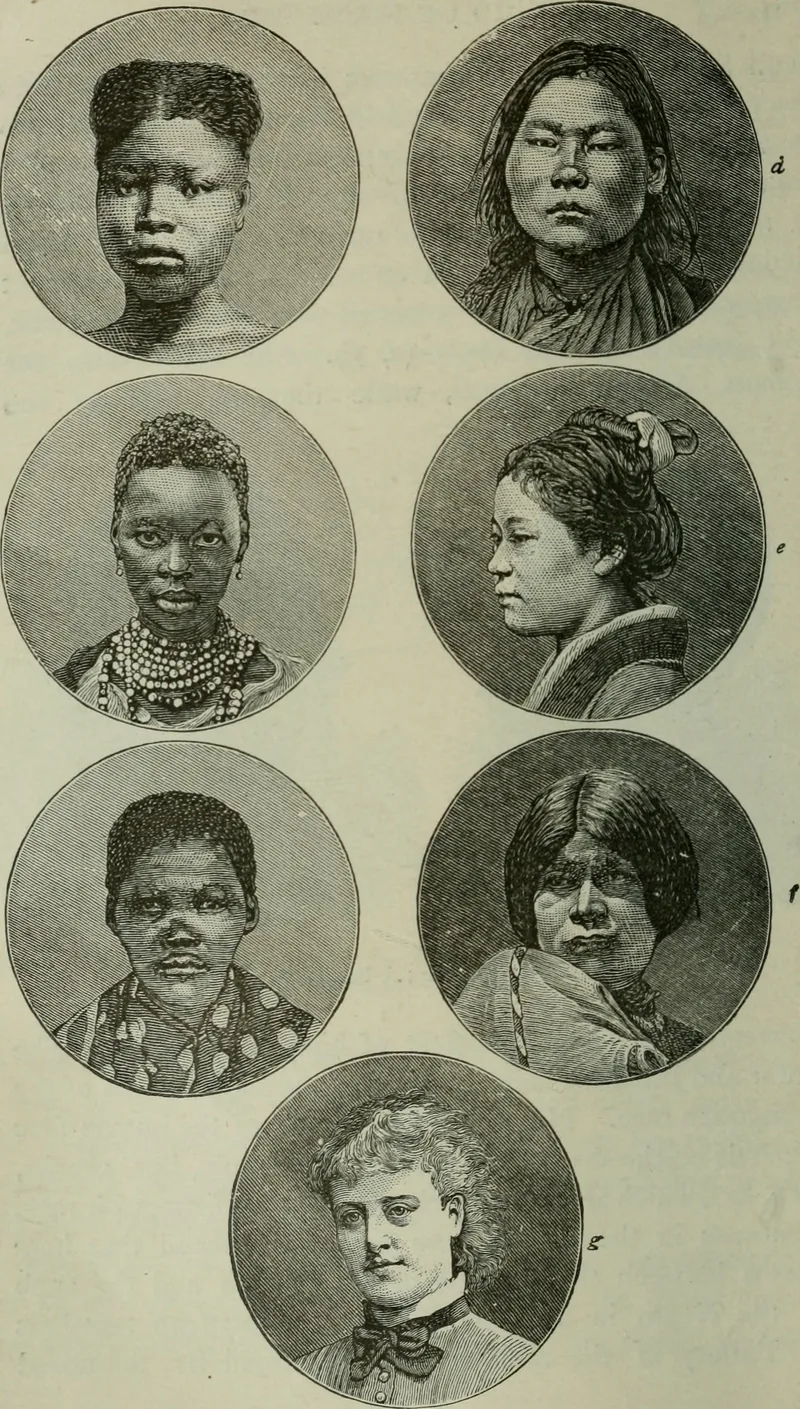
These works were enormously influential, and each contained real insights, but they shared an assumption that colonised peoples represented humanity's childhood. Their authors rarely met the people they wrote about. Twentieth-century anthropologists such as Bronisław Malinowski and E. E. Evans-Pritchard insisted on long fieldwork and on understanding a religion's own logic; Evans-Pritchard's study of Nuer religion (1956) showed a sophisticated theology of Spirit among a Sudanese cattle-herding people.
Since the 1970s scholars have also criticised the "world religions paradigm", the habit of dividing humanity into a handful of large religions modelled on Protestant Christianity, with everything else left in a residual box. Tomoko Masuzawa's The Invention of World Religions (2005) traced how this classification arose. Indigenous scholars, from the Lakota writer Vine Deloria Jr. to the Ugandan poet and critic Okot p'Bitek, have argued that outsiders repeatedly forced their traditions into foreign categories, for instance by searching every African religion for a Christian-style "high god".
Shared Themes: Gods, Ancestors, Land and Rite§
No single feature defines all these traditions, and generalising across continents is risky. Still, certain themes recur and help orient a reader:
- Many sacred beings. Most ancient religions were polytheistic, with great gods who governed cosmic forces and local deities who protected cities, households and trades. Many indigenous traditions speak of a creator who is distant, alongside more accessible spirits, deities or "powers".
- Ancestors. The dead often remain members of the community, honoured with offerings, consulted through divination and expected to protect their descendants.
- Sacred landscape. Mountains, rivers, springs, caves and groves are inhabited by powers or mark events of the creation. Australian Aboriginal religion, discussed in Australian and Pacific Religions, is perhaps the clearest case of religion written onto the land.
- Ritual over doctrine. Correct performance of offerings, festivals, initiations and funerals usually mattered more than assent to a creed. The Romans, as Roman Religion explains, had almost no theology but a great deal of carefully recorded procedure.
- Exchange and sacrifice. Gifts to the gods, from food and drink to animals and, in some societies, human lives, created reciprocal obligations. Such practices are described here historically.
- Specialists of the sacred. Priests, diviners, healers, seers and the figure that scholars call the shaman mediated between communities and the unseen; see Shamanism.
Ancient Religions: Reconstructing the Past§
The ancient religions in this section were large, literate, state-supported systems. Egypt and Mesopotamia produced some of humanity's oldest religious texts: the Pyramid Texts carved inside royal tombs around 2350 BCE, Sumerian temple hymns, and the Babylonian creation epic Enuma Elish. The articles on Ancient Egyptian Religion and Mesopotamian Religion cover their gods, temples and ideas of the afterlife, while the library's separate section on ancient magic, beginning with What Is Ancient Magic?, deals with spells, amulets and exorcism.
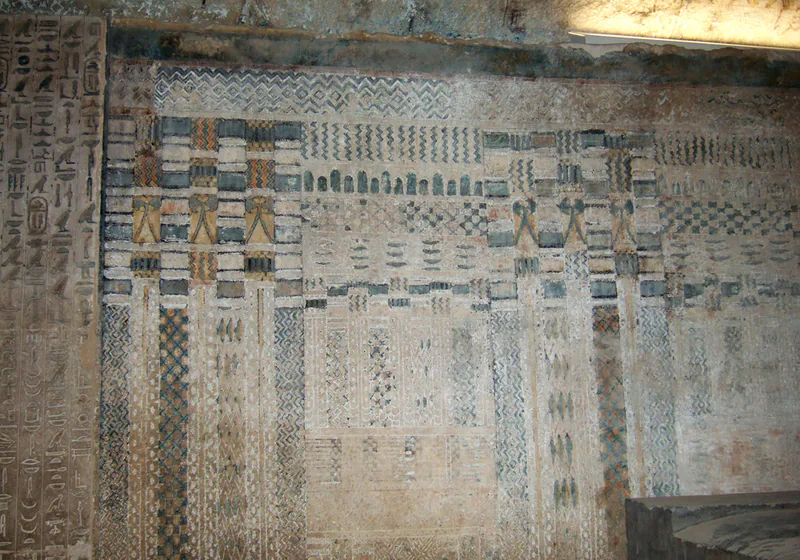
Greek and Roman religion are known through a richer literature, but much of it was written by poets and philosophers whose views did not represent ordinary worship. Greek Religion and the Mysteries looks at civic sacrifice and the secret initiations of Eleusis. For northern Europe the evidence is thinner and later: Norse myth survives mainly in thirteenth-century Christian Iceland, and Celtic religion in Roman reports, inscriptions and medieval Irish and Welsh tales. The articles on Norse and Germanic Religion and Celtic Religion explain what can and cannot be known. Mesoamerican Religion covers the Maya and Aztec world, where indigenous books, colonial records and archaeology combine and where Maya ritual specialists still keep the old calendar.
Living Indigenous Traditions§
The second half of the section concerns religions with living practitioners. African Traditional Religions surveys the Yoruba, Akan, Igbo, Zulu and other peoples, whose traditions also travelled across the Atlantic and shaped the religions described in the library's sections on Vodou and Santería. Native American Religions treats the distinct traditions of the Lakota, Haudenosaunee, Diné, Hopi and others, and the long legal struggle for religious freedom in the United States and Canada.
These traditions survived missionary suppression, legal bans and forced schooling. In many places they have revived strongly since the late twentieth century, supported by language programmes, the return of sacred objects from museums and the protection of sacred sites. At the same time, interest from outsiders has created problems: commercial "workshops" selling ceremonies, the misuse of sacred symbols, and the appropriation of terms such as "shaman" and "medicine man". Many communities ask that particular rites, songs and stories be kept within the people or within initiated groups. This library follows that request and describes such practices only in general, public terms.
Why These Religions Matter for Esoteric Studies§
Indigenous and ancient religions are also the raw material from which later Western esotericism built much of its imagery. Renaissance Hermeticists believed they were recovering the wisdom of Egypt; nineteenth-century occultists borrowed Chaldean astrology, Greek mysteries and Druidic lore, often inaccurately; twentieth-century neo-shamans and modern Pagans looked to Siberia, the Amazon and pre-Christian Europe. Understanding the historical religions on their own terms helps a reader to separate genuine ancient evidence from later romantic invention, a distinction the library also draws in its articles on Druidry and Heathenry and the Runes.
Frequently asked questions§
Are indigenous religions the same as paganism?§
Not exactly. "Pagan" was originally a Christian term for non-Christians and has often been used dismissively. Today it usually describes modern Pagan movements such as Wicca, Druidry and Heathenry. Indigenous religions are the traditions of specific peoples, and most of their practitioners do not call themselves Pagan.
Is animism a religion?§
Animism is not a single religion but a scholarly term. Tylor used it for a supposed earliest belief in souls; more recent writers such as Graham Harvey use it for ways of life that treat animals, plants, places and objects as persons with whom humans have relationships. Many indigenous traditions can be described this way, but the word is an outsider's category.
How do scholars know about religions that died out?§
They combine texts written by the religion's own priests and scribes, such as Egyptian papyri or Babylonian tablets, with archaeology of temples, burials and offerings, and with reports by neighbours and later writers. Each kind of evidence has biases, so historians compare them carefully and avoid filling gaps with modern assumptions.
Can anyone practise an indigenous religion?§
That depends on the tradition. Some, such as Yoruba-derived religions, have spread widely and accept outsiders through initiation; others are bound to kinship and land and are not open to people outside the community. Respect for each people's own rules is the guiding principle.
Sources and further reading§
- Primitive Culture — Edward Burnett Tylor, 1871
- The Elementary Forms of Religious Life — Émile Durkheim, 1912
- Nuer Religion — E. E. Evans-Pritchard, 1956
- The Invention of World Religions — Tomoko Masuzawa, 2005
- From Primitive to Indigenous: The Academic Study of Indigenous Religions — James L. Cox, 2007
- Indigenous Religions: A Companion — Graham Harvey (ed.), 2000
- Animism: Respecting the Living World — Graham Harvey, 2005
- Religions of the Ancient World: A Guide — Sarah Iles Johnston (ed.), 2004