Liber XXXV · Witchcraft & Wicca · Chapter I: Druidry
Druidry: The Ancient Druids and the Modern Druid Revival
Druidry explained: what Caesar, Pliny and Tacitus said about the ancient druids, the Romantic revival of Iolo Morganwg, and modern Druid beliefs and practice.

Druidry is a modern spiritual path inspired by the druids, the learned priestly class of the ancient Celtic-speaking peoples of Gaul and the British Isles. Almost everything known about the original druids comes from a handful of Greek and Roman writers and from medieval Irish literature, and they left no texts of their own. Modern Druidry, which grew out of an eighteenth-century Romantic revival, is a nature-centred spirituality emphasising reverence for the earth, creativity, seasonal ritual and the inspiration its followers call awen.
The Druids of Antiquity: What Greek and Roman Writers Said§
The fullest ancient description comes from Julius Caesar's Gallic War (Book 6), written in the 50s BCE while he was conquering Gaul. Caesar says the druids presided over sacrifices and religious matters, acted as judges in disputes, were exempt from military service and taxes, and met annually at a sacred place in the territory of the Carnutes. Their training could last twenty years, during which pupils memorised a great quantity of verse; they did not commit their teachings to writing. Their central doctrine, he reports, was that souls do not perish but pass after death from one body to another. Caesar also says the discipline was believed to have originated in Britain.
Other authors added details. The Greek writers Strabo and Diodorus Siculus describe three honoured classes: bards (poets and singers), vates or ouateis (seers and natural philosophers) and druids (philosophers and priests). Pliny the Elder, in his Natural History, describes white-robed druids cutting mistletoe from an oak with a golden sickle on the sixth day of the moon and sacrificing two white bulls. The historian Tacitus narrates the Roman assault on the island of Mona (Anglesey) around AD 60, where druids stood among the defenders raising their hands to the sky and calling down curses.
These sources must be read with care. Caesar was a general justifying conquest, Pliny wrote about Gaul from a distance, and Greek writers often idealised barbarian philosophers. Their reports of human sacrifice, including Caesar's account of victims burned in wicker figures, may contain some truth but were also part of Roman propaganda. The Roman state suppressed druidism in the first century AD under Tiberius and Claudius.
Archaeology, Irish Literature and the Limits of Evidence§
Archaeology has found Iron Age sanctuaries, votive deposits, ritual shafts and bog bodies such as Lindow Man, sometimes interpreted as sacrificial victims, but no object or burial can be proved to belong to a druid. Stonehenge and other stone circles were built in the Neolithic and Bronze Age, some two thousand years before any recorded druid, though the association between them is a cornerstone of modern popular imagination.
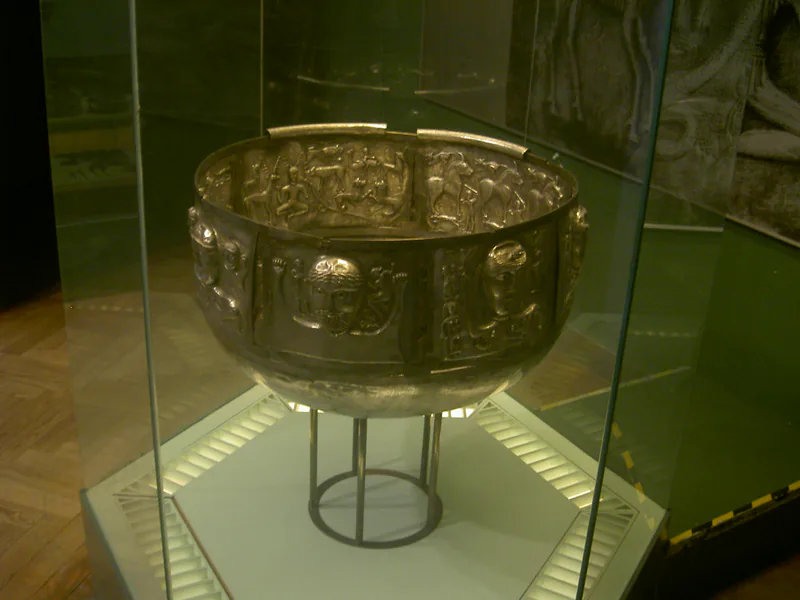
In early medieval Ireland, where Rome never ruled, the druí appear in sagas, laws and saints' lives as seers, advisers to kings and rivals of Christian missionaries. These texts were written down by Christian monks centuries after the conversion, so they preserve a memory of druids filtered through later concerns. The historian Ronald Hutton, in Blood and Mistletoe (2009), shows how each age since has rewritten the druids in its own image: as patriots, sages, proto-Christians, scientists, nature mystics or bloodthirsty pagans.
The Druid Revival: Antiquarians, Iolo Morganwg and the Gorsedd§
Interest in the druids revived in the Renaissance with the rediscovery of classical texts. In the seventeenth century the antiquary John Aubrey suggested that stone circles such as Avebury and Stonehenge had been druid temples, and in the eighteenth William Stukeley developed the idea at length in Stonehenge, a Temple Restor'd to the British Druids (1740), presenting the druids as practitioners of a primitive monotheism close to Christianity.
The most influential figure of the revival was the Welsh stonemason and poet Edward Williams (1747–1826), known as Iolo Morganwg. On 21 June 1792 he held the first ceremony of the Gorsedd of the Bards of the Island of Britain on Primrose Hill in London. Iolo claimed to have inherited an unbroken bardic tradition and produced a large body of supposed medieval material, much of it published after his death as Barddas (1862). Scholars, notably G. J. Williams in the twentieth century, demonstrated that much of it was Iolo's own composition. Nonetheless the Gorsedd became part of the Welsh National Eisteddfod from 1819 and remains an honoured cultural institution. Iolo also gave modern Druidry the symbol of three rays, often written /|, representing awen.
Fraternal Orders and the Twentieth-Century Druid Movements§
In 1781 Henry Hurle founded the Ancient Order of Druids in London, a fraternal and charitable society modelled partly on Freemasonry rather than a religious body. Many similar friendly societies followed in Britain, America and Australia.

A more spiritual Druidry developed in the twentieth century. Groups known by names such as the Ancient Druid Order began holding solstice ceremonies at Stonehenge in the early 1900s. In 1964 the poet and teacher Ross Nichols founded the Order of Bards, Ovates and Druids (OBOD), which under Philip Carr-Gomm from 1988 grew into one of the largest Druid orders, teaching through a correspondence course. In the United States, Isaac Bonewits founded Ár nDraíocht Féin ("Our Own Druidry") in 1983 as an explicitly Pagan and scholarship-minded organisation. Other orders, such as the Ancient Order of Druids in America, revived by John Michael Greer, preserve a revival-era tradition.
Modern Druid Belief and Practice§
Modern Druidry is diverse and generally non-dogmatic. Common features include:
- Reverence for nature, often understood as sacred in itself, and an ethic of environmental care;
- Awen, the flowing spirit of inspiration, invoked in ritual and sought in poetry, music and art;
- The three grades of bard, ovate and druid, loosely based on the classical triad, representing creativity, healing and seership, and philosophy;
- Seasonal ceremonies at the solstices, equinoxes and four Celtic-named festivals, broadly sharing the eight-fold Wheel of the Year with Wicca, often held outdoors in a circle;
- Trees and the ogham, the early medieval Irish alphabet, whose associations with particular trees derive from later medieval Irish texts and are used in modern meditation and divination;
- Ancestors of blood, place and tradition.
Theologically, some Druids are polytheists honouring Celtic deities such as Brigid, Lugh, Cerridwen or the Dagda (see Gods and Goddesses); others are pantheists, animists, or Christians who see Druidry as a cultural and spiritual practice. Philip Carr-Gomm's Druidcraft (2002) explored a deliberate blending of Druidry and Wicca, reflecting long-standing friendships between the two movements: Gerald Gardner and Ross Nichols were acquaintances. For comparison with Germanic Paganism see Heathenry and the Runes.
Stonehenge, Recognition and Druidry Today§
Stonehenge has been both a stage and a battleground for modern Druids. Solstice gatherings drew growing crowds in the twentieth century, and after the confrontation known as the Battle of the Beanfield in 1985 access was restricted for over a decade. Since 2000, English Heritage has allowed "managed open access" at the summer solstice, when thousands gather to watch the sunrise alongside Druid ceremonies.
In 2010 the Charity Commission for England and Wales registered The Druid Network as a charity for the advancement of religion, a decision widely reported as the first official recognition of Druidry as a religion in Britain. Druid groups are now active across Europe, North America and Australia, and Druid ideas also flourish in Brittany, Wales and Cornwall through cultural Gorseddau. For the broader history of witchcraft and Paganism, see What Is Witchcraft?.
Frequently asked questions§
Did the druids build Stonehenge?§
No. Stonehenge was built in phases from around 3000 BCE to about 1500 BCE, long before the druids are recorded. The association began with seventeenth- and eighteenth-century antiquarians.
What did the ancient druids believe?§
Classical writers report that they taught that the soul is immortal and passes into another body after death, studied the stars and nature, and presided over sacrifices and law. Because they wrote nothing down, their beliefs are known only through outsiders.
Is modern Druidry a religion?§
For many followers it is, and The Druid Network was registered as a religious charity in England and Wales in 2010. Others treat Druidry as a spiritual philosophy compatible with other faiths.
What is awen?§
Awen is a Welsh word for poetic or divine inspiration. In modern Druidry it is a central concept, symbolised by three rays of light, and invoked in ritual and creative work.
Sources and further reading§
- Blood and Mistletoe: The History of the Druids in Britain — Ronald Hutton, 2009
- Druids: A Very Short Introduction — Barry Cunliffe, 2010
- The Druids — Stuart Piggott, 1968
- The Book of Druidry — Ross Nichols, 1990
- The Druid Way — Philip Carr-Gomm, 1993
- The Druidry Handbook: Spiritual Practice Rooted in the Living Earth — John Michael Greer, 2006
- Bonewits's Essential Guide to Druidism — Isaac Bonewits, 2006
- The Gallic War — Julius Caesar, c. 50 BCE