Liber XVI · Indigenous & Ancient Religions · Chapter VII: Native American Religions
Native American Religions: Traditions, History and Revival
Native American religions explained: Lakota, Haudenosaunee, Diné and Hopi traditions, the Ghost Dance, bans on ceremony and the fight for religious freedom.

Native American religions are the religious traditions of the indigenous peoples of North America, whose hundreds of nations, from the Haudenosaunee of the north-east to the Lakota of the plains, the Diné (Navajo) and Hopi of the south-west and the peoples of the Pacific coast, each have their own sacred stories, ceremonies and ways of relating to land, ancestors and spiritual beings. There is no single "Native American religion": traditions differ as much as the languages that carry them. Most, however, stress relationship and reciprocity with the living world, and many have survived generations of legal suppression and are practised and revived today.
Diversity and Shared Patterns§
Before European colonisation North America was home to peoples speaking several hundred languages belonging to dozens of families. Their ways of life ranged from farming towns in the south-west and the east to bison-hunting nations of the plains, salmon-fishing chiefdoms of the north-west coast and hunting bands of the subarctic. Religions varied accordingly, and terms such as "Great Spirit", popularised by translators and later by Hollywood, flatten very different concepts.
Scholars such as Sam Gill and the Standing Rock Sioux writer Vine Deloria Jr. have nevertheless pointed to recurring emphases. Religion is usually inseparable from the land: particular mountains, lakes and springs are sacred because of events in a people's history or creation. Relationships extend to animals, plants and powers, often addressed as relatives. Ceremony renews the world and the community. Sacred knowledge is passed on orally by elders and specialists, and much of it is not meant to be shared outside the community. In God Is Red (1973) Deloria contrasted such spatially rooted religion with the time-centred historical faith of Christianity.
Lakota Religion: Wakȟáŋ Tȟáŋka and the Sacred Pipe§
The Lakota, one of the peoples often called Sioux, speak of Wakȟáŋ Tȟáŋka, frequently translated "Great Spirit" but better understood as "the great mysterious", the sum of all sacred powers. According to Lakota tradition, the sacred pipe was brought to the people by White Buffalo Calf Woman, a holy being who taught them rites that would keep them in right relationship. Seven rites associated with the pipe include the purification ceremony (inípi, the sweat lodge), the vision quest (hanbléčheyapi, "crying for a vision") and the Sun Dance (wiwáŋyaŋg wačhípi), held in summer, in which dancers fulfil vows through fasting, prayer and sacrifice for the people's welfare.
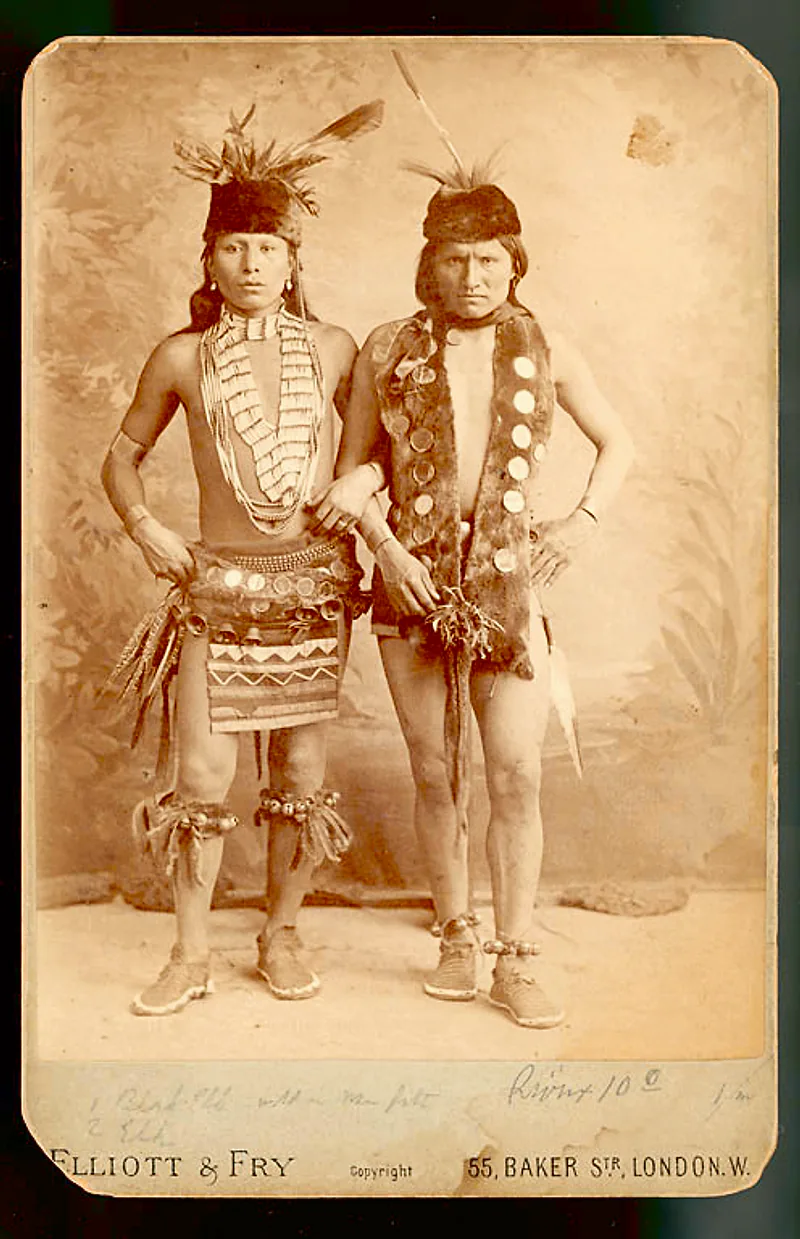
Much outside knowledge comes from Black Elk (Heȟáka Sápa, c. 1863–1950), an Oglala holy man whose visions and life were recorded by the poet John G. Neihardt in Black Elk Speaks (1932) and whose account of the seven rites was published by Joseph Epes Brown as The Sacred Pipe (1953). Scholars note that these books were shaped by their editors, and that Black Elk was also a devoted Catholic catechist for decades, an example of how Native people often combined traditions. The library does not describe ceremonial procedure; these are living rites under the authority of Lakota spiritual leaders.
The Haudenosaunee, the Longhouse and Handsome Lake§
The Haudenosaunee (Iroquois) Confederacy of the Mohawk, Oneida, Onondaga, Cayuga, Seneca and later Tuscarora tells how Sky Woman fell from the sky world onto the back of a great turtle, where animals brought up mud from beneath the waters to make the earth, so that North America is called Turtle Island. The Peacemaker and Hiawatha founded the confederacy under the Great Law of Peace, symbolised by the white pine.
In 1799 the Seneca leader Handsome Lake (Ganiodaiio), ill and in despair over the collapse of Seneca society, experienced a series of visions. His teaching, the Gaiwiio ("good message"), called for an end to alcohol abuse and witchcraft, strengthened family life, adapted farming and renewed the traditional cycle of thanksgiving ceremonies, such as the Midwinter and Green Corn festivals. The resulting Longhouse religion remains a living faith among Haudenosaunee communities. The anthropologist Anthony F. C. Wallace used it as his model of a "revitalisation movement", a concept now applied to new religions worldwide.
Diné, Hopi and Pueblo Traditions§
The Diné (Navajo) of the south-west speak of emergence through a series of underworlds into the present world, guided by the Holy People (Diyin Dineʼé) such as Changing Woman. The ideal of hózhǫ́, often translated as beauty, balance and harmony, is restored through ceremonies called chants or "ways", such as the Blessingway, led by trained singers (hataałii). Some healing ceremonies use dry paintings of coloured sand that depict Holy People and are destroyed after use.

The Hopi and other Pueblo peoples of Arizona and New Mexico organise religious life around an annual cycle of ceremonies held in underground chambers called kivas and in village plazas. The katsinam (kachinas), spirit beings associated with rain, ancestors and clouds, visit the villages for part of the year, embodied by masked dancers, and carved katsina figures teach children about them. Many Pueblo ceremonies are closed to outsiders, a decision taken after years of intrusive photography and publication.
Other traditions include the Midewiwin or Grand Medicine Society of the Anishinaabe (Ojibwe) of the Great Lakes, whose healers recorded teachings on birchbark scrolls, and the potlatch of the north-west coast, a feast at which hosts distributed goods to mark names, rank and memorial obligations.
Prophets, the Ghost Dance and Suppression§
Colonisation brought disease, warfare, removal and missions, and it provoked prophetic movements. In 1889 the Paiute prophet Wovoka (Jack Wilson) in Nevada taught a dance and an ethic of peace that would reunite the living with the dead and renew the world. This Ghost Dance spread across the West. Among the Lakota it alarmed the authorities, and the attempt to suppress it ended in the massacre of some 250 or more Lakota people at Wounded Knee on 29 December 1890. James Mooney's study for the Bureau of Ethnology (1896) remains a key source.
Governments also legislated against ceremony. The United States' Code of Indian Offenses (1883) banned the Sun Dance and other dances; Canada outlawed the potlatch in 1884 and certain dances in 1895, bans not lifted until 1951. Children were sent to boarding and residential schools where Native languages and religion were forbidden. Practitioners kept ceremonies alive in secret or by adapting them.
Religious Freedom and Revival§
The Native American Church, which grew from the late nineteenth century and was incorporated in Oklahoma in 1918, blends Christian elements with older traditions and uses peyote as a sacrament, which the library describes only historically. Legal battles over its use led to the Supreme Court case Employment Division v. Smith (1990) and to federal amendments in 1994 protecting sacramental use by tribal members.
The American Indian Religious Freedom Act of 1978 declared federal policy to protect Native religious practice, and the Native American Graves Protection and Repatriation Act (1990) began the return of ancestral remains and sacred objects from museums. Disputes over sacred sites, from Bear Butte to the San Francisco Peaks, continue. In 1993 Lakota, Dakota and Nakota leaders issued a declaration condemning the sale and imitation of their ceremonies by non-Natives, a concern shared by many nations in the face of "plastic shamans" and New Age borrowings discussed in New Age and Shamanism.
Frequently asked questions§
Is there one Native American religion?§
No. Each nation has its own traditions, languages and ceremonies. Some practices spread widely, such as the sacred pipe, the sweat lodge or the powwow, but even these differ from people to people, and many Native people are also Christian.
What was the Ghost Dance?§
It was a religious movement begun in 1889 by the Paiute prophet Wovoka, who taught that a dance and righteous living would bring renewal and reunion with the dead. Its suppression among the Lakota culminated in the massacre at Wounded Knee in 1890.
Can non-Native people take part in Native ceremonies?§
Only when invited by those with authority to conduct them. Many nations restrict ceremonies to their own members, and leaders have strongly criticised paid workshops and imitations of sacred rites by outsiders.
Sources and further reading§
- Black Elk Speaks — John G. Neihardt, 1932
- The Sacred Pipe: Black Elk's Account of the Seven Rites of the Oglala Sioux — Joseph Epes Brown (ed.), 1953
- God Is Red: A Native View of Religion — Vine Deloria Jr., 1973
- Native American Religions: An Introduction — Sam D. Gill, 1982
- The Death and Rebirth of the Seneca — Anthony F. C. Wallace, 1970
- The Ghost-Dance Religion and the Sioux Outbreak of 1890 — James Mooney, 1896
- The Sixth Grandfather: Black Elk's Teachings Given to John G. Neihardt — Raymond J. DeMallie (ed.), 1984
- The Land Looks After Us: A History of Native American Religion — Joel W. Martin, 2001