Liber XVI · Indigenous & Ancient Religions · Chapter I: African Traditional Religions
African Traditional Religions: God, Spirits, Ancestors and Rite
African traditional religions explained: Yoruba, Akan, Igbo, Zulu, Nuer and other traditions, their creator gods, spirits, ancestors, diviners and history.

"African traditional religions" is the term scholars use for the indigenous religions of sub-Saharan Africa, practised by peoples such as the Yoruba, Akan, Igbo, Fon, Kongo, Zulu, Kikuyu, Nuer and Dinka. There is no single African religion: each people has its own deities, myths, rites and specialists. Many, however, share a pattern of belief in a supreme creator, in lesser divinities or spirits who are more directly involved in human affairs, and in ancestors who remain part of the family, together with divination, sacrifice and rites of passage.
Diversity and the Problem of "African Religion"§
Africa south of the Sahara holds well over a thousand languages and an enormous range of societies, from kingdoms with royal cults and priesthoods to small pastoral or farming communities with no full-time religious specialists. Religions vary accordingly. The Yoruba of south-western Nigeria have a crowded pantheon of òrìṣà worshipped in shrines and festivals; the Nuer of South Sudan, as described by the anthropologist E. E. Evans-Pritchard, focus on Kwoth, Spirit, conceived both as a single God in the sky and as many lesser refractions of spirit.
Early European observers often described these religions as "fetishism" or as lacking any idea of God. In the mid-twentieth century African Christian scholars, above all John S. Mbiti in African Religions and Philosophy (1969), answered by stressing that Africans everywhere believed in one supreme God. Mbiti's work gave the subject academic respectability, but critics such as Okot p'Bitek, in African Religions in Western Scholarship (1970), argued that it "Hellenised" African thought by making it resemble Christian theology. Most scholars now try to describe each tradition in its own vocabulary.
The Creator, the Divinities and the Spirits§
High gods§
Many African peoples speak of a creator who made the world and then withdrew. Myths in several regions explain this distance: the sky once lay close to the earth until a woman pounding grain with a long pestle struck it, or until humans offended God in some other way, and it moved away. The Yoruba Olodumare (also Olorun, "owner of the sky"), the Akan Nyame or Onyankopon, the Igbo Chukwu, the Kikuyu Ngai, associated with Mount Kenya, and the Zulu uNkulunkulu are often cited. In many traditions the creator receives little direct worship, though prayers and proverbs invoke him or her constantly.

Divinities and nature spirits§
Between the creator and humanity stand many beings. Among the Yoruba these are the òrìṣà: Ọbàtálá, who shaped human bodies; Ògún, god of iron and war; Ṣàngó, the thunder god and deified king of Ọyọ; Ọ̀ṣun, goddess of the river of that name; Èṣù, the messenger and guardian of crossroads; and Ọ̀rúnmìlà, witness of destiny and patron of Ifá divination. The Akan honour abosom, deities associated with rivers, lakes and the sea, such as Tano. The Igbo earth goddess Ala (or Ani) guards morality and fertility and is honoured with mbari houses filled with sculpture. Among the Fon of Benin these powers are called vodun; their religion is treated in West African Vodun.
Spirits also dwell in forests, hills and waters, and some are dangerous. Communities distinguish between powers that can be honoured, those that must be pacified, and witchcraft, the hidden harmful power believed to be used by envious people.
Ancestors and the Living Community§
Ancestors are central to most African religions. Not every dead person becomes an ancestor: typically one must have lived a full and moral life, had descendants and received proper funeral rites. Ancestors remain concerned with their families, rewarding care and punishing neglect, and are remembered through libations of water or drink poured at shrines, offerings at graves, the naming of children, and festivals.
Among the Zulu the amadlozi (ancestral shades) are consulted through diviners called izangoma, who often describe their calling as an illness sent by the ancestors. Among the Akan, the stools of former chiefs are blackened and kept as shrines to royal ancestors; the Golden Stool of the Asante, which according to tradition descended from the sky in the time of Osei Tutu around 1700, embodies the soul of the nation. Masquerades such as the Yoruba Egúngún bring the dead back into the town in costumed form during annual festivals.
Mbiti described the recently dead, remembered by name, as the "living-dead", and the long-dead as passing into a collective past. The idea that the family includes the departed and the unborn is one of the most widely shared features of African religious thought.
Divination, Healing and Ritual Specialists§
African religions are rich in methods of finding out the causes of misfortune and the will of the spirits. The best known is Yoruba Ifá, in which a babaláwo ("father of secrets") casts sixteen palm nuts or a divining chain (ọ̀pẹ̀lẹ̀) to produce one of 256 signs, the odù, each linked to a large body of memorised verses telling stories of precedent and prescribing offerings. UNESCO proclaimed Ifá a Masterpiece of the Oral and Intangible Heritage of Humanity in 2005. Related systems exist among the Fon (Fa) and Ewe (Afa), and the same principle reached the Americas in Cuban Ifá and in the cowrie-shell divination of Santería, discussed in Santería, Lucumí and the Orishas.
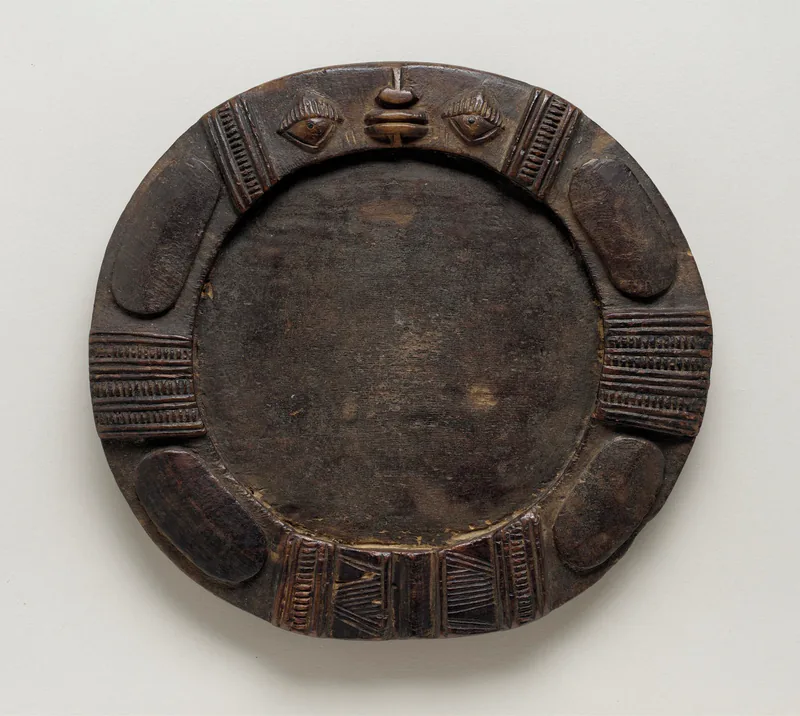
Other peoples use different techniques: rubbing boards, the throwing of bones or shells in southern Africa, possession by spirits who speak through a medium, or consultation of oracles. Evans-Pritchard's study of the Azande (1937) described a poison oracle administered to chickens, which he used to show how a system of belief about witchcraft could be internally rational. Healers combine herbal knowledge with ritual and are often the same people as diviners. The library treats such practices historically; the plant knowledge involved belongs to the communities who hold it.
Sacrifice, Festivals and Rites of Passage§
Offerings range from kola nuts, palm oil, gin and food to the sacrifice of animals, which are usually eaten by the community afterwards; this is described here as historical and ethnographic fact. Sacrifice renews the bond between people and powers and often follows a divinatory diagnosis.
Annual festivals mark harvests, honour deities and celebrate kingship: the Yoruba festival of Ọ̀ṣun at Osogbo, whose sacred grove became a UNESCO World Heritage Site in 2005; yam festivals among the Igbo; and the Asante Odwira. Rites of passage, including naming, initiation into adulthood (often with circumcision), marriage and elaborate funerals, are moments when the whole community and its ancestors gather. Initiation into secret societies, such as the Poro and Sande of Liberia and Sierra Leone, transmits knowledge kept from outsiders.
Colonialism, Conversion and the Atlantic World§
From the nineteenth century Christian missions and colonial governments suppressed many practices, and today most Africans are Christian or Muslim. Yet traditional religion has rarely vanished. It survives in family ancestral rites, in the persistence of diviners and healers, in royal and civic festivals, and in African independent churches that blend Christian worship with prophecy and healing. Several countries, including Benin with its national Vodun holiday on 10 January, now give official recognition to indigenous religion.
The Atlantic slave trade carried Yoruba, Fon, Kongo and other traditions to the Americas, where they were reshaped among enslaved communities and their descendants into Haitian Vodou, Cuban Santería and Palo, Brazilian Candomblé and other religions surveyed in African Diasporic Religions. Since the late twentieth century there has also been a reverse movement, with devotees from the Americas travelling to Nigeria and Benin to seek initiation.
Frequently asked questions§
Do African traditional religions believe in one God?§
Many do recognise a single creator, but they also honour lesser divinities, spirits and ancestors, so they cannot be described simply as monotheistic or polytheistic. Scholars debate how central the creator was before contact with Christianity and Islam, and the answer differs from people to people.
What is the role of ancestors in African religion?§
Ancestors are deceased family members who continue to care for and discipline their descendants. They are honoured with libations, offerings and festivals and consulted through divination, and neglecting them is thought to bring misfortune.
Is Ifá the same as Santería?§
No. Ifá is a Yoruba divination system and body of sacred verse centred on Ọ̀rúnmìlà. Santería, or Lucumí, is a Cuban religion that developed from Yoruba traditions and includes Ifá priests among its specialists, along with the worship of many orishas.
Are African traditional religions still practised?§
Yes. Although most Africans are Christian or Muslim, many still observe ancestral rites, consult diviners or take part in traditional festivals, and some identify fully with an indigenous religion. Practitioners in the Americas and Europe have also grown in number.
Sources and further reading§
- African Religions and Philosophy — John S. Mbiti, 1969
- African Religions in Western Scholarship — Okot p'Bitek, 1970
- Nuer Religion — E. E. Evans-Pritchard, 1956
- Witchcraft, Oracles and Magic Among the Azande — E. E. Evans-Pritchard, 1937
- Divinity and Experience: The Religion of the Dinka — Godfrey Lienhardt, 1961
- Ifa Divination: Communication Between Gods and Men in West Africa — William Bascom, 1969
- African Religions: A Very Short Introduction — Jacob K. Olupona, 2014
- Olódùmarè: God in Yoruba Belief — E. Bọlaji Idowu, 1962