Liber XVI · Indigenous & Ancient Religions · Chapter I: African Traditional Religions
Akan Religion: Onyame, the Abosom, Ancestors and the Golden Stool
Akan religion of Ghana and Côte d'Ivoire: Onyame the Supreme Being, Asase Yaa, the abosom and their priests, the ancestors, Adae, Odwira and the Golden Stool.

Akan religion is the traditional religion of the Akan peoples of southern Ghana and eastern Côte d'Ivoire, among them the Asante, Fante, Akyem, Akuapem, Bono and Baule. It recognises a Supreme Being, Onyame or Onyankopɔn, the Earth goddess Asase Yaa, a host of lesser deities called abosom who speak through priests and priestesses, and the ancestors (nsamanfoɔ), who remain part of the family and the state. Although most Akan today are Christian or Muslim, the old religion lives on in shrines, in the rites of chieftaincy and in festivals such as Adae and Odwira.
Who the Akan Are and How Their Religion Is Known§
The Akan speak closely related languages, mainly Twi and Fante, and share matrilineal clans (abusua), a seven-day week with day names, and a political system of chiefs whose authority is symbolised by stools. From the late seventeenth century the Asante kingdom, centred on Kumasi, became the most powerful Akan state, controlling gold and trade routes until its conflicts with Britain in the nineteenth century and its incorporation into the Gold Coast colony in 1901.
Outsiders' knowledge of Akan religion comes largely from the colonial anthropologist R. S. Rattray, whose Ashanti (1923) and Religion and Art in Ashanti (1927) recorded rites and explanations from chiefs and priests, and from Ghanaian scholars who wrote from within the culture. J. B. Danquah's The Akan Doctrine of God (1944) presented Akan theology as a sophisticated philosophy, and Kwame Gyekye's An Essay on African Philosophical Thought (1987) analysed its concepts of God, person and destiny. Their approaches differ: some earlier writers stressed parallels with Christianity, while later scholars emphasise the religion's own logic. As the overview of African traditional religions explains, there is no single scripture or central authority, and practice varies between communities.
Onyame and Asase Yaa: God and the Earth§
The Akan acknowledge a Supreme Being known by several names. Onyame (or Nyame) is often linked with the sky; Onyankopɔn is commonly glossed "the great one who alone is Nyame"; Odomankoma emphasises his role as infinite creator. Proverbs and drum texts praise him as the one to whom all things belong and who provides rain and sunshine. The widely printed adinkra symbol Gye Nyame, "except God", expresses his supremacy.

A well-known story explains why God is distant. Once the sky lay close to the earth, but an old woman pounding fufu kept striking God with her long pestle, so he withdrew upward. People then tried to reach him by piling mortars on top of one another, but needed one more mortar and took the bottom one away, and the tower collapsed. The tale accounts for God's remoteness without implying indifference.
Formerly many compounds had a Nyame dua, "God's tree", a forked post holding a pot or basin in which offerings were placed. There were, according to Rattray, also some temples and priests of the Supreme Being in Asante, though many scholars stress that Onyame was more often approached through lesser powers.
Second only to Onyame stands Asase Yaa, the Earth, named after Thursday (Yaa being the female day name for Thursday-born). She is the source of fertility, the keeper of the dead who are buried in her, and the guardian of morality on the land. In many Akan areas farmers traditionally did not till the soil on Thursday, and libations to Asase Yaa accompany the opening of graves and the taking of oaths.
The Abosom and Their Priests§
The abosom (singular ɔbosom) are lesser deities, described as children or messengers of Onyame. Many are associated with bodies of water, such as Tano (Taa Kora), the god of the Tano River, regarded as one of the greatest Asante deities, Lake Bosomtwe and the sea. Others are attached to particular lineages, towns or states. Each has a shrine, often containing a brass pan or other vessel holding sacred substances, and is served by a priest or priestess, ɔkɔmfoɔ (plural akɔmfoɔ).
A person may be called to priesthood when an ɔbosom seizes them, sometimes after illness or a period of disturbed behaviour, followed by years of training under an established priest, in which they learn dances, songs, herbal knowledge and the rules of the deity. At public ceremonies, accompanied by drumming, the deity enters the priest, who then speaks with its voice, diagnoses afflictions and gives advice, a pattern found across West Africa and its diaspora, as discussed in spirit possession in Afro-Atlantic religions.
Distinct from the abosom are asuman (singular suman), charms and protective objects whose power comes from the plants, animal parts or other materials they contain and from the specialist who makes them. In the twentieth century new "witch-finding" shrines, some imported from the northern savanna, such as Tigare, spread widely among the Akan; the psychiatrist and anthropologist M. J. Field studied the people who came to them in Search for Security (1960). Beliefs about bayi, witchcraft, remain influential and sometimes harmful, and Ghanaian human-rights groups campaign against accusations of witchcraft, especially those made against older women.
The Person: Ɔkra, Sunsum and Mogya§
Akan thought describes the human person as made up of several elements, though their exact meanings are debated by philosophers. The ɔkra is the life-soul given by Onyame, which carries a person's destiny (nkrabea) and returns to God at death. The sunsum is often translated "spirit" or "personality", and is linked in many accounts with the ntoro, a spiritual bond inherited from the father. The mogya, blood, comes from the mother and determines membership in the matrilineal clan, the abusua, which governs inheritance and succession.
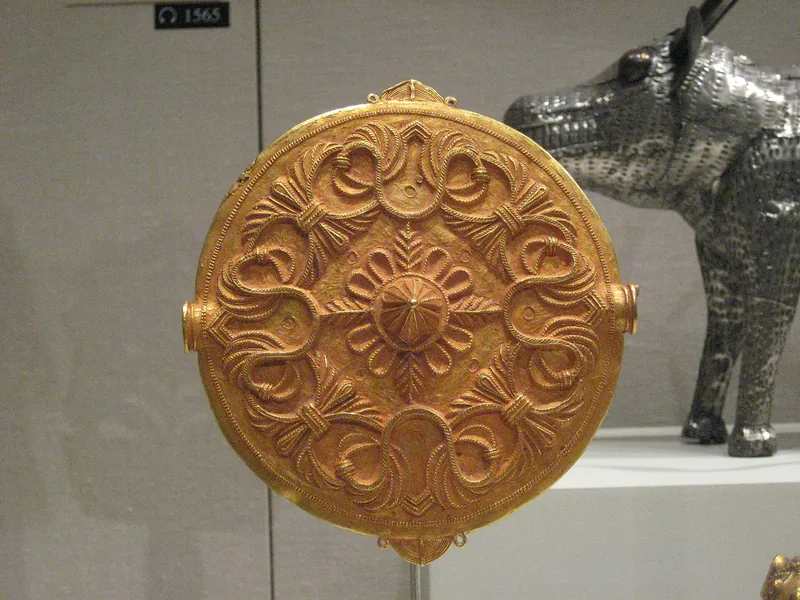
The ɔkra is also linked with day names. Every Akan child receives a name according to the weekday of birth, Kwasi or Akosua for Sunday, Kwadwo or Adwoa for Monday, and so on, and each day has its own kra qualities. The former United Nations Secretary-General Kofi Annan bore the name for a Friday-born boy.
The Ancestors, the Stools and the Adae§
The ancestors, nsamanfoɔ, are the dead who lived worthy lives and passed through proper funeral rites. They are believed to watch over their descendants, rewarding good conduct and punishing neglect, and are given libations of drink and offerings of food on many occasions. Funerals are among the most elaborate events in Akan life.
At the level of the state, the ancestors are honoured through stools. When a respected chief dies, his stool may be blackened and placed in the stool house (nkonnwafieso), where it becomes the shrine of his spirit. These rites are performed by the chief and designated custodians and are not public. Every forty-two days, following the Akan calendar, the chief enters the stool house during the festival called Adae, either Akwasidae (on a Sunday) or Awukudae (on a Wednesday), to offer drink and food to the ancestors, followed by a public assembly with drumming and the receiving of homage.
The greatest annual festival in Asante was Odwira, held around the time of the new yam harvest, a rite of purification for the nation in which the ancestors were honoured, the shrines cleansed and the new year's yams first offered. It is still celebrated, in modified form, in Kumasi and Akuapem.
The Golden Stool and Asante Sacred Kingship§
According to Asante tradition, around 1700 the priest Ɔkɔmfoɔ Anokye summoned from the sky a stool covered in gold, which descended into the lap of Osei Tutu, the first Asantehene, at a great gathering. Known as Sika Dwa Kofi, "the golden stool born on Friday", it is believed to contain the sunsum, the soul, of the whole Asante nation. It is never sat upon, and it is brought out only on major occasions.
The stool's sacred status became the focus of a famous conflict. In 1900 the British governor Frederic Hodgson demanded to sit on it as a sign of submission. The demand caused deep offence and led to the War of the Golden Stool, in which Yaa Asantewaa, Queen Mother of Ejisu, led resistance against the British. The stool itself was hidden and never surrendered, and it remains at the heart of the Asante monarchy today.
Elsewhere, Akan religion has had a long life in the Americas, where enslaved Akan, known in Jamaica as Coromantee, influenced Maroon culture and spiritual practices discussed in African and Caribbean folk beliefs. In Ghana the Afrikania Mission, founded in 1982 by the former Catholic priest Kwabena Damuah, has sought to reform and promote traditional religion as a national faith.
Frequently asked questions§
What is the name of God in Akan religion?§
God is called Onyame or Nyame, Onyankopɔn and Odomankoma, names stressing his supremacy, his association with the sky and his role as creator. The phrase Gye Nyame, "except God", is a widely used symbol of his supremacy.
What are the abosom?§
The abosom are lesser deities, regarded as children or agents of Onyame, often associated with rivers, lakes, the sea or particular towns and families. They are served in shrines by priests and priestesses who receive them in possession and speak on their behalf.
Why is the Golden Stool sacred?§
The Asante believe that the Golden Stool descended from the sky through the priest Ɔkɔmfoɔ Anokye and contains the soul of the Asante nation. Its safety is identified with the welfare of the people, which is why it is never sat on.
Is Akan traditional religion still practised?§
Yes. Although most Akan are Christian or Muslim, many still consult shrines and priests, pour libation to ancestors and take part in festivals such as Adae and Odwira, which are closely tied to chieftaincy.
Sources and further reading§
- Ashanti — R. S. Rattray, 1923
- Religion and Art in Ashanti — R. S. Rattray, 1927
- The Akan Doctrine of God — J. B. Danquah, 1944
- An Essay on African Philosophical Thought: The Akan Conceptual Scheme — Kwame Gyekye, 1987
- West African Traditional Religion — Kofi Asare Opoku, 1978
- Search for Security: An Ethno-Psychiatric Study of Rural Ghana — M. J. Field, 1960
- Asante in the Nineteenth Century: The Structure and Evolution of a Political Order — Ivor Wilks, 1975