Liber XVI · Indigenous & Ancient Religions
Animism: From Tylor's Theory to the New Animism in Religion
Animism explained: Tylor's 1871 theory of souls and spirits, its critics, Hallowell's other-than-human persons and the new animism of modern scholarship.

Animism is the name scholars have given to the understanding that the world is inhabited by souls, spirits or persons who are not human, such as animals, plants, rivers, mountains and ancestors. The word was made famous by the Victorian anthropologist Edward Burnett Tylor, who in 1871 proposed animism as the earliest form of all religion; since the late twentieth century a "new animism" has redefined it as a way of living in relationship with a world of many kinds of persons. The history of the term is therefore also a history of how Western scholars have looked at indigenous religions.
Edward Burnett Tylor and the Theory of Animism§
The Latin anima, "soul" or "breath", had been used in an earlier sense by the German physician Georg Ernst Stahl (1659–1734), whose "animism" held that the rational soul directly governs the body's vital processes. Tylor (1832–1917), a Quaker-born scholar who became Oxford's first Reader in anthropology in 1884, gave the word its modern religious meaning in Primitive Culture (1871).
Tylor was unhappy with definitions of religion that required a supreme deity, organised worship or moral doctrine, because they excluded many peoples described in travellers' and missionaries' reports. He proposed instead a "minimum definition": belief in spiritual beings. Every religion, from the simplest to the most elaborate, contained this belief, and he named it animism.
His account of its origin was intellectual. He imagined an early "savage philosopher" puzzling over two sets of experiences: the difference between a living body and a corpse, and the appearance of people in dreams and visions. The natural conclusion was that each human has a life and a phantom, combined in a detachable soul that can leave the body in sleep, trance or death. By analogy, souls were then attributed to animals, plants and objects, and the idea was extended into a world of independent spirits and finally of gods. Ancestor cults, funeral offerings, beliefs about possession and the idea of an afterlife were, for Tylor, all developments of this one reasoning.
Tylor also coined the influential notion of "survivals": customs that outlived the conditions that produced them, such as folk charms and superstitions in Victorian England, which he read as traces of an older animist stage.
Animism in Victorian Evolutionary Schemes§
Tylor's theory belonged to a wider Victorian project of ranking human societies on a single scale of progress, from "savagery" through "barbarism" to "civilisation". Animism was the bottom rung; polytheism and monotheism came later, and science would eventually explain away what religion had guessed at. James George Frazer built on Tylor in The Golden Bough (1890, expanded 1906–1915), adding a stage of magic before religion, a sequence discussed in theories of magic.
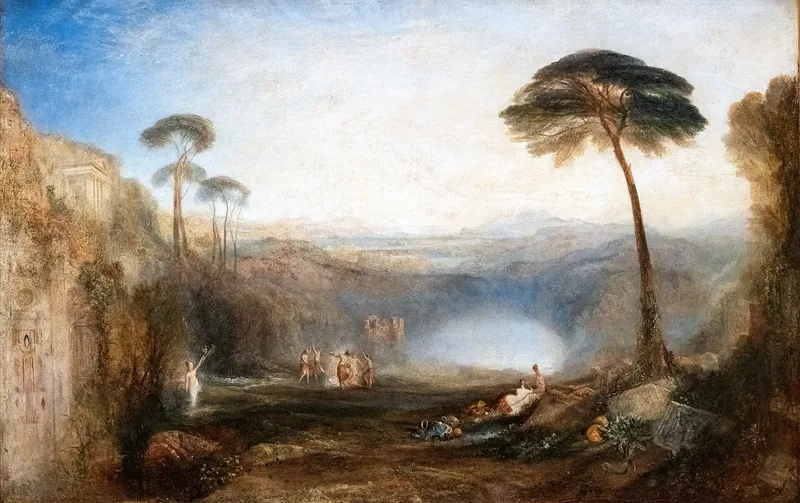
Tylor's Oxford pupil R. R. Marett questioned the priority of animism. In an essay of 1900, later collected in The Threshold of Religion (1909), he argued that something more diffuse preceded belief in souls: a feeling of awe before an impersonal power, which he called "animatism" and linked with the Melanesian and Polynesian idea of mana (discussed in Australian and Pacific religions). Friedrich Max Müller, by contrast, derived religion from the personification of natural phenomena such as the sun and sky, a "nature-myth" school that Tylor's followers opposed.
These debates shared assumptions that later scholars found untenable: that living peoples in Africa, Australia or the Americas were "contemporary ancestors" of Europeans, that their religions were childish errors of reasoning, and that the evidence of colonial reports could be used without regard to context.
Critiques: Durkheim, Evans-Pritchard and the End of Evolutionism§
Émile Durkheim's The Elementary Forms of the Religious Life (1912) rejected Tylor's explanation on sociological grounds. Religion, he argued, could not be built on an illusion born of dreams; it must express something real, namely society itself, experienced in collective ritual. Durkheim chose Australian totemism, not animism, as his "elementary form", and treated the distinction between sacred and profane as more basic than belief in spirits.
Fieldwork-based anthropology in the twentieth century, associated with Bronisław Malinowski and later with E. E. Evans-Pritchard, moved further away from speculation about origins. In Theories of Primitive Religion (1965), Evans-Pritchard criticised Tylor and Frazer for imagining how they would have reasoned had they been "primitive" people, a method he likened to guessing how a horse would think. Questions about the first religion, he concluded, could not be answered from the evidence.
By the mid-twentieth century "animism" survived chiefly as a loose label in textbooks, censuses and missionary literature for the religions of peoples without scriptures, often with a condescending tone. Many scholars avoided it altogether.
The "New Animism": Hallowell, Bird-David and Harvey§
The term was rehabilitated from an unexpected direction. The American anthropologist A. Irving Hallowell worked among the Ojibwe (Anishinaabe) of the Berens River in Manitoba in the 1930s. In his essay "Ojibwa Ontology, Behavior, and World View" (1960) he observed that Ojibwe grammar and conversation treated certain stones, winds, thunderers and animals as persons, and that the category "person" was wider than "human". He coined the phrase "other-than-human persons". Hallowell recorded an elder's answer to the question of whether all stones are alive: not all, he replied, but some are. The point was not a doctrine about matter but an expectation that some beings might act, speak or enter into relationships.

Nurit Bird-David, working with the Nayaka, a forest people of South India, argued in an article in Current Anthropology (1999) that Tylor had misunderstood animism by treating it as a failed theory of the world. For the Nayaka, she proposed, it was a "relational epistemology": one comes to know a tree, an elephant or a hill by engaging with it as a fellow being, sharing space and responding to it.
The religious studies scholar Graham Harvey drew these threads together in Animism: Respecting the Living World (2005). He described animists as people who recognise that the world is full of persons, only some of whom are human, and who are therefore concerned with how to live respectfully among them. Harvey included indigenous peoples such as the Ojibwe and Maori, and also modern Pagans and environmentalists who have adopted the term for themselves. The "new animism" thus shifts attention from belief in souls to etiquette, reciprocity, gift, hunting ethics and kinship with the land.
Animism, Perspectivism and the Ontological Turn§
A parallel line of thought developed among anthropologists of Amazonia and Siberia. Eduardo Viveiros de Castro described an Amerindian "perspectivism" (1998), in which humans, animals and spirits share a common soul or culture but differ in bodies: a jaguar sees itself as human and sees blood as manioc beer. Rane Willerslev's Soul Hunters (2007) explored how Yukaghir hunters in Siberia imitate and seduce the animals they hunt, a practice closely tied to shamanism.
The French anthropologist Philippe Descola, in Beyond Nature and Culture (French 2005, English 2013), proposed that human societies organise the relationship between "interiority" and "physicality" in four basic ways. Animism attributes similar inner lives to humans and non-humans but different bodies; naturalism, the modern Western scheme, attributes similar bodies (physics, biology) but grants inner life only to humans; totemism and analogism are the other two combinations. In this framework animism is not an early stage of thought but one coherent ontology among several, and Western naturalism is equally a cultural construction.
Critics have asked whether these models simplify very different peoples, and whether talk of "ontologies" risks exaggerating difference. Others welcome the shift because it takes indigenous statements seriously as statements about the world rather than as errors or metaphors.
Animism in Living Traditions and Modern Paganism§
Many communities whose religions are described as animist do not use the word and may reject it, preferring their own terms: the Ojibwe speak of relatives and of beings with manidoo power; Aboriginal Australians speak of Country and the Dreaming; Shinto discourse of kami is sometimes, and sometimes controversially, called animistic in Japan itself. Scholars now usually prefer to name a particular people and tradition rather than file it under a generic heading, a point also made in the introduction to indigenous and ancient religions.
At the same time, some people have adopted "animist" as a self-description. Modern Pagans, eco-spiritual groups and writers on new age spirituality use it to express a sense that rivers, trees and animals deserve respect as fellow beings. Indigenous critics have cautioned against borrowing specific ceremonies, songs or sacred objects from communities that have not shared them, and many Native American nations ask outsiders not to perform their ceremonies. The broad attitude of respect is widely shared; the protocols of particular peoples belong to those peoples.
Frequently asked questions§
What is the simplest definition of animism?§
In Tylor's classic sense, animism is belief in spiritual beings, such as souls and spirits, in humans, animals, places and things. In the newer scholarly sense it means a way of life that treats many non-human beings as persons with whom humans have relationships and obligations.
Is animism a religion?§
Animism is not a single religion with a founder, creed or institution. It is a scholarly category, and sometimes a self-description, for an outlook found in many separate traditions around the world, each with its own language, rites and authorities.
Who coined the term animism?§
The word was used in the eighteenth century by the physician Georg Ernst Stahl for a medical theory of the soul. Its religious meaning comes from Edward Burnett Tylor's Primitive Culture (1871).
What is the difference between animism and the new animism?§
Tylor's animism was a theory about how early humans reasoned their way to belief in souls, placed at the bottom of an evolutionary ladder. The new animism, associated with Hallowell, Bird-David and Harvey, describes how particular peoples live in relationship with other-than-human persons, without ranking cultures or treating their views as errors.
Sources and further reading§
- Primitive Culture — Edward Burnett Tylor, 1871
- The Threshold of Religion — R. R. Marett, 1909
- The Elementary Forms of the Religious Life — Émile Durkheim, 1912
- Theories of Primitive Religion — E. E. Evans-Pritchard, 1965
- Animism: Respecting the Living World — Graham Harvey, 2005
- Soul Hunters: Hunting, Animism, and Personhood among the Siberian Yukaghirs — Rane Willerslev, 2007
- Beyond Nature and Culture — Philippe Descola, 2013