Rastafari: History, Beliefs and Practice of the Movement
Rastafari explained: Jamaican origins, Marcus Garvey and Ethiopianism, Haile Selassie, Babylon and Zion, dreadlocks, ital, ganja and the Rasta mansions.

Rastafari is a religious and cultural movement that arose in Jamaica in the 1930s among the descendants of enslaved Africans. Its adherents, known as Rastafari, Rastafarians or Rastas, regard Haile Selassie I, emperor of Ethiopia from 1930 to 1974, as the returned messiah or the living manifestation of God (Jah), and they look to Africa, especially Ethiopia, as Zion, the promised homeland, in contrast to "Babylon", the oppressive Western system born of slavery and colonialism. Known worldwide through reggae music and the dreadlocked image of Bob Marley, Rastafari is a decentralised movement with several "mansions" or orders and a strong ethic of natural living, called livity.
Roots: Ethiopianism and Marcus Garvey§
For centuries enslaved Africans in the Americas read the Bible as a story of their own captivity and promised deliverance. A verse in Psalm 68:31, "Ethiopia shall soon stretch out her hands unto God", became the watchword of Ethiopianism, a movement among Black Christians in Africa and the diaspora that identified biblical Ethiopia with Africa as a whole and looked for its redemption. Ethiopia's victory over Italy at Adwa in 1896 made it a symbol of African independence.
The Jamaican activist Marcus Garvey (1887–1940), founder of the Universal Negro Improvement Association (1914), preached Black pride, economic self-reliance and a return to Africa. Garvey himself was a Christian and later criticised Haile Selassie, but many early Rastafari remembered him as a prophet. A popular tradition, not reliably documented in his own words, holds that he told his followers to look to Africa for the crowning of a Black king. Another precursor text was the Holy Piby, the "Black man's Bible" compiled by Robert Athlyi Rogers and published in 1924.
The Coronation of 1930 and the First Rastafari§
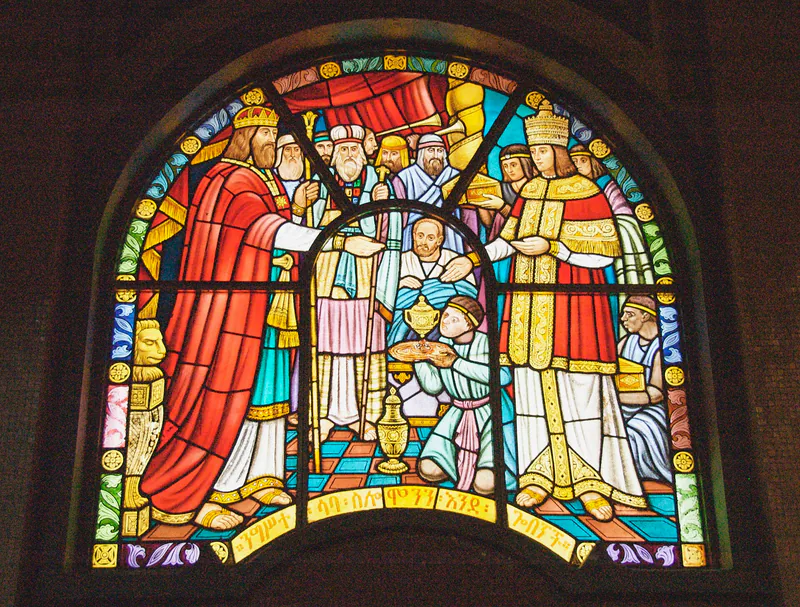
On 2 November 1930, Ras Tafari Makonnen was crowned in Addis Ababa as Haile Selassie I ("Might of the Trinity"), with the titles King of Kings, Lord of Lords and Conquering Lion of the Tribe of Judah, and a claim to descend from Solomon and the Queen of Sheba through their son Menelik, as related in the Ethiopian epic Kebra Nagast. The coronation, reported in newspapers worldwide, struck a group of Jamaican preachers as the fulfilment of prophecy. They saw in the emperor's titles the language of Revelation 5:5, where the Lion of the tribe of Judah is worthy to open the sealed book.
In the early 1930s Leonard Howell, Joseph Hibbert, Archibald Dunkley and Robert Hinds independently began preaching that Haile Selassie was the returned Christ or the living God. Howell, whose pamphlet The Promised Key (around 1935) is among the earliest Rastafari texts, was imprisoned for sedition for urging loyalty to the emperor rather than the British king. In 1940 he founded Pinnacle, a commune in the hills of St Catherine, where followers lived communally and grew crops, including ganja; police raided it repeatedly, and it was destroyed in 1954. Many of its members moved to the poor districts of West Kingston.
Beliefs: Jah, Babylon and Zion§
Rastafari has no single creed, and its thinkers emphasise personal revelation through "reasoning". Several ideas are widely shared:
- Jah, a name drawn from Psalm 68:4 in the King James Version, is God, revealed in Haile Selassie. Some Rastas regard the emperor as God incarnate, others as Christ returned, and others, especially in the Twelve Tribes of Israel, as a divine king through whom they follow Christ.
- I-and-I expresses the unity of the speaker with God and with other people; Rastafari speech, sometimes called "Iyaric", replaces syllables with "I" to affirm this, so that "Ital" is vital, natural food.
- Babylon is the corrupt system of Western power, from slavery and colonialism to police, politics and materialism; Zion is Africa, and especially Ethiopia, the true home.
- Repatriation to Africa is a hope and, for some, a practical aim. In the 1950s Haile Selassie granted land at Shashamane in southern Ethiopia to Black people of the diaspora, and a small Rastafari community settled there.
- Many Rastas view the Bible as a book distorted by translators and read it as a history of Black Israelites, the true chosen people.
Livity: Dreadlocks, Ital and the Sacred Herb§
Livity is the Rastafari way of life. Many Rastas grow their hair in dreadlocks, citing the Nazirite vow of Numbers 6:5, which forbids a razor to come upon the head; locks also symbolise the lion's mane and a rejection of Babylon's grooming standards. The ital diet favours natural, unprocessed and often vegetarian food, avoiding pork and frequently all meat, salt and alcohol.
Many Rastas use ganja (cannabis) as a sacrament, the "holy herb" that aids meditation and reasoning, citing biblical verses about the herbs of the field. Its use, especially in communal reasoning sessions with a chalice pipe, is described here historically. It brought decades of arrests in Jamaica and elsewhere; Jamaica decriminalised small amounts and recognised sacramental use by Rastafari in 2015. The wider history of the plant in ritual is covered in Cannabis in Religion and Magic.
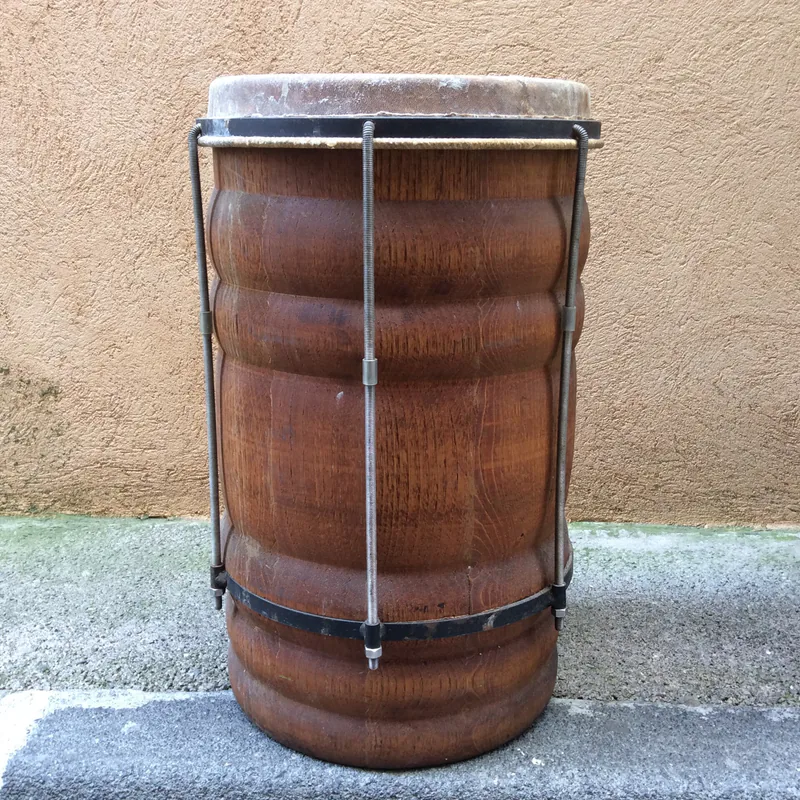
The great ceremonial gathering is the Nyabinghi or "groundation", featuring drumming on three drums (bass, funde and repeater), chanting of hymns and psalms, and reasoning that may last for days. Important dates include 23 July (Haile Selassie's birthday), 2 November (the coronation) and 21 April, Grounation Day, commemorating the emperor's visit to Jamaica in 1966.
Haile Selassie's Visit, Persecution and Reggae§
Rastafari were long despised and persecuted in Jamaica. In 1960 a study by scholars at the University College of the West Indies, M. G. Smith, Roy Augier and Rex Nettleford, The Ras Tafari Movement in Kingston, Jamaica, urged the government to take the movement seriously and to explore repatriation; an official mission to Africa followed in 1961. The Coral Gardens incident of 1963, in which violence near Montego Bay led to the round-up and abuse of many Rastas, is remembered as a time of state persecution; in 2017 Prime Minister Andrew Holness formally apologised on behalf of the Jamaican government.
When Haile Selassie arrived in Kingston on 21 April 1966, tens of thousands of people crowded the airport. The visit raised the movement's status. In the 1970s reggae musicians, above all Bob Marley, Peter Tosh and Burning Spear, carried Rastafari themes to the world. The emperor was deposed in 1974 and died in 1975; many Rastas refused to believe the reports of his death or regarded it as irrelevant to his eternal divinity.
The Mansions of Rastafari§
Rastafari is organised loosely. The Nyabinghi Order, the oldest, emphasises the drumming ceremonies and theocratic government of Haile Selassie. The Bobo Ashanti (Ethiopia Africa Black International Congress), founded by Charles Edwards (Prince Emmanuel) in 1958, lives in communal settlements, wears turbans and robes, and regards its founder as part of a divine trinity with Marcus Garvey and Haile Selassie. The Twelve Tribes of Israel, founded in 1968 by Vernon Carrington ("Prophet Gad"), assigns members to tribes according to their birth month and is more open to Christian readings. Many individuals belong to no mansion. In recent decades Rastafari women have challenged the movement's traditional patriarchy, and Rastafari has spread through Africa, Europe and the Pacific. Scholars such as Leonard Barrett, Barry Chevannes and Ennis Edmonds have shown how it moved from the margins of Jamaican society to become a global culture.
Frequently asked questions§
Do Rastafari believe Haile Selassie is God?§
Most do regard him as divine, either as God incarnate or as the returned Christ, though interpretations vary. The Twelve Tribes of Israel, for example, emphasise Christ and honour Haile Selassie as his representative on earth.
Why do Rastas wear dreadlocks?§
Many cite the Nazirite vow in the book of Numbers, which forbids cutting the hair of one consecrated to God. Dreadlocks also symbolise the lion of Judah, African identity and the rejection of Babylon's standards, though not every Rasta wears them.
Is Rastafari a religion?§
Many members prefer to call it a way of life or a movement rather than a religion, since it has no central church or creed. Scholars generally classify it as a new religious movement with strong political and cultural dimensions.
Sources and further reading§
- The Rastafarians — Leonard E. Barrett, 1977
- Rastafari: Roots and Ideology — Barry Chevannes, 1994
- Rastafari: From Outcasts to Culture Bearers — Ennis Barrington Edmonds, 2003
- Rasta and Resistance: From Marcus Garvey to Walter Rodney — Horace Campbell, 1985
- The Ras Tafari Movement in Kingston, Jamaica — M. G. Smith, Roy Augier and Rex Nettleford, 1960
- The Queen of Sheba and Her Only Son Menyelek (Kebra Nagast) — E. A. Wallis Budge (trans.), 1922