Liber XXIII · Rastafari · Chapter I: Beliefs: Jah, Babylon & Zion
Rastafari Beliefs: Jah, Babylon, Zion and I-and-I Explained
Rastafari beliefs explained: Jah the living God, I-and-I, Black Israel, Babylon as the system of oppression, Zion and repatriation, and everliving life.

Rastafari belief centres on Jah, the living God revealed in Haile Selassie I; on the identity of Black people as the true Israel, exiled from Africa; on Babylon, the oppressive system built by slavery and colonialism; and on Zion, Africa and above all Ethiopia, the promised home. These ideas are not fixed in a creed but worked out through personal revelation, Bible reading and communal "reasoning", so that individual Rastas and the different mansions express them in different ways.
How Rastafari Know: The Bible, Revelation and Reasoning§
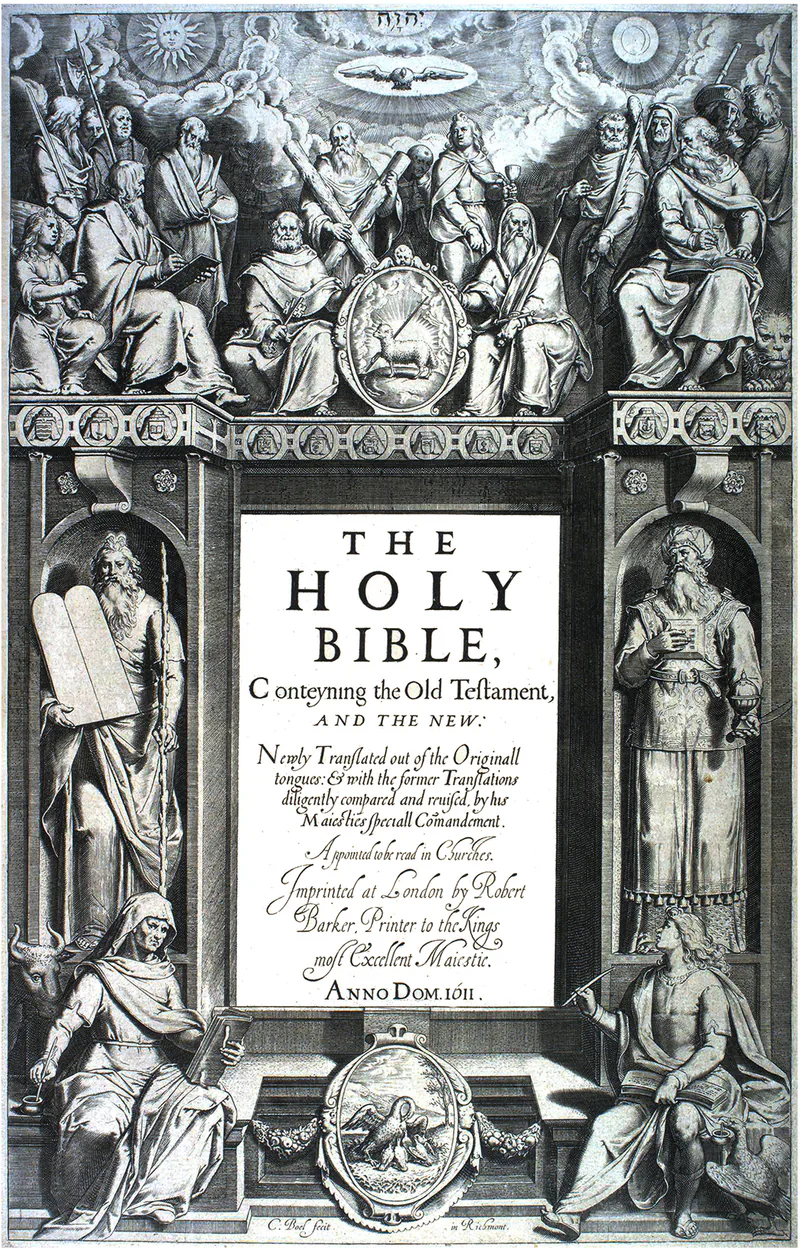
Rastafari grew up among Jamaicans who knew the King James Bible intimately, and the Bible remains its main scripture. It is read, however, with suspicion as well as reverence. Many Rastas hold that the text was altered by its European translators to hide the African identity of its heroes and to justify slavery, so that much of the story has never been told. The task of the believer is to read it with an awakened, inward eye and to recover the hidden truth. On the formation of the canon itself, see the Christian Bible and its canon.
Alongside the Bible, Rastafari draw on the Ethiopian Kebra Nagast, on early Afro-Caribbean texts such as the Holy Piby, and on the speeches of Haile Selassie. Above all they value knowledge gained by experience and inspiration. Rastafari speak of "overstanding" rather than understanding and test ideas in reasoning, unhurried discussion among brethren and sistren, whose ritual setting is described in Nyabinghi and reasoning. Because of this, scholars such as Barry Chevannes and Ennis Edmonds stress that Rastafari doctrine is better described as a set of shared themes than as a system.
Jah: The Living God§
The name Jah comes from Psalm 68:4 in the King James Version, which bids the faithful extol God "by his name Jah". It is a short form of the divine name, and Rastafari use it as the everyday name of God.
God in human form§
Rastafari reject what they call a "spooky" God who lives beyond the sky and promises reward only after death. God, in their view, is a living reality who has shown himself in human form. For most Rastas this revelation is Haile Selassie I, whose life is treated in Haile Selassie I in Rastafari: Jah Rastafari, the Almighty, the King of Kings. Some regard him as God incarnate, others as Christ in his second, kingly coming, and others as the divine representative of Christ.
I-and-I§
If God became human, the divine is also present in every person. Rastafari express this with I-and-I, used in place of "we" and often of "I" alone. The phrase affirms the unity of the speaker with Jah and with other people and refuses the subordinate "me" that slavery taught. The broader Rasta transformation of English that grows from this word is the subject of Iyaric, the Rasta language.
Black Israel and the Chosen People§
Like the enslaved Christians before them, Rastafari read the history of Israel as their own: a chosen people carried into captivity, scattered among the nations and promised a return. Many Rastas identify Black people of the African diaspora as the true Israelites and the descendants of the Ethiopian line of Solomon, and see the Atlantic slave trade as a new Egyptian bondage.
In the early 1950s the anthropologist George Eaton Simpson, studying Rastafari in West Kingston, summarised their teaching in a handful of propositions that Leonard Barrett later made well known. They included the divinity of Haile Selassie, the identity of Black people as the reincarnation of ancient Israel exiled in Jamaica, the view of Jamaica as a hopeless hell and Ethiopia as heaven, the imminence of repatriation, and an expectation that Black people would soon rule. The more racially exclusive elements of this early teaching softened from the 1960s onward. Many Rastafari now speak of the oneness of humanity under Jah and welcome members of any background, a change seen especially in the Twelve Tribes of Israel, while still holding to the special history and calling of African people.
Babylon: The System of Oppression§
The second great image of Rastafari is Babylon. In the Bible, Babylon is the empire that destroyed Jerusalem and carried the Judeans into exile, remembered in Psalm 137:1:
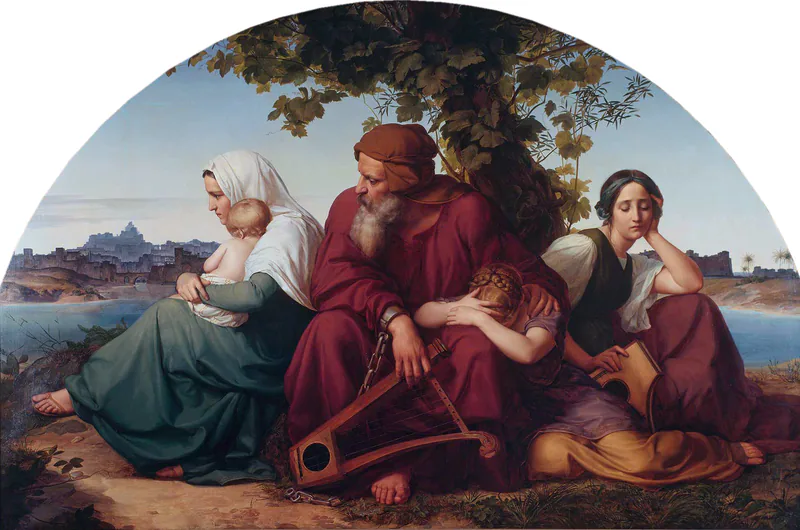
By the rivers of Babylon, there we sat down, yea, we wept, when we remembered Zion.
In the Book of Revelation Babylon becomes a harlot city, the symbol of a corrupt world power whose fall the saints celebrate, and Protestant readers had long identified it with Rome.
Rastafari extend the image to the whole system that enslaved Africans and still holds them down: the colonial state and its successors, the police and prisons (in Jamaican speech "Babylon" became a name for the police), the established churches that blessed slavery, the economic order of debt and wages, and the materialism and vanity of Western culture. Babylon is also within, in habits of thought and desire absorbed from that system. The Rastafari response is to separate from it as far as possible, to expose it in speech and song, and to "chant down Babylon", trusting that the power of the word and of Jah's judgement will bring it down. The livity of diet, hair and dress described in Rastafari livity is in part a practical refusal of Babylon.
Zion and Repatriation to Africa§
Zion, the hill of Jerusalem, stands in Rastafari for Africa and above all Ethiopia, the land of the emperor and the ark. Return, or repatriation, has been a central hope since the 1930s.
The hope has taken concrete forms. In 1959 the preacher Claudius Henry sold cards that his followers believed would carry them to Africa in October; hundreds gathered in vain, and his movement ended in arrests and a treason trial. In 1961, after a report by University College scholars recommended it, the Jamaican government sent a mission to Ethiopia and West African states that included three Rastafari, Mortimo Planno, Douglas Mack and Filmore Alvaranga. Their minority report favoured early migration; little official action followed. Small numbers of Rastas did settle in Ethiopia, especially at Shashamane on land granted by the emperor, and in Ghana and elsewhere.
Not every Rasta expects to move. After the emperor's visit of 1966 many embraced the idea, attributed to him in oral tradition, of "liberation before repatriation": working for justice where they live. Others speak of a spiritual or cultural repatriation, a return to African identity wherever one is, and of Zion as a state of freedom and righteousness as much as a place.
Judgement, Death and Everliving Life§
Rastafari thought has a strong apocalyptic strand drawn from the prophets and Revelation: Babylon will fall, Jah will judge the nations, and the righteous will inherit the earth. This judgement is usually imagined as taking place in history and on earth, not in a heaven beyond death.
Many Rastafari speak of everliving life rather than everlasting life: the righteous need not die, and death is the fate of those who live by Babylon's ways. For this reason some Rastas have avoided funerals and talk of the dead, in the spirit of the saying of Jesus that the dead should bury their dead. Others accept physical death but believe in the continuity of the spirit or in reincarnation through the generations of Israel. These beliefs, like the response to the reported death of Haile Selassie in 1975, show the movement's resistance to a single orthodoxy.
One Love and its limits§
The ethic that follows from these beliefs is often summed up in the phrase "One Love": peace, equality, mutual respect and simplicity of life. Critics, including Rastafari women, have pointed out that traditional teaching placed women under male authority as "queens" or "empresses" and restricted their role in worship. Since the 1980s women have written and organised to change this, and the debate continues within the movement.
Frequently asked questions§
What does Jah mean in Rastafari?§
Jah is the Rastafari name for God, taken from Psalm 68:4 in the King James Bible. For most Rastas Jah has been revealed in Haile Selassie I, and the divine is also present in every person.
What does Babylon mean to Rastafari?§
Babylon is the system of oppression that grew from slavery and colonialism: corrupt governments, police, churches that supported slavery, exploitative economics and materialism. Rastafari seek to separate from it and expect its fall.
Do all Rastafari want to move to Africa?§
No. Repatriation to Africa, especially Ethiopia, is a central hope, and some Rastas have settled there, notably at Shashamane. Many others understand repatriation spiritually or follow the principle of "liberation before repatriation", working for justice where they live.
Sources and further reading§
- Rastafari: Roots and Ideology — Barry Chevannes, 1994
- The Rastafarians — Leonard E. Barrett, 1977
- Dread: The Rastafarians of Jamaica — Joseph Owens, 1976
- Chanting Down Babylon: The Rastafari Reader — Nathaniel Samuel Murrell, William David Spencer and Adrian Anthony McFarlane (eds.), 1998
- Dread Jesus — William David Spencer, 1999
- Rastafari: A Very Short Introduction — Ennis B. Edmonds, 2012
- Rastafari and Other African-Caribbean Worldviews — Barry Chevannes (ed.), 1995