Liber XXIII · Rastafari · Chapter I: Beliefs: Jah, Babylon & Zion
The Bible in Rastafari: Scripture, Prophecy and Black Israel
How Rastafari read the Bible: the King James Version, key verses on Ethiopia and the Lion of Judah, the charge of distortion and 'sighting up'.

The Bible is the central scripture of Rastafari, read mostly in the King James Version but interpreted in a new way: as the history and prophecy of Black people, the true Israel, whose redeemer has appeared in Haile Selassie I. Rastafari treat the text with reverence and suspicion at once, holding that it contains divine truth but was distorted by its European translators, so that its meaning must be recovered through inspired reading, which they call "sighting up", and through reasoning together.
A Biblical Faith from Jamaican Soil§
Rastafari arose among Jamaicans formed by Christianity. Generations of enslaved and free Africans had heard the Bible in Baptist, Methodist and Anglican churches and in the Afro-Christian Revival tradition, and many had learned to read from it. Black preachers before Rastafari had already found in the Exodus a story of their own captivity and deliverance and in the Psalms a voice for their sorrow. The first Rastafari preachers of the 1930s, described in the origins of Rastafari, took that inheritance and turned it toward Ethiopia and its emperor.
The King James Version remains the text most Rastafari use. Its English, familiar from church and school, is quoted in reasoning, chanted at Nyabinghi gatherings and woven into reggae lyrics. Yet Rastafari do not accept it as a closed, infallible book in the way some Protestant churches do. For the broader history of the Christian canon, see The Christian Bible and Its Canon.
Ethiopia in Scripture§
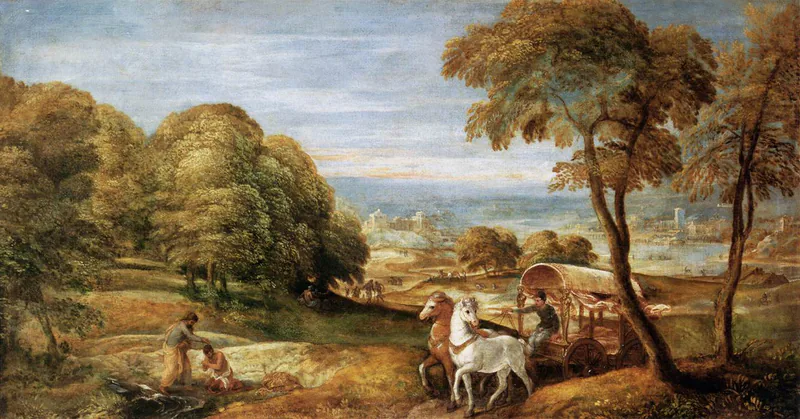
Rastafari attention fixes first on the passages that name Ethiopia, usually the translation of the Hebrew Kush. The most famous is Psalm 68:31: "Ethiopia shall soon stretch out her hands unto God", the watchword of Ethiopianism long before Rastafari. Others include:
- Psalm 87:4, which lists Ethiopia among the nations whose people were "born there", in Zion.
- Amos 9:7, in which God asks the children of Israel whether they are not as the children of the Ethiopians to him.
- Zephaniah 3:10, which speaks of worshippers coming from beyond the rivers of Ethiopia.
- Acts 8, the conversion of the Ethiopian official, read as evidence of Ethiopia's early Christianity.
Together with the Ethiopian tradition of Solomon and the Queen of Sheba, told in the Kebra Nagast, these verses persuade Rastafari that Ethiopia stands at the centre of sacred history rather than at its edge. The Semitic scholar Edward Ullendorff, in Ethiopia and the Bible, showed how deeply biblical themes had shaped Ethiopian culture itself, a fact that Rastafari regard as confirmation of their reading.
The Lion, the King and the Messiah§
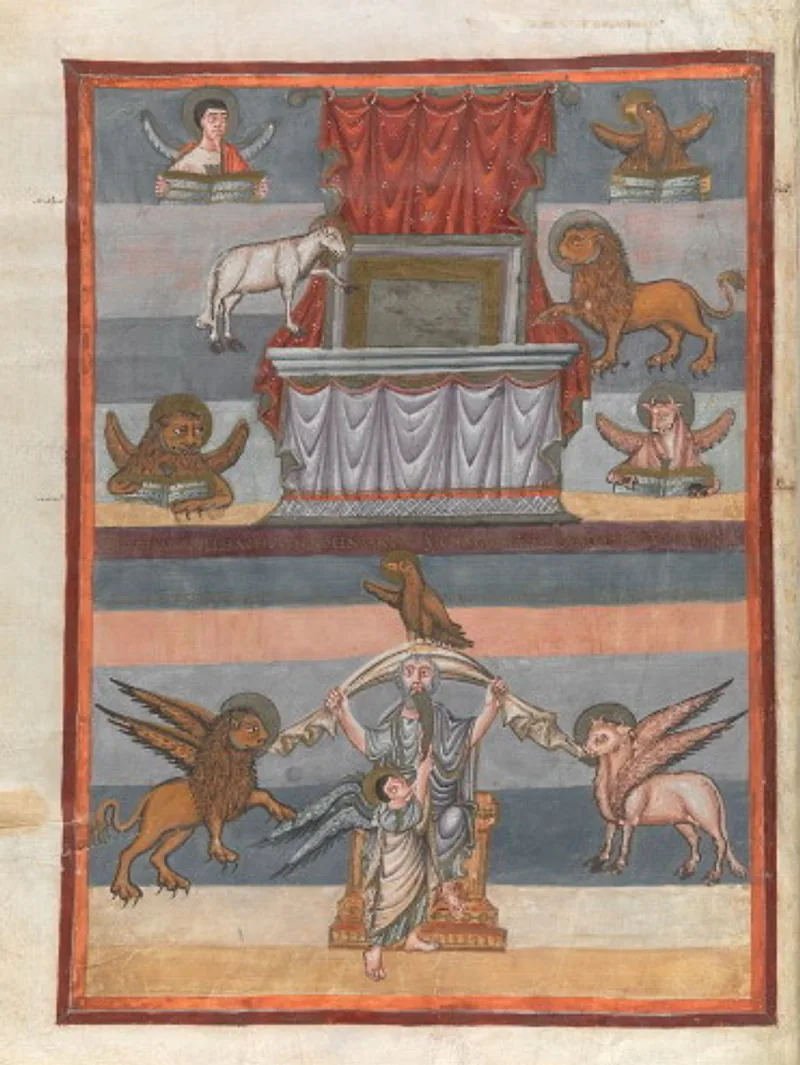
The second group of texts concerns the Messiah and his titles. In Revelation 5:5 the Lion of the tribe of Judah, the Root of David, is worthy to open the sealed book; in Revelation 19:16 the rider on the white horse bears the name King of Kings and Lord of Lords. When Haile Selassie was crowned in 1930 with these very titles, the first Rastafari saw the prophecies fulfilled, as explained in Haile Selassie I in Rastafari belief.
Rastafari also cite the descriptions of God and the risen Christ. In Daniel 7:9 the Ancient of Days has hair like pure wool, and in Revelation 1:14–15 the Son of man has hair white like wool and feet like fine brass burning in a furnace. Rastafari read these images as describing a Black God, and verses such as Song of Solomon 1:5, "I am black, but comely", as affirmations of Black beauty. Genesis 49, with Jacob's blessing of Judah as a lion's whelp, and Isaiah 9:6, with its titles for the coming child, complete the messianic picture.
Black Israel, Babylon and the Law§
Rastafari identify themselves with Israel, God's chosen people, and the history of Israel's exile with the enslavement of Africans. Psalm 137, the lament by the rivers of Babylon, became one of the movement's anthems, sung in reggae by the Melodians. The name Babylon for the oppressive Western system comes from the prophets and from Revelation 18, which foretells the fall of the great city. The theology that results is set out in Rastafari beliefs.
The Law of Moses also shapes daily life. The Nazirite vow of Numbers 6 underlies the wearing of dreadlocks; the dietary laws of Leviticus 11 support the avoidance of pork and shellfish; and verses such as Genesis 1:29 and Psalm 104:14, on the herbs given to humanity, are cited in defence of the sacred herb. These practices are described in Rastafari livity. Rastafari who observe the Sabbath and the laws of purity, such as the Bobo Ashanti, draw on the Torah more literally still.
"Half the Story": Distortion and Sighting Up§
Rastafari reverence for the Bible is joined to a strong suspicion of its transmission. Many Rastafari hold that King James and the translators of the European churches altered the text, removed books and obscured the identity of the Black Israelites, so that the Bible as it stands tells only part of the truth. The phrase "half the story has never been told", made famous by Bob Marley's song "Get Up, Stand Up", expresses a widely shared view of history and of scripture.
The remedy is inspired reading. Rastafari speak of sighting up a passage: reading it in the light of the spirit, of history and of the emperor's revelation until its hidden meaning appears. In reasoning, the circle of discussion described in Nyabinghi and reasoning, participants read verses aloud, test interpretations against one another and reject readings that serve Babylon. Because Rastafari hold that words carry power, as explained in Word, Sound and Power, the act of reading aloud is itself part of revelation. The Jesuit Joseph Owens, who attended reasonings in West Kingston in the early 1970s, recorded many such interpretations in Dread: The Rastafarians of Jamaica.
Practice varies between houses. The Twelve Tribes of Israel, founded by Vernon Carrington, encourage members to read the Bible systematically, a chapter a day, and give a large place to Christ; other Rastafari read more selectively, concentrating on the Psalms, the prophets and Revelation.
Other Scriptures: Kebra Nagast, Holy Piby and the Emperor's Words§
Rastafari do not limit sacred reading to the Bible. The Ethiopian Kebra Nagast, with its account of the Ark's journey to Aksum and the Solomonic descent of the emperors, is widely read in English translation. The Holy Piby, compiled by Robert Athlyi Rogers and published in 1924 as a scripture for the Afro-Athlican Constructive Church, and early Jamaican tracts such as The Promised Key, discussed in Leonard Howell and Pinnacle, belong to the movement's prehistory. The speeches of Haile Selassie, treated in Haile Selassie's speeches, are quoted with an authority close to scripture.
Theologians such as Noel Leo Erskine, in From Garvey to Marley, and William David Spencer, in Dread Jesus, have compared Rastafari interpretation with the liberation theologies of Latin America and Black America: readings that begin from the experience of the oppressed and find in scripture a God who takes their side.
Frequently asked questions§
Do Rastafari read the Bible?§
Yes. The Bible, usually the King James Version, is the main scripture of Rastafari. They read it as the history and prophecy of Black people and of Haile Selassie, though many believe it has been distorted and must be read with discernment.
What Bible verses are important to Rastafari?§
Psalm 68:31 on Ethiopia, Revelation 5:5 and 19:16 on the Lion of Judah and the King of Kings, Numbers 6 on the Nazirite vow, Psalm 137 on exile in Babylon and passages in Daniel and Revelation describing hair like wool are among the most cited.
Why do Rastafari say the Bible was changed?§
Many Rastafari believe European translators and churches altered or removed parts of scripture to hide the African identity of Israel and to support colonial power. They therefore read the text critically, through inspired interpretation and reasoning.
Do Rastafari have other holy books?§
Many read the Ethiopian Kebra Nagast, and some value early texts such as the Holy Piby and The Promised Key. The speeches of Haile Selassie are also treated with great authority.
Sources and further reading§
- Dread: The Rastafarians of Jamaica — Joseph Owens, 1976
- From Garvey to Marley: Rastafari Theology — Noel Leo Erskine, 2005
- Dread Jesus — William David Spencer, 1999
- Chanting Down Babylon: The Rastafari Reader — Nathaniel Samuel Murrell, William David Spencer and Adrian Anthony McFarlane, 1998
- Ethiopia and the Bible — Edward Ullendorff, 1968
- The Holy Piby — Robert Athlyi Rogers, 1924