Liber XXIII · Rastafari · Chapter II: Haile Selassie I
Haile Selassie's Speeches: The 1936 League Address and 'War'
Haile Selassie's speeches: the 1936 League of Nations address, the 1963 UN speech behind Bob Marley's War, and how Rastafari read the emperor's words.

Haile Selassie I gave two speeches that became famous far beyond Ethiopia: his appeal to the League of Nations in Geneva on 30 June 1936, after Fascist Italy had invaded his country, and his address to the United Nations General Assembly in October 1963, a passage of which Bob Marley set to music as "War". For Rastafari, who regard the emperor as divine or as God's chosen king, these and his other speeches are read as words of revelation, quoted in reasoning and chanted at Nyabinghi gatherings.
Ethiopia and the League of Nations§
As regent, Ras Tafari Makonnen sought international recognition for Ethiopia as a modern sovereign state. In 1923 Ethiopia was admitted to the League of Nations, the international body founded after the First World War, partly at his initiative; admission required a pledge to suppress the slave trade, still active in parts of the empire. In 1924 he toured Europe, the first Ethiopian ruler to do so. After his coronation in 1930, described in Haile Selassie I in Rastafari belief, he introduced a written constitution in 1931 and continued to present Ethiopia as a member of the community of nations.
Italy, which held the neighbouring colonies of Eritrea and Italian Somaliland and remembered its defeat by Ethiopia at Adwa in 1896, had other plans. In December 1934 a clash at the wells of Walwal, in the disputed Ogaden borderland, gave Mussolini's government a pretext. Ethiopia appealed to the League, which delayed.
The Italian Invasion of 1935–1936§
On 3 October 1935 Italian forces crossed into Ethiopia from Eritrea and Somaliland without a declaration of war. The League declared Italy the aggressor and imposed economic sanctions, but they excluded oil and were not enforced by the great powers, and Britain and France explored a compromise that would have given Italy much of the country. Ethiopian armies, poorly equipped, fought on several fronts. The Italian air force used mustard gas against soldiers and civilians, in violation of the Geneva Protocol of 1925, a fact that historians such as Angelo Del Boca later documented in detail.
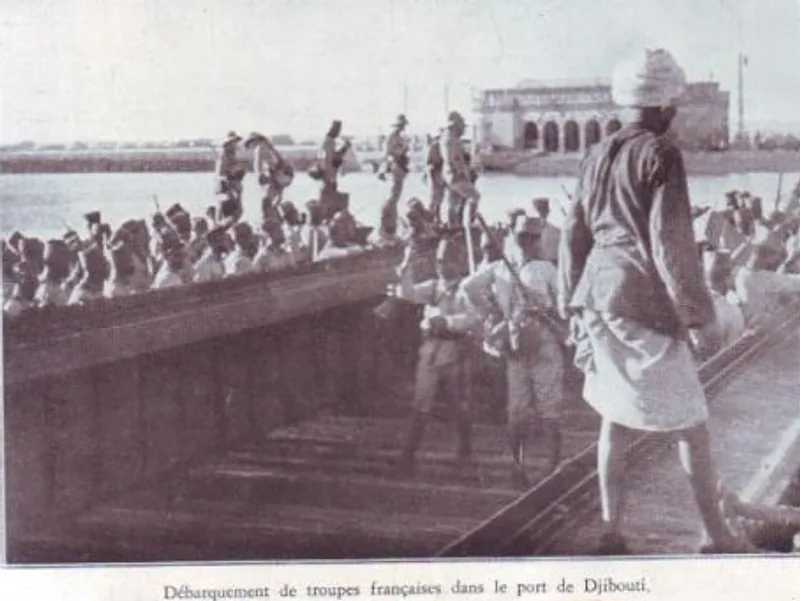
After the defeat of his army at Maychew in March 1936, the emperor returned to Addis Ababa and, on the advice of his council, left the country in early May, travelling by train to Djibouti and by British ship to Palestine and then to England. Italian troops entered Addis Ababa on 5 May 1936, and Mussolini proclaimed the Italian empire. The emperor and his family settled in exile at Bath, at Fairfield House, an episode also described in Empress Menen Asfaw.
The Geneva Address of 30 June 1936§
Haile Selassie went in person to Geneva to address the Assembly of the League. When he rose to speak, Italian journalists in the gallery whistled and shouted until they were removed. He delivered his speech in Amharic, and a French translation was read.
The speech described the Italian use of gas from aircraft, falling like a fine rain on soldiers, women, cattle and fields, and told how the emperor had trusted the League's promises. Its argument was that the issue was not Ethiopia alone: what was at stake was the collective security of every small state and the value of international treaties. If the League abandoned a member to aggression, no weak nation could trust it again. He closed by asking the assembled representatives what answer he should take back to his people. A sentence widely attributed to him in connection with the occasion, that it was Ethiopia's turn today and would be theirs tomorrow, became the speech's best-known summary.
The League lifted its sanctions on Italy in July 1936. Most historians treat the episode as a turning point in its collapse and in the slide toward the Second World War. Time magazine had already named the emperor its Man of the Year for 1935, and the Geneva speech made him an international symbol of the victim of aggression who refused to submit.
Exile, Return and the Emperor's Postwar Voice§
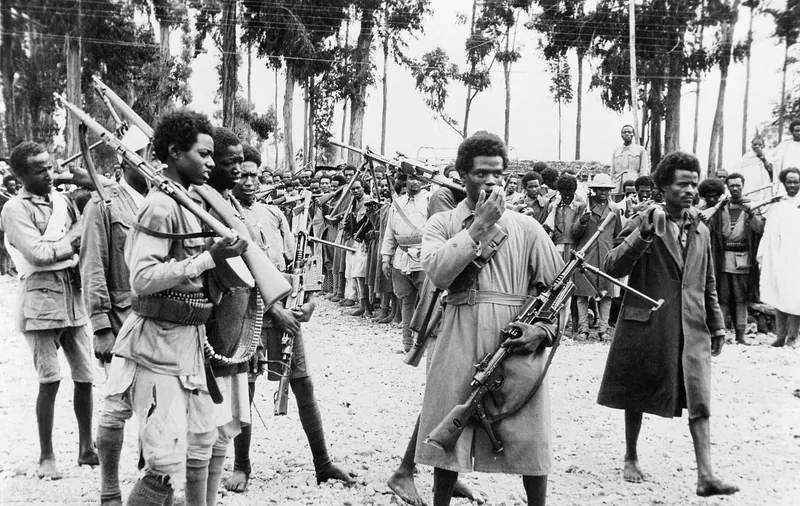
The emperor spent the years 1936–1940 in Bath, campaigning for his country's cause with limited means. When Italy entered the war on Germany's side in 1940, Britain recognised him as an ally. He returned to Ethiopia with British and Commonwealth forces and Ethiopian patriot fighters in early 1941, and entered Addis Ababa on 5 May 1941, five years to the day after the Italian occupation of the city. In a proclamation on his return he urged Ethiopians not to take revenge on Italians, a call later admired by his biographers.
In the following decades Haile Selassie became an elder statesman of independent Africa. In May 1963 he hosted the conference in Addis Ababa that founded the Organisation of African Unity, whose headquarters were placed in his capital; the date, 25 May, is now kept as African Liberation Day, one of the observances listed in Rastafari holy days. His speeches of this period, many published in the collection Selected Speeches (1967), speak of African unity, education, development and the end of colonialism.
The 1963 United Nations Speech and Bob Marley's "War"§
On 4 October 1963 Haile Selassie addressed the General Assembly of the United Nations in New York. He recalled Geneva in 1936, praised the United Nations as the hope of a world that had failed once before, and called for disarmament and for an end to colonial rule and racial discrimination, naming the regimes of southern Africa.
One long passage, in the English text, declares that until the idea that one race is superior and another inferior is finally discredited and abandoned, and until basic human rights are guaranteed to all without regard to race, there will be war. In 1976 Bob Marley and the Wailers released "War" on the album Rastaman Vibration, setting that passage, slightly adapted, to a reggae rhythm; the song credits Allen Cole and Carlton Barrett as writers. "War" carried the emperor's words to audiences around the world, and it remains the best-known example of the way Rastafari musicians turned his speeches into song, a theme of Reggae and Rastafari.
Reading the Emperor's Words in Rastafari§
Rastafari read Haile Selassie's speeches as more than political statements. For believers who see him as Jah incarnate or as the returned Christ, his words carry divine authority, and passages are recited at the opening of reasoning sessions and Nyabinghi gatherings, quoted in sermons and printed in pamphlets. The emperor's autobiography, My Life and Ethiopia's Progress, and published collections of his addresses are studied alongside the Bible and the Kebra Nagast.
Several themes in his speeches fit naturally into Rastafari thought: the dignity of Africa, the unity of its peoples, the condemnation of racial injustice and the call to peace, which Rastafari connect with their own ideas of Babylon and Zion. Other themes, such as his Orthodox Christianity, his support for modernisation and his alliance with Western powers, are interpreted more selectively.
Historians point out that the emperor spoke as a Christian monarch and a statesman, not as the founder of a religion, and that he did not claim divinity; the relation between his own faith and Rastafari belief is discussed in Rastafari and the Ethiopian Orthodox Church. Many Rastafari answer that the meaning of his words is not limited to his stated intentions, and that, like scripture, they disclose their full sense to those who read them in faith.
Frequently asked questions§
What did Haile Selassie say at the League of Nations?§
On 30 June 1936 he described the Italian invasion and the use of poison gas, and warned that if the League failed to protect Ethiopia, no small nation could trust collective security again. He ended by asking what reply he should carry back to his people.
Which Haile Selassie speech is Bob Marley's "War" based on?§
"War" adapts a passage from the emperor's address to the United Nations General Assembly in October 1963, which condemned the doctrine of racial superiority. The song appeared on Rastaman Vibration in 1976.
Why do Rastafari quote Haile Selassie's speeches?§
Many Rastafari regard the emperor as divine or as God's chosen king, so his words are treated as teaching. Passages are recited at reasoning sessions and gatherings and studied alongside the Bible.
Did the League of Nations help Ethiopia?§
It condemned Italy and imposed limited sanctions, but these excluded oil and were lifted in July 1936. Ethiopia was occupied until 1941, when British, Commonwealth and Ethiopian forces restored the emperor.
Sources and further reading§
- Selected Speeches of His Imperial Majesty Haile Selassie First, 1918 to 1967 — Haile Selassie I, 1967
- My Life and Ethiopia's Progress, 1892–1937 — Haile Selassie I (trans. Edward Ullendorff), 1976
- Haile Sellassie I: The Formative Years, 1892–1936 — Harold G. Marcus, 1987
- King of Kings: The Triumph and Tragedy of Emperor Haile Selassie I of Ethiopia — Asfa-Wossen Asserate, 2015
- The Ethiopian War, 1935–1941 — Angelo Del Boca, 1969
- Haile Selassie's War — Anthony Mockler, 1984
- A History of Modern Ethiopia, 1855–1991 — Bahru Zewde, 2001