Liber XXIII · Rastafari · Chapter V: Nyabinghi, Reasoning & Ritual
Rastafari Holy Days: The Calendar of Nyabinghi Celebrations
Rastafari holy days explained: Ethiopian Christmas, Grounation Day, Haile Selassie's birthday, Garvey Day, Ethiopian New Year, Coronation Day and the Sabbath.

The Rastafari year is marked by holy days that commemorate the life of Haile Selassie I, the history of Ethiopia and the struggle for African freedom. The most widely kept are Ethiopian Christmas (7 January), Grounation Day (21 April), the emperor's birthday (23 July), Marcus Garvey's birthday (17 August), Ethiopian New Year (11 September) and Coronation Day (2 November), each usually celebrated with a Nyabinghi gathering of drumming, chanting and reasoning.
How the Rastafari Calendar Works§
Rastafari is a decentralised movement, and no authority issues a calendar binding on all. Each mansion and community decides which dates it marks and how. Over the decades, however, a common set of commemorations has emerged, drawn from three sources: the life of Haile Selassie and his family, the Ethiopian Christian calendar, and the history of African and Caribbean liberation.
The main celebrations take the form of a Nyabinghi, also called a groundation or binghi: a gathering, often lasting three days and sometimes seven, with continuous drumming on the bass, funde and repeater drums, the chanting of psalms and hymns, reasoning, and the sharing of ital food. The ceremony itself is described in Nyabinghi and reasoning. The dates below are those most often listed; individual communities add or omit some.
The Ethiopian Calendar and Its Feasts§
Ethiopia uses its own calendar, inherited from the Coptic and Alexandrian tradition. It has twelve months of thirty days and a thirteenth month of five or six days, and because it reckons the birth of Christ differently, its year number is seven or eight years behind the Gregorian. Rastafari who are close to the Ethiopian Orthodox Church, or who simply wish to keep time with Zion, observe its feasts.
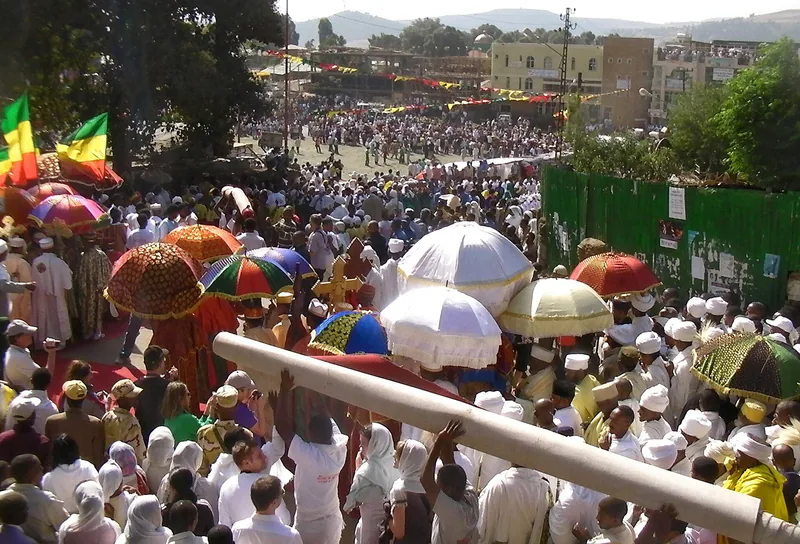
- Ethiopian Christmas (Genna or Ledet), 7 January. The Ethiopian Orthodox Church celebrates the Nativity on 29 Tahsas, which normally falls on 7 January in the Gregorian calendar. Many Rastafari hold a Nyabinghi at this time, honouring Christ and, for many, his return in the person of the emperor.
- Timkat, 19 January. The Ethiopian feast of the Epiphany, commemorating the baptism of Christ, is celebrated with processions of the tabot, the replica of the Ark of the Covenant. Rastafari members of the Ethiopian Orthodox Church keep it; others mark it less widely.
- Ethiopian New Year (Enkutatash), 11 September. The first day of the month Meskerem normally falls on 11 September (12 September in the year before a Gregorian leap year). Rastafari often celebrate it as the true New Year, and some date their writings by the Ethiopian year.
The relationship between Rastafari and the Orthodox Church, including those who have been baptised into it, is described in Rastafari and the Ethiopian Orthodox Church.
Holy Days of Haile Selassie and Empress Menen§
The emperor's life supplies the most important commemorations.
- Coronation Day, 2 November. On 2 November 1930 Ras Tafari Makonnen was crowned Haile Selassie I, King of Kings and Conquering Lion of the Tribe of Judah. For Rastafari this is the founding event of their faith, the day on which, as they understand it, prophecy was fulfilled. Coronation Day is among the largest Nyabinghi gatherings of the year.
- The emperor's birthday, 23 July. Haile Selassie was born on 23 July 1892 at Ejersa Goro, near Harar. His Earthstrong, the Rastafari word for a birthday, is celebrated with a major Nyabinghi in Jamaica and around the world.
- Grounation Day, 21 April. On 21 April 1966 the emperor arrived in Kingston for a state visit, greeted by tens of thousands of people at the airport. Rastafari remember the day as the moment their God or king set foot in Jamaica, and its name echoes the groundation gatherings with which it is celebrated. Its history is told in Haile Selassie I in Rastafari belief.
- Empress Menen's birthday. Many communities also mark the birthday of the empress, whom they honour as Queen Omega, though sources give different dates for her birth; see Empress Menen Asfaw.
Some Rastafari also observe 16 July, the anniversary of the Ethiopian constitution granted by the emperor in 1931, and 2 March, the anniversary of the Ethiopian victory over Italy at Adwa in 1896.
Days of African and Caribbean Liberation§
A third group of dates links Rastafari to the history of the African diaspora.
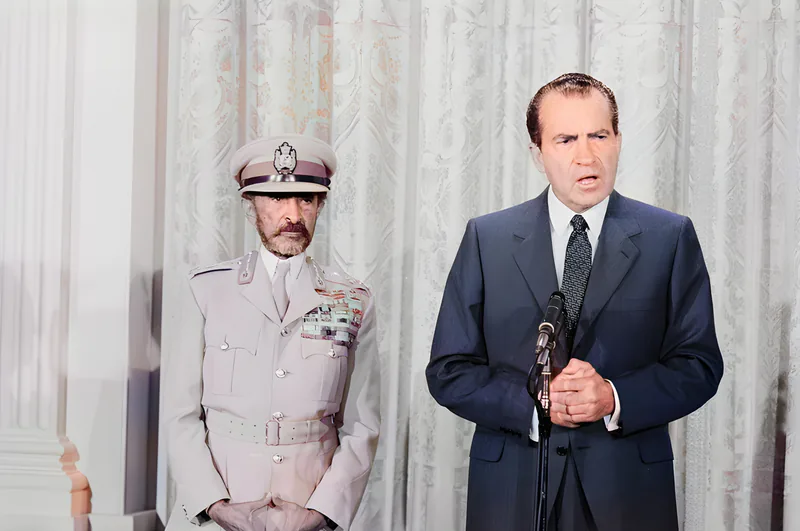
- African Liberation Day, 25 May. The anniversary of the founding of the Organisation of African Unity in Addis Ababa in 1963, at a conference hosted by Haile Selassie, whose speeches of that period are discussed in Haile Selassie's speeches.
- Emancipation Day, 1 August. On 1 August 1834 the Slavery Abolition Act came into force in the British Caribbean, and on 1 August 1838 the "apprenticeship" that followed it ended, completing emancipation. Jamaica keeps the day as a public holiday, and Rastafari mark it as a remembrance of the ancestors.
- Marcus Garvey's birthday, 17 August. Garvey was born at St Ann's Bay in 1887. Rastafari honour him as a prophet, and his birthday is a widely kept holy day; see Marcus Garvey and Rastafari.
Individual communities add other anniversaries of their own, such as remembrances of the persecution of the early movement, described in Coral Gardens 1963, or the birthday of Bob Marley on 6 February, which is widely celebrated in Jamaica.
The Sabbath and the Rhythm of the Week§
Alongside the annual holy days, several mansions keep a weekly Sabbath. The Bobo Ashanti observe it strictly from sunset on Friday to sunset on Saturday, with rest and worship in their tabernacle, as described in Bobo Ashanti. Many other Rastafari regard Saturday as the day of rest, following Exodus 20:8–11. Others hold that every day belongs to Jah and keep no fixed weekly observance.
The Twelve Tribes add a distinctive layer to the calendar: each member belongs to one of the twelve tribes of Israel according to the month of his or her birth, so that the months themselves carry a tribal meaning in that house.
How Holy Days Are Celebrated§
A Nyabinghi for a holy day usually takes place at a tabernacle or on open ground prepared for the purpose, with a central fire and a decorated space for the drummers. Participants often wear white or the Rastafari colours, women with their heads covered. The drumming begins in the evening and continues through the night, punctuated by chants, prayers for the emperor, readings from the Psalms and the emperor's speeches, and reasoning. Ital food is prepared and shared. The gathering may last until the dawn of the third day.
Outside Jamaica, in Britain, the United States, Ethiopia, Ghana and elsewhere, communities adapt these customs, and some holy days have become public festivals with concerts and processions. The comparison with other religious calendars, such as the Jewish festivals and the Sabbath, shows how much Rastafari draws on the biblical pattern of sacred time while giving it a new, African centre.
Frequently asked questions§
What is the most important Rastafari holy day?§
Coronation Day, 2 November, is often considered the most important, since it marks the crowning of Haile Selassie in 1930, the event that gave rise to the faith. The emperor's birthday on 23 July and Grounation Day on 21 April are also major celebrations.
What is Grounation Day?§
Grounation Day, 21 April, commemorates Haile Selassie's arrival in Jamaica in 1966. Rastafari celebrate it with Nyabinghi gatherings as the day the emperor came among them.
Do Rastafari celebrate Christmas?§
Many celebrate Ethiopian Christmas on 7 January, following the Ethiopian Orthodox calendar, rather than 25 December. Practice varies, and some Rastafari do not mark Christmas at all.
What does "Earthstrong" mean?§
Earthstrong is the Rastafari word for a birthday, a day on which a person's strength on earth is celebrated. The emperor's Earthstrong on 23 July is a major holy day.
Sources and further reading§
- The Rastafarians — Leonard E. Barrett, 1977
- Rastafari: Roots and Ideology — Barry Chevannes, 1994
- Rastafari: From Outcasts to Culture Bearers — Ennis Barrington Edmonds, 2003
- Ethiopian Christianity: History, Theology, Practice — Philip F. Esler, 2019
- The Ethiopian Tewahedo Church: An Integrally African Church — Abuna Yesehaq, 1989
- Rastafari: A Very Short Introduction — Ennis B. Edmonds, 2012