Liber XXIII · Rastafari · Chapter V: Nyabinghi, Reasoning & Ritual
Nyabinghi and Reasoning: Rastafari Ritual, Drums and Chant
Nyabinghi and reasoning in Rastafari: the origin of the name, the bass, funde and repeater drums, chants and psalms, the groundation calendar and the chalice.
Rastafari has no priesthood, no fixed liturgy and, for most of its history, no church buildings, so its worship takes two main forms: the reasoning, an informal gathering in which a small circle of brethren discuss scripture, politics and daily life, and the Nyabinghi (also called a "binghi", "groundation" or "grounation"), a large ceremonial assembly of drumming, chanting and prayer that may last for days.
The Name Nyabinghi: From East Africa to Kingston§
The word comes from the Great Lakes region of East Africa. In the highlands where present-day south-western Uganda meets northern Rwanda, Nyabingi (spellings vary) was a powerful female spirit served by mediums, many of them women. In the early twentieth century the cult became a focus of resistance to German, Belgian and British colonial rule, and colonial officers associated it with Muhumusa, a woman who claimed the spirit's authority and led an uprising around 1911 before her capture.
How the name crossed the Atlantic is a curious story. In the mid-1930s, during the Italian invasion of Ethiopia, a sensational report circulated in the European and then the Jamaican press claiming that Haile Selassie led a secret African society called "Nya-Binghi", sworn to overthrow white rule. The story had little basis in fact, but early Rastafari took it up. In Jamaica "Nyabinghi" came to be glossed as "death to black and white oppressors", and the word gave its name both to the ceremonial dance and drumming and to the oldest Rastafari order, the House of Nyabinghi, whose members regard themselves as subjects of the theocratic government of Haile Selassie I.
The Nyabinghi Drums: Bass, Funde and Repeater§
The sound of a Nyabinghi gathering is made by three drums, played with the hands except for the largest.
- The bass drum is a large, double-headed drum struck with a padded stick. It sounds a slow, heavy beat, usually on the first of every two or four counts, often likened to the heartbeat or to the tread of judgement.
- The funde (also spelled fundeh) is a medium-sized drum that keeps a steady, unvarying two-stroke pattern.
- The repeater, also called the kete or akete, is the smallest and highest-pitched drum. Its player improvises over the others, and the repeater is said to carry the message.
Ethnomusicologists, among them Kenneth Bilby and Verena Reckord, trace this ensemble to Burru drumming, an Afro-Jamaican tradition rooted in the countryside (by most accounts in the parish of Clarendon) and later at home in the yards of West Kingston, and more distantly to Kumina, the Kongo-derived religion of the parish of St Thomas. In the 1940s and 1950s Rastafari in Kingston absorbed Burru drummers and their rhythms, reshaping them into a vehicle for chant. The drummer Count Ossie (Oswald Williams, c. 1926–1976) became the best-known master of the style, and his camp in the Wareika Hills east of Kingston drew Rastafari and young jazz and ska musicians alike. With his group the Mystic Revelation of Rastafari he recorded the triple album Grounation (1973).
The rhythm matters theologically. Many Rastafari speak of the drum as a weapon against Babylon and of "chanting down Babylon" as an act that weakens unjust power. The slow, deliberate pulse is meant to be meditative rather than ecstatic: Nyabinghi drumming, unlike the Revival and Kumina traditions from which it partly descends, does not aim at spirit possession, which most Rastafari reject.
Chants, Hymns and the Psalms§
Nyabinghi chants are mostly sung in call and response, the lead singer lining out a verse that the gathering repeats. A large number are adapted from the Sankey hymnals and Revivalist songs that were sung in Jamaican churches, with names and words changed: Zion becomes Africa, the Lord becomes Jah or Rastafari, and the promised land is Ethiopia.
The Psalms are the movement's favourite prayer book. Psalm 137, the lament of the exiles "by the rivers of Babylon", is read as the story of Africans carried into slavery; Psalm 68, with its promise that "Ethiopia shall soon stretch out her hands unto God", is recited as prophecy fulfilled in the crowning of Haile Selassie; and Psalm 133, "Behold, how good and how pleasant it is for brethren to dwell together in unity!", is a common opening for gatherings. The cry "Jah Rastafari!" punctuates the chant.
Because the chants were sung long before reggae existed, they are one of the oldest layers of Rastafari culture, and several later passed into popular music, as described in Reggae and Rasta Culture.
The Groundation: How a Nyabinghi Gathering Is Held§
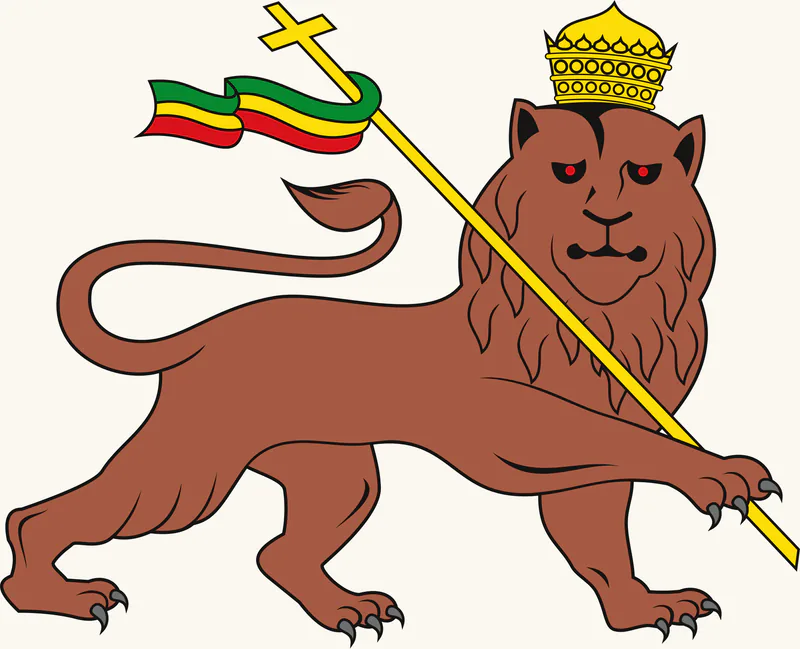
A Nyabinghi gathering is usually called by elders of the House of Nyabinghi, though other Rastafari attend freely. It is held at a camp or tabernacle, often in the countryside, with a large central fire kept burning for the duration, a tabernacle or shelter for the drummers, and flags in red, gold and green, frequently bearing the Lion of Judah. Gatherings commonly run for three to seven days and nights, with drumming and chanting through the night and reasoning, ital cooking and rest by day.
Conduct is governed by unwritten but firm rules that vary between camps. Elders, often called the Ancients, preside; alcohol, tobacco and meat are generally excluded; men usually remove hats and women cover their heads; and in the more orthodox camps women wear long skirts and have traditionally kept a separate, more restricted role. These customs have been questioned by Rastafari women in recent decades, and practice differs widely.
The Rastafari Calendar of Nyabinghi Dates§
The main Nyabinghi gatherings mark dates in the life of Haile Selassie and in the history of African freedom. Commonly observed dates, which vary between camps, include:
- 7 January, Ethiopian Christmas (Genna), following the Ethiopian calendar.
- 21 April, Grounation Day, remembering the emperor's arrival in Jamaica in 1966.
- 25 May, African Liberation Day, the anniversary of the founding of the Organisation of African Unity in 1963.
- 23 July, the birthday of Haile Selassie (born 1892).
- 1 August, Emancipation Day, marking the end of slavery in the British Caribbean.
- 17 August, the birthday of Marcus Garvey (born 1887).
- 2 November, the anniversary of the coronation in 1930.
Reasoning: Rastafari Dialogue and Discernment§
If the Nyabinghi is the movement's festival, the reasoning is its everyday worship and its school. Brethren, and in many places sistren, gather in a yard or a room, sit in a circle, and talk, sometimes for hours, about a passage of the Bible, a news story, a point of history or a personal difficulty. There is no appointed teacher. Each speaker is expected to give his or her own "inner light" on the matter, and the aim is a shared understanding, often called overstanding, reached by argument and agreement rather than imposed from above.
The anthropologist Barry Chevannes linked the style of reasoning to the young radicals of West Kingston in the late 1940s and 1950s, who rejected the authority of the early preachers and insisted that every Rastafari must find Jah within. The Jesuit scholar Joseph Owens, who sat in reasoning sessions in Kingston in the early 1970s, built his book Dread (1976) largely from what he heard there, and it shows how much theology was made in these conversations. The language of reasoning, with its I-words and reshaped vocabulary, is treated in Rasta Language: Iyaric.
The Chalice and the Sacred Herb§
For many Rastafari a reasoning is also a sacramental occasion at which ganja (cannabis), called the holy herb or wisdom weed, is shared, traditionally in a communal water pipe known as the chalice or cutchie. A prayer or blessing is said before the chalice is lit, and it is passed around the circle. Rastafari understand the herb as an aid to meditation and to clear reasoning, a gift of creation that opens the mind to Jah, and they cite biblical verses such as Psalm 104:14 on "herb for the service of man". The legal history of this sacrament, from decades of arrests to Jamaica's 2015 reform, and its place in the wider history of religion, are covered in Cannabis in Religion and Magic.
Other Rites: Sabbath, Baptism and Death§
Rastafari practice beyond the Nyabinghi and the reasoning varies by mansion. The Bobo Ashanti keep a strict Saturday Sabbath with fasting and prayer at their communal settlement; the Twelve Tribes of Israel hold regular meetings and read a chapter of the Bible a day; and from 1970, when the Ethiopian Orthodox Church established a mission in Jamaica under Archbishop Abuna Yesehaq, a number of Rastafari were baptised into it and attend its liturgy, though the Church itself does not teach that Haile Selassie is divine.
Death holds a particular place. Many Rastafari speak of everliving life and reject the idea that the righteous must die; some avoid funerals and contact with corpses, citing Jesus's words "let the dead bury their dead" in Matthew 8:22. Practice has become more varied as the movement's first generations have themselves died.
Frequently asked questions§
What is a Nyabinghi in Rastafari?§
A Nyabinghi, or groundation, is a ceremonial gathering of drumming, chanting, prayer and reasoning, usually held over several days around a central fire. It marks key dates such as Haile Selassie's birthday and the anniversary of his coronation. The name also refers to the oldest Rastafari order, the House of Nyabinghi.
What are the three Nyabinghi drums?§
The bass drum, struck with a padded stick, sounds a slow, heavy beat; the funde keeps a steady two-stroke rhythm; and the small repeater improvises over both.
What happens at a Rastafari reasoning?§
A small group sits together and discusses scripture, history, politics or daily life, with no appointed leader and the aim of reaching a shared understanding. For many Rastafari it is also a sacramental occasion at which ganja is shared in a chalice after a prayer, though not all Rastafari use it.
Do Rastafari go to church?§
Most have no church in the usual sense: worship happens in reasonings, at Nyabinghi gatherings and in the meetings of the mansions. Some Rastafari belong to the Ethiopian Orthodox Church, which has had a presence in Jamaica since 1970.
Sources and further reading§
- Rastafari: Roots and Ideology — Barry Chevannes, 1994
- Dread: The Rastafarians of Jamaica — Joseph Owens, 1976
- The Rastafarians — Leonard E. Barrett, 1977
- Rastafari and Other African-Caribbean Worldviews — Barry Chevannes (ed.), 1995
- Chanting Down Babylon: The Rastafari Reader — Nathaniel Samuel Murrell, William David Spencer and Adrian Anthony McFarlane (eds.), 1998
- Caribbean Currents: Caribbean Music from Rumba to Reggae — Peter Manuel, Kenneth Bilby and Michael Largey, 1995