Liber XXIII · Rastafari · Chapter VIII: Rastafari Today
Rastafari Today: A Global Movement, Its Debates and Rights
Rastafari today: numbers in Jamaica and worldwide, Shashamane and repatriation, legal fights over ganja and dreadlocks, and women's voices in the faith.

Rastafari today is a global movement with communities in the Caribbean, Africa, Europe, North America and the Pacific, though it remains small in numbers: Jamaica's 2011 census counted about 29,000 Rastafari, roughly one per cent of the population, and worldwide estimates range from several hundred thousand to around a million. Once persecuted in Jamaica, it is now widely recognised there as part of the national heritage, while its members continue to press for religious rights, debate the meaning of their faith and pursue the old hope of return to Africa.
How Many Rastafari Are There?§
No reliable world figure exists. Rastafari has no membership rolls, many people identify with it without belonging to any organisation, and census forms in most countries do not list it. In Jamaica, the census of 2011 recorded about 29,000 people who described their religion as Rastafari, a little over one per cent of the population, though the movement's cultural influence there is far greater than that figure suggests. Estimates for the world as a whole, often quoted in reference works, vary from a few hundred thousand to about a million, and scholars treat them with caution.
What is clear is that Rastafari is no longer chiefly Jamaican. In the 1950s and 1960s Caribbean migrants carried it to Britain, where the sociologist Ernest Cashmore studied it among young Black Britons in the 1970s; it took root in Toronto, New York and Miami; and from the 1970s, carried largely by reggae as described in Reggae and Rasta Culture, it reached West and Southern Africa, Ethiopia, Western Europe, Japan, Brazil, Australia and New Zealand. In New Zealand, Māori communities on the East Coast, especially around Ruatoria, adopted Rastafari in the 1970s and 1980s and blended it with their own struggles over land and identity.
Repatriation and Africa: Shashamane and Beyond§
Repatriation to Africa, the central hope of early Rastafari, has been realised by a small number. The best-known settlement is Shashamane (also spelled Shashemene) in southern Ethiopia, on land that Haile Selassie granted to the Black people of the diaspora through the Ethiopian World Federation in the years after the Second World War (accounts date the grant to the late 1940s or the 1950s). Settlers from Jamaica and elsewhere arrived from the 1960s onwards. After the revolution of 1974 and the emperor's death the following year, the military government nationalised land, and the community lost much of its holding; it continued on a smaller scale.

The historian Giulia Bonacci, in her study of the return to Ethiopia, has described the long legal and economic uncertainty of the settlers, many of whom lived for decades without Ethiopian citizenship. In 2017 the Ethiopian government began issuing identity cards giving Rastafari residents a recognised status, a step welcomed in the community though short of full citizenship. Smaller groups of Rastafari have settled in Ghana, The Gambia, South Africa and elsewhere; the historian Monique Bedasse has documented an earlier wave of repatriation to Tanzania in the 1970s and 1980s, encouraged by the pan-African policies of Julius Nyerere. Ghana's encouragement of diaspora return, including its "Year of Return" in 2019, has drawn further interest.
For many Rastafari, repatriation is now understood in more than one way: as physical migration for some, and for others as a spiritual and cultural return, a reorientation toward Africa while living elsewhere.
Law and Rights: Ganja, Dreadlocks and Recognition§
Much of the recent history of Rastafari has been fought in courts and parliaments. Two issues recur: the sacramental use of ganja and the right to wear dreadlocks.
The Sacrament and the Law§
For decades Rastafari were arrested and imprisoned for possessing the herb they regard as holy. In 2015 Jamaica's Dangerous Drugs (Amendment) Act decriminalised possession of small amounts and recognised the sacramental use of ganja by Rastafari, allowing it at designated places of worship and events. Several other Caribbean states, among them Antigua and Barbuda and Barbados, have since made comparable provision for Rastafari sacramental use. In South Africa the Constitutional Court ruled against a Rastafari law graduate, Gareth Prince, in 2002, holding that his religious use did not override the drug laws, but a later case bearing his name led the same court in 2018 to decriminalise private adult use. These changes are described here as legal and religious history; the wider history of the plant in ritual is covered in Cannabis in Religion and Magic.
Legal reform has brought a new concern. As medical and commercial cannabis industries have grown in Jamaica and elsewhere, Rastafari organisations have complained that companies and the state now profit from a plant for which Rastafari were long punished, while small Rastafari farmers are excluded by costly licensing. Some speak of Babylon taking over the sacrament.
Dreadlocks at School and Work§
Dreadlocks, worn by many Rastafari as a sign of their vow, have been the subject of repeated disputes. In Ghana in 2021, after a prestigious state school refused to admit Rastafari students unless they cut their locks, the High Court ruled that the school could not deny a student admission on that ground. Similar disputes have arisen in Jamaica, Kenya, Malawi, South Africa and the Caribbean. In the United States, laws known as CROWN Acts, first passed in California in 2019 and later adopted by a number of other states, prohibit discrimination based on natural hairstyles, including locs. In Britain, the Court of Appeal held in 1993 that Rastafari were not a distinct ethnic group under the race relations law of the time, but later law on discrimination by religion or belief has given Rastafari protection as a faith.
Recognition in Jamaica§
In Jamaica itself, the movement has moved from the margins to a recognised place in national life. The government has apologised for the abuses at Coral Gardens in 1963, the University of the West Indies supports the academic study of Rastafari, and there have been campaigns to preserve Leonard Howell's settlement at Pinnacle as a heritage site. Many Rastafari nonetheless argue that recognition has been symbolic, and that poverty, land and reparations remain unresolved.
Rastafari Women and the Question of Gender§
Early Rastafari teaching gave men the leading role. Women, called queens or empresses, were expected to cover their heads, wear long skirts, defer to their partners and, in the more orthodox houses, observe restrictions during menstruation. From the 1980s Rastafari women began to write and organise on their own account. Scholars and members such as Maureen Rowe and Imani Tafari-Ama, and the anthropologist Obiagele Lake in her study Rastafari Women (1998), have examined how a movement of liberation could also subordinate women, and how women have reinterpreted the faith, pointing to Empress Menen, Haile Selassie's consort, as a model of shared sovereignty.
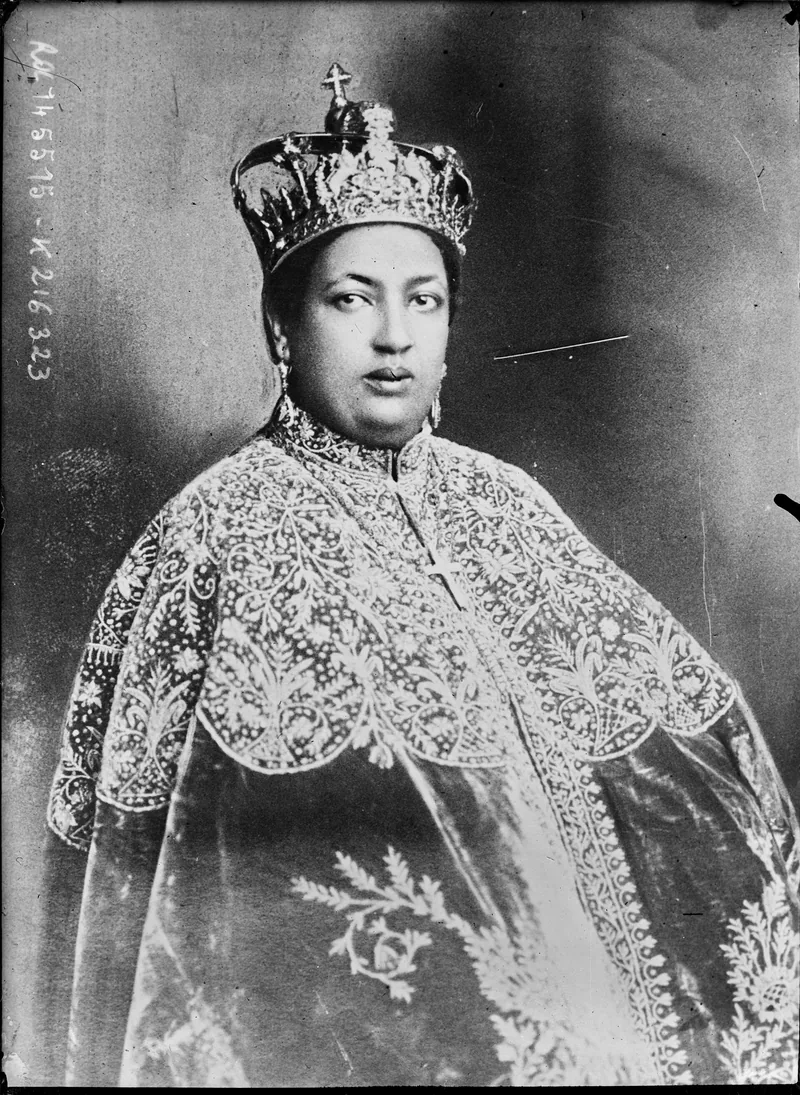
Today practice varies widely. Some camps maintain the older customs; elsewhere women lead reasonings, speak at Nyabinghi gatherings, run organisations and write the movement's history. The change has been gradual and remains debated.
Debates Within the Faith§
Haile Selassie After 1975§
The emperor's death in 1975 and the reburial of his remains in Holy Trinity Cathedral in Addis Ababa in November 2000 raised a question each generation must answer (his life and the beliefs about him are covered in Haile Selassie I). Some Rastafari reject the reports of his death; others hold that the divine cannot die and that his spirit lives in I-and-I; others see him chiefly as a righteous king and Christ's representative rather than God incarnate. The relationship with Ethiopia itself is delicate: most Ethiopian Christians do not regard the emperor as divine, and the Ethiopian Orthodox Church, which many Rastafari have joined, teaches orthodox Christian doctrine.
Organisation, Authority and Authenticity§
Rastafari has always resisted central authority, and attempts to form umbrella councils that could speak for the movement to governments have met with only partial success. Alongside the mansions and the House of Nyabinghi, described in Nyabinghi, Reasoning and Ritual, many Rastafari belong to no group. Some members also worry about authenticity: the global spread of the colours, the language described in Rasta Language: Iyaric and the dreadlocked image has produced many people who use the symbols without the livity. Questions of sexuality, of the place of non-Black Rastafari and of how to adapt the faith to the internet age are also discussed, in reasonings that now take place online as well as in the yard.
A New Religious Movement Grown Old§
Scholars of religion often use Rastafari as a case study of a new religious movement that has survived its founding generation. Ennis Edmonds describes its passage from despised outcasts to "culture bearers"; others note how a prophetic, anti-institutional movement has developed elders, councils, academic study and international networks without losing its suspicion of hierarchy. Nearly a century after the coronation of 1930, its central symbols remain those of the first preachers: the emperor, the Bible read as African history, Babylon and Zion, and the drum.
Frequently asked questions§
How many Rastafari are there in the world?§
There is no reliable count. Jamaica's 2011 census recorded about 29,000 Rastafari, around one per cent of the population, and worldwide estimates range from several hundred thousand to about a million. Many people identify with the movement without belonging to any organisation.
Do Rastafari still live in Ethiopia?§
Yes. A community lives at Shashamane in southern Ethiopia, on land originally granted by Haile Selassie to the African diaspora. It is smaller than its founders hoped, and its members long lacked legal status, but since 2017 Ethiopia has issued them identity cards.
Is ganja legal for Rastafari?§
It depends on the country. Jamaica recognised the sacramental use of ganja by Rastafari in 2015, and Antigua and Barbuda and Barbados have made similar provision, but in many countries Rastafari have no religious exemption from drug laws.
Can Rastafari women lead in the movement?§
Traditionally men led, but since the 1980s Rastafari women have organised, written and taken more prominent roles. Practice varies between camps and mansions, and the question remains debated.
Sources and further reading§
- Becoming Rasta: Origins of Rastafari Identity in Jamaica — Charles Price, 2009
- Rastafari: From Outcasts to Culture Bearers — Ennis Barrington Edmonds, 2003
- Rastafari in the New Millennium: A Rastafari Reader — Michael Barnett (ed.), 2012
- Exodus! Heirs and Pioneers, Rastafari Return to Ethiopia — Giulia Bonacci, 2015
- Jah Kingdom: Rastafarians, Tanzania, and Pan-Africanism in the Age of Decolonization — Monique A. Bedasse, 2017
- Rastafari Women: Subordination in the Midst of Liberation Theology — Obiagele Lake, 1998
- Rastaman: The Rastafarian Movement in England — Ernest Cashmore, 1979