Liber XXIII · Rastafari · Chapter III: Livity, Ital & Dreadlocks
Women in Rastafari: Empresses, Daughters and Changing Roles
Women in Rastafari: the Kingman and Empress ideal, Levitical rules of dress and purity, the I-Threes, Rasta women writers and changing roles today.

Women in Rastafari are called daughters, sistren, queens and empresses, and the movement's ideal joins each woman to a Kingman in a partnership modelled on Haile Selassie and Empress Menen. Traditional Rastafari livity placed women under male headship, with rules of modest dress, head covering and ritual purity; since the 1970s Rastafari women have written, organised, sung and reasoned in public, and many have reinterpreted or challenged those rules from within the faith.
The Kingman and the Empress§
Rastafari speak of the ideal couple as Kingman and Empress, or King and Queen. The model is the imperial couple of Ethiopia: Haile Selassie I and Empress Menen Asfaw, crowned together in November 1930. Early Rastafari texts called them King Alpha and Queen Omega, the beginning and the end, so that the divine was understood to include a male and a female principle. The empress's life and her place in belief are described in Empress Menen Asfaw.
A Rasta woman is therefore addressed with royal titles. "Empress" is used especially for the wife or partner of a Rastaman; "queen" and "daughter" are common; "sistren" is the collective term, the counterpart of "brethren". Like much of the movement's vocabulary, explained in Iyaric: Rasta language, these titles are chosen for what their sound affirms. Rastafari describe these names as a restoration of dignity to Black women, whom slavery and colonial society had degraded.
Traditional Teaching: Headship, Dress and Purity§
The first generations of Rastafari, drawing on the Old Testament and on the patriarchal norms of Jamaican society, taught that the man is the head of the woman as Christ is the head of the man, a principle many read in 1 Corinthians 11. The Kingman was expected to provide, protect and teach; the Empress to care for the home, raise children in livity and support her partner.
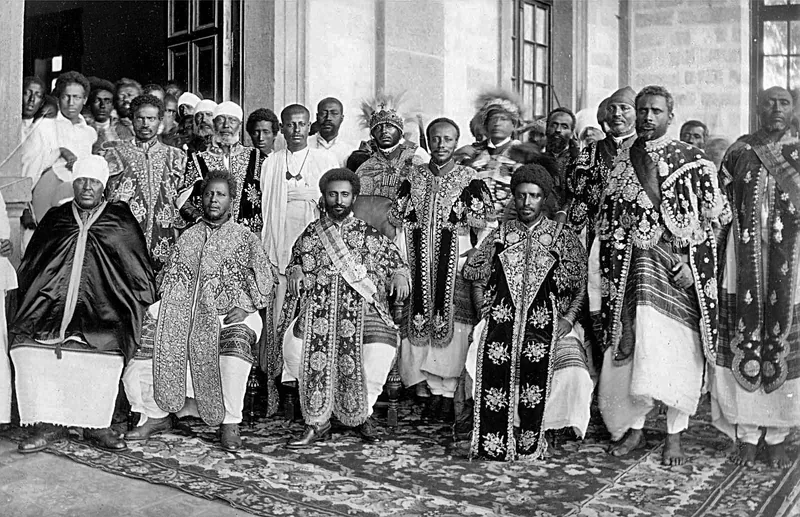
Several rules followed from this teaching:
- Dress. Women were to dress modestly, in long skirts or dresses, without trousers, which were considered men's clothing (Deuteronomy 22:5). Make-up, straightened hair and artificial adornment were discouraged as the vanities of Babylon.
- Covering. Women covered their heads, especially at worship and reasoning, with a wrap or tam over their locks.
- Purity. Following Levitical law (Leviticus 15), women in many houses withdrew from cooking for men and from ritual gatherings during menstruation. The Bobo Ashanti, described in Bobo Ashanti, keep the strictest forms of these rules.
- Ritual roles. Women attended Nyabinghi gatherings and reasonings, but the drums, the chalice and leadership of the circle were generally reserved for men.
Many Rastafari women accepted these rules as a sacred discipline, part of the livity that sets the faithful apart from Babylon. Others found them a source of tension, particularly when a woman came to the faith through a partner rather than through her own conversion, a pattern several scholars have described.
Women in the Early Movement§
Women were present in Rastafari from its beginning. Leonard Howell's preaching in the 1930s drew women as well as men, and women lived and worked at the commune of Pinnacle. But the movement's early public face was male, and the Youth Black Faith and Nyabinghi elders of the 1950s, who shaped much of later practice, were men. In the dreadlocked "House" tradition of that period, the sense of separation from society often included distance from women, who were seen by some elders as a distraction from spiritual life.
Women nevertheless sustained households, raised children in the faith, cooked ital food for gatherings and kept communities together through decades of poverty and police persecution.
Rastafari Women Find a Public Voice§
From the 1970s the place of women in the movement changed visibly. The I-Threes, the trio of Rita Marley, Marcia Griffiths and Judy Mowatt who sang with Bob Marley from 1974, brought Rastafari women before world audiences. Judy Mowatt's album Black Woman (1979) addressed the experience of Black and Rasta women directly, and Rita Marley later became a guardian of her husband's legacy and a figure of repatriation in Ghana.
Writers and scholars followed. The Jamaican journalist and later senator Barbara Makeda Blake Hannah published Rastafari: The New Creation (1981), an account of the faith from within. Maureen Rowe, in an essay on the woman in Rastafari published in Caribbean Quarterly in 1980, described the constraints women faced and their contribution. In the collection Chanting Down Babylon (1998), Imani Tafari-Ama wrote of the Rastawoman as rebel. Women formed their own groups, organised conferences, and took a more active part in reasoning, so that by the 1990s their participation was a recognised feature of Rastafari life.
Scholarly Debates on Gender and Rastafari§
Scholars have read women's position in Rastafari in contrasting ways. The anthropologist Obiagele Lake, in Rastafari Women: Subordination in the Midst of Liberation Theology (1998), argued that a movement of liberation for Black people reproduced the subordination of women. Others, such as Jeanne Christensen in Rastafari Reasoning and the RastaWoman (2014), have stressed women's agency: the ways in which they choose, interpret and sometimes reshape the rules, and find in Rastafari a source of dignity and identity. Many Rastafari women themselves reject a simple choice between the two readings, describing their faith as both demanding and empowering.
The broader questions of authority, organisation and change in the movement are discussed in Rastafari Today.
Differences Between the Mansions§
Practice varies widely. The Bobo Ashanti maintain separate quarters for menstruating women and strict dress codes. The Nyabinghi order has long been led by male elders, though women attend and chant at its gatherings. The Twelve Tribes of Israel, more open to Christian readings and to members from the middle classes, have generally given women a more visible role in their meetings and activities, though leadership remained male. Independent Rastas, especially outside Jamaica, often treat dress and purity rules as personal choices rather than obligations. These differences are surveyed in The Mansions of Rastafari.
Outside Jamaica, in Britain, the United States, Africa and elsewhere, Rastafari women have often taken leading roles in community organisations, education and repatriation projects, adapting the movement's teaching on women to new social settings.
Frequently asked questions§
What is a Rastafari woman called?§
She may be called a daughter, sistren, queen or empress. "Empress" is used especially for the wife or partner of a Rastaman, following the example of Empress Menen.
Do Rastafari women have dreadlocks?§
Many do, and they usually cover them with a head wrap or tam, especially at worship. As with men, not every Rastafari woman wears locks.
Can Rastafari women wear trousers?§
Traditional teaching, drawing on Deuteronomy 22:5, discouraged it, and the Bobo Ashanti still forbid it. Many Rastafari women today regard dress rules as a matter of personal conviction rather than law.
Are women equal in Rastafari?§
Rastafari teach that men and women share in the divine, but traditional practice gave men headship and leadership. Since the 1970s women have gained a stronger voice, and the question of equality remains debated within the movement.
Sources and further reading§
- Rastafari Women: Subordination in the Midst of Liberation Theology — Obiagele Lake, 1998
- Rastafari Reasoning and the RastaWoman: Gender Constructions in the Shaping of Rastafari Livity — Jeanne Christensen, 2014
- Rastafari: The New Creation — Barbara Makeda Blake Hannah, 1981
- Chanting Down Babylon: The Rastafari Reader — Nathaniel Samuel Murrell, William David Spencer and Adrian Anthony McFarlane, 1998
- Rastafari: Roots and Ideology — Barry Chevannes, 1994
- Rastafari in the New Millennium: A Rastafari Reader — Michael Barnett (ed.), 2012