Liber XXIII · Rastafari · Chapter IV: The Mansions of Rastafari
Bobo Ashanti: Prince Emmanuel and the EABIC Rastafari House
The Bobo Ashanti explained: Prince Emmanuel Charles Edwards, the 1958 convention, Bobo Hill at Bull Bay, the trinity, Levitical laws, turbans and brooms.

The Bobo Ashanti (also spelled Bobo Shanti), formally the Ethiopia Africa Black International Congress (EABIC), are the most strictly organised of the Rastafari mansions. Founded by Charles Edwards (1915–1994), whom they call Prince Emmanuel or King Emmanuel, they live as a priestly community on Bobo Hill at Bull Bay, east of Kingston, keep a strict Sabbath and Levitical laws of purity, wear turbans and robes, and honour a divine trinity of Marcus Garvey, Prince Emmanuel and Haile Selassie.
Charles Edwards and the 1958 Convention§
Charles Edwards was born in rural Jamaica in 1915; accounts usually place his birth in the parish of St Elizabeth. Like many early Rastafari, he moved to Kingston and came to the faith in the city's poor western districts. By the 1950s he was leading a camp in Back-o-Wall, a squatter settlement near the Kingston waterfront where many Rastafari lived after the destruction of Leonard Howell's commune at Pinnacle, described in Leonard Howell and Pinnacle.
In March 1958 Edwards called a convention of Rastafari from across the island, often described as the first universal Rastafari gathering. Hundreds, and by some reports thousands, attended over several weeks. Many came in the belief that repatriation to Africa was imminent and that ships would soon carry them home. When no ships came, the gathering ended with a symbolic attempt by some participants to "capture" Kingston for the faith, which brought arrests. The convention made Edwards a prominent figure and is usually counted as the founding moment of the EABIC. His followers came to regard him as a divine person, and he took the name Prince Emmanuel.
From Back-o-Wall to Bobo Hill§
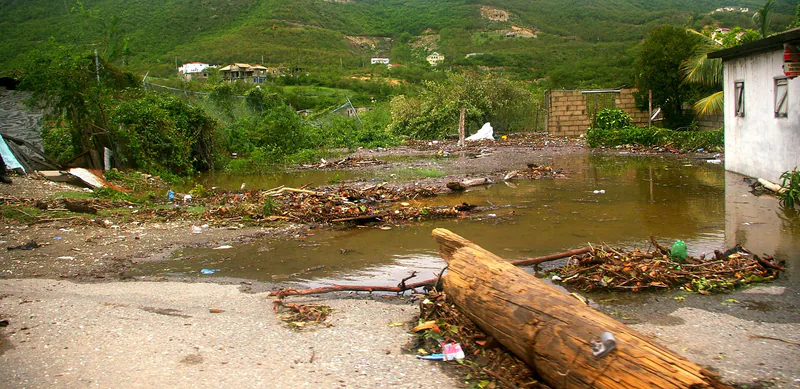
The community suffered repeated police raids and evictions. In 1966 the government bulldozed Back-o-Wall to make way for housing, and the Bobo moved more than once before settling, in the early 1970s, on a hillside at Bull Bay in the parish of St Andrew, east of Kingston. The camp, with its tabernacle, houses, workshops and red, gold and green painted buildings, became known as Bobo Hill, and its official name is the Ethiopia Africa Black International Congress Church of Salvation.
The name "Bobo Ashanti" combines two elements. "Ashanti" refers to the Asante people of present-day Ghana, from whom many enslaved Jamaicans descended, and expresses the community's African identity. "Bobo" is explained in different ways, and its origin is not certain. Members often call one another "Bobo" and use the greeting "Blessed love".
The Trinity: Prophet, Priest and King§
The distinctive theology of the Bobo Ashanti centres on a trinity of three persons. Marcus Garvey is the prophet who foretold redemption, as explained in Marcus Garvey and Rastafari; Prince Emmanuel is the priest; and Haile Selassie I is the king. The Bobo frequently invoke the three together, and their worship includes the chant of "Holy Emmanuel I Selassie I Jah Rastafari".
Prince Emmanuel is regarded as the Black Christ in the flesh, a priest after the order of Melchizedek (Hebrews 7), and as part of the divine revelation alongside the emperor. This sets the Bobo apart from other mansions, most of which recognise only Haile Selassie as divine. Other houses respect the Bobo as fellow Rastafari but do not share this belief, a difference discussed in The Mansions of Rastafari.
Priests, Prophets and the Sabbath§
The community is organised by office. Men may be priests, who lead worship, teach and preside over the ritual life of the camp, or prophets, who preach and go out to spread the message. Prince Emmanuel stood at the head of the order, and after his death in 1994 leadership passed to a council of priests.
The Sabbath, from sunset on Friday to sunset on Saturday, is kept strictly, with rest from work and services in the tabernacle with drumming, chanting and readings. The Bobo also hold regular Nyabinghi-style gatherings and mark the main Rastafari holy days, described in Rastafari holy days. Visitors to the camp are expected to follow its rules of dress and conduct.
Laws of Purity and the Place of Women§
Bobo life follows the laws of the Old Testament, especially the book of Leviticus, more closely than any other mansion. Food follows ital principles, described in Rastafari livity, and members avoid contact with what they regard as unclean.
Purity laws shape the life of women in particular. Following Leviticus 12 and Leviticus 15, women withdraw from ordinary community life during menstruation and for a period after childbirth, living in separate quarters, and they may not cook for men during that time. Women cover their heads, arms and legs and do not wear trousers. Bobo women describe these rules as a form of sanctity and protection; critics within and outside the movement have seen them as an especially strict form of patriarchy. The debate is followed in Women in Rastafari.
Dress, Brooms and Self-Reliance§
The Bobo Ashanti are among the most recognisable Rastafari. Men wrap their dreadlocks in tall turbans and wear long robes, often in black or in the Rastafari colours; women wear long skirts and head wraps. Their appearance consciously recalls the priests of ancient Israel and the dress of Ethiopia.
The community supports itself through craft and trade, above all the making of brooms from straw and palm, which members sell in Kingston and beyond. The broom is also a symbol: it stands for cleanliness, for sweeping away the corruption of Babylon and for the dignity of independent labour. The Bobo campaign actively for repatriation to Africa and for reparations for slavery, and they have established branches in other Caribbean islands, in Britain and in parts of Africa.
The Bobo in Music and Public Life§
From the 1990s several leading dancehall and reggae artists, among them Sizzla Kalonji, Capleton and Anthony B, identified with the Bobo Ashanti and brought its turbans, chants and themes to a large audience. Their success marked a revival of Rastafari themes in Jamaican popular music, discussed in Reggae and Rastafari. Some of their lyrics also drew international protest in the 2000s over hostility to homosexuality, a controversy that touched the wider debate about Rastafari attitudes in a global culture.
For scholars such as Barry Chevannes and Ennis Edmonds, the Bobo Ashanti show one direction in which Rastafari developed after the 1950s: toward a disciplined, communal and priestly religion with a founder of its own, in contrast to the loose, individual faith of many other Rastafari.
Frequently asked questions§
Who founded the Bobo Ashanti?§
The Bobo Ashanti were founded by Charles Edwards (1915–1994), known as Prince Emmanuel. He organised a large Rastafari convention in Kingston in 1958, from which the Ethiopia Africa Black International Congress grew.
What do the Bobo Ashanti believe?§
They share the Rastafari faith in Haile Selassie but honour a trinity of Marcus Garvey as prophet, Prince Emmanuel as priest and Haile Selassie as king. They follow Old Testament laws of Sabbath and purity closely and seek repatriation to Africa.
Why do Bobo Ashanti wear turbans?§
Men wrap their dreadlocks in turbans as a sign of holiness and priesthood, recalling the dress of the priests of Israel and of Ethiopia. Women cover their heads and bodies for similar reasons.
Where is Bobo Hill?§
Bobo Hill is the community's headquarters at Bull Bay, in St Andrew, on the coast east of Kingston, Jamaica. The community settled there in the early 1970s.
Sources and further reading§
- Rastafari: Roots and Ideology — Barry Chevannes, 1994
- Rastafari: From Outcasts to Culture Bearers — Ennis Barrington Edmonds, 2003
- The Rastafarians — Leonard E. Barrett, 1977
- Chanting Down Babylon: The Rastafari Reader — Nathaniel Samuel Murrell, William David Spencer and Adrian Anthony McFarlane, 1998
- Rastafari in the New Millennium: A Rastafari Reader — Michael Barnett (ed.), 2012
- The Rastafari Movement: A North American and Caribbean Perspective — Michael Barnett, 2018