Liber XXIII · Rastafari · Chapter IX: Reggae & Rasta Culture
Reggae and Rastafari: Music, Bob Marley and Rasta Culture
How Rastafari shaped reggae: from Count Ossie's drums and ska to Bob Marley, Burning Spear and dub, plus red, gold and green, Rasta art, film and literature.

Reggae is a Jamaican popular music that emerged around 1968, and from the early 1970s it became the main voice of Rastafari to the world. Rastafari supplied much of its drumming, its imagery of Babylon and Zion, its language and its moral seriousness, while reggae gave a small and persecuted religious movement a global audience, above all through Bob Marley. Not all reggae is Rastafari music, and not all Rastafari music is reggae, but the history of each cannot be told without the other.
From Nyabinghi Drums to Ska and Rocksteady§
Before reggae there were the drums. The Nyabinghi ensemble of bass, funde and repeater, described in Nyabinghi, Reasoning and Ritual, was played in the Rastafari camps of West and East Kingston in the 1950s, and these camps were also gathering places for young musicians. The most important was the Wareika Hills camp of the drummer Count Ossie (Oswald Williams), where Rastafari drummers met jazz players trained at schools such as Alpha Boys.
Around 1960 Count Ossie's drummers played on "Oh Carolina" by the Folkes Brothers, produced by Prince Buster, one of the first Jamaican records to carry the sound of the Rastafari drum to a mass audience. In the years of ska (roughly 1960–1966), the fast, horn-led music of Jamaican independence in 1962, several musicians associated with the Wareika camp, among them the trombonist Don Drummond of the Skatalites, wrote tunes with Ethiopian and African titles. Rocksteady, slower and more vocal, followed in the mid-1960s, and from about 1968 the new rhythm called reggae took its place, its name first appearing on record in Toots and the Maytals' "Do the Reggay" (1968).
The visit of Haile Selassie to Jamaica in April 1966 was a turning point for musicians as for everyone else. In its wake many young singers and players grew their hair, took up reasoning and began to write about Jah, repatriation and Babylon. Groups such as the Abyssinians, whose "Satta Massagana" (recorded 1969) is sung partly in Amharic-inspired words, and the Melodians, whose "Rivers of Babylon" (1970) set Psalm 137 and Psalm 19 to a reggae beat, showed that the chants of the camps could become popular songs. Ras Michael and the Sons of Negus brought the Nyabinghi drums themselves into the studio.
Roots Reggae: The Music of Rastafari in the 1970s§
The 1970s are remembered as the age of roots reggae, a music of slow, heavy rhythms and lyrics about history, suffering and redemption. Its drum patterns often placed the main accent on the third beat of the bar, the so-called one-drop, and many listeners have heard in its measured pulse an echo of the Nyabinghi bass drum.
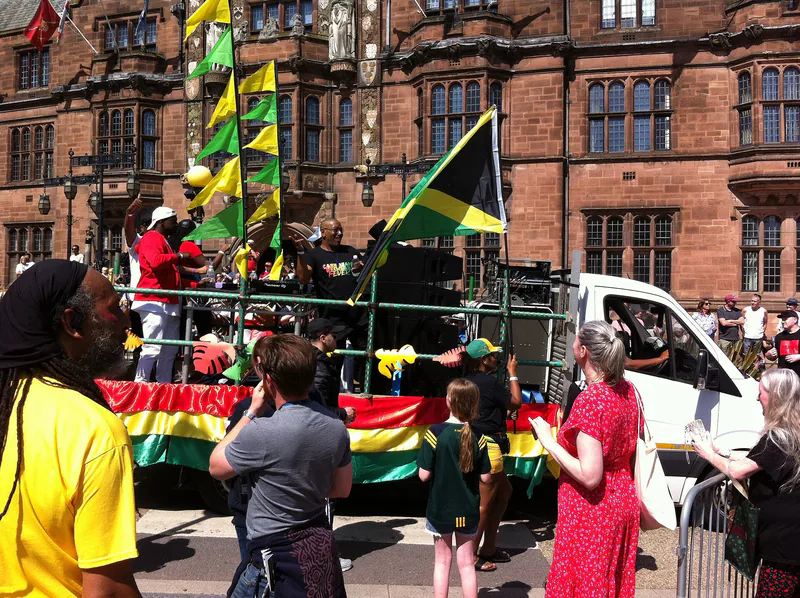
Its singers made Rastafari doctrine into song. Burning Spear (Winston Rodney) recorded Marcus Garvey (1975), which made Garvey a prophet for a new generation; Culture sang of the apocalyptic year in Two Sevens Clash (1977), whose title track caused anxiety across Kingston as 7 July 1977 approached; Peter Tosh recorded Legalize It (1976) and Equal Rights (1977); Bunny Wailer released Blackheart Man (1976), whose title turned a slur used against Rastafari into a badge of honour; and Israel Vibration, Black Uhuru, the Congos and many more followed. The record producers and sound-system operators of Kingston, for whom the music was also a business, recorded this material in large quantities.
Dub and the Sound System§
Alongside the songs grew dub, an art of remixing in which engineers such as King Tubby (Osbourne Ruddock) and the producer Lee "Scratch" Perry stripped tracks down to drum and bass, adding echo and reverberation. Scholars of the music, notably Michael Veal, have described dub as a sound of fragmentation and space; for many Rastafari listeners its deep bass and spacious mixing suited meditation and reasoning. The sound system, a mobile set of huge speakers, carried both songs and dubs to dances in Jamaica and later in Britain, where Rastafari sound systems became centres of Black British culture.
Bob Marley and the Global Message of Rastafari§
Bob Marley (1945–1981) did more than anyone to make Rastafari known worldwide. With Peter Tosh and Bunny Wailer he formed the Wailers in the early 1960s; all three embraced Rastafari in the later 1960s. From Catch a Fire (1973), released internationally by Island Records, to Uprising (1980), Marley's albums sold around the world, and he is often described as the first global superstar from the developing world.
His songs are full of Rastafari teaching. "War", on Rastaman Vibration (1976), sets to music lines from Haile Selassie's address to the United Nations General Assembly in October 1963, in which the emperor declared that until the philosophy holding one race superior and another inferior was abandoned, there would be war. "Exodus" (1977) speaks of the movement of Jah people. "Redemption Song" (1980) adapts words from a speech Marcus Garvey gave in Nova Scotia in 1937 urging his listeners to free themselves from mental slavery. Marley was a member of the Twelve Tribes of Israel; in November 1980, a few months before his death from cancer, he was baptised into the Ethiopian Orthodox Church. He received a state funeral in Jamaica in May 1981.
Marley's fame changed Rastafari itself. Dreadlocks, the red, gold and green and the image of Haile Selassie became known on every continent, and many people outside Jamaica first encountered the movement through his records. Scholars such as Jason Toynbee have discussed how his music became a voice of the postcolonial world, while Rastafari have debated whether the commercial success of reggae served or diluted the message.
Dancehall, Conscious Reggae and the Reggae Revival§
In the 1980s dancehall, a faster, more electronic style centred on the deejay, largely displaced roots reggae in Jamaica, and much of it turned from religious and political themes to the dance, sexuality and street life. In the 1990s a wave of "conscious" artists brought Rastafari back to the centre: Garnett Silk, Tony Rebel, Luciano, Capleton, Sizzla and Anthony B, several of them associated with the Bobo Ashanti, and Buju Banton, whose album 'Til Shiloh (1995) marked his embrace of Rastafari. Some of these artists' lyrics, especially songs hostile to gay people, have drawn strong international criticism and led to cancelled concerts, a controversy that divides listeners and Rastafari themselves.
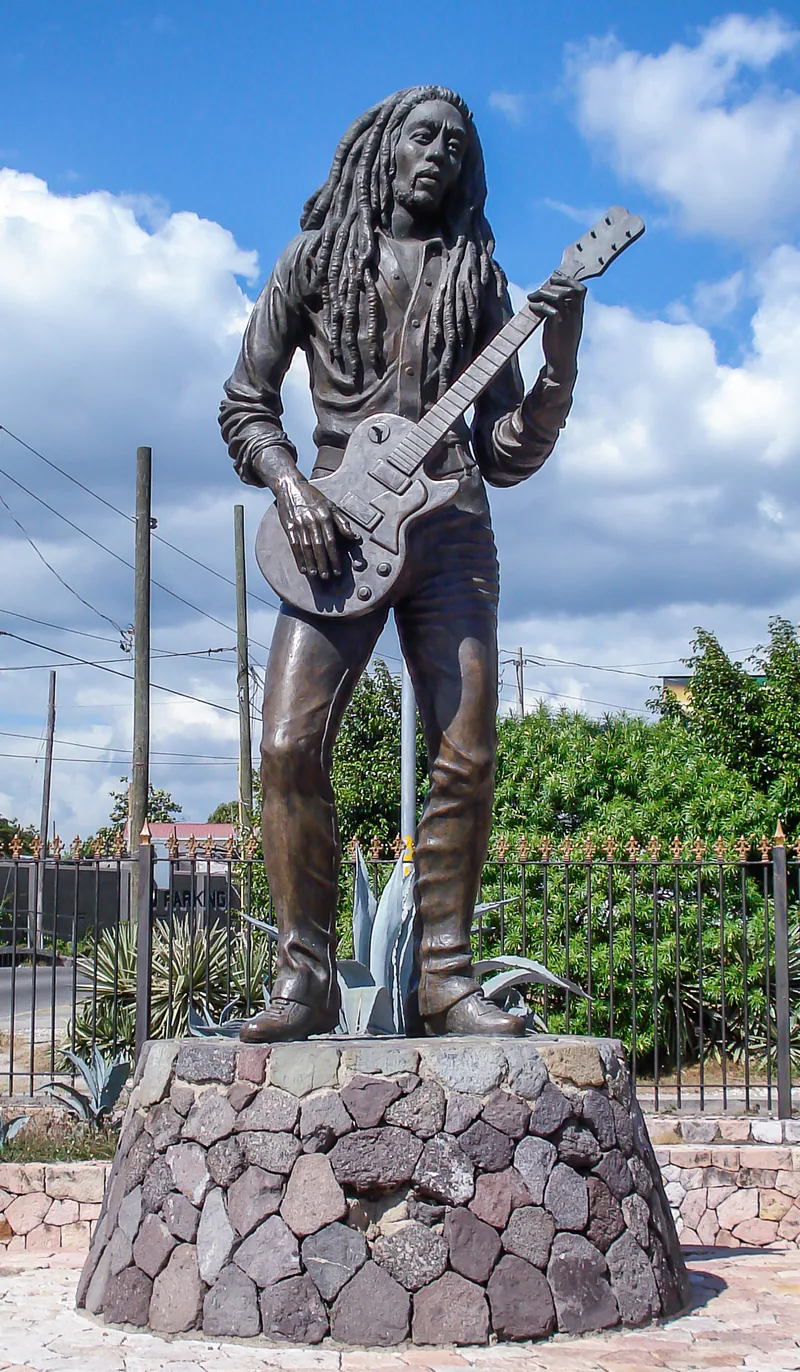
In the 2010s a younger generation, often described by Jamaican journalists as the "reggae revival", returned to roots sounds and Rastafari themes. In 2018 UNESCO inscribed reggae music of Jamaica on its Representative List of the Intangible Cultural Heritage of Humanity, noting its role in voicing social protest and spirituality.
Rasta Culture Beyond Music: Colours, Art, Literature and Film§
Red, Gold and Green and the Lion of Judah§
Rastafari visual culture is built on a small set of symbols. The colours red, gold and green come from the flag of the Ethiopian empire (green, yellow and red), and are commonly explained as the blood of martyrs, the wealth of Africa and the land and its vegetation; many Rastafari add black for the African people, from the red, black and green of Marcus Garvey's movement. The Lion of Judah, which appeared on the imperial Ethiopian flag carrying a cross, stands for Haile Selassie as Conquering Lion of the Tribe of Judah and for the strength of the faithful. Portraits of the emperor and empress, maps of Africa and the Star of David also recur on walls, banners and clothing, along with the knitted cap or tam in which many Rastafari gather their locks.
Art, Literature and Film§
In Jamaican painting, self-taught or "intuitive" artists such as Everald Brown drew on Rastafari and Ethiopian Christian themes in visionary work now held by the National Gallery of Jamaica. In literature, Roger Mais's novel Brother Man (1954) portrayed a gentle, persecuted Rasta-like healer in Kingston, and Orlando Patterson's The Children of Sisyphus (1964) depicted Rastafari among the poor of the city. Dub poets such as Mutabaruka made the reshaped language discussed in Rasta Language: Iyaric into a poetic art. On film, Rockers (1978) presented a largely Rastafari cast of musicians in their own world. The scholar Darren Middleton has surveyed this whole body of work as the arts of Rastafari.
Commodification and Authenticity§
The success of the culture has produced a long argument. Rasta colours and images appear on tourist souvenirs and fashion, and the dreadlocked figure has become a marketing cliché, often detached from faith. Many Rastafari distinguish between those who follow the livity and those who only wear its symbols, and warn against Babylon selling back to the world a culture it once persecuted. These debates continue in Rastafari Today.
Frequently asked questions§
Is reggae Rastafari music?§
Reggae is a broad Jamaican popular style, and many reggae songs have nothing to do with religion. But Rastafari shaped its rhythms, language and themes, and roots reggae of the 1970s was largely the music of Rastafari singers expressing their faith. Nyabinghi drumming and chant are the movement's own sacred music.
Was Bob Marley a Rastafari?§
Yes. Marley embraced Rastafari in the later 1960s, belonged to the Twelve Tribes of Israel and filled his songs with Rastafari teaching. Shortly before his death in 1981 he was also baptised into the Ethiopian Orthodox Church.
What do the colours red, gold and green mean in Rastafari?§
They are taken from the flag of the Ethiopian empire. Rastafari commonly explain red as the blood of martyrs, gold as the wealth of Africa and green as the land; many add black, from Marcus Garvey's colours, for the African people.
Sources and further reading§
- Bass Culture: When Reggae Was King — Lloyd Bradley, 2000
- Catch a Fire: The Life of Bob Marley — Timothy White, 1983
- Bob Marley: Herald of a Postcolonial World? — Jason Toynbee, 2007
- Dub: Soundscapes and Shattered Songs in Jamaican Reggae — Michael E. Veal, 2007
- Reggae Routes: The Story of Jamaican Music — Kevin O'Brien Chang and Wayne Chen, 1998
- Wake the Town and Tell the People: Dancehall Culture in Jamaica — Norman C. Stolzoff, 2000
- Rastafari and the Arts: An Introduction — Darren J. N. Middleton, 2015