Liber XXIII · Rastafari · Chapter VII: Rasta Language: Iyaric
Iyaric: Rasta Language, I-and-I and Dread Talk Explained
Iyaric or Dread Talk, the language of Rastafari: why Rastas say I-and-I, words like ital, irie, overstand and downpressor, their origins and influence.

Iyaric, also called Dread Talk, Rasta talk or "livalect", is the distinctive way of speaking developed by Rastafari in Jamaica from the 1940s onwards. Built on Jamaican Creole, it reshapes English words so that their sound matches their meaning, replaces syllables with the sound "I" to affirm the divine presence in every person, and gives everyday words new religious and political senses. Its best-known expression, I-and-I, means "I", "we" and "God with me" at once.
Why Rastafari Created Their Own Language§
Rastafari treat words as powerful. Many hold that language, like the Bible, was shaped by Babylon, the system of slavery and colonial rule, to keep Africans in a subordinate place, and that a free people must remake its speech. The early movement grew among the urban and rural poor, whose everyday language was Jamaican Creole, a language that formed during slavery from English and West African tongues and that the colonial school system long treated as broken English. Rastafari did not reject Creole in favour of standard English; instead they worked on both, consciously altering words so that the way a word sounds tells the truth about what it means.
The anthropologist Barry Chevannes associated many of these innovations with the young radicals of West Kingston in the late 1940s and 1950s, the same circles that adopted dreadlocks and developed the practice of reasoning. Reasoning sessions, where speakers debated scripture and history at length, were the workshop in which the vocabulary was made, tested and passed on. Because it was spoken rather than written, it varies between camps and generations, and there has never been an official dictionary.
I-and-I: The Pronoun of Divine Unity§
The heart of Rasta speech is the word I. In Jamaican Creole the usual first-person pronoun is mi ("mi go", "mi waan"), which serves as both "I" and "me". Rastafari argue that mi makes the speaker an object, the "me" of someone who is acted upon, and that it carries the habits of servitude. They therefore say "I" in all positions, and for "we" or for the self in its fullest sense they say I-and-I (often written InI or I&I).
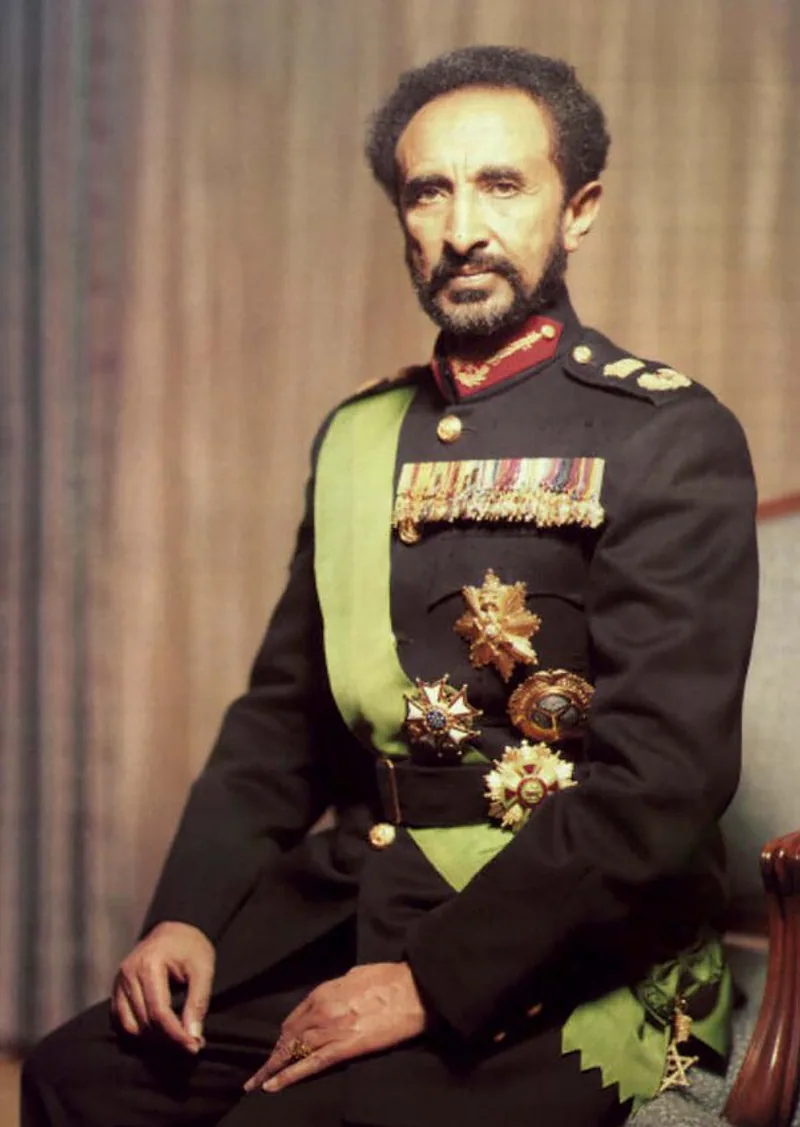
I-and-I carries several meanings at once. It is the speaker; it is the community of believers; and it expresses the belief that Jah dwells within each person, so that the self speaks with God. Rastafari also note that the regnal number of Haile Selassie I is a Roman numeral that can be read as the letter I, and the emperor's name is often pronounced "Selassie-I" and the title "Rastafar-I". Other persons are addressed in the same spirit: "the I" can mean "you", and "I-man" is a self-description of a Rastaman.
How Iyaric Words Are Made§
The linguist Velma Pollard, of the University of the West Indies, made the first systematic study of the vocabulary in a series of papers from the 1980s, gathered as Dread Talk: The Language of Rastafari (1994). She showed that most Rasta words are formed by a small number of regular processes. The examples below are widely attested, though usage varies.
I-Words§
The most productive process replaces the first syllable of a word, or adds a syllable, with "I", turning an ordinary word into one that affirms the divine self:
- Ital, from vital: natural, pure, life-giving, especially food prepared without salt, chemicals or meat.
- Irie: good, at peace, in harmony; now a common Jamaican greeting.
- Iration, from creation; Inity, from unity; Ises, from praises ("give Ises to Jah").
- Idren, alongside bredren and sistren, for fellow believers.
- Iyah, a familiar form of address between brethren, and Iwah, for the hour or time, are among many less common forms.
Words Remade So That Sound Fits Sense§
A second process changes part of a word whose sound seems to contradict its meaning:
- Downpression for oppression, because the oppressor holds people down, not "op" or up.
- Overstand for understand, since true knowledge raises a person rather than placing them under.
- Livicate for dedicate, removing the "dead" sound from an act of devotion.
- Politricks for politics, a judgement on the party politics of Jamaica in the 1970s and after.
Old Words with New Meanings§
A third group consists of ordinary words given a Rastafari sense: Babylon, the oppressive system and, specifically, the police; Zion, Africa and the true home (both explained in Beliefs: Jah, Babylon and Zion); dread, fearsome or awe-inspiring and therefore good, as in "dreadlocks"; bald-head, a person outside the faith; chalice, the communal pipe of the reasoning; livity, the whole Rastafari way of life; and downtown, yard and camp with their particular social meanings in Kingston. Greetings and blessings form another layer: "Blessed love", "Give thanks", "Guidance", "Jah live" and "Selah", the last borrowed from the Psalms.
Amharic, Ethiopia and the Name "Iyaric"§
Because Rastafari look to Ethiopia as Zion, many have studied Amharic, the official language of the Ethiopian empire, and Ge'ez, its liturgical language. Amharic words entered Rasta use through the emperor's names and titles (Negus, king; Ras, a noble title literally meaning "head"; Haile Selassie, "Power of the Trinity"), through the Ethiopian Orthodox Church after its arrival in Jamaica in 1970, and through songs such as the Abyssinians' "Satta Massagana" (recorded 1969), whose title is usually glossed as "give thanks" or "give praise". Rastafari groups have run Amharic classes, and some Rastafari learned the Ethiopic script.

The word Iyaric itself, often explained as a blend of "I" and "Amharic", is a later label, popular in the 1990s and after among some Rastafari and writers on the movement. Scholars more often use Pollard's term "Dread Talk", and many Rastafari simply speak of "Rasta talk". The name implies a closer link with Amharic than the vocabulary actually shows: almost all of it is built from English and Creole, and the Amharic element is small and largely ceremonial.
Iyaric in Reggae and Everyday Speech§
The language spread far beyond the camps through music. From the late 1960s reggae songs carried I-and-I, Babylon, downpression and Zion to every part of Jamaica and then to the world; Bob Marley, Peter Tosh, Burning Spear and many others sang in it, and dub poets such as Mutabaruka made the reshaped word central to their art. In Jamaica, words such as irie, ital, bredren and I-man became part of general speech, used by people with no religious interest in Rastafari. In Britain, the Caribbean speech of the post-war migrants, including its Rasta element, influenced the youth language of London and other cities.
This success has a cost that Rastafari themselves discuss. Words that once marked a person as a member of a despised religious minority now appear in advertising and tourist slogans, and their spiritual sense can be lost. For many Rastafari, Iyaric remains a discipline as much as a style: to say "I-and-I" is to affirm, every time one speaks, that the speaker is a subject and not an object, and that the divine is present in the human person.
How Scholars Study Rasta Talk§
Pollard's work placed Rasta speech within the study of Caribbean Creole languages, which had been established by Frederic Cassidy's Jamaica Talk (1961) and the Dictionary of Jamaican English (1967) compiled by Cassidy and Robert Le Page. Later researchers, among them the anthropologist John Homiak, studied the language as part of Rastafari ritual and oral history, showing how stories and sayings were passed down through generations of elders. Students of religion have compared the Rastafari attention to the sound and inner meaning of words with other traditions that find sacred meaning in language, from Hebrew letter mysticism such as gematria to the theology of the divine name, although Rastafari wordplay arose independently and works through sound rather than numbers.
Frequently asked questions§
What does I-and-I mean in Rastafari?§
I-and-I is the Rastafari way of saying "I", "me" or "we". It expresses the belief that Jah lives within every person, so that the speaker never stands alone, and it rejects the Creole pronoun "mi" as the word of a subordinate. It can refer to the speaker, to the community, or to both together.
What is Iyaric?§
Iyaric is a name for the language of Rastafari, a vocabulary built on Jamaican Creole and English that replaces syllables with "I" and remakes words so that their sound fits their meaning. Scholars usually call it Dread Talk, after Velma Pollard's 1994 study.
What do ital and irie mean?§
Ital comes from "vital" and means natural and pure, especially food prepared without salt, chemicals or meat. Irie means good, peaceful or in harmony, and is used as a greeting. Both words are now common in Jamaican speech generally.
Why do Rastas say overstand?§
Rastafari hold that the sound of a word should match its meaning. "Understand" suggests standing beneath something, whereas real knowledge raises a person up, so they say "overstand". The same reasoning produces "downpression" for oppression.
Sources and further reading§
- Dread Talk: The Language of Rastafari — Velma Pollard, 1994
- Rastafari: Roots and Ideology — Barry Chevannes, 1994
- Rastafari and Other African-Caribbean Worldviews — Barry Chevannes (ed.), 1995
- Dread: The Rastafarians of Jamaica — Joseph Owens, 1976
- Jamaica Talk: Three Hundred Years of the English Language in Jamaica — Frederic G. Cassidy, 1961
- Dictionary of Jamaican English — F. G. Cassidy and R. B. Le Page, 1967