Liber XXIII · Rastafari · Chapter VIII: Rastafari Today
Shashamane: The Rastafari Settlement and Return to Ethiopia
Shashamane and Rastafari repatriation: the emperor's land grant, the Ethiopian World Federation, the 1961 Mission to Africa and the settlers today.

Shashamane (also spelled Shashemene) is a town in the Oromia region of southern Ethiopia, about 250 kilometres south of Addis Ababa, where Haile Selassie I granted land to people of the African diaspora after the Second World War. It became the best-known Rastafari settlement in Africa and the symbol of repatriation, the return to Zion that stands at the heart of Rastafari hope. Its history, from the land grant through revolution, land reform and decades of uncertain legal status, shows both the strength of that hope and the difficulty of realising it.
Repatriation in Rastafari Belief§
From the first preaching of Leonard Howell and his contemporaries in the 1930s, Rastafari taught that the descendants of enslaved Africans in the Americas were exiles in Babylon and that their true home was Zion, Africa and above all Ethiopia. Repatriation was understood as a divine promise, often read through the story of Israel's return from Babylon in the Bible, and as a just remedy for the crime of slavery. The theology of Babylon and Zion is set out in Rastafari beliefs.
For the early movement repatriation was expected soon, by miraculous means or by the emperor's command. Gatherings such as Prince Emmanuel Edwards's convention of 1958, described in Bobo Ashanti, drew people who believed that ships would come to carry them home. Shashamane was the one place where the hope took the form of land actually granted.
The Ethiopian World Federation and the Land Grant§
The Ethiopian World Federation (EWF) was founded in New York in 1937 by Malaku Bayen, an Ethiopian physician and relative of the emperor, to rally support among people of African descent for Ethiopia, then under Italian occupation. Local branches spread through the United States and the Caribbean, and the federation's Jamaican branches, from the 1950s, attracted many Rastafari, who saw in it an official link with the emperor.
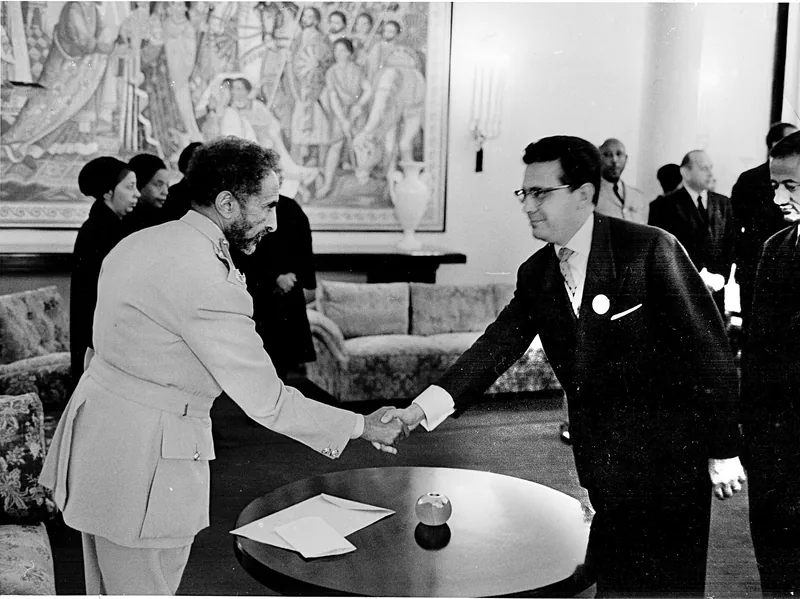
In gratitude for diaspora support during the war, Haile Selassie set aside a tract of his own crown land near Shashamane for Black people from the West who wished to settle in Ethiopia. The grant is usually dated to 1948, though some accounts place it in the 1950s, and its size is variously given, commonly as about five hundred hectares. News of the grant, spread through the EWF, gave Rastafari in Jamaica a concrete focus for their hope of return.
The first settlers were few. Accounts name a small number of Caribbean-born Garveyites from the United States who arrived around 1950 and farmed the land. Settlement remained limited for years, partly because of the cost and difficulty of the journey and partly because the conditions of the grant and of Ethiopian residence were never fully defined.
The 1961 Mission to Africa§
Repatriation entered Jamaican politics after 1960. In that year three scholars of the University College of the West Indies, M. G. Smith, Roy Augier and Rex Nettleford, published The Ras Tafari Movement in Kingston, Jamaica, which recommended among other measures that the government send a mission to Africa to explore the possibility of migration. In 1961 the government did so. The delegation, which visited Ethiopia, Nigeria, Ghana, Liberia and Sierra Leone, included three Rastafari representatives, Mortimo Planno, Filmore Alvaranga and Douglas Mack, and was received by Haile Selassie in Addis Ababa.
The Rastafari members wrote a separate minority report, which emphasised the welcome they had received and the emperor's offer of land. The official report was more cautious, and after Jamaican independence in 1962 the new government did not pursue an organised programme of repatriation. The episode nevertheless gave Rastafari a new legitimacy as participants in national debate, part of the story told in Rastafari Today.
Settlers, the Emperor and the Revolution§
Haile Selassie's visit to Jamaica in April 1966, described in Haile Selassie I in Rastafari belief, renewed interest in Shashamane. According to Rastafari tradition, the emperor advised the elders he met that the people should seek liberation in Jamaica before repatriation, words that Rastafari have interpreted in different ways. From the mid-1960s Jamaican Rastafari began to arrive in small numbers, some by remarkable overland journeys, and in the 1970s the Twelve Tribes of Israel organised the settlement of members, giving the community a larger and more organised presence.
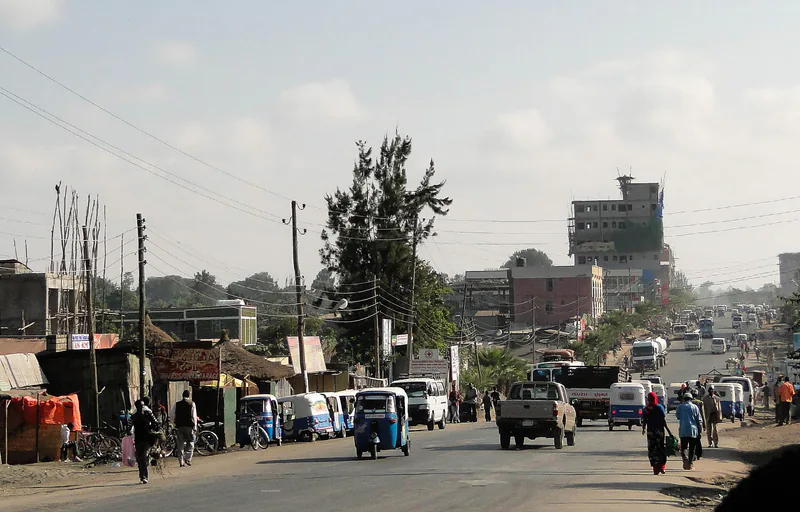
The revolution of 1974 changed everything. The military government known as the Derg deposed the emperor, who died in 1975, and in 1975 it nationalised all rural land. The settlers, whose title rested on the emperor's personal gift, lost most of their holding and were left with a small part of the original grant. Some left; others stayed through the years of military rule, famine and civil war, maintaining their faith in a country whose government had overthrown the king they worshipped.
Life in Shashamane Today§
After the fall of the Derg in 1991 the community grew again, with settlers from Jamaica and other Caribbean islands, Britain, the United States and elsewhere. Estimates of its size vary, and most scholars speak of a few hundred people, many now born in Ethiopia. The community maintains tabernacles of the different mansions, schools and small businesses, and receives visitors and pilgrims, especially around the main holy days described in Rastafari holy days.
The historian Giulia Bonacci, whose study Exodus! is the fullest account of the settlement, has described its long legal uncertainty. Most settlers were not Ethiopian citizens and had no clear residence status; children born in Ethiopia could find themselves without the citizenship of either their parents' country or their own. Relations with the local Oromo population have generally been peaceful but have sometimes been marked by tension over land and by differences of culture and religion. In 2017 the Ethiopian government began issuing identity cards to Rastafari residents, a step welcomed in the community as recognition, though short of full citizenship. The relationship between Rastafari settlers and Ethiopia's own church is explored in Rastafari and the Ethiopian Orthodox Church.
Other Destinations: Ghana, Tanzania and Beyond§
Shashamane is not the only African home of repatriated Rastafari. The historian Monique Bedasse, in Jah Kingdom, has documented a wave of repatriation to Tanzania in the 1970s and 1980s, encouraged by Julius Nyerere's pan-African policies. Ghana, the first sub-Saharan colony to gain independence and the home of a long tradition of diaspora return, has attracted Rastafari settlers, among them Rita Marley; its "Year of Return" in 2019 drew wide interest across the diaspora. Smaller groups live in The Gambia, South Africa, Kenya and elsewhere, and Rastafari have also grown up among Africans themselves.
Spiritual Repatriation and the Meaning of Return§
Most Rastafari have never lived in Africa, and many now speak of repatriation in more than one sense. For some it remains a literal aim, to be pursued through migration, settlement and the claim for reparations for slavery. For others it is also a spiritual and cultural return: living in Africa's ways, keeping its holy days, learning its languages and history, and turning toward Zion while remaining where they are.
Shashamane holds a special place in both understandings. As the land given by the emperor himself, it is for Rastafari a tangible sign that the promise of return was real, even if its fulfilment has been partial and hard-won.
Frequently asked questions§
What is Shashamane?§
Shashamane is a town in southern Ethiopia where Haile Selassie granted land to people of the African diaspora after the Second World War. It became the main Rastafari settlement in Africa.
Why did Haile Selassie give land to Rastafari?§
The grant was made to diaspora Africans, through the Ethiopian World Federation, in recognition of their support for Ethiopia during the Italian occupation. Rastafari, many of whom belonged to the federation, became its main settlers.
How many Rastafari live in Shashamane?§
Estimates vary, but scholars generally speak of a few hundred people, including many born in Ethiopia. The number has risen and fallen with the country's politics.
Are Rastafari in Ethiopia citizens?§
Most settlers were not Ethiopian citizens and lived for decades without clear status. Since 2017 identity cards have given many residents recognised residence, though not full citizenship.
Sources and further reading§
- Exodus! Heirs and Pioneers, Rastafari Return to Ethiopia — Giulia Bonacci, 2015
- Jah Kingdom: Rastafarians, Tanzania, and Pan-Africanism in the Age of Decolonization — Monique A. Bedasse, 2017
- The Ras Tafari Movement in Kingston, Jamaica — M. G. Smith, Roy Augier and Rex Nettleford, 1960
- The Rastafarians — Leonard E. Barrett, 1977
- Rastafari: From Outcasts to Culture Bearers — Ennis Barrington Edmonds, 2003
- A History of Modern Ethiopia, 1855–1991 — Bahru Zewde, 2001