Liber XIV · Hinduism · Chapter II: Dharma, Karma & Moksha
The Manusmriti: The Laws of Manu, Dharma and Controversy
The Manusmriti or Laws of Manu explained: its date, contents and place in Dharmashastra, its rules on caste and women, colonial use and modern controversy.

The Manusmriti, or Laws of Manu (properly the Manava Dharmashastra), is the best-known Sanskrit treatise on dharma: a verse text of about 2,700 stanzas in twelve chapters, probably composed around the second century CE, that sets out the duties of the social classes and stages of life, the rules of purity, marriage and inheritance, the conduct of kings and courts, penances and the workings of karma. Long treated by Brahmin jurists as the foremost authority on law, it was made central to "Hindu law" under British rule and has become, in modern India, one of the most criticised texts of the Hindu tradition.
What Is the Manusmriti? Title, Author and Date§
Smriti, "what is remembered," is the class of authoritative tradition that stands below shruti, the revealed Veda. The Manusmriti is the most prestigious work of this class. It presents itself as the teaching of Manu, the progenitor of humankind, who received it from the creator Brahma; at the request of the great sages, Manu delegates its recitation to his pupil Bhrigu, so that the text is framed as a dialogue.
Modern scholars do not take this frame as history. The text draws on earlier law books and reflects the social and political world of north India after the Mauryas. Older estimates placed it anywhere between about 200 BCE and 200 CE. Patrick Olivelle, whose critical edition of 2005 is now standard, argues that it is the work of a single, learned author, perhaps with a team of assistants, writing in the second or third century CE, and that its careful structure, not later interpolation, explains many apparent inconsistencies. These views remain debated, and many traditional readers still regard Manu's code as timeless.
Dharmashastra: Where the Laws of Manu Fit§
The Manusmriti is part of a long tradition of thought on dharma, explained more generally in Dharma, Karma, Samsara and Moksha. Its predecessors were the Dharmasutras, prose manuals attributed to Apastamba, Gautama, Baudhayana and Vasishtha, composed within Vedic schools in the last centuries BCE. Manu's verse treatise, broader in scope and grander in its cosmic framework, became the model for later works such as the law books of Yajnavalkya and Narada, the latter devoted largely to legal procedure.
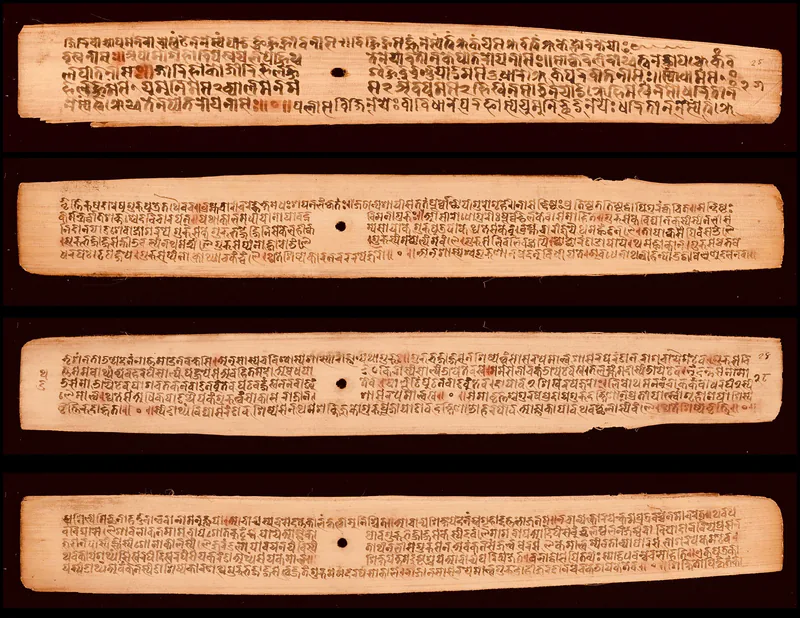
Manu names four sources of dharma: the Veda, the tradition and conduct of those who know the Veda, the practice of good people, and what is pleasing to oneself. Later jurists treated his text with special respect; a saying quoted in the tradition holds that whatever Manu said is medicine. The great medieval commentaries, especially those of Medhatithi (probably ninth or tenth century) and Kulluka Bhatta (of uncertain date, usually placed between the thirteenth and fifteenth centuries), reconciled it with other authorities and with changing practice. Digests (nibandhas) compiled under royal patronage arranged quotations from Manu and other law books by topic.
Contents of the Twelve Chapters§
The Manusmriti moves from the creation of the world to the final goal of liberation:
- Chapter 1: Creation of the world and of the four social classes, and the origin of the text.
- Chapter 2: The sources of dharma and the life of the Vedic student, including initiation and the Savitri or Gayatri mantra.
- Chapter 3: Marriage and the householder, forms of marriage, daily sacrifices and the ancestral offerings.
- Chapter 4: The householder's livelihood and conduct.
- Chapter 5: Food, purity and impurity, including rules on death and birth, and the duties of women.
- Chapter 6: The forest hermit and the renouncer, the later stages of life.
- Chapter 7: The king, his duties, counsellors, war and diplomacy.
- Chapters 8–9: Law and legal procedure: the eighteen "titles of law," including debt, deposits, sale, boundaries, assault, theft and adultery, followed by marriage law, inheritance and the duties of the classes.
- Chapter 10: The mixed classes and rules for times of distress.
- Chapter 11: Gifts, penances and expiations for sins.
- Chapter 12: Karma and rebirth, the three qualities of nature and the supreme knowledge of the self.
The final chapter, with its detailed account of how particular actions lead to particular rebirths, is one of the classical sources for Hindu ideas of karma; see also Reincarnation and the Afterlife.
Varna, Caste and Women in the Manusmriti§
The text's vision of society is hierarchical. It explains the four classes (varnas), Brahmin, Kshatriya, Vaishya and Shudra, as created from the mouth, arms, thighs and feet of the primordial being, echoing a Rigvedic hymn, and assigns them distinct duties; the Shudra's duty is service to the three higher classes, who alone may study the Veda. Groups arising from unions across classes are given lower positions, and the most excluded are placed outside the village. Punishments for some offences vary with the class of offender and victim.
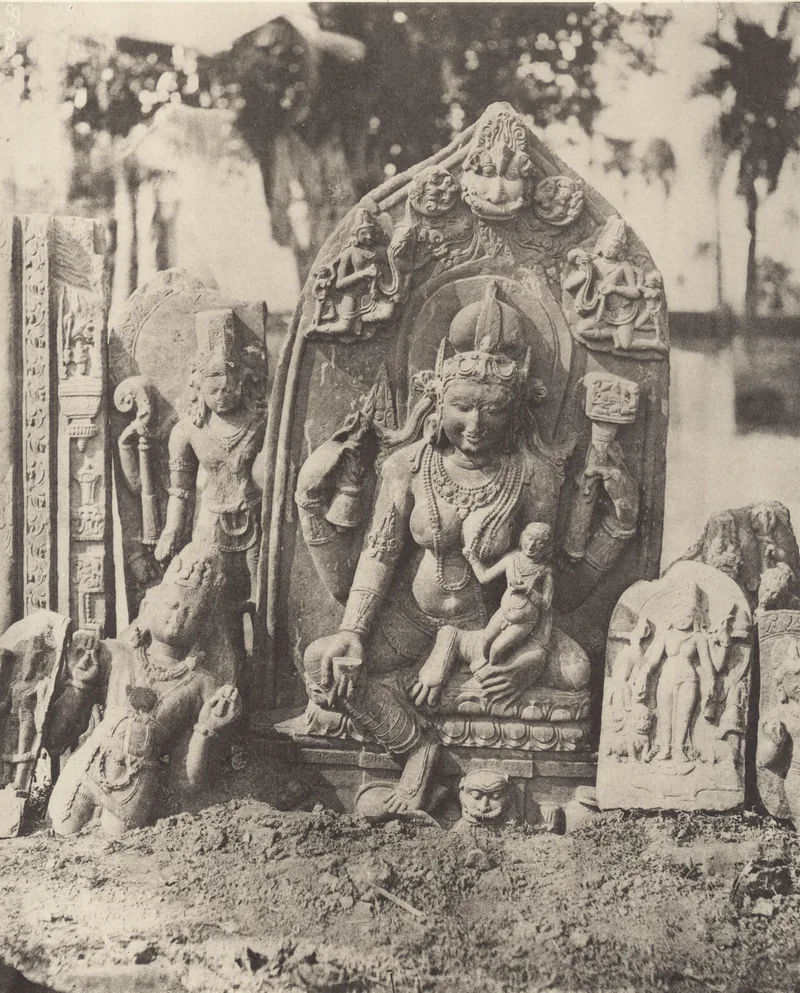
On women, the text speaks in more than one voice. It declares that where women are honoured the gods rejoice, and requires husbands and relatives to treat them generously. Yet it also states that a woman should be under the protection of her father in childhood, her husband in youth and her sons in old age, and that she should never be independent; it limits her access to Vedic ritual and property and prescribes lifelong fidelity for widows. Scholars caution that such rules describe the ideals of a Brahmin elite rather than the actual lives of most people, and that Indian legal practice drew heavily on local custom. Nonetheless, these passages have shaped perceptions of the text more than any others.
From Colonial Law Code to Modern Controversy§
The Manusmriti's modern fame owes much to colonial rule. In 1794 Sir William Jones published an English translation, Institutes of Hindu Law, intending to provide British judges with the "law of the Hindus." Courts applying "Anglo-Hindu law" treated Sanskrit law books as binding codes, giving a normative text a rigid legal authority it had rarely enjoyed. Georg Bühler's translation of 1886 in the Sacred Books of the East became the standard Victorian version, and European writers, including Friedrich Nietzsche, discussed Manu as an example of an ancient aristocratic order.
In India, critics of caste turned against the text. Jotirao Phule attacked Brahmin authority in the nineteenth century, and on 25 December 1927, during the Mahad satyagraha for Dalit access to a public water tank, B. R. Ambedkar and his followers publicly burned a copy of the Manusmriti; the date is still marked by some as "Manusmriti Dahan Din." Ambedkar's later critique of Hindu scripture, in works such as Annihilation of Caste (1936), made the text a symbol of caste oppression. After independence, the Constitution abolished untouchability, and the Hindu Code Bills of the 1950s replaced the old personal law with modern statutes.
Interpreting the Manusmriti Today§
Responses among Hindus vary widely. Some traditionalists continue to regard the Manusmriti as a sacred authority whose rules should be understood in their proper context. Reform movements such as the Arya Samaj accepted parts of Manu while rejecting passages they considered later interpolations. Many contemporary Hindus point out that, as smriti, the text is subordinate to the Veda and to conscience, and that Hindu tradition always recognised that dharma changes with time and place; they regard its discriminatory rules as historically conditioned rather than binding.
Dalit and feminist critics see the text as an ideological foundation of inequality, while historians increasingly read it as a sophisticated work of political and legal theory from a specific era. The Manusmriti thus stands at the centre of debates about tradition, caste and gender that are outlined in What Is Hinduism?.
Frequently asked questions§
Who wrote the Manusmriti?§
Tradition attributes it to Manu, the first man and lawgiver, with the sage Bhrigu as narrator. Most modern scholars regard it as the work of an unknown Brahmin author or circle of authors, probably of the second or third century CE.
Is the Manusmriti a religious scripture?§
It is smriti, authoritative tradition, rather than shruti, the revealed Veda. It was long the most respected work on dharma, but its authority has always been subordinate to the Veda in principle, and many modern Hindus do not regard it as binding.
Why did Ambedkar burn the Manusmriti?§
On 25 December 1927, during the Mahad campaign for Dalit rights, B. R. Ambedkar and his supporters burned the text as a protest against the caste hierarchy and the exclusion of Dalits that they believed it sanctioned.
Sources and further reading§
- Manu's Code of Law: A Critical Edition and Translation of the Mānava-Dharmaśāstra — Patrick Olivelle, 2005
- The Laws of Manu — Wendy Doniger & Brian K. Smith (trans.), 1991
- The Laws of Manu — Georg Bühler (trans.), 1886
- History of Dharmaśāstra — P. V. Kane, 1930
- The Spirit of Hindu Law — Donald R. Davis Jr., 2010
- Annihilation of Caste — B. R. Ambedkar, 1936