Liber XIV · Hinduism · Chapter II: Dharma, Karma & Moksha
Dharma, Karma, Samsara and Moksha: Core Ideas of Hinduism
Dharma, karma, samsara and moksha explained: duty and cosmic order, action and its fruits, the cycle of rebirth, liberation, and the four aims of Hindu life.

Dharma, karma, samsara and moksha are four interlocking ideas at the heart of Hindu thought. Dharma is the order that sustains the world and the duty proper to each person; karma is action and the consequences it carries into this and future lives; samsara is the cycle of birth, death and rebirth driven by karma; and moksha is liberation from that cycle. Hindu traditions agree on this broad framework while disagreeing, sometimes sharply, on what liberation is and how it is reached.
Dharma: Cosmic Order, Duty and Law§
Dharma derives from the Sanskrit root dhri, "to hold" or "uphold." It is what holds the world together: the natural and moral order, inherited from the Vedic idea of rita, which keeps the seasons turning and society stable. For individuals it means right conduct, religious duty, virtue and law. There is no single English equivalent, and the word is used differently in Hinduism, Buddhism and Jainism.
The systematic treatment of dharma is found in the dharmasutras and dharmashastras, legal and ethical treatises composed from about the third century BCE onward. The most famous is the Manava Dharmashastra or Laws of Manu, usually dated to between about the second century BCE and the second century CE. These texts regulate ritual, diet, purity, marriage, inheritance, kingship, crime and penance. They name four sources of dharma: the Veda, the tradition of those who know the Veda, the conduct of good people, and what is pleasing to oneself, that is, conscience.
Varnashrama Dharma and Svadharma§
Classical dharma is largely particular rather than universal. It depends on a person's social class (varna) and stage of life (ashrama), a scheme known as varnashrama dharma, as well as on gender, region and family custom. Each person has his or her own dharma (svadharma); the Bhagavad Gita famously holds that it is better to perform one's own duty imperfectly than another's well. The law books also recognise a "common dharma" binding on everyone, typically listing non-violence (ahimsa), truthfulness, not stealing, purity and self-restraint, and an "emergency dharma" for times of crisis.
This framework has been deeply contested. The British used the Laws of Manu, translated by William Jones in 1794, as a basis for Hindu personal law, giving it an authority it had rarely held in practice. In 1927 the Dalit leader B. R. Ambedkar publicly burned a copy as a protest against caste discrimination. Many modern Hindus emphasise universal virtues over caste duties, and Mohandas Gandhi made ahimsa and truth the core of his reading of dharma.
Karma: Action and Its Consequences§
Karma means "action." In the Vedic period it referred above all to ritual action, which produced results by its own power. In the early Upanishads the idea was extended to all deeds and linked to rebirth. In the Brihadaranyaka Upanishad the sage Yajnavalkya, asked what happens to a person after death, takes his questioner aside to discuss it privately and concludes that one becomes good by good action and bad by bad action; elsewhere the same text teaches that as a person acts, so he becomes, and that desire shapes will, will shapes action, and action determines destiny.
Later theologians classified karma into three kinds: the store accumulated from past lives (sanchita), the portion that has begun to bear fruit in the present life (prarabdha), and the new karma being created now (kriyamana or agami). Hindu schools debated how karma operates: whether as an impersonal law, or, as most theistic traditions hold, under the supervision of God, who distributes its fruits justly and whose grace can override it. Rituals, pilgrimage, penance and the transfer of merit to the dead show that karma was never understood as rigid fate.
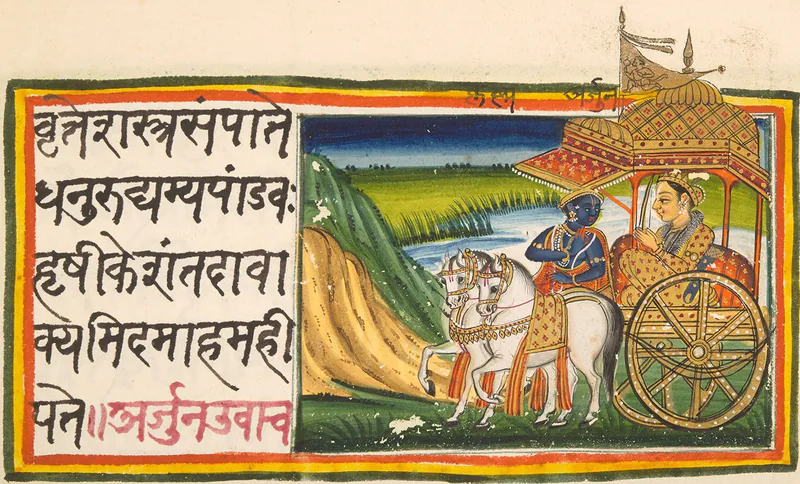
The Bhagavad Gita gave the doctrine an ethical turn. Since all embodied beings must act, the solution is not to stop acting but to act without attachment to results, offering action to God. Such action does not bind; this is the "discipline of action" (karma yoga), discussed in The Epics and the Bhagavad Gita.
Samsara: The Cycle of Rebirth§
Samsara, "wandering" or "flowing on," is the round of births and deaths through which the self passes. According to its karma, a being may be reborn as a god, a human, an animal or a plant, or may spend time in heavens or hells before returning to earthly birth. The Bhagavad Gita compares rebirth to a person casting off worn-out clothes and putting on new ones. Most schools hold that the self (atman or jiva) migrates accompanied by a subtle body that carries its mental impressions and karmic residues.
The early Upanishads present rebirth as a new and partly secret teaching, contrasting a "path of the gods," from which there is no return, with a "path of the fathers," which leads back to earth through rain, plants and food. Older ideas did not disappear: Hindu funeral and ancestral rites (shraddha) still feed and honour the ancestors as if they dwelt in a world of the fathers, and many Hindus hold both views together. For comparison with other traditions, see Reincarnation and the Afterlife and, for Puranic cosmology, The Puranas.
Moksha: Liberation and Its Interpretations§
Moksha or mukti, "release," is freedom from samsara. It is generally regarded as the highest human goal, but its nature is understood in different ways.
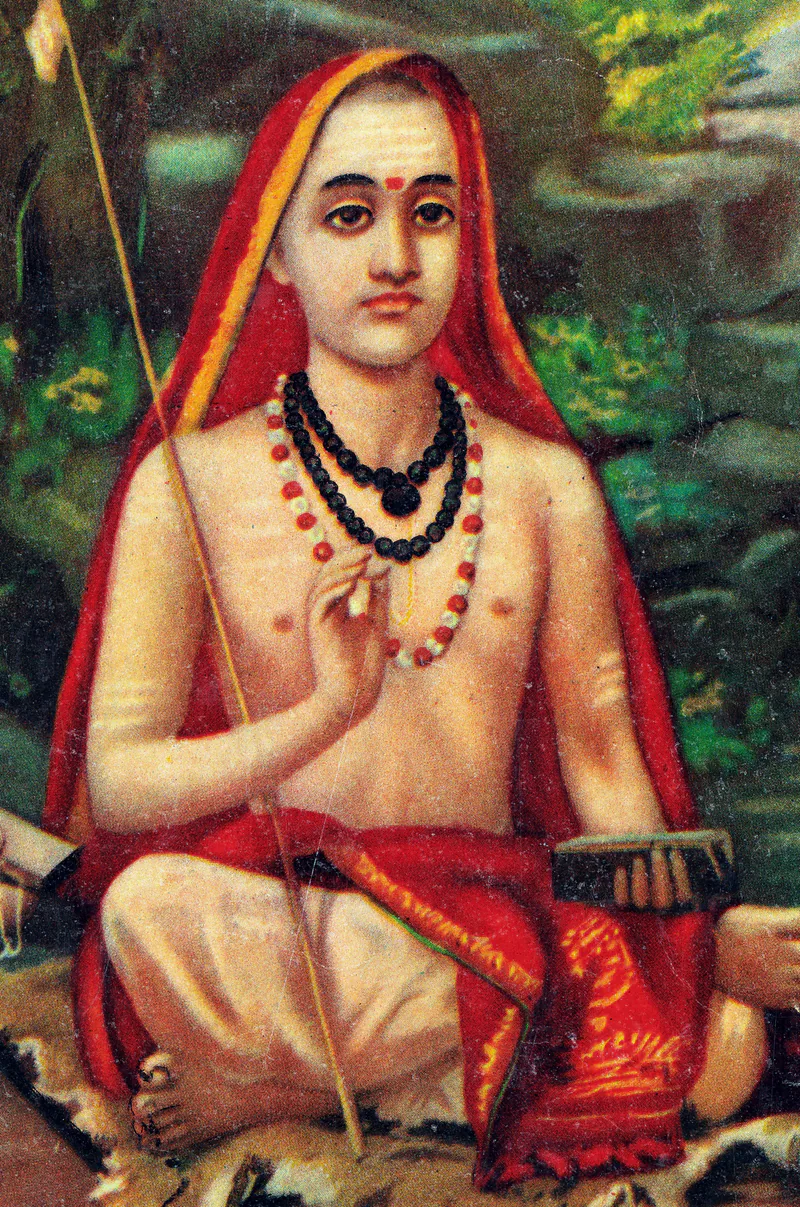
- In Advaita Vedanta, liberation is the realisation that the self is identical with brahman; nothing new is gained, but ignorance is removed. It can be attained while still alive (jivanmukti).
- In theistic Vedanta and the devotional traditions, the liberated soul remains distinct and enjoys eternal communion with or service of God, Vishnu or Shiva, in his heaven.
- In Samkhya and Yoga, liberation is kaivalya, the "isolation" of pure consciousness from matter, as explained in Yoga Philosophy and Samadhi.
- In Nyaya, it is the permanent cessation of suffering; the earliest Mimamsakas, by contrast, aimed chiefly at heaven through ritual.
These positions are compared in The Six Schools of Hindu Philosophy and Hinduism and Vedanta.
The Paths to Liberation§
The Gita and later teachers describe several paths (margas or yogas): the way of action performed as service; the way of knowledge, which discriminates the eternal self from the transient; and the way of loving devotion to God, which many traditions regard as the easiest and highest. Meditative yoga is a fourth discipline, and in the 1890s Swami Vivekananda popularised the scheme of four yogas, karma, jnana, bhakti and raja, that is now widely used to summarise Hinduism. Most traditions hold that the guidance of a guru is indispensable.
The Four Aims of Life and the Four Stages§
Classical Hinduism does not regard liberation as the only legitimate goal. Early texts speak of three aims (trivarga): dharma, artha, meaning wealth, power and worldly success, the subject of Kautilya's Arthashastra, and kama, love and pleasure, the subject of Vatsyayana's Kamasutra. Moksha was later added as the fourth aim. The ideal life balances them under the governance of dharma.
The four stages of life (ashramas) express a similar balance. A young man of the twice-born classes was to be a celibate student, then a married householder, then a forest-dwelling retiree, and finally a renouncer (sannyasi) who abandons all ties in pursuit of liberation. Historians have shown that the scheme began as a set of alternative lifestyles and only later became a sequence, an attempt to reconcile the householder's dharma with the renouncer's quest for release. In reality few people followed it in full, and women were mostly addressed only through the householder stage, but it remains a powerful ideal.
Frequently asked questions§
Is karma the same as fate in Hinduism?§
Not exactly. Karma explains present circumstances as results of past actions, but present actions continue to shape the future, and most traditions add that God's grace, devotion, ritual and knowledge can modify or burn away karma. Hindu thinkers have generally rejected pure fatalism.
What is the difference between dharma and karma?§
Dharma is the right order and the duty one ought to follow; karma is action and the consequences it produces. Acting in accordance with dharma produces good karma, while acting against it produces bad karma.
Can everyone attain moksha?§
Most Hindu traditions hold that moksha is open to all beings eventually, though some older texts restricted certain paths, such as Vedic study or formal renunciation, to particular classes. The devotional movements in particular insisted that sincere love of God makes liberation available to anyone regardless of caste or gender.
What are the four purusharthas?§
They are the four aims of human life: dharma (right conduct), artha (prosperity and power), kama (pleasure and love) and moksha (liberation). The first three concern life in the world; the fourth transcends it.
Sources and further reading§
- The Law Code of Manu — Patrick Olivelle (trans.), 2004
- The Laws of Manu — Georg Bühler (trans.), 1886
- The Āśrama System: The History and Hermeneutics of a Religious Institution — Patrick Olivelle, 1993
- Karma and Rebirth in Classical Indian Traditions — Wendy Doniger O'Flaherty (ed.), 1980
- Dharma: Its Early History in Law, Religion, and Narrative — Alf Hiltebeitel, 2011
- History of Dharmaśāstra — P. V. Kane, 1930