Liber XXXVI · Zoroastrianism · Chapter VI: Parsis & Modern Zoroastrianism
Parsis and Modern Zoroastrianism: India, Iran and the Diaspora
The Parsis and modern Zoroastrians: the migration to Gujarat, Parsi Bombay, reform and orthodoxy, Zoroastrians in Iran, the diaspora and identity.

The Parsis are the Zoroastrians of the Indian subcontinent, descendants of Iranians who, according to their tradition, left Iran after the Arab conquest and settled in Gujarat more than a thousand years ago. Together with the Zoroastrians who remained in Iran and the communities that have since spread to North America, Britain, Australia and elsewhere, they make up the modern Zoroastrian world: small in number, influential far beyond its size, and engaged in vigorous debates about reform, conversion and survival.
The Parsi Migration to India§
The founding story of the Parsis is preserved in the Qissa-i Sanjan ("Story of Sanjan"), a Persian poem completed in 1599 by Bahman Kaikobad, a priest of Navsari. It relates that Zoroastrians from Khorasan, unable to practise their religion freely after the Muslim conquest, sailed to the island of Hormuz and then to Diu, and finally landed on the coast of Gujarat at Sanjan. The local Hindu ruler, Jadi Rana, allowed them to settle on condition that they adopt the local language and certain customs, and there they enthroned a sacred fire. A later and much-loved legend, not found in the Qissa itself, tells that the king sent them a full bowl of milk to show that his land had no room, and that the Parsi leader stirred in sugar to show that they would sweeten it without making it overflow.
Historians treat the Qissa as a community memory written centuries after the events. Its chronology is ambiguous, and dates for the landing at Sanjan ranging from the early eighth to the tenth century have been proposed. Copper-plate inscriptions and other evidence show Iranian traders on the western coast of India in this period, and the migration may have taken place in several waves. The sacred fire said to have been established by the first settlers is today the Iranshah Atash Bahram at Udvada (see Zoroastrian fire temples and ritual).
Parsis in Gujarat and Bombay§
For centuries the Parsis lived as farmers, weavers, toddy-tappers and traders in the towns of Gujarat, especially Navsari and Surat. They adopted Gujarati as their language and Indian dress, while preserving their religion and its priestly lineages, which divided Gujarat into ecclesiastical districts (panths). From the fifteenth century they consulted the priests of Iran by letter on matters of ritual; these exchanges, the Rivayats, are an important source for Zoroastrian law.

The rise of Bombay under the East India Company transformed the community. Parsis moved to the new city in large numbers from the late seventeenth century and became shipbuilders, brokers and merchants, prominent in the trade with China. The Bombay Parsi Panchayat, which grew into the community's chief institution in the eighteenth century, administered charities, housing and religious property. In the nineteenth and twentieth centuries Parsis founded hospitals, schools and libraries, and produced leading figures in Indian public life: Dadabhai Naoroji (1825–1917), an early leader of the Indian National Congress and in 1892 the first Asian elected to the British House of Commons; Jamsetji Tata (1839–1904), founder of the industrial group that bears his name; the physicist Homi J. Bhabha; and Field Marshal Sam Manekshaw. The rock singer Freddie Mercury, born Farrokh Bulsara in Zanzibar in 1946, came from a Parsi family.
Reform, Orthodoxy and Esoteric Movements§
Contact with Western education and Christian missionaries provoked a religious crisis in the nineteenth century. The Scottish missionary John Wilson attacked Zoroastrianism in The Parsi Religion (1843) as dualistic and superstitious, and a few young Parsis converted to Christianity. In response, reformers founded associations such as the Rahnumae Mazdayasnan Sabha (1851), which sought to purify the religion of what they saw as later accretions, while the German scholar Martin Haug, lecturing in Bombay in the 1860s, taught that the Gathas of Zarathustra were strictly monotheistic and that later ritual and dualistic theology were secondary. Many Parsis adopted this view, which remains influential among reformists who treat the Gathas as the core of the faith (see Zarathustra and the Gathas and Ahura Mazda and cosmic dualism).
Traditionalists, by contrast, defended the authority of the whole Avesta, the priesthood and the purity laws. A third current was esoteric. The Theosophical Society, whose founders moved its headquarters to India in 1879, presented Zoroastrianism as an expression of ancient wisdom, and Henry Steel Olcott lectured to Parsi audiences in Bombay; on Theosophy's wider influence see the Theosophical Society. In the early twentieth century Behramshah Shroff founded Ilm-e Khshnoom ("science of spiritual satisfaction"), a Parsi esoteric movement that claimed hidden teachings received from Zoroastrian masters in the mountains of Iran and gave mystical justifications for traditional ritual.
A long dispute over the calendar also divided the community: in 1745 some Parsis adopted the Kadmi calendar used in Iran, one month different from the prevailing Shahenshahi reckoning, and in the twentieth century a Fasli calendar fixed to the seasons was introduced, so that three calendars remain in use.
Zoroastrians in Iran from the Qajars to Today§
In Iran, Zoroastrians — often called by the derogatory term gabr — lived for centuries as a small, poor and sometimes persecuted minority, concentrated in and around Yazd and Kerman. In the nineteenth century Parsis in India organised aid for them; the Persian Zoroastrian Amelioration Fund, founded in Bombay in 1854, sent the envoy Manekji Limji Hataria to Iran, and in 1882 the Qajar shah abolished the special poll tax levied on Zoroastrians. Some Iranian Zoroastrians migrated to India, where they are known as Iranis and became famous for their cafés in Bombay and Pune.
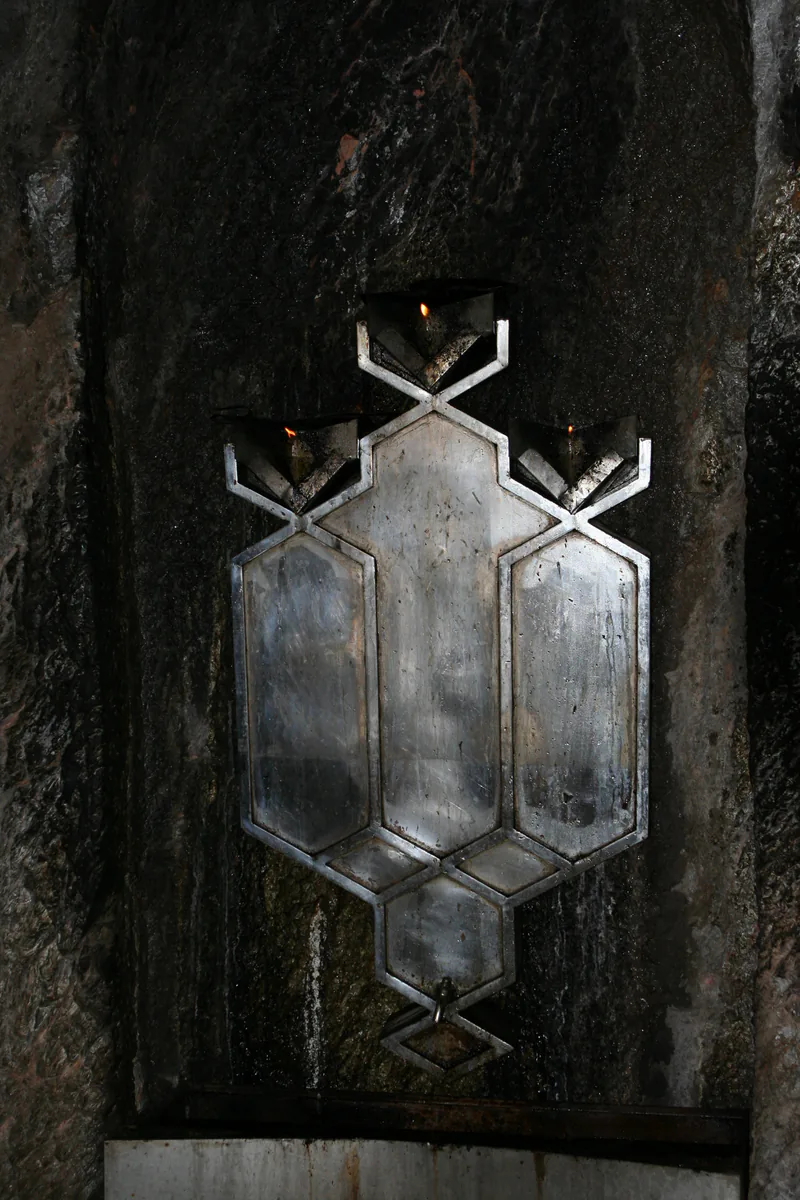
The constitution of 1906 gave Zoroastrians a representative in the new parliament, and under the Pahlavi shahs, who celebrated pre-Islamic Iran, the community gained status and moved increasingly to Tehran. The constitution of the Islamic Republic of 1979 recognises Zoroastrians as a religious minority with one seat in parliament. Iranian Zoroastrians maintain their own customs, including pilgrimages to mountain shrines near Yazd such as Pir-e Sabz (Chak Chak), and festivals like Sadeh and Mehregan, which many non-Zoroastrian Iranians now attend as celebrations of national heritage.
A Global Diaspora§
From the nineteenth century Parsis and Iranian Zoroastrians settled in Britain, East Africa, Hong Kong and Singapore, and after 1960, and again after the Iranian revolution of 1979, in large numbers in North America, Britain and Australia. The Zoroastrian association in Britain traces its origins to 1861, and North American associations formed the Federation of Zoroastrian Associations of North America (FEZANA) in 1987. Diaspora communities, often without resident priests or consecrated fires, have built dar-e mihrs and community centres, hold World Zoroastrian Congresses and teach the religion to children who may have little Gujarati or Persian. The sociologist John Hinnells documented this diaspora in detail.
Identity, Conversion and Demographic Decline§
The Parsi population of India fell from about 114,000 in 1941 to about 57,000 in the census of 2011, because of late marriage, low birth rates and emigration; surveys suggest a worldwide Zoroastrian population of roughly 110,000 to 125,000 in the 2010s. The Indian government's "Jiyo Parsi" programme, launched in 2013, supports fertility treatment for Parsi couples.
Underlying the demographic question is the question of who is a Zoroastrian. Orthodox Parsis do not accept converts and, following a Bombay High Court judgement of 1908 and long custom, generally accept the children of Parsi fathers and non-Parsi mothers but not those of Parsi mothers and non-Parsi fathers; women who marry outside the community have sometimes been barred from fire temples and funeral grounds, an issue that has reached India's Supreme Court. Reformists, particularly in the diaspora, argue that Zarathustra's message was universal and welcome converts and mixed families; small movements of new converts have appeared in Russia, Central Asia, Latin America and among Kurds. The future of the towers of silence, discussed in Zoroastrian fire temples and ritual, is another point of tension between tradition and change. The faith's beliefs are summarised in What Is Zoroastrianism?
Frequently asked questions§
Who are the Parsis?§
The Parsis are the Zoroastrian community of India and Pakistan, descended from Iranians who settled in Gujarat after the Arab conquest of Iran. Their name means "Persians", and today most live in Mumbai and Gujarat.
Can you convert to Zoroastrianism?§
Traditional Parsi practice does not accept converts, and many Indian fire temples admit only those born into the community. Some Iranian and diaspora Zoroastrians accept converts, and a number of reformist priests perform initiations for them, so practice varies.
What is the difference between Parsis and Iranis?§
Both are Zoroastrians in India. Parsis descend from the early medieval migrants from Iran, whereas Iranis descend from Zoroastrians who came from Iran much later, mainly in the nineteenth and early twentieth centuries, and kept closer ties to Iranian language and customs.
Sources and further reading§
- The Zoroastrian Diaspora: Religion and Migration — John R. Hinnells, 2005
- The Parsis of India: Preservation of Identity in Bombay City — Jesse S. Palsetia, 2001
- Zoroastrians: Their Religious Beliefs and Practices — Mary Boyce, 1979
- A Persian Stronghold of Zoroastrianism — Mary Boyce, 1977
- The Zoroastrian Flame: Exploring Religion, History and Tradition — Alan Williams, Sarah Stewart & Almut Hintze (eds.), 2016
- Zoroastrianism: An Introduction — Jenny Rose, 2011