Liber XVI · Indigenous & Ancient Religions · Chapter III: Australian & Pacific Religions
Traditional Hawaiian Religion: Akua, Kapu, Heiau and Revival
Traditional Hawaiian religion explained: the gods Kū, Kāne, Lono, Kanaloa and Pele, the Kumulipo, heiau and kāhuna, and the kapu system and its 1819 end.

Traditional Hawaiian religion is the indigenous religion of the Kānaka Maoli, the Native Hawaiian people, centred on the worship of gods (akua) such as Kū, Kāne, Lono, Kanaloa and the volcano goddess Pele, on ancestral guardians, and on a system of sacred restrictions called kapu. Temples (heiau) served by priests (kāhuna) upheld the power of ruling chiefs, and the kapu regulated relations between chiefs and commoners and between men and women. The official religion was overthrown by Hawaiʻi's own rulers in 1819, months before Christian missionaries arrived, but many of its beliefs, chants and practices have survived and are honoured by Native Hawaiians today.
The Akua: Kū, Kāne, Lono, Kanaloa and Pele§
The settlers who reached Hawaiʻi from central eastern Polynesia, probably around 1000–1200 CE according to current archaeological estimates, brought gods also known elsewhere in the Pacific. Four were pre-eminent. Kū, "upright", was the god of war, but also of fishing, canoe-building and forests; his many forms included Kūkāʻilimoku, the war god of Kamehameha I, represented by a famous image of red and yellow feathers. Kāne was associated with life, sunlight, fresh water and procreation. Lono was the god of rain, agriculture, fertility and peace. Kanaloa was linked with the ocean and its winds and with voyaging; in parts of Polynesia his counterpart Tangaroa was the supreme creator.
Many other deities were honoured. Pele, goddess of the volcano, dwelt in the crater of Kīlauea on Hawaiʻi Island; a large body of chant tells of her journey from Kahiki and of her sister Hiʻiaka. Laka was patron of the hula. Families had their own ʻaumakua, deified ancestors who might appear as sharks, owls, lizards or other creatures and who protected and disciplined their descendants. The wider Pacific background of these ideas, including mana and tapu, is introduced in Australian and Pacific religions.
The Kumulipo and Hawaiian Cosmology§
The best-known Hawaiian creation text is the Kumulipo, "beginning in deep darkness", a genealogical chant of more than two thousand lines. It was composed, according to tradition, for a high chief around the early eighteenth century and was preserved in the line of King Kalākaua, who printed it in 1889; Queen Liliʻuokalani published an English translation in 1897, and Martha Beckwith produced a scholarly edition in 1951.
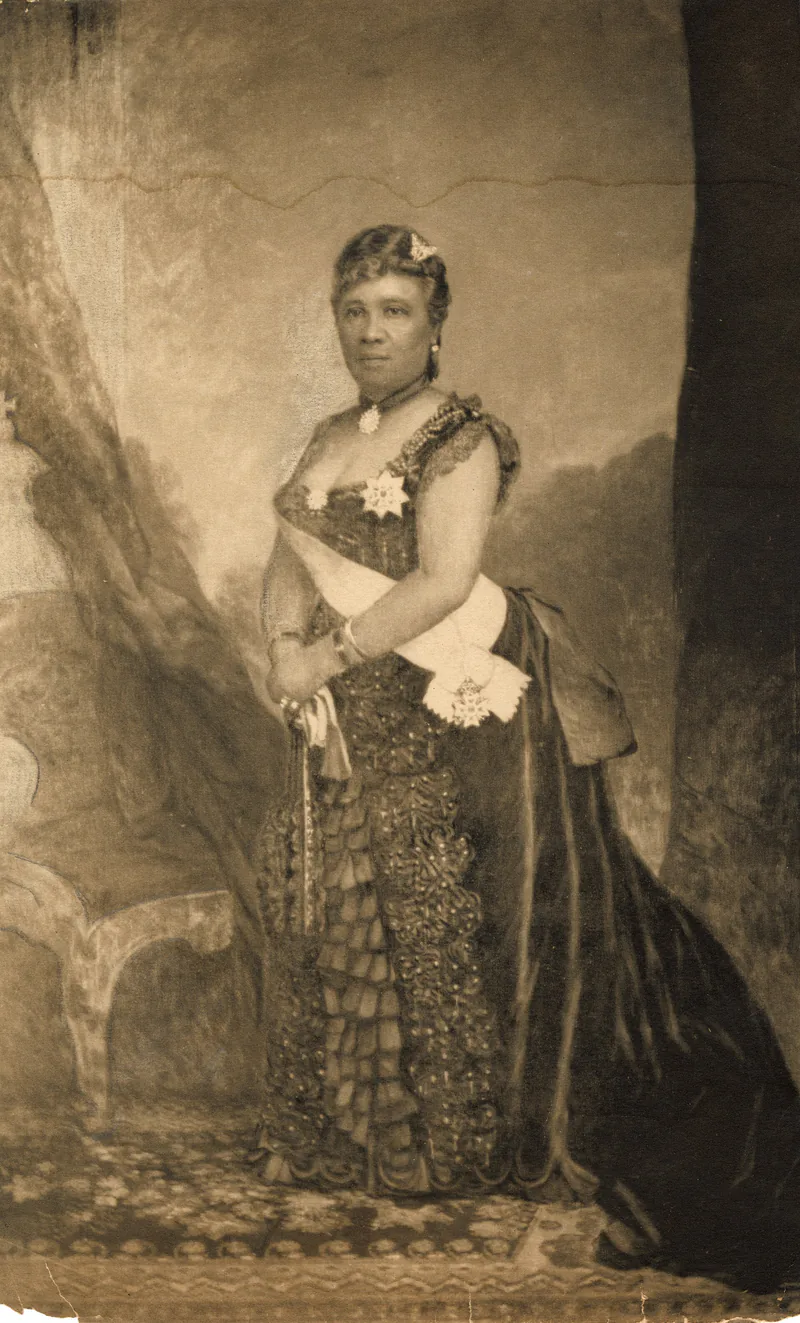
The chant begins in pō, the primordial night, from which life unfolds in successive eras: the coral polyp first, then shellfish, seaweeds and fish, insects and birds, creatures of land and sea, and at last the gods and human beings, culminating in the genealogy of the chief for whom it was composed. Its pairing of land and sea species and its vision of creation as a continuous unfolding of kin have often been noted. The Kumulipo was not a creed but a sacred genealogy, linking ruling chiefs to the origins of the cosmos and so affirming their rank and mana.
In Hawaiian thought, the gods, the land and the people are bound by descent. Another tradition traces the islands themselves to the union of Wākea, the sky father, and Papahānaumoku, the earth mother, whose descendants include the taro plant and the first chiefs. Care for the land (mālama ʻāina) is therefore also care for an elder relative.
Heiau, Kāhuna and the Rites of Chiefs§
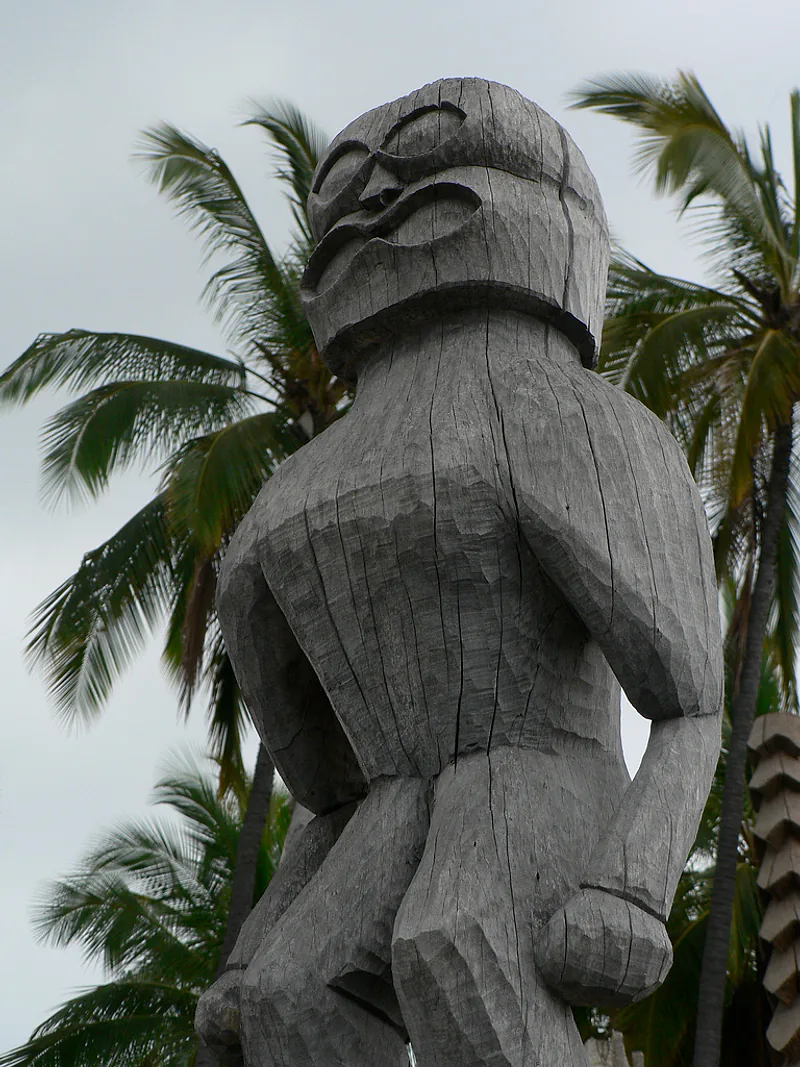
Worship centred on the heiau, temples ranging from small fishing shrines to great stone platforms. The most important were the luakini, temples of the state dedicated to Kū, which only a ruling chief could build or reconsecrate. Their rites, described by nineteenth-century Hawaiian scholars such as David Malo and Samuel Kamakau, involved long ceremonies of prayer, offerings and carved wooden images (kiʻi), and at the most solemn moments human sacrifice, usually of war captives or kapu breakers. The anthropologist Valerio Valeri's Kingship and Sacrifice (1985) analysed this cult as the core of Hawaiian kingship. Puʻukoholā Heiau, built by Kamehameha I around 1790–1791 as he fought to unite the islands, still stands on Hawaiʻi Island.
Priests and experts were called kāhuna, a word meaning master of a craft. There were temple priests of Kū and Lono, but also kāhuna of healing (lāʻau lapaʻau), navigation, canoe-building, genealogy and sorcery. Knowledge passed through long apprenticeship and was carefully guarded. The twentieth-century "Huna" system popularised by the American writer Max Freedom Long from the 1930s onward, and later taken up in New Age circles, is Long's own construction; Native Hawaiian scholars and practitioners have repeatedly said that it does not represent traditional Hawaiian religion.
The Kapu System: Mana, Law and Separation§
Kapu, the Hawaiian form of the Polynesian tapu, meant sacred, restricted or forbidden. Persons and things charged with mana, divine power and efficacy, had to be protected from contact with what was common (noa). The highest chiefs carried such intense kapu that commoners had to prostrate themselves in their presence, and even their shadows, belongings and bathwater were dangerous to touch.
The ʻai kapu, "sacred eating", separated men and women at meals. Men and women ate apart, food for each was prepared in separate ovens, and women were forbidden certain foods, including pork, most kinds of banana, coconuts and particular fish, many of which were offered to the gods. Other kapu regulated fishing seasons, the use of resources and ritual periods during which silence or stillness was required.
Breaking a serious kapu could be punished by death, since it endangered the relation between gods and people. Yet the system also offered mercy: a kapu breaker or a defeated warrior who reached a puʻuhonua, a place of refuge such as the one at Hōnaunau on Hawaiʻi Island, could be absolved by its priests and return home. Hawaiian historians emphasise that the kapu functioned as law, governing land, sea and social order as well as religious life.
Makahiki, Lono and the Arrival of Captain Cook§
Each year the four-month season of Makahiki, beginning with the appearance of the Pleiades (Makaliʻi) in the evening sky around November, was dedicated to Lono. War was forbidden, the luakini rites were suspended, and an image of Lono, a tall staff hung with white bark cloth, was carried around each island in a clockwise circuit to receive tribute from every district. Games, feasts and contests filled the season, which ended with rites restoring the rule of Kū and the chief.
In January 1779 the British explorer James Cook sailed into Kealakekua Bay on Hawaiʻi Island during the Makahiki and was received with elaborate ceremonies at the Hikiau heiau. He left early in February, returned a week later to repair a damaged mast, and was killed on 14 February in a confrontation over a stolen boat. Whether the Hawaiians identified Cook with Lono became the subject of a famous scholarly debate. Marshall Sahlins argued in Islands of History (1985) that Cook's movements fitted the ritual pattern of the Makahiki and that he was treated as a form of Lono; Gananath Obeyesekere replied in The Apotheosis of Captain Cook (1992) that the idea was a European myth, and that Hawaiians, as practical people, would not have mistaken him for a god. The exchange shaped wider discussion of how outsiders interpret other peoples' religions.
The End of the Kapu in 1819 and Modern Revival§
Kamehameha I died in May 1819. His heir Liholiho (Kamehameha II), urged by Kamehameha's powerful widow Kaʻahumanu and by his mother Keōpūolani, publicly ate with women at a feast in Kailua that autumn, breaking the ʻai kapu. Orders followed to destroy heiau and burn the images, and the high priest Hewahewa supported the change. A chief named Kekuaokalani, guardian of Kūkāʻilimoku, took up arms for the old order and was defeated and killed at the battle of Kuamoʻo in December 1819. Historians explain the abolition through political rivalries, the influence of foreigners who broke kapu without punishment, devastating epidemics and the ambitions of chiefly women. American Protestant missionaries arrived only in 1820, and many chiefs then embraced Christianity.
The old religion did not vanish. In 1824 the Christian chiefess Kapiʻolani famously defied Pele at the edge of Kīlauea's crater, but devotion to Pele continued among Hawaiian families. Hula, restricted under missionary influence, was publicly revived by King Kalākaua in the 1880s. From the 1970s the Hawaiian Renaissance brought new life to language, chant, hula and navigation; the voyaging canoe Hōkūleʻa sailed to Tahiti in 1976, and the Protect Kahoʻolawe ʻOhana campaigned to end military bombing of the island of Kahoʻolawe, where Makahiki ceremonies were later revived. Protests to protect the summit of Mauna Kea, regarded as sacred, against telescope construction drew wide support in 2019.
Native Hawaiian practitioners today often ask visitors to respect heiau and other sacred sites, not to remove stones or leave inappropriate offerings, and not to treat chants, hula or ceremonies as entertainment or as material for commercial spirituality.
Frequently asked questions§
What were the main gods of Hawaii?§
The four principal gods were Kū (war, fishing and forests), Kāne (life and fresh water), Lono (rain, agriculture and peace) and Kanaloa (the ocean). Pele, goddess of the volcano, and the family guardian spirits called ʻaumakua were also widely honoured.
What was the kapu system?§
It was a system of sacred laws and restrictions that protected the mana of gods and chiefs and governed relations between ranks and between men and women, including the separation of men and women at meals. Serious violations could be punished by death.
Why was the kapu system abolished in 1819?§
After the death of Kamehameha I, his son Liholiho and the queen Kaʻahumanu broke the eating kapu and ordered the destruction of the temples. Historians cite political struggle among chiefs, foreign influence and social upheaval; Christian missionaries arrived only after the abolition.
Sources and further reading§
- Hawaiian Antiquities (Moolelo Hawaii) — David Malo, 1903
- Ruling Chiefs of Hawaii — Samuel Manaiakalani Kamakau, 1961
- Hawaiian Mythology — Martha Beckwith, 1940
- The Kumulipo: A Hawaiian Creation Chant — Martha Warren Beckwith, 1951
- Kingship and Sacrifice: Ritual and Society in Ancient Hawaii — Valerio Valeri, 1985
- Islands of History — Marshall Sahlins, 1985
- The Apotheosis of Captain Cook: European Mythmaking in the Pacific — Gananath Obeyesekere, 1992
- Native Land and Foreign Desires: Pehea Lā E Pono Ai? — Lilikalā Kameʻeleihiwa, 1992