Liber IV · Buddhism · Chapter I: Buddhism in the West
Alexandra David-Néel: The Explorer Who Brought Tibet to the West
Alexandra David-Néel: her journey to Lhasa in 1924, years with Tibetan hermits, Magic and Mystery in Tibet, tulpas and trance runners, and her legacy.

Alexandra David-Néel (1868–1969) was a French writer, Buddhist and explorer who in 1924 became the first European woman to reach Lhasa, the forbidden capital of Tibet, travelling in disguise as a beggar pilgrim. Her books, above all My Journey to Lhasa and Magic and Mystery in Tibet, described Tibetan hermits, rituals and meditative feats to a wide Western audience and shaped how Europeans and Americans imagined Tibetan Buddhism for much of the twentieth century.
Early Life: Theosophy, the Musée Guimet and the Opera Stage§
Louise Eugénie Alexandrine Marie David was born in 1868 at Saint-Mandé, near Paris, to a French Protestant father and a Belgian Catholic mother, and grew up mostly in Brussels. Restless and independent, she ran away from home several times as a girl. As a young woman she spent time in London, where she frequented the circle of the Theosophical Society, and then studied Asian languages and religions in Paris. She later recalled that her decisive encounter with Buddhism took place in the library and galleries of the Musée Guimet, the Paris museum of Asian art, and she considered herself a Buddhist from her early twenties.
The Theosophical milieu that first drew her eastward is described in Theosophy, Lobsang Rampa and the Western third eye, but she soon distanced herself from its Masters and occult hierarchies, preferring what she saw as the rational, experimental core of the Buddha's teaching.
To support herself she trained as a singer and performed for several years as a soprano, including at the opera house in Hanoi in the 1890s and later in Athens and Tunis. She also wrote on anarchist and feminist themes. In Tunis in 1904 she married Philippe Néel, a railway engineer. The marriage was unconventional: the couple lived apart for most of their lives, but Philippe supported her travels financially, and her long letters to him are one of the main sources for her journeys.
India, Sikkim and the Hermit of Lachen§
In 1911 she left for India, intending a journey of eighteen months; she did not return for fourteen years. In 1912, at Kalimpong in the eastern Himalayas, she obtained an audience with the Thirteenth Dalai Lama, then in temporary exile from Tibet, who encouraged her to learn Tibetan. In the small kingdom of Sikkim she was befriended by the crown prince, Sidkeong Tulku, a reforming reincarnate lama, and met the Gomchen ("great meditator") of Lachen, a tantric hermit who became her principal teacher.
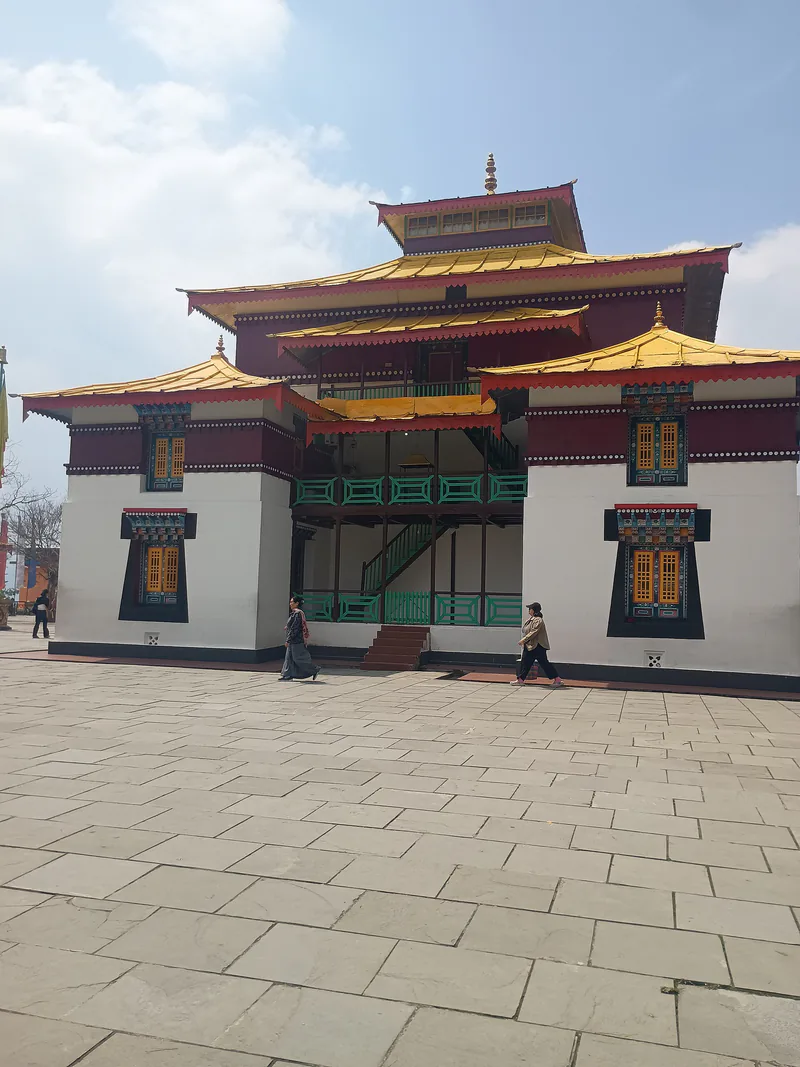
For about two years, from 1914, she lived in a cave hermitage near his retreat at almost 4,000 metres, studying Tibetan language and texts and practising meditation through the Himalayan winter. During this period she took in a fifteen-year-old Sikkimese monk, Aphur Yongden (1899–1955), who became her companion for the rest of his life and whom she later legally adopted. In 1916 she crossed the border without permission to visit the Ninth Panchen Lama at Tashilhunpo monastery in Shigatse. The British authorities in Sikkim expelled her in response.
Kumbum and the Journey to Lhasa in 1924§
Barred from Tibet through India, she and Yongden went to Japan, Korea and China, and from 1918 spent about three years at or near Kumbum, a great Gelug monastery in the north-eastern Tibetan region of Amdo, where she studied texts and observed monastic life. She then set out on a long and dangerous journey across eastern Tibet, determined to reach Lhasa, which the Tibetan government, under British and Chinese pressure, kept closed to foreigners.
In the winter of 1923–24, aged fifty-five, she crossed the high passes on foot with Yongden, posing as his mother, a poor pilgrim. She darkened her face with soot, carried a begging bowl and hid her compass and pistol under her clothes. They reached Lhasa early in 1924 and remained for about two months, visiting the Potala Palace and the great monasteries unrecognised. Her account, My Journey to Lhasa (1927), was an immediate success in France, Britain and America, and she returned to Europe in 1925 as a celebrity.
Magic and Mystery in Tibet: Tulpas, Trance Runners and Inner Heat§
Her most influential book, published in French in 1929 and in English in 1931 (in the United States as Magic and Mystery in Tibet), described the spiritual practices she had witnessed or heard about. She wrote of tummo, the yogic "inner heat" by which hermits were said to endure the cold wearing only cotton, and of tests in which students dried wet sheets on their bodies on winter nights. She described lung-gom-pa runners, who were said to travel enormous distances in a trance-like state with long, bounding strides. She wrote of the chöd rite, in which a practitioner visualises offering his own body to demons in order to cut attachment to the self, and of the oracles and divination used in Tibetan communities.
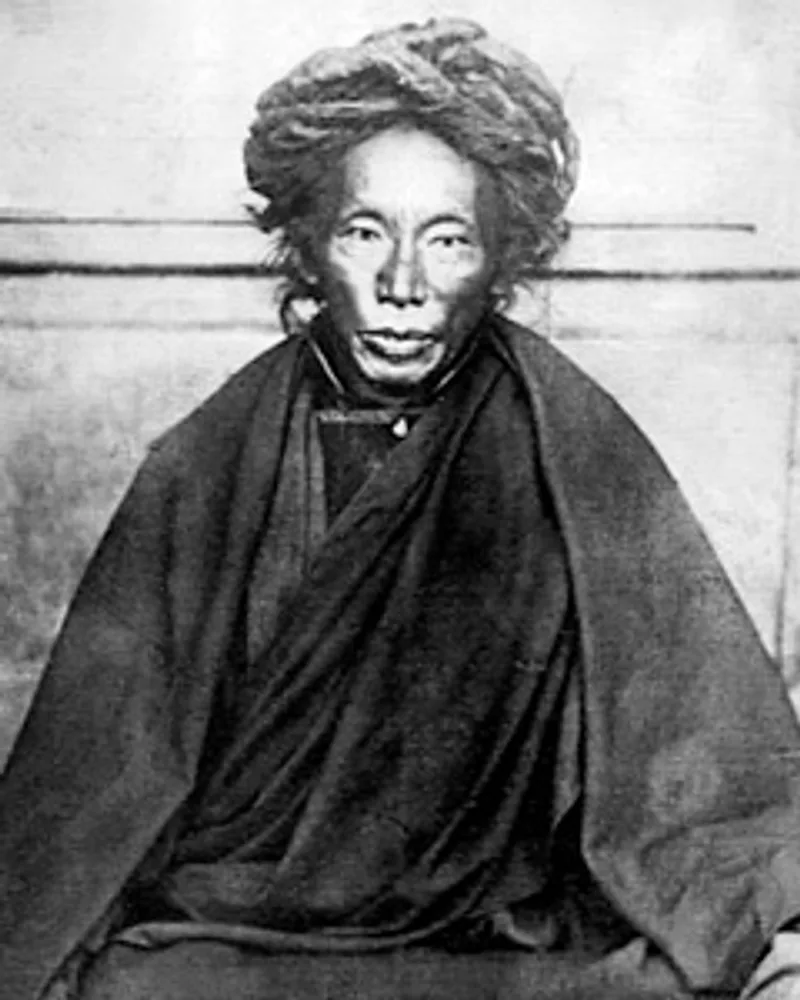
The most famous passage concerns the tulpa, a term she took from the Tibetan word for an emanation or magical creation. She claimed to have created, through prolonged concentration, the phantom of a jovial monk who gradually became visible to others and slipped out of her control, until she dissolved it with difficulty. The episode later inspired Western occultists and, from the 2010s, an online movement of "tulpamancers", as described in servitors and egregores.
David-Néel insisted that none of this was supernatural. She presented such phenomena as products of psychic training and concentration, the subject, in her view, of a kind of experimental psychology. Readers and scholars have long debated how much of her account rests on direct observation, on hearsay and on literary embellishment; her biographers note that she wrote for a popular audience and was not averse to dramatising her experiences.
Scholar, Buddhist and Writer: The Later Years at Digne§
In 1928 David-Néel settled at Digne in Provence, in a house she named Samten Dzong, "fortress of meditation". With Yongden she translated and wrote steadily: Initiations and Initiates in Tibet, an account of tantric initiation and teaching; The Superhuman Life of Gesar of Ling, a version of the Tibetan epic; and later works on Buddhist doctrine, including the book published in English as The Secret Oral Teachings in Tibetan Buddhist Sects. In her writing on Buddhism she stressed reason, self-reliance and the analysis of mind, a view close to the Buddhist modernism of her time.
She returned to China in 1937 and spent the war years largely in the eastern Tibetan border town of Tachienlu (modern Kangding), coming back to France in 1946. Yongden died in 1955. David-Néel continued to write into extreme old age and, according to a well-known anecdote, renewed her passport at one hundred. She died at Digne in 1969, a few weeks before her 101st birthday. In 1973 her ashes and Yongden's were scattered in the Ganges at Varanasi.
Legacy and Assessment§
David-Néel's books reached a far wider public than academic Tibetology, and they were read by later generations of Western seekers, including writers of the Beat Generation. With the Theosophists before her and Lobsang Rampa after her, she contributed to the image of Tibet as a land of hidden wisdom and strange powers that historians such as Donald Lopez have analysed critically. Unlike many contributors to that image, however, she had genuinely lived among Tibetans, learned the language and studied with real teachers, and her accounts of ordinary monastic and lay life remain valuable.
She also stands among the pioneering Western women in Buddhism, part of the history traced in Buddhism in the West. Her house at Digne is now a museum, and her work remains in print in many languages, alongside the later flowering of Tibetan Buddhism in exile and in Western countries.
Frequently asked questions§
Was Alexandra David-Néel the first Western woman in Lhasa?§
She is generally recognised as the first European woman to reach Lhasa, which she entered in disguise early in 1924 with her adopted son Aphur Yongden. Lhasa was then closed to foreigners, and she stayed for about two months without being identified.
Did Alexandra David-Néel really create a tulpa?§
In Magic and Mystery in Tibet she claimed to have created a visualised phantom monk that became partly independent before she dissolved it. There is no way to verify the story; she interpreted it as a psychological phenomenon, and many readers regard it as a subjective experience told with literary licence.
Was Alexandra David-Néel a Buddhist?§
Yes. She considered herself a Buddhist from her early twenties, studied with Tibetan teachers and wrote several books on Buddhist doctrine. Her understanding stressed reason and personal practice rather than devotion or the supernatural.
Sources and further reading§
- My Journey to Lhasa — Alexandra David-Néel, 1927
- Magic and Mystery in Tibet — Alexandra David-Néel, 1931
- Initiations and Initiates in Tibet — Alexandra David-Néel, 1931
- The Secret Lives of Alexandra David-Neel — Barbara M. Foster and Michael Foster, 1998
- Alexandra David-Neel: Portrait of an Adventurer — Ruth Middleton, 1989
- Trespassers on the Roof of the World: The Race for Lhasa — Peter Hopkirk, 1982
- Prisoners of Shangri-La: Tibetan Buddhism and the West — Donald S. Lopez Jr., 1998