Liber VIII · Eastern Mysticism · Chapter X: The Third Eye
Theosophy, Lobsang Rampa and the Western Third Eye
How the West invented its third eye: Blavatsky's pineal eye, Leadbeater's clairvoyant chakras, Steiner and Bailey, and Cyril Hoskin's 1956 hoax The Third Eye.

The Western idea of the "third eye", a dormant organ of psychic vision linked to the pineal gland that can be "opened", was created largely by the Theosophical movement between the 1880s and the 1920s and popularised by a single best-seller of 1956. Helena Blavatsky taught that the pineal gland was the withered remnant of a spiritual eye; C. W. Leadbeater described the brow chakra as an organ of clairvoyance; and The Third Eye, presented as the memoir of a Tibetan lama called Lobsang Rampa, turned out to be the work of an Englishman, Cyril Hoskin, who had never been to Tibet.
Before Theosophy: Inner Sight in Western Occultism§
Western esotericism had long spoken of inner sight. Neoplatonic and Christian writers described an "eye of the soul" opened by contemplation, and in the eighteenth century Emanuel Swedenborg claimed that his spiritual sight had been opened so that he could see heaven and hell. In the decades around 1800, practitioners of animal magnetism, or mesmerism, reported that subjects in a magnetic trance could perceive distant events or read with their eyes covered, sometimes claiming to see through the forehead or the pit of the stomach. By the mid-nineteenth century Spiritualist mediums were demonstrating "clairvoyance" on public platforms.
None of this was yet attached to a specific organ between the brows. What changed in the 1880s was the meeting of three things: Western occultism's interest in psychic faculties, a growing Western awareness of Indian yoga and tantra, and new scientific findings about the pineal gland.
Blavatsky's Third Eye in The Secret Doctrine§
In 1886 zoologists described a light-sensitive "parietal eye" connected with the pineal complex in certain lizards. Helena Petrovna Blavatsky (1831–1891), co-founder of the Theosophical Society in 1875, seized on these reports. In the second volume of The Secret Doctrine (1888), devoted to the origins of humanity, she described a sequence of "root races" over immense periods of time. The early races, she taught, possessed a third eye, an organ of spiritual vision, which was physically active in the remote past. As humanity descended into gross matter and sensuality, the eye withdrew and hardened into the pineal gland, which remained as its witness.
Blavatsky connected this third eye with the eye of Śiva and with the Cyclopes of Greek myth, which she treated as distorted memories of the early races. Spiritual sight, in her account, could still be reawakened in the purified seer, but only through moral and spiritual development, not by technique alone. Her synthesis gave the modern West its central formula: the third eye is real, it is the pineal gland, and it is dormant rather than absent. Historians regard the root-race scheme as a nineteenth-century construction drawing on contemporary science, evolutionary theory and Indian cosmology. For the scientific side of the story, see the pineal gland from Descartes to modern science; for the movement, see what is Theosophy.
Leadbeater, Besant and Clairvoyance§
The most influential Theosophical writer on psychic perception was Charles Webster Leadbeater (1854–1934). In Clairvoyance (1899) he set out a classification of psychic faculties, and in Occult Chemistry (1908, with Annie Besant) he and Besant claimed to have observed the structure of atoms by a "magnifying" clairvoyance. In The Chakras (1927) Leadbeater described the subtle centres as spinning vortices that he said he could see. The brow centre, in his description, has ninety-six "spokes" or petals divided into two halves of different colours, a figure quite different from the two petals of the Sanskrit texts. He associated the faculty of magnification with this centre and even suggested that the serpent on the brow of Egyptian royal headdresses symbolised it.
Leadbeater and other Theosophists also mapped the centres onto endocrine glands and nerve plexuses. In much Theosophical writing the brow centre was related to the pituitary body and the crown to the pineal, although accounts varied. This correlation of chakras with glands, absent from the Indian sources, became a standard feature of later Western chakra books. On Leadbeater's wider influence see the history of the chakras and the Theosophical Society.
The Third Eye after Blavatsky: Steiner and Bailey§
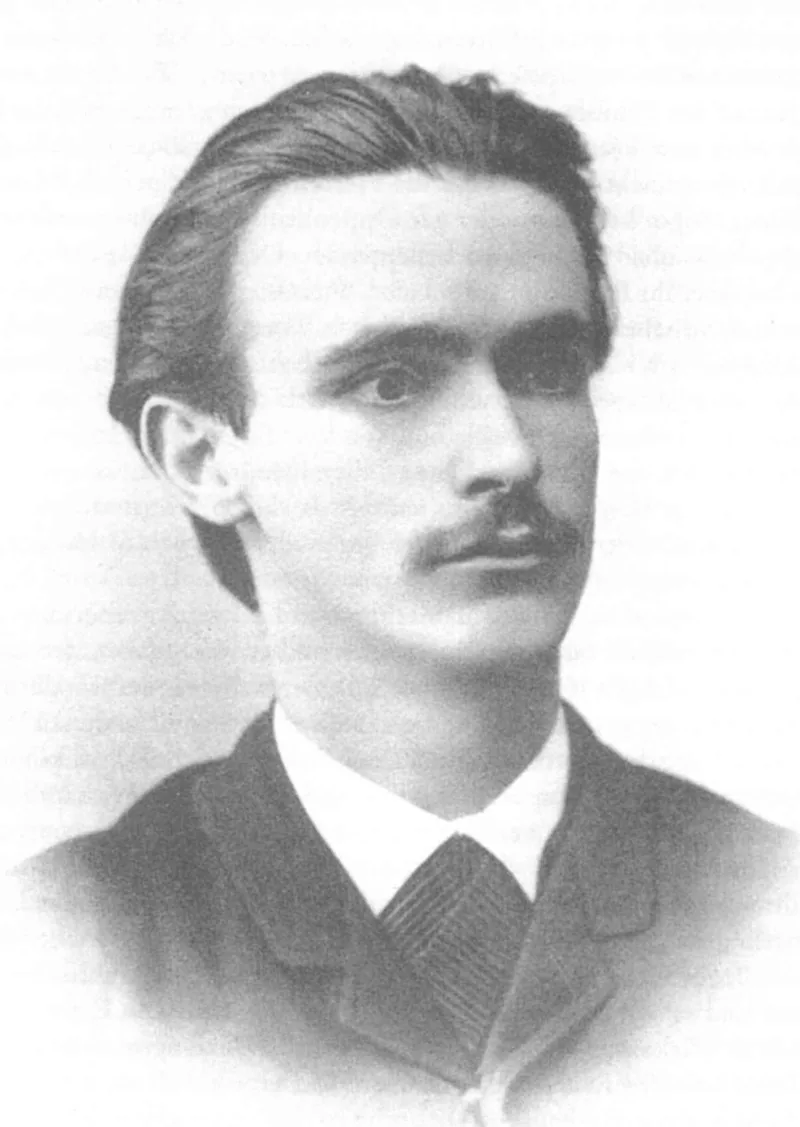
Two important teachers who emerged from Theosophy developed the theme in their own ways. Rudolf Steiner, in the series of essays published as How to Know Higher Worlds (from 1904), described spiritual organs of perception that he called "lotus flowers", including a two-petalled lotus in the region between the eyes. He presented their development as the fruit of patient moral and meditative discipline and warned against forcing them. His later movement is described in Anthroposophy.
Alice A. Bailey, whose books from the 1920s onward were presented as teachings received from a Tibetan master, wrote extensively on the "ajna centre" and the "head centre". She related the first to the pituitary and the second to the pineal, and in some passages described the third eye as something that develops through the interplay of these centres in the advanced disciple. Her vocabulary of centres, rays and energies fed directly into the New Age movement of the later twentieth century.
Lobsang Rampa and The Third Eye (1956)§
In November 1956 the London publisher Secker & Warburg issued The Third Eye, presented as the autobiography of T. Lobsang Rampa, a lama from a noble Lhasa family. The book described his childhood training at the Chakpori medical college on a hill in Lhasa, and above all an operation at the age of eight in which, it said, a hole was bored into his forehead and a sliver of treated wood inserted to open his third eye, giving him the ability to see auras. It also told of flying kites large enough to carry men, encounters with the yeti and secret knowledge preserved in Tibetan monasteries.
The book arrived at a moment of intense Western interest in Tibet, which had been occupied by China in 1950 and was the subject of Heinrich Harrer's best-selling Seven Years in Tibet. Before publication the manuscript had been shown to people with knowledge of Tibet, several of whom doubted it, and the publishers included a foreword acknowledging that they could not verify the author's claims. The Third Eye was nonetheless an immediate success, translated into many languages and reprinted for decades.
The Exposure of Cyril Hoskin§
Specialists who knew Tibet were sceptical from the start: the book was full of errors about Tibetan language, customs and Buddhism. A group of them engaged a private detective, and in early 1958 British newspapers reported that "Lobsang Rampa" was Cyril Henry Hoskin (1910–1981), the son of a plumber from Plympton in Devon, who had worked in a series of ordinary jobs, had never been to Tibet and knew no Tibetan. Hoskin did not retract. In later books he explained that in 1949, after a fall in his garden, his body had been taken over by the spirit of the Tibetan lama, so that the story was true of the person now inhabiting it.
Hoskin went on to write nearly twenty books under the Rampa name, eventually settling in Canada, where he died in Calgary in 1981. The anthropologist and monk Agehananda Bharati wrote a critical essay on what he called "Rampaism", and the historian of Buddhism Donald Lopez, in Prisoners of Shangri-La (1998), devoted a chapter to the book. Lopez shows how The Third Eye, for many readers their first encounter with Tibet, shaped Western expectations of Tibetan Buddhism for decades, even among those who knew it to be a fabrication. Tibetan Buddhism has no practice of opening a third eye by surgery; the three-eyed deities and inner sight it does describe are discussed in the urna and inner sight in Buddhism.
The Western Third Eye after Rampa§
From the 1960s the Western third eye passed into the counterculture and then the New Age. The rainbow chakra scheme of the 1970s assigned the brow centre the colour indigo and the themes of intuition and imagination, and popular books combined Blavatsky's pineal gland, Leadbeater's clairvoyant chakras and Rampa's aura-seeing into a single picture. In recent decades online culture has added promises of pineal "activation" and "decalcification", for which there is no scientific evidence.
Seen historically, the Western third eye is a creative modern synthesis rather than an ancient secret. It borrowed real elements from Indian and Tibetan traditions, notably the ājñā centre and the image of the three-eyed deity, and combined them with Victorian evolutionary science, Spiritualist clairvoyance and, in Rampa's case, invention. Understanding that history allows readers to appreciate the traditional teachings on their own terms, as described in the third eye: history and meaning, and to see the modern layers for what they are.
Frequently asked questions§
Who was Lobsang Rampa?§
"T. Lobsang Rampa" was the pen name of Cyril Henry Hoskin (1910–1981), an Englishman from Devon. His book The Third Eye (1956) claimed to be the memoir of a Tibetan lama, but in 1958 newspapers revealed that Hoskin had never been to Tibet.
Is The Third Eye by Lobsang Rampa a true story?§
No. Scholars of Tibet found numerous errors in it, and its author was identified as an Englishman with no Tibetan background. Hoskin later claimed that a lama's spirit had taken over his body, a claim that cannot be verified and is not accepted by historians.
What did Blavatsky say about the third eye?§
In The Secret Doctrine (1888) she taught that earlier human races had an active third eye of spiritual vision, which atrophied into the pineal gland as humanity became more material. She drew on recent zoological research on the parietal eye of lizards.
Do Tibetan Buddhists open the third eye by surgery?§
No. There is no such practice in Tibetan Buddhism. The operation described in The Third Eye is fictional, although Tibetan art does depict many deities with a third eye on the forehead.
Sources and further reading§
- The Secret Doctrine — Helena P. Blavatsky, 1888
- Clairvoyance — C. W. Leadbeater, 1899
- The Chakras — C. W. Leadbeater, 1927
- How to Know Higher Worlds — Rudolf Steiner, 1904
- Letters on Occult Meditation — Alice A. Bailey, 1922
- The Third Eye — T. Lobsang Rampa, 1956
- Prisoners of Shangri-La: Tibetan Buddhism and the West — Donald S. Lopez Jr., 1998
- Madame Blavatsky: The Mother of Modern Spirituality — Gary Lachman, 2012