Liber VIII · Eastern Mysticism · Chapter X: The Third Eye
Ajna and the Third Eye in Yoga and Tantra: The Brow Centre
Ajna and the third eye in yoga and tantra: the point between the brows in the Gita, the Ṣaṭ-cakra-nirūpaṇa, hatha yoga gazes and the meeting of the channels.
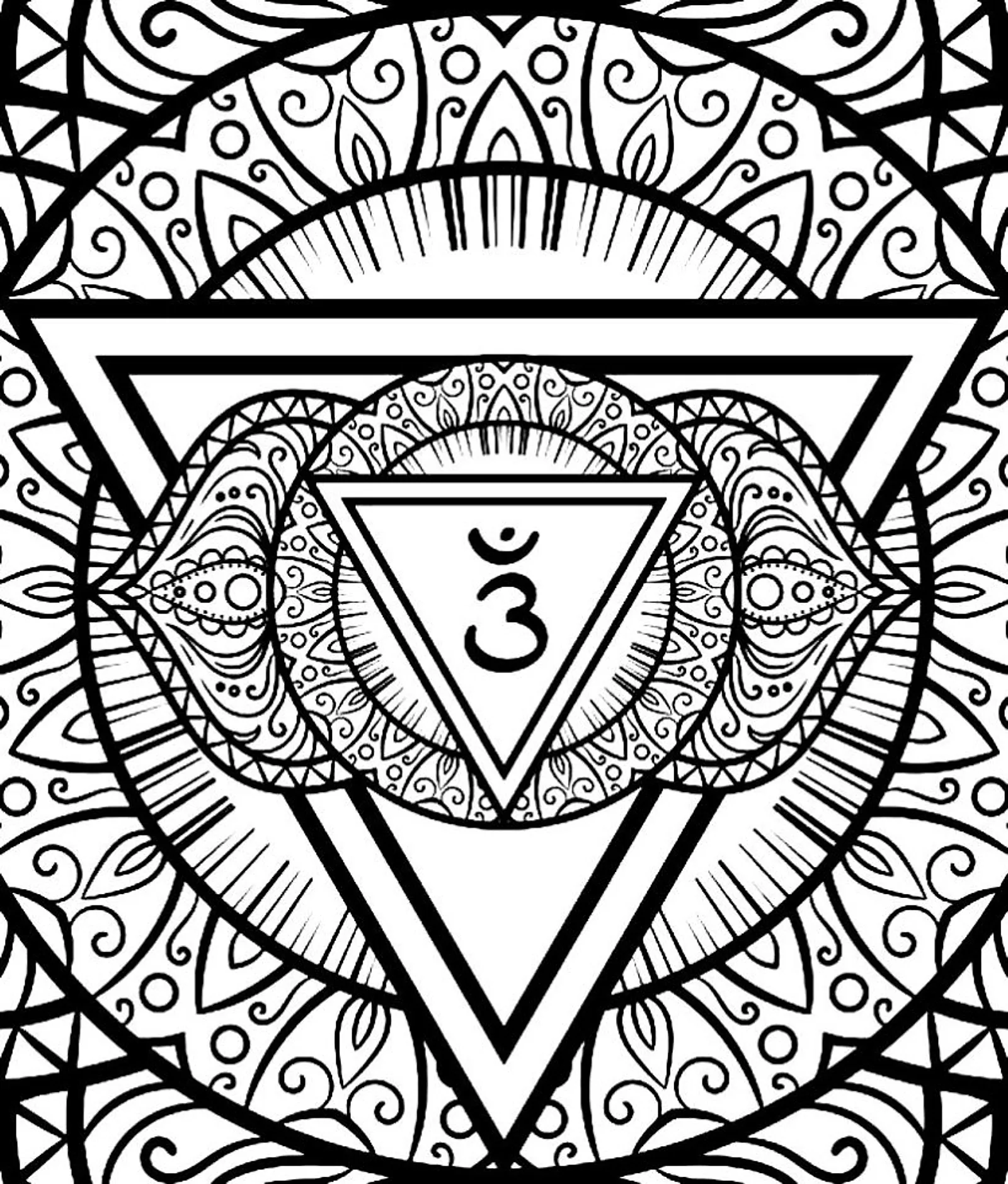
In yoga and tantra the "third eye" corresponds to ājñā, the "command" centre at the point between the eyebrows (bhrūmadhya). Yogic texts treat this point as a place to fix the gaze and the breath, tantric texts install a two-petalled lotus there as the sixth centre of the subtle body, and hatha yoga describes it as the meeting place of the three principal channels and a gateway to the crown. Only in modern times did ājñā become widely identified with a psychic "third eye" and with the pineal gland.
Ajna, "Command": Name and Place Between the Brows§
The Sanskrit ājñā means "command", "authority" or "order". Commentators explain the name in two ways: this is the centre where the command of the guru is received from above, and it is the point from which a mind that has become steady governs the lower centres. Some texts call it the jñāna-cakra, "centre of knowledge", playing on the similar sound. Its location is given as the space between the eyebrows, sometimes slightly behind the surface of the forehead within the head.
In the standard six-centre system that modern readers know from Sir John Woodroffe's The Serpent Power, ājñā is the sixth lotus, above the throat centre and below the thousand-petalled crown. The full traditional description of the chakra, with its letters, deities and the many variant systems, belongs to the article on Ajna, the brow chakra. This article follows a narrower thread: how the point between the brows became a focus of practice and a "third eye" in the yogic and tantric imagination. For the broader story of the third eye in other religions, see the third eye: history and meaning.
Fixing the Gaze Between the Eyebrows in Early Yoga§
The idea of directing attention to the brow is older than the chakras. The Bhagavad Gītā, usually dated to the last centuries BCE or the first centuries CE, twice mentions the space between the eyebrows. In one passage the meditator shuts out external contacts and fixes the gaze between the brows while balancing the in-breath and out-breath. In another, the dying yogin, with a steady mind and the strength of yoga, draws the vital breath (prāṇa) to the point between the brows and so reaches the supreme Person. Here the brow is not yet a lotus or a third eye; it is a point for gathering breath and attention at the decisive moments of meditation and death.
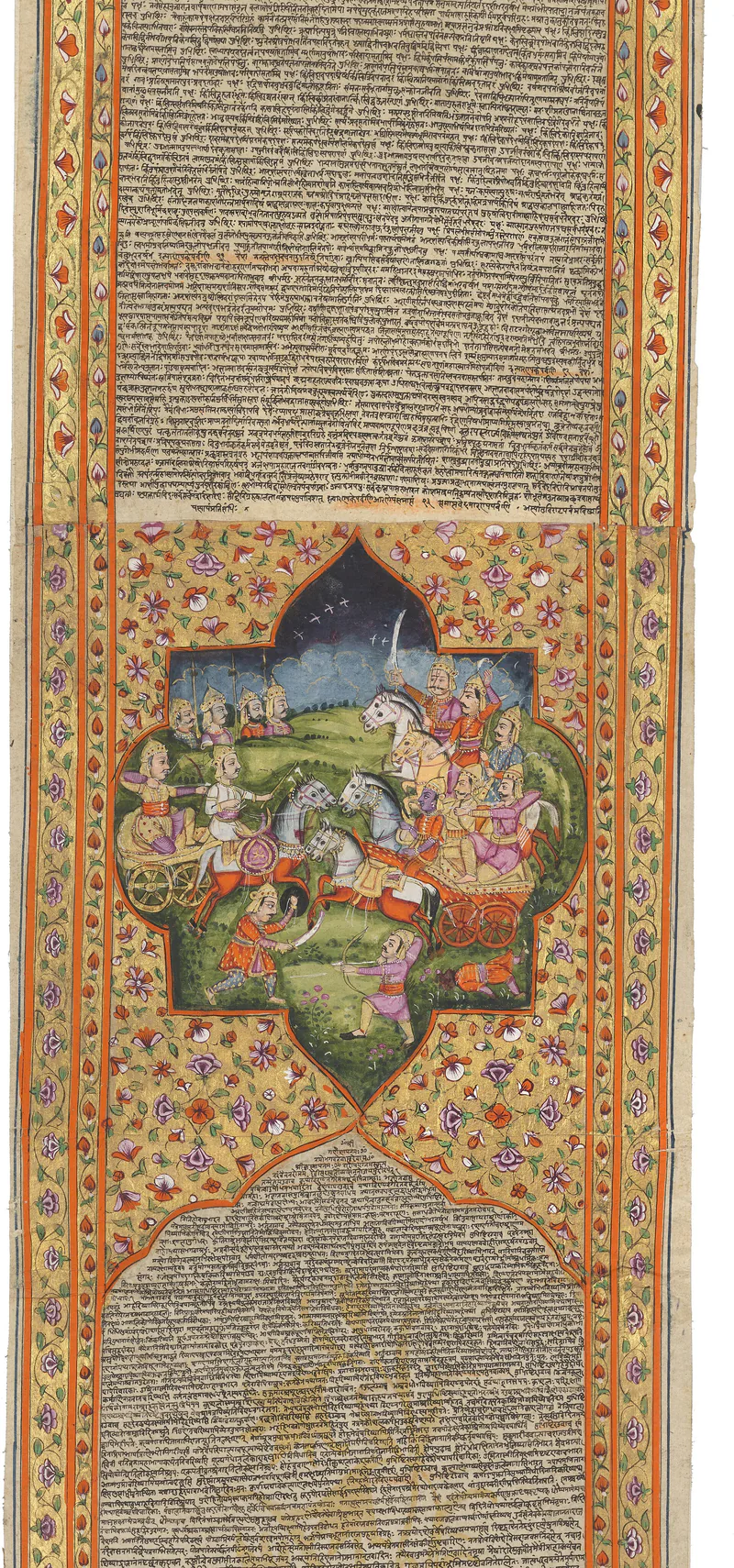
Some of the minor "Yoga Upaniṣads", texts composed over a long period in the medieval era, repeat and develop these instructions, recommending concentration on the brow, the tip of the nose or the heart. The Jābāla Upaniṣad gives the point a sacred geography of its own: it identifies the holy city of Avimukta (Vārāṇasī) with the junction of the brows and the nose, so that the meditator carries the most sacred place of pilgrimage within the body. The move from outer to inner pilgrimage is typical of how Indian traditions came to map sacred sites onto the body.
The Ajna Lotus in the Ṣaṭ-cakra-nirūpaṇa§
The classic description of ājñā comes from the Ṣaṭ-cakra-nirūpaṇa, composed in Bengal by Pūrṇānanda in 1577 and translated by Woodroffe. The lotus is white like the moon and has two petals, bearing the syllables haṃ and kṣaṃ. Within it sits the goddess Hākinī, described with six faces and six arms, and within a downward-pointing triangle a liṅga called Itara shines like lightning. The seed mantra of this centre is the sacred syllable Oṃ itself, and the text describes ājñā as the seat of the subtle mind (manas). Where the lower lotuses are associated with the elements of earth, water, fire, air and space, ājñā lies beyond them; it is the place where the elements have already been dissolved into mind.
Like the other centres in this text, ājñā is a support for visualisation within a liturgy of kuṇḍalinī's ascent. The practitioner meditates on the lotus, its letters and its deities, and the text promises extraordinary fruits for doing so, including knowledge and the power to enter other bodies, in the same idiom of praise it uses for each lotus. Scholars such as Gavin Flood and Christopher Wallis emphasise that systems like this were prescriptive templates for practice, not descriptions of anatomy. See the history of the chakras for how this one Bengali system came to stand for "the" chakras in the West.
Where the Three Channels Meet: Triveni and the Rudra Knot§
Hatha yoga describes three principal channels (nāḍī): iḍā on the left, piṅgalā on the right and suṣumnā in the centre. In many accounts iḍā and piṅgalā wind upward around the central channel and meet it at ājñā before ending at the nostrils. Texts and commentators liken this meeting to Prayāga, where the rivers Gaṅgā and Yamunā join the invisible Sarasvatī; the brow is called the "triple confluence" (triveṇī). The image again turns a pilgrimage site into a point within the body.
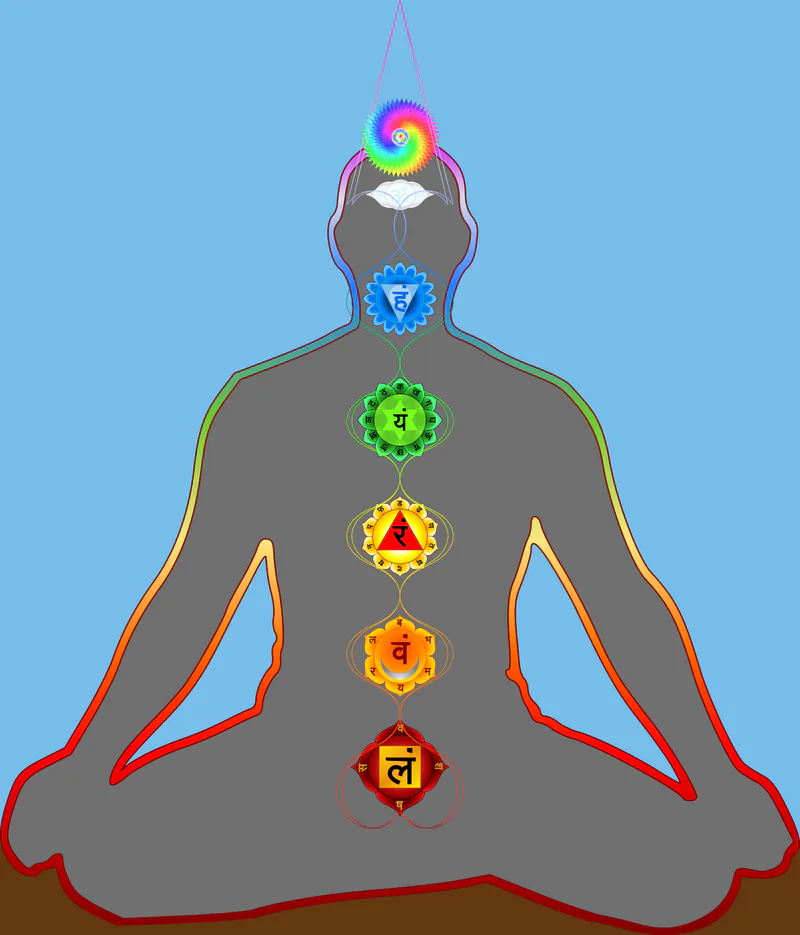
Hatha texts also speak of three "knots" (granthi) that block the ascent of breath or kuṇḍalinī: the knot of Brahmā, the knot of Viṣṇu and the knot of Rudra. The Haṭhayogapradīpikā (fifteenth century) presents their piercing as stages in hearing the inner sound (nāda). Different texts locate the knots differently, but many later works and modern teachers place the knot of Rudra at ājñā, making the brow the last threshold before the crown. On the channels and the ascent, see kundalini yoga.
Brow Practices in Hatha Yoga: Shambhavi Mudra and Trataka§
Two practices associated with the brow are especially well documented. The Haṭhayogapradīpikā describes śāmbhavī mudrā, the "seal of Śambhu (Śiva)": attention is fixed on an inner object while the eyes remain open and unblinking, seeing without looking. Later teachers often describe it as directing the gaze upward toward the brow. The text praises it as a secret guarded "like a respectable woman", a common idiom for esoteric teaching.
The same text lists trāṭaka, steady gazing at a small object, among six cleansing practices (ṣaṭkarma). The yogin gazes at a small mark without blinking until tears come; the text says this removes eye diseases and sloth. The Gheraṇḍa Saṃhitā, a later compendium, also teaches trāṭaka, along with a meditation on light (jyotir-dhyāna). Modern teachers, particularly in the Bihar School of Yoga, popularised gazing at a candle flame and then holding the after-image at the brow; this is now the best-known form of "third eye meditation". A gentle version, with cautions about eye strain, epilepsy and mental health, is described in third eye meditation.
Kashmir Śaiva texts also used the brow. The Vijñāna Bhairava Tantra, a collection of over a hundred contemplative techniques, includes one in which the senses are closed and a point of light (bindu) is perceived between the brows; as it gradually dissolves, the practitioner rests in the supreme state. The aim, characteristically, is not to keep the light but to let it dissolve into open awareness.
Beyond Ajna: Bindu, Nada and the Path to the Crown§
In tantric systems ājñā is not the summit. Between the brow and the crown many Śaiva texts describe a series of increasingly subtle stages, often correlated with the parts of the syllable Oṃ as its sound fades: the dot (bindu), the half-moon (ardhacandra), the resonance (nāda) and further stages up to the "beyond-mind" (unmanī). Woodroffe summarised such schemes in his commentary. The point is that the brow marks the end of the ordinary mind, and what lies beyond it is described in terms of sound and silence rather than sight.
This is a useful corrective to the modern emphasis on "seeing". In most premodern yoga the visual phenomena of brow concentration, such as lights and colours, are signs along the way, sometimes even distractions. The goal was the stillness of mind that the Yoga Sūtra calls the cessation of its fluctuations, or the union of Śiva and Śakti at the crown in tantric language.
Ajna in Later Traditions and the Modern Third Eye§
Devotional and sant traditions of northern India also prized the brow. Poems attributed to Kabīr speak of trikuṭī, the "three-peaked" place behind the eyes, as the threshold of inner sound and light, and the modern Sant Mat and Radha Soami movements teach concentration at the "eye centre" or "third eye", called tisra til, "the third sesame seed", as the seat of the soul in the waking body. In these movements the brow is the starting point of an inward journey guided by a living master.
The identification of ājñā with a clairvoyant "third eye" and with the pineal gland came later and from the West. Theosophists in the late nineteenth and early twentieth centuries mapped the chakras onto glands and nerve plexuses, and the twentieth-century New Age gave ājñā the colour indigo and the themes of intuition and imagination. These are modern layers, not features of the Sanskrit sources. There is also no scientific evidence that chakras exist as physical structures; ājñā is best understood as what the texts present it as, a focus for meditation and a stage in a symbolic map of the inner journey.
Frequently asked questions§
Is the ajna chakra the same as the third eye?§
In modern usage they are usually treated as the same, because ājñā is located between the brows. Historically, ājñā is a centre in tantric and hatha yoga systems, while the "third eye" draws also on the myth of Śiva and on Western occult ideas about the pineal gland.
What does ajna mean?§
Ājñā is Sanskrit for "command" or "authority". Traditional commentators say it is the place where the guru's command is received, and where the steadied mind governs the lower centres.
What is shambhavi mudra?§
Śāmbhavī mudrā is a hatha yoga practice described in the Haṭhayogapradīpikā in which attention rests on an inner object while the eyes are open and still. Later teachers commonly associate it with an upward gaze toward the brow.
Do the old texts say that ajna gives psychic powers?§
The Ṣaṭ-cakra-nirūpaṇa and other texts promise remarkable fruits for meditating on each centre, as a form of praise. Their main concern, however, is the ascent of kuṇḍalinī and the stilling of the mind, and many teachers regarded powers as distractions on the way.
Sources and further reading§
- The Serpent Power — Arthur Avalon (Sir John Woodroffe), 1919
- Haṭhayogapradīpikā — Svātmārāma, 1450
- The Gheranda Samhita — trans. James Mallinson, 2004
- Roots of Yoga — James Mallinson & Mark Singleton, 2017
- The Tantric Body: The Secret Tradition of Hindu Religion — Gavin Flood, 2006
- Vijñānabhairava or Divine Consciousness — Jaideva Singh, 1979
- Yoga: Immortality and Freedom — Mircea Eliade, 1958
- The Bhagavad-Gita: Krishna's Counsel in Time of War — Barbara Stoler Miller, 1986