Liber VIII · Eastern Mysticism · Chapter I: Chakras & Subtle Body
Chakras in the West: From Theosophy to the Rainbow Chakras
How the chakras came to the West: Theosophy and Leadbeater's The Chakras, Woodroffe's Serpent Power, Jung's 1932 seminar, Esalen and Anodea Judith.

The Western chakra system, seven rainbow-coloured energy centres each tied to a gland and a psychological theme, was assembled in Europe and America between about 1880 and 1990 from Indian tantric sources, Theosophical clairvoyance, depth psychology and the human potential movement. Its main milestones are C. W. Leadbeater's The Chakras (1927), John Woodroffe's translation The Serpent Power (1919), C. G. Jung's kundalini seminar of 1932, the counterculture around the Esalen Institute, and Anodea Judith's Wheels of Life (1987).
How the Chakras First Reached Western Readers§
The subtle-body teaching of the tantras reached Western readers in a recognisable form only in the late nineteenth century, largely through Indian intermediaries. The Theosophical Society, founded in New York in 1875 and based at Adyar in India from 1882, published and promoted English versions of yoga texts. Among them were Srinivasa Iyangar's translation of the Haṭhapradīpikā (1893) and Śrīśa Chandra Vasu's translations of the Gheraṇḍa Saṃhitā and Śiva Saṃhitā, which gave English-language readers petal counts, names and locations for the centres. Rama Prasad's Nature's Finer Forces (1890), a Theosophical study of breath and the elements based on the Śivasvarodaya, presented the subtle body in the vocabulary of vibration and "forces".
Swami Vivekananda's Raja Yoga (1896), based on lectures he gave in America, was especially influential. Vivekananda described kundalini rising through the suṣumnā and the lotuses along it, and explained them with analogies from nineteenth-century physiology, comparing the central channel to the spinal cord and the lotuses to nerve centres. This physiological reading, pursued further in Vasant Rele's The Mysterious Kundalini (1927), which linked kundalini with the vagus nerve, set a pattern for later attempts to locate the chakras in the anatomy of the nervous and endocrine systems.
A Western precedent was also rediscovered in this period. An illustration associated with the German Christian theosopher Johann Georg Gichtel's Theosophia Practica (first published 1696) shows a human figure with centres along the body marked by planetary symbols. Leadbeater reproduced it in The Chakras as evidence that European mystics had known the centres, though its meaning within Gichtel's Boehme-inspired theology is quite different; see Jacob Boehme.
Theosophy, Leadbeater and The Chakras (1927)§
Helena Blavatsky referred to the subtle centres sparingly, and warned that hatha practices were dangerous without proper guidance. In The Secret Doctrine (1888) she linked the pineal gland with an ancient organ of spiritual vision, an idea that later fed into the Western "third eye" (see the pineal gland from Descartes to modern science). The decisive Theosophical work on the chakras was by Charles Webster Leadbeater (1854–1934), the Society's most prolific clairvoyant author. On Theosophy generally, see the Theosophical Society.
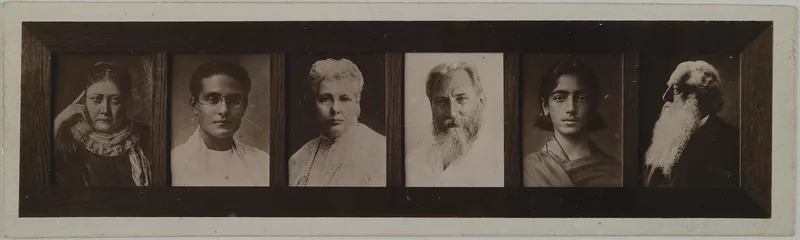
In The Chakras, published at Adyar in 1927, Leadbeater described the centres as saucer-like vortices in the "etheric double", a subtle counterpart of the physical body, which he claimed to observe directly. He gave each a number of "spokes" (four at the base, ten at the navel, twelve at the heart, sixteen at the throat, ninety-six at the brow and 972 at the crown) and described their colours in detail. He also replaced the genital centre with one at the spleen, a change he justified by the dangers he saw in the lower centre, and he related the chakras to nerve plexuses and glands. The book's colour plates, painted by Edward Warner, became some of the most widely reproduced chakra images of the century.
Alice Bailey, a former Theosophist who founded her own Arcane School, took this further in works such as Esoteric Healing (1953), tying seven centres systematically to seven endocrine glands, from the adrenals to the pineal. The Theosophical layer transformed the chakras from visualisation templates into organs of an energy body that could be perceived, diagnosed and healed, a conception that still underlies most modern energy medicine.
Woodroffe and The Serpent Power (1919)§
At almost the same moment, a quite different account appeared. Sir John Woodroffe (1865–1936), a British judge of the Calcutta High Court, published under the pseudonym Arthur Avalon a series of studies and translations of Shakta tantra, produced in collaboration with Bengali scholars, among them Atal Bihari Ghose. The Serpent Power (1919) translated Pūrṇānanda's Ṣaṭ-cakra-nirūpaṇa of 1577 and the short Pādukā-pañcaka, with a long introduction and plates of the lotuses.
Woodroffe presented tantra as a serious philosophy at a time when it was widely disparaged, and his book gave the West its standard six-centre system, with the thousand-petalled lotus above. He noted that the Theosophical descriptions of the centres then in print, including Leadbeater's earlier writings, differed from the tantric ones. Yet Western authors increasingly mixed the two, combining Woodroffe's Sanskrit names, petals and bījas with Leadbeater's vortices, colours and glands. The historian Kathleen Taylor has examined the collaborative and Bengali background of the Avalon books, a reminder that "Woodroffe's chakras" were in large part the work of Indian practitioners.
Jung's 1932 Seminar and the Psychological Chakras§
In October 1932 the Indologist Jakob Wilhelm Hauer lectured on kundalini yoga at the Psychological Club in Zurich, and C. G. Jung followed with his own seminar on the subject. Jung used The Serpent Power as his text and read the chakras as stages in the process he called individuation. Muladhara was the everyday world of conscious life; Svadhisthana the plunge into the water of the unconscious; Manipura the fire of the passions; Anahata the first awareness of the self beyond the ego; Vishuddha the realm of abstract and psychic reality. The two highest centres he treated as lying beyond present experience.

Jung warned that Westerners should not simply imitate Indian practices, but his reading had a lasting effect: it made the chakras a symbolic map of psychological growth. The seminar notes circulated privately for decades and were published as The Psychology of Kundalini Yoga (1996), edited by Sonu Shamdasani. For the tantric background Jung was interpreting, see kundalini yoga.
From Esalen to Wheels of Life: The Rainbow Chakras§
After the Second World War, Indian teachers who came to the West, from Swami Sivananda's disciples to Swami Muktananda and Yogi Bhajan, brought new interest in kundalini and the chakras, and Gopi Krishna's Kundalini: The Evolutionary Energy in Man (1967 in India, 1970 in the West) gave a vivid first-person account of an awakening. The Esalen Institute at Big Sur, California, founded in 1962 by Michael Murphy and Dick Price, became a meeting place for Asian religion, humanistic psychology and bodywork, and helped create the setting in which the chakras became tools for personal growth. On the wider movement, see the New Age.
The rainbow colour scheme, red at the root through orange, yellow, green, blue and indigo to violet at the crown, is generally traced to Christopher Hills, whose Nuclear Evolution (in its enlarged 1977 edition, Discovery of the Rainbow Body) correlated the chakras with the visible spectrum and with types of consciousness. The Japanese researcher Hiroshi Motoyama's Theories of the Chakras (1981) sought to measure chakra activity with instruments, claims that have not been accepted by mainstream science.
Anodea Judith's Wheels of Life (1987) and Eastern Body, Western Mind (1996) synthesised these strands into the system now taught in most yoga studios. Each chakra received an element, a colour, a gland, a "right" (to have, to feel, to act, to love, to speak, to see, to know), a developmental age and a characteristic distortion or "demon". Barbara Brennan's Hands of Light (1987) and Caroline Myss's Anatomy of the Spirit (1996), which compared the chakras with the Christian sacraments and the Kabbalistic sefirot, carried the system into energy healing and popular spirituality, alongside the crystals and aura work of the period.
Assessing the Western Chakra System§
Historians of religion and of modern esotericism, including Kurt Leland, whose Rainbow Body (2016) traces the Western system from Blavatsky to Brennan, generally make three points. First, nearly every element of the familiar seven-chakra package has an identifiable modern author: the rainbow colours, the glands, the psychological themes and the crystals and oils. Second, the system drew on one sixteenth-century Bengali text, read through Theosophy and Jungian psychology, and does not represent "the" Indian view, since Indian traditions themselves contain many different subtle-body maps (see the history of the chakras). Third, the Western system has returned to India: many Indian teachers now present the rainbow chakras, an example of what the anthropologist Agehananda Bharati called the "pizza effect", in which a cultural form travels abroad and comes back transformed and newly prestigious.
Debates continue about cultural appropriation and commercialisation, and about claims that chakras can be measured or diagnosed. There is no scientific evidence for chakras as physical structures, and the tantric texts never claimed that they were. Read historically, the Western chakra system is a modern tradition in its own right, with its own founders, texts and practices. The individual articles on Vishuddha, Ajna and Sahasrara set the two layers side by side.
Frequently asked questions§
Who brought the chakras to the West?§
No single person. Theosophical publications and translators, Swami Vivekananda's Raja Yoga (1896), C. W. Leadbeater's The Chakras (1927) and John Woodroffe's The Serpent Power (1919) were the main channels before the Second World War. Jung, the counterculture and writers such as Anodea Judith shaped the modern form.
Did Leadbeater invent the chakras?§
No. The chakras come from Indian tantric and yogic texts. Leadbeater reinterpreted them as clairvoyantly observed etheric vortices, changed the second centre to the spleen, and linked the centres with glands and colours, which strongly influenced the Western system.
Where do the rainbow chakra colours come from?§
They are a modern development, usually traced to Christopher Hills's Nuclear Evolution and the 1970s human potential movement, and popularised by later authors including Anodea Judith. The Sanskrit texts give each lotus its own colours, which do not follow the spectrum.
What did Jung say about the chakras?§
In his 1932 seminar Jung read the chakras as symbols of stages in psychological development, from ordinary conscious life at the root to the realisation of the self. He thought the highest centres lay beyond what modern Westerners could experience, and he warned against imitating Indian practice directly.
Sources and further reading§
- Raja Yoga — Swami Vivekananda, 1896
- Nature's Finer Forces — Rama Prasad, 1890
- The Serpent Power — Arthur Avalon (Sir John Woodroffe), 1919
- The Chakras — C. W. Leadbeater, 1927
- The Mysterious Kundalini — Vasant G. Rele, 1927
- The Psychology of Kundalini Yoga — C. G. Jung, ed. Sonu Shamdasani, 1996
- Sir John Woodroffe, Tantra and Bengal: "An Indian Soul in a European Body?" — Kathleen Taylor, 2001
- Esalen: America and the Religion of No Religion — Jeffrey J. Kripal, 2007
- Wheels of Life — Anodea Judith, 1987
- Rainbow Body: A History of the Western Chakra System from Blavatsky to Brennan — Kurt Leland, 2016