Liber IV · Buddhism · Chapter I: Buddhism in the West
Buddhism in the West: A History From Orientalism to Mindfulness
How Buddhism came to the West: early encounters, Victorian scholars and Theosophists, Asian immigrants, Zen, Tibetan and insight teachers, and mindfulness.
Buddhism became known in the West mainly from the nineteenth century, through European scholars who translated its texts, Theosophists and writers who popularised it, and Asian immigrants who brought it to the Americas. In the twentieth century, Japanese Zen teachers, Tibetan lamas in exile and Southeast Asian meditation masters founded centres across Europe, North America and Australia, and Buddhist meditation was eventually adapted into the secular mindfulness movement.
Early Encounters: Greeks, Christians and Missionaries§
Contact between the Mediterranean world and Buddhism goes back to the Hellenistic kingdoms of Bactria and north-west India, whose Greek rulers patronised Buddhism. A Pali text, the Milindapanha ("Questions of Milinda"), presents a dialogue between the monk Nagasena and a king usually identified with the Indo-Greek ruler Menander of the second century BCE. In the Christian West, Clement of Alexandria, around 200 CE, mentions Indians who follow a teacher called "Boutta" and honour him as a god — one of the earliest Western references to the Buddha by name.
In the Middle Ages, the story of the Buddha reached Europe in disguise. The legend of Barlaam and Josaphat, in which an Indian prince renounces his kingdom after encountering old age, sickness and death, and is converted by a hermit, derives from the Buddha's life through Central Asian, Arabic and Georgian intermediaries; Josaphat's name goes back to "bodhisattva". Translated into Greek and Latin and then most European languages, it made the Buddha, unrecognised, into a Christian saint. Marco Polo, in the thirteenth century, described the cult of "Sagamoni Borcan" in Ceylon with sympathy, and from the sixteenth century Catholic missionaries in Japan, China and Tibet produced detailed reports; the Jesuit Ippolito Desideri studied Tibetan philosophy in Lhasa between 1716 and 1721.
Victorian Discovery: Scholars, Theosophists and The Light of Asia§
Modern Western knowledge of Buddhism began when European scholars gained access to Buddhist manuscripts in the early nineteenth century. The French scholar Eugène Burnouf, working on Sanskrit texts collected in Nepal by the British resident Brian Houghton Hodgson, published his Introduction to the History of Indian Buddhism in 1844, which effectively founded the field. A short extract from his French translation of the Lotus Sutra appeared in English that same year in the American Transcendentalist journal The Dial. Arthur Schopenhauer found in Buddhism a confirmation of his own philosophy, and the word "Buddhism" itself became common in English in this period. As Philip Almond has argued, the Victorians largely constructed "Buddhism" as an object located in ancient texts, often contrasting a pure original teaching with what they saw as the corrupt Buddhism of contemporary Asia.
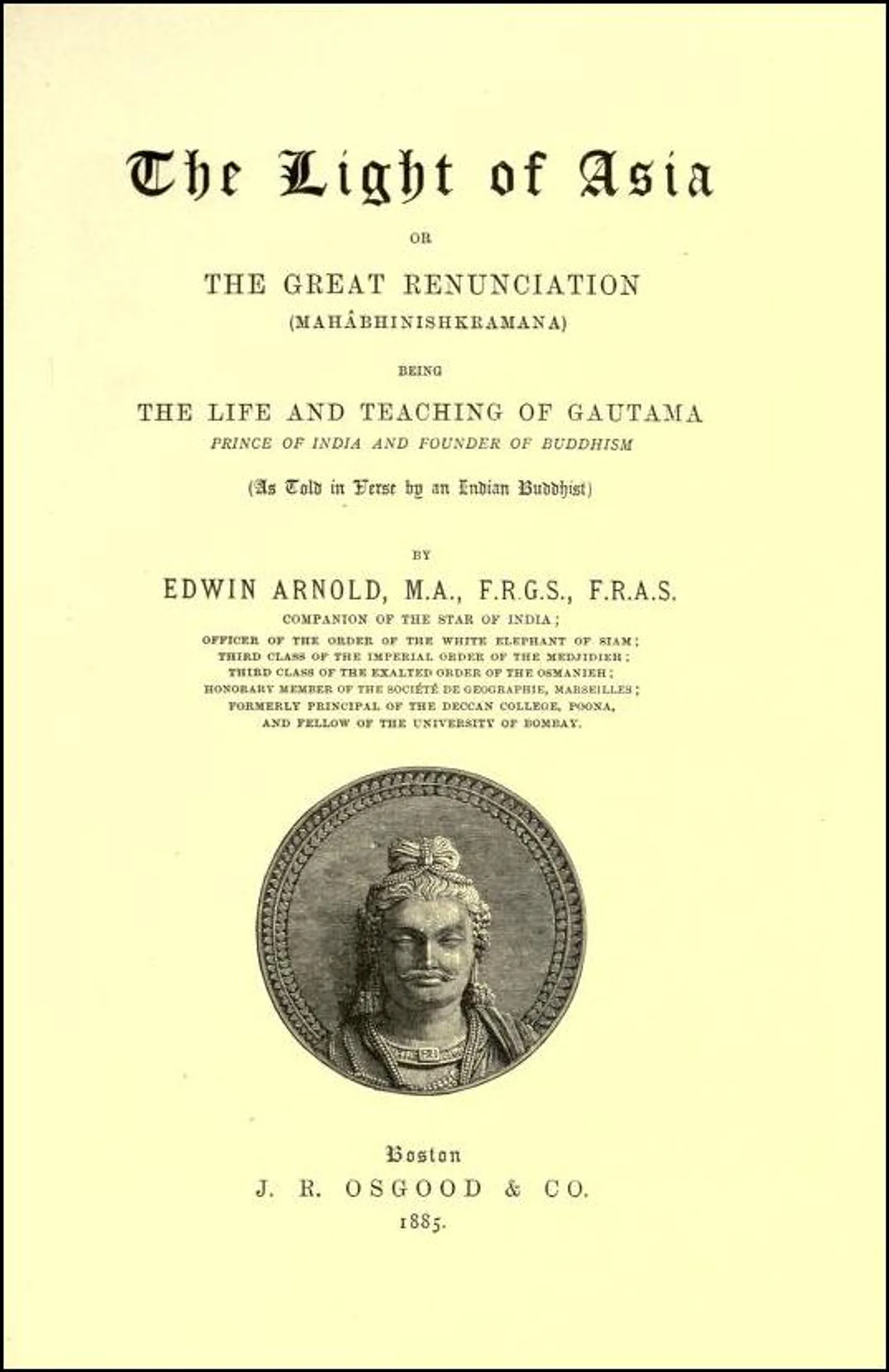
Two works brought Buddhism to a wide public. Sir Edwin Arnold's long poem The Light of Asia (1879), a romantic retelling of the Buddha's life, sold hundreds of thousands of copies in Britain and America. And in 1881 T. W. Rhys Davids founded the Pali Text Society to publish and translate the Pali Canon, presenting the Buddha as a rational ethical teacher.
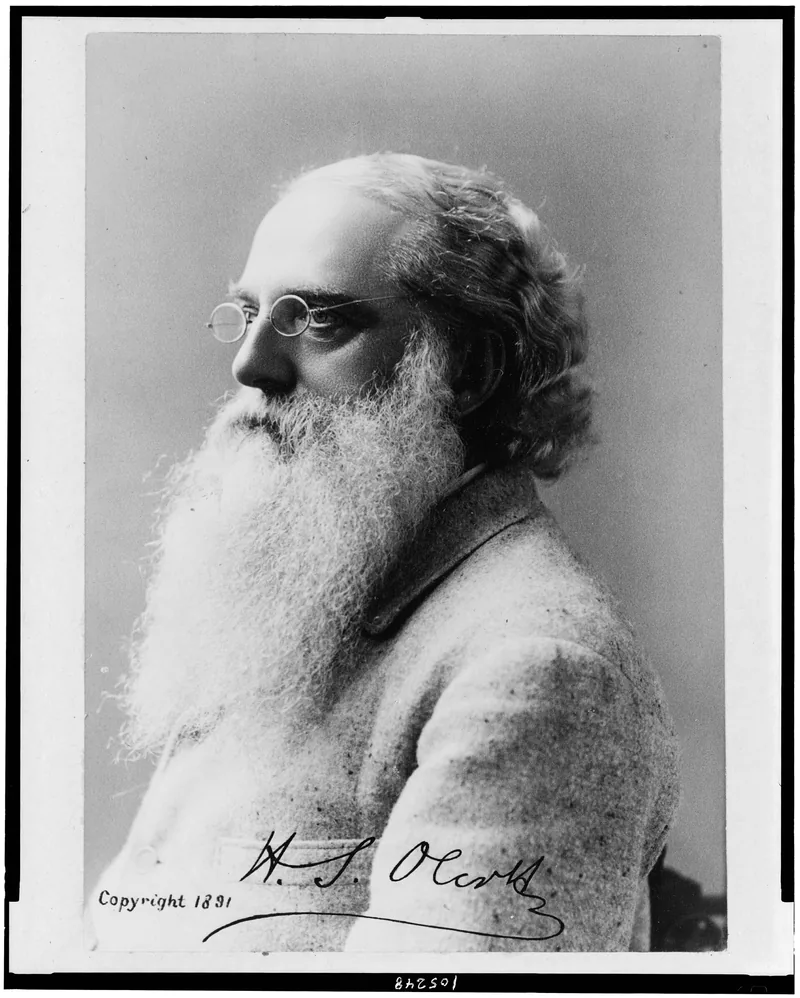
The Theosophical movement played a striking role. In 1880 Helena Blavatsky and Henry Steel Olcott, founders of the Theosophical Society, took the refuges and precepts in Ceylon, becoming among the first Westerners publicly to become Buddhists. Olcott wrote a Buddhist Catechism (1881), founded Buddhist schools and helped promote the Buddhist flag, and his protégé Anagarika Dharmapala became a leading figure in the Theravada revival in Sri Lanka. At the World's Parliament of Religions in Chicago in 1893, Dharmapala and the Japanese Zen abbot Shaku Soen addressed Western audiences directly.
The First Western Monks and Buddhist Societies§
The first Westerners ordained as Buddhist monks followed in the early twentieth century. The Englishman Allan Bennett, an associate and early teacher of Aleister Crowley in the Hermetic Order of the Golden Dawn, was ordained in Burma in 1901–1902 as Ananda Metteyya and led a Buddhist mission to Britain in 1908. The German Anton Gueth became the monk Nyanatiloka and founded a hermitage for Western monks in Sri Lanka. In Berlin, the physician Paul Dahlke built the Buddhist House, opened in 1924, and in London, the barrister Christmas Humphreys founded what became the Buddhist Society in the same year. These early converts mostly embraced Theravada, which they understood as a rational religion without dogma or ritual.
Asian Immigrant Buddhism in America and Europe§
Alongside the converts, Buddhism arrived with Asian immigrants. Chinese workers built temples in California from the 1850s, and Japanese immigrants to Hawaii and the American West brought Jodo Shinshu, the form of Pure Land Buddhism founded by Shinran; its first missionary priests arrived in San Francisco in 1899, and the organisation they founded was renamed the Buddhist Churches of America in 1944, while many of its members were held in internment camps. After immigration reforms in the United States in 1965, and refugee movements from Vietnam, Laos and Cambodia in the 1970s and 1980s, Asian Buddhist communities of every tradition multiplied across North America, Europe and Australia. Researchers have often noted that these communities, which include the majority of Western Buddhists, have received less attention than convert groups.
The Twentieth-Century Teachers: Zen, Tibetan and Insight Lineages§
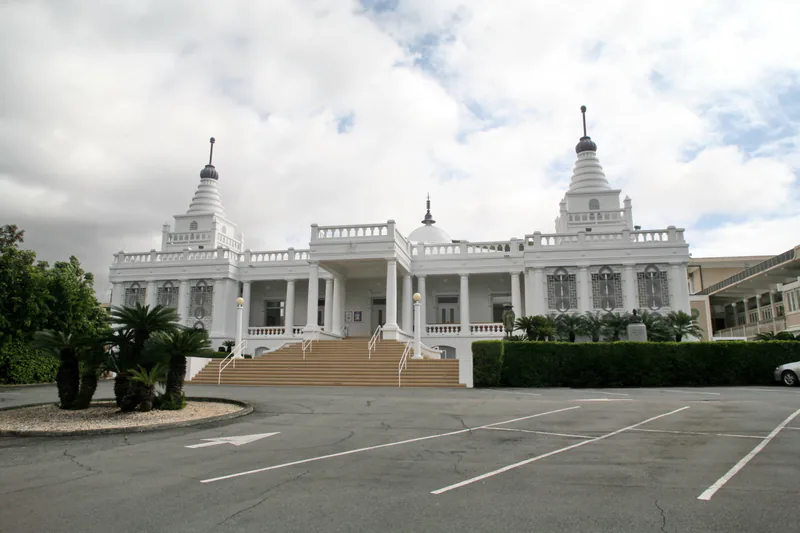
After the Second World War, Western interest in Buddhism grew rapidly. D. T. Suzuki's English writings on Zen, Alan Watts's books and Jack Kerouac's novel The Dharma Bums (1958) made Zen fashionable, and the Soto priest Shunryu Suzuki founded the San Francisco Zen Center in 1962 and, in 1967, the Tassajara monastery in California, often described as the first Zen training monastery outside Asia. The history of these lineages is told in Zen and Chan.
After the Chinese occupation of Tibet and the Dalai Lama's flight to India in 1959, Tibetan teachers came to the West. Chögyam Trungpa and Akong Rinpoche founded Samye Ling in Scotland in 1967, and Trungpa later founded the Naropa Institute in Colorado in 1974; teachers of all four Tibetan schools followed, as described in Tibetan Buddhism. Western students of the Burmese and Thai meditation traditions founded the Insight Meditation Society in Massachusetts in 1975, and the Vietnamese monk Thich Nhat Hanh, exiled for his peace activism, established the Plum Village community in France in 1982. New Western organisations also appeared, such as the Friends of the Western Buddhist Order, founded in London in 1967 by the English monk Sangharakshita and now called Triratna, and the Japanese lay movement Soka Gakkai spread internationally.
Mindfulness and the Secular Turn§
From the late 1970s Buddhist meditation was increasingly detached from its religious setting. In 1979 the molecular biologist Jon Kabat-Zinn, a practitioner of Zen and insight meditation, founded the Mindfulness-Based Stress Reduction programme at the University of Massachusetts Medical School, presenting mindfulness as a secular technique for stress and illness. Later programmes such as Mindfulness-Based Cognitive Therapy brought it into psychology, education and the workplace. The broader history of these developments is traced in meditation in Eastern traditions. At the same time, "secular Buddhism", represented by writers such as Stephen Batchelor, sought to reinterpret the Dharma without belief in rebirth.
Debates About Western Buddhism§
Scholars and Buddhists continue to debate what has happened to Buddhism in the West. David McMahan has described "Buddhist modernism", a reinterpretation that emphasises meditation, rationality, compatibility with science and personal experience, while playing down ritual, monasticism, cosmology and merit — a reshaping in which Asian reformers took part as much as Westerners. Donald Lopez has examined how Western fantasies shaped the image of Tibet. Jan Nattier and others have analysed the differences between immigrant and convert Buddhism. Western Buddhist communities have also faced crises, including scandals over the abuse of authority by some teachers, which have prompted new codes of ethics. Despite these tensions, Buddhism is now a permanent part of Western religious life, practised by perhaps one percent of the population in the United States and around half a percent in Britain.
Frequently asked questions§
When did Buddhism come to the West?§
Europeans heard of the Buddha in antiquity, but Buddhism became known in detail only in the nineteenth century through scholarship, translation and popular books. The first Western converts appeared in the 1880s, and Buddhist communities and centres spread widely after the Second World War.
Who was the first Western Buddhist?§
It is hard to name a single first, but Henry Steel Olcott and Helena Blavatsky, who took the refuges and precepts in Sri Lanka in 1880, are often cited as among the first Westerners formally to become Buddhists. Among the earliest Western monks was the Englishman Allan Bennett, ordained in Burma as Ananda Metteyya in the early 1900s.
Is mindfulness Buddhist?§
Mindfulness (sati) is a factor of the Buddhist Eightfold Path, and modern mindfulness programmes draw on Buddhist meditation methods, especially Burmese insight meditation and Zen. Secular mindfulness, however, presents these techniques without Buddhist doctrine or ritual, and both Buddhists and scholars debate how much of the original context is lost.
Sources and further reading§
- The British Discovery of Buddhism — Philip C. Almond, 1988
- How the Swans Came to the Lake: A Narrative History of Buddhism in America — Rick Fields, 1981
- The Awakening of the West: The Encounter of Buddhism and Western Culture — Stephen Batchelor, 1994
- The White Buddhist: The Asian Odyssey of Henry Steel Olcott — Stephen Prothero, 1996
- The Making of Buddhist Modernism — David L. McMahan, 2008
- Prisoners of Shangri-La: Tibetan Buddhism and the West — Donald S. Lopez Jr., 1998
- Buddhism in America — Richard Hughes Seager, 1999
- The Light of Asia — Edwin Arnold, 1879