Liber XXI · New Religions · Chapter IV: Japanese New Religions
Soka Gakkai: Nichiren Buddhism, Makiguchi, Toda and Ikeda
Soka Gakkai explained: Nichiren and the Lotus Sutra, founders Makiguchi, Toda and Ikeda, chanting Nam-myoho-renge-kyo, Komeito, SGI and the 1991 split.

Soka Gakkai ("Value-Creation Society") is a Japanese lay Buddhist movement based on the teachings of the thirteenth-century monk Nichiren, founded in 1930 by the educator Makiguchi Tsunesaburō and his disciple Toda Jōsei and built into a mass organisation after the Second World War by Toda and his successor Ikeda Daisaku. Its members chant the phrase Nam-myōhō-renge-kyō, the title of the Lotus Sutra, before a mandala called the Gohonzon, seeking to bring about a "human revolution" in their own lives and peace in society. With millions of members in Japan and an international branch, Soka Gakkai International, active in nearly every country, it is the largest and most politically influential of the Japanese new religions.
Nichiren and the Lotus Sutra§
Soka Gakkai's roots lie in the reforming career of Nichiren (1222–1282), a fisherman's son from the province of Awa who trained in the Tendai school, described in Shingon and Tendai Esoteric Buddhism, on Mount Hiei. He concluded that in the age of the decline of the Dharma (mappō) only the Lotus Sutra, the great Mahayana scripture surveyed in Mahayana Buddhism, could save humanity, and that the essence of the sutra was contained in its title. He therefore taught the chanting of the daimoku, Nam-myōhō-renge-kyō, "devotion to the Mystic Law of the Lotus Sutra", and inscribed calligraphic mandalas, the Gohonzon, as objects of worship.
Nichiren attacked other schools, especially the Pure Land devotion to Amida, and in his treatise Risshō ankoku ron (1260) warned the government that disasters would continue until the country embraced the true teaching. He was exiled twice and narrowly escaped execution in 1271, experiences his followers read as proof of his mission. After his death his disciples divided into several lineages. One, founded by his disciple Nikkō at Taisekiji at the foot of Mount Fuji, became known in the modern period as Nichiren Shōshū; it regarded Nichiren as the True Buddha of the present age and venerated a great mandala, the Dai-Gohonzon, as the supreme object of worship.
Makiguchi, Toda and the Value-Creating Education Society§
Makiguchi Tsunesaburō (1871–1944) was a geographer and primary-school principal who developed a theory of education centred on the creation of value: beauty, benefit and good. In 1928 he converted to Nichiren Shōshū, finding in it a religious foundation for his ideas. With his younger colleague Toda Jōsei (1900–1958), a teacher and businessman, he published The System of Value-Creating Pedagogy, whose first volume appeared on 18 November 1930, the date now celebrated as the founding of the Sōka Kyōiku Gakkai (Value-Creating Education Society). The small society gradually shifted from educational reform to religious practice.
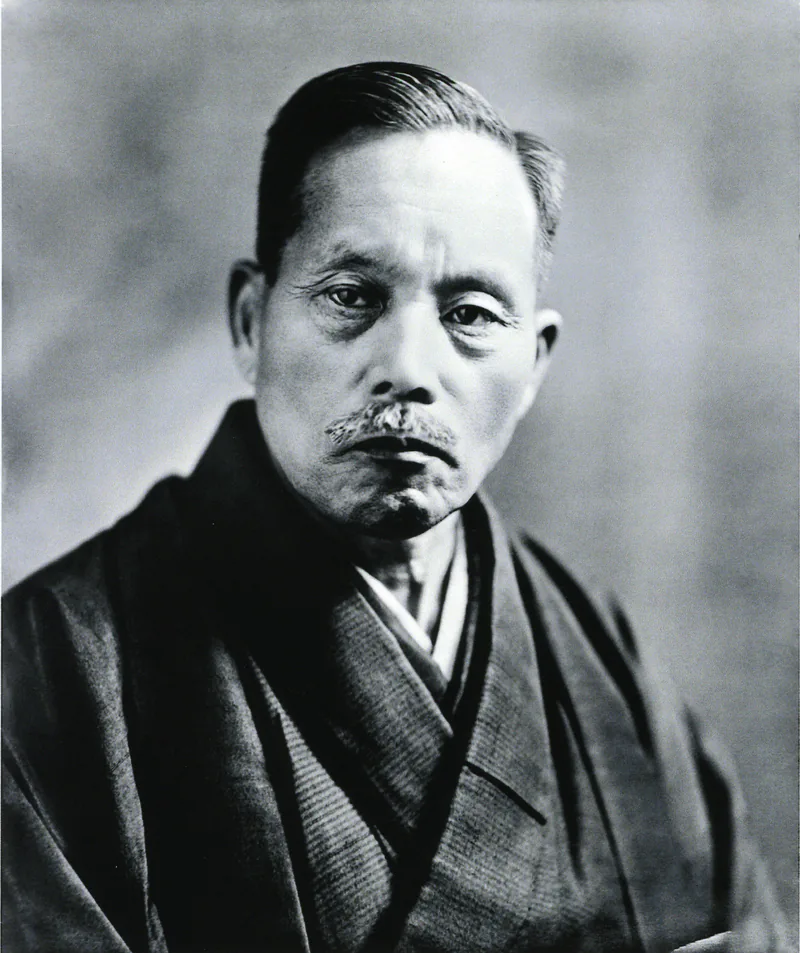
During the Second World War the government required religious groups to support State Shinto and to enshrine talismans of the Ise Shrine. Makiguchi refused, arguing that doing so would betray the Lotus Sutra. In 1943 he, Toda and other leaders were arrested under the Peace Preservation Law; Makiguchi died in Sugamo prison on 18 November 1944, at the age of seventy-three. Soka Gakkai remembers him as a martyr for freedom of conscience; historians note that his resistance was religious rather than an opposition to the war as such.
Postwar Expansion under Toda Jōsei§
Toda left prison in July 1945 and rebuilt the movement under the shorter name Soka Gakkai. After becoming its second president in 1951 he set a goal of 750,000 member households, which was reached within his lifetime. Expansion came through shakubuku, an assertive method of propagation derived from Nichiren that involved refuting other religions and urging conversion; it brought rapid growth among people uprooted by urbanisation and the hardships of postwar Japan, and also a reputation for aggressive proselytising and conflict with families and other religious groups.
Toda promised that faith would bring concrete benefits in this life as well as enlightenment, and organised members into dense networks of local groups, study classes and youth divisions. He founded the newspaper Seikyō Shimbun in 1951. In September 1957 he issued a declaration calling for the abolition of nuclear weapons, which the movement treats as a founding document of its peace activities. Toda died in April 1958.
Ikeda Daisaku, Kōmeitō and Soka Gakkai International§
Ikeda Daisaku (1928–2023) became the third president in 1960 at the age of thirty-two and led the movement, as president and later as honorary president, for more than sixty years. Under him Soka Gakkai claimed millions of households in Japan and founded schools, Soka University (1971), a concert association and an art museum. Ikeda wrote prolifically, including the multi-volume novel The Human Revolution about the movement's history, and held published dialogues with figures such as the historian Arnold Toynbee.
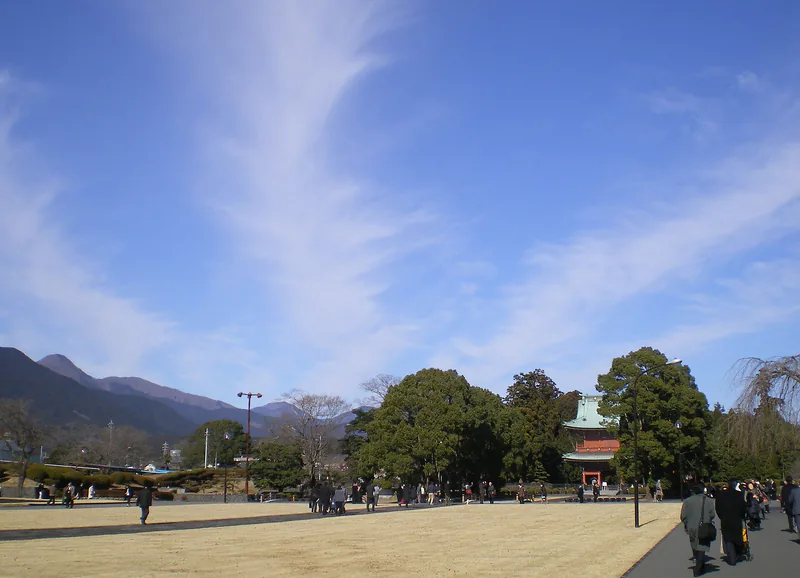
In 1964 Soka Gakkai founded the Kōmeitō ("Clean Government Party"). After a 1969–1970 scandal over efforts to suppress a critical book, the party and the religious organisation were formally separated, though the movement's members remain the party's core supporters. Kōmeitō served in governing coalitions with the Liberal Democratic Party for most of the period from 1999 to 2025, making Soka Gakkai a frequent subject of debate about religion and politics in Japan.
Soka Gakkai International (SGI) was founded in 1975 on Guam as an umbrella for branches abroad. The movement grew among both Japanese emigrants and local converts in the United States, Brazil, Europe and East Asia; in Britain, the sociologists Bryan Wilson and Karel Dobbelaere studied members drawn by its emphasis on personal responsibility, and in Italy the movement gained formal agreement with the state in 2015. Its presence abroad belongs to the wider story told in Buddhism in the West.
Practice: Daimoku, Gongyō and the Gohonzon§
The core practice is chanting Nam-myōhō-renge-kyō before the Gohonzon, enshrined in a home altar (butsudan). Morning and evening members perform gongyō, reciting passages from the second ("Expedient Means") and sixteenth ("Life Span of the Thus Come One") chapters of the Lotus Sutra, followed by chanting the daimoku for as long as they choose. Members believe that this practice reveals the Buddha nature present in every person, transforms karma and leads to "absolute happiness", an indestructible state of life rather than mere good fortune; they also chant for concrete goals in work, health and relationships, understanding results as the fruit of inner change.
Community life centres on monthly discussion meetings (zadankai) in members' homes, where people share experiences and study the writings of Nichiren, collected in English as The Writings of Nichiren Daishonin. Study examinations, youth and women's divisions and cultural festivals sustain a strong sense of belonging. Key concepts include human revolution (the inner transformation of the individual as the basis of social change), the oneness of life and environment, and kōsen-rufu, the wide propagation of the Lotus Sutra understood today as the spread of humanistic values and peace.
The Break with Nichiren Shōshū and Debates§
For six decades Soka Gakkai was a lay organisation (hokkeko) of the Nichiren Shōshū priesthood, whose temples conferred the Gohonzon and whose head temple, Taisekiji, received millions of Soka Gakkai pilgrims. Tensions over authority, finances and Ikeda's role grew from the 1970s. In 1991 the high priest Nikken excommunicated the organisation. Soka Gakkai denounced the priesthood as authoritarian and corrupt; the priesthood accused Ikeda of placing himself above the clergy. From 1993 Soka Gakkai began issuing Gohonzon itself, based on a transcription by an eighteenth-century high priest, and in 2014 revised its doctrinal rules so that it no longer regards the Dai-Gohonzon at Taisekiji as the object of devotion. The split made Soka Gakkai a fully independent lay Buddhist religion.
Critics, including Japanese journalists and former members, have accused the movement of a personality cult around Ikeda, of pressure in proselytising and fundraising, and of political ambitions; in 1995 a French parliamentary report listed it among groups it called "sects". Scholars such as Levi McLaughlin have instead analysed Soka Gakkai as a mirror of modern Japan itself, combining bureaucratic organisation, mass media, education and religious devotion. Its history fits the broader patterns examined in Studying New Religious Movements.
Frequently asked questions§
What does Nam-myoho-renge-kyo mean?§
It is the title of the Lotus Sutra preceded by namu, "devotion to". Soka Gakkai members translate it as devotion to the Mystic Law of cause and effect expressed in the sutra, and believe that chanting it brings out the Buddha nature inherent in every person.
Is Soka Gakkai the same as Nichiren Shōshū?§
No. Soka Gakkai began as a lay society attached to the Nichiren Shōshū priesthood but was excommunicated in 1991. Both follow Nichiren and chant the same phrase, but they are now separate organisations with different views of authority and of the objects of worship.
What is the Gohonzon?§
The Gohonzon is a scroll mandala inscribed with Nam-myōhō-renge-kyō in the centre, surrounded by the names of Buddhas, bodhisattvas and protective deities, based on those inscribed by Nichiren. Members enshrine it in their homes and chant before it as the object of devotion.
Sources and further reading§
- The Writings of Nichiren Daishonin — Nichiren, 1999
- The Human Revolution — Daisaku Ikeda, 1972
- The History and Theology of Soka Gakkai: A Japanese New Religion — Daniel A. Métraux, 1988
- A Time to Chant: The Soka Gakkai Buddhists in Britain — Bryan Wilson and Karel Dobbelaere, 1994
- Soka Gakkai in America: Accommodation and Conversion — Phillip E. Hammond and David W. Machacek, 1999
- Soka Gakkai's Human Revolution: The Rise of a Mimetic Nation in Modern Japan — Levi McLaughlin, 2019
- The Rush Hour of the Gods: A Study of New Religious Movements in Japan — H. Neill McFarland, 1967