Liber XXI · New Religions · Chapter IV: Japanese New Religions
Tenrikyo: Nakayama Miki, the Jiba and the Joyous Life
Tenrikyo explained: Nakayama Miki's revelation of 1838, God the Parent, the Ofudesaki, the Jiba at Tenri, the Service, the eight dusts and the Joyous Life.

Tenrikyo ("Teaching of Heavenly Wisdom") is a Japanese religion founded by Nakayama Miki (1798–1887), a farmer's wife in Yamato province who in 1838 began to speak, as her followers believe, as the vessel of God the Parent, the creator of humanity. It teaches that God created human beings in order to see them live the Joyous Life (yōki gurashi), and that people can attain it by sweeping away the mental "dusts" of selfishness and by performing the sacred Service at the Jiba, the place of human creation, in the city of Tenri. Often counted among the first of Japan's modern new religions, it has its headquarters in Tenri, Nara Prefecture, and communities in many countries.
Nakayama Miki and the Revelation of 1838§
Nakayama Miki was born in 1798 in a farming village in Yamato, the old province around Nara, and married at thirteen into the Nakayama family of Shōyashiki, a village that is now part of the city of Tenri. Tenrikyo biographies describe her as a devout follower of Pure Land Buddhism and as remarkable for her compassion, for example in caring for a neighbour's child.
In 1838 her son was suffering from pain in his leg, and the family invited a mountain ascetic (yamabushi) to perform an exorcistic rite. Because the usual medium was absent, Miki took that role herself. During the ritual she fell into a state of possession, and a god declaring himself the "Original God, the True God" demanded her as his shrine, Tsukihi no yashiro, so that he could save the world. After three days of refusal, according to the traditional account, her husband agreed on 26 October 1838, which Tenrikyo regards as its founding date. The setting reflects the world of Japanese folk religion, in which possession by a deity, or kamigakari, was a familiar religious experience; on that background see The Kami.
In obedience to divine instructions, as she understood them, Miki gave away the family's property to the poor over the following years, reducing the household to hardship. From the 1850s she became known for granting safe childbirth, and people began to visit her for healing. By the 1860s a community of followers had formed and built a place for worship beside her house.
God the Parent and the Story of Creation§
Tenrikyo calls its deity Oyagami, "God the Parent", and also Tsukihi ("Moon-Sun") and Tenri-Ō-no-Mikoto. God is understood as a parent who created humanity out of love and wishes to share in the joy of his children, rather than as a distant ruler or a judge. Tenrikyo teaching sets out a distinctive account of creation, the "Truth of Origin". In the beginning the world was a muddy ocean; God the Parent, seeking joy, drew forth creatures from the mud, among them a fish and a serpent that became the models for the first man and woman, and other beings that were given roles in human creation. Humans were conceived at a particular spot, which Miki identified in 1875 in the grounds of the Nakayama house: the Jiba.
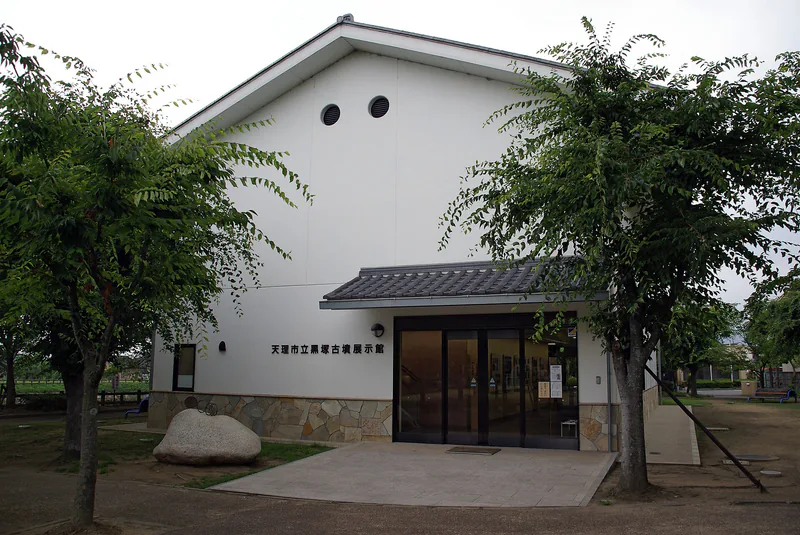
This story differs from both the Shinto myths of the Kojiki and Buddhist cosmology, and it is one of the reasons scholars treat Tenrikyo as a new religious system rather than a variant of existing traditions, though it shares much of the vocabulary of Japanese religion described in What Is Shinto?.
The Scriptures: Ofudesaki, Mikagura-uta and Osashizu§
Tenrikyo has three scriptures. The Ofudesaki ("Tip of the Writing Brush"), written by Miki between 1869 and 1882, consists of 1,711 verses in the form of Japanese waka poems in seventeen parts. Written in simple, often allusive language, it records God the Parent's intentions, the teaching of creation, and instructions for the Service. The Mikagura-uta ("Songs for the Service"), composed between 1866 and 1875, provides the words sung during the sacred dance. The Osashizu ("Divine Directions") are revelations given through Miki's close disciple Iburi Izō after her death, from 1887 until his own death in 1907, answering questions from followers on matters of faith and church organisation.
The Service at the Jiba and the Kanrodai§
The central rite of Tenrikyo is the Kagura Zutome, the Service, performed at the Jiba by ten masked performers who move around a wooden stand called the Kanrodai, which marks the place of human creation. Accompanied by singing and musical instruments, the dancers' gestures re-enact the work of creation and pray for the salvation of the world. The Service is performed in full at the main sanctuary on the 26th of each month, commemorating the founding day, while a related hand dance (teodori) to the songs of the Mikagura-uta is performed in Tenrikyo churches around the world.
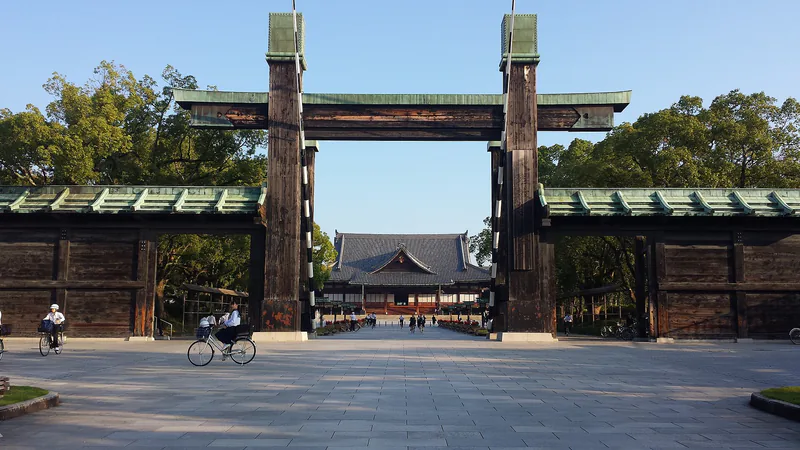
The Kanrodai at the centre of the sanctuary stands under an opening in the roof, and Tenrikyo teaches that when the world is purified a heavenly dew (kanro) will descend upon it. Because the Jiba is believed to be humanity's original home, followers who come to Tenri on pilgrimage are greeted with the words okaerinasai, "welcome home". The city of Tenri, which grew around the headquarters, contains large pilgrim dormitories, Tenri University, a hospital, and the Tenri Central Library, whose collections are known to scholars of Japanese and world religion.
Dust, the Body as a Loan and the Joyous Life§
Tenrikyo ethics turns on the image of dust (hokori). Human minds accumulate dust through self-centred uses of the mind, which Tenrikyo lists as eight: miserliness, covetousness, hatred, self-love, grudge-bearing, anger, greed and arrogance. Like dust, these settle easily but can be swept away by reflection and sincere effort. Illness and misfortune are understood as God's "guidance" (michiose), loving signs that prompt a person to reflect on the state of the mind, rather than as punishment.
A related teaching holds that the body is a thing lent by God (kashimono karimono): only the mind belongs to the individual. Death is understood as "returning" the body in order to receive a new one, and Tenrikyo speaks of rebirth (denaoshi, "setting out anew"). Followers practise hinokishin, voluntary unpaid work offered in gratitude, such as cleaning public places, and missionaries offer the sazuke, a prayer for healing administered by those who have received it at the Jiba. The goal of all this is the Joyous Life, a world in which people live together in mutual help and gladness.
Persecution, Sect Shinto and Restoration§
Miki's activities attracted the hostility of Buddhist priests, Shinto authorities and the police of the new Meiji state, which sought to control popular religion. She was detained many times, the last in 1886, when she was nearly ninety. She died, in Tenrikyo terms "withdrew from physical life", on 18 February 1887 (the 26th day of the first month in the old calendar). Followers believe that she remains ever-living at the Foundress's Sanctuary, where she is served meals and her room is maintained daily.
To survive under the Meiji system, the movement accepted affiliation with recognised Shinto bodies and in 1908 was officially recognised as an independent sect of Sect Shinto. In that period it issued a doctrine that conformed to state ideology and gave less prominence to the Ofudesaki and its creation story. After 1945, with the end of State Shinto and the grant of religious freedom, Tenrikyo undertook a "restoration" (fukugen) of its founder's original teachings, issuing a new official doctrine in 1949, and in 1970 it left the association of Shinto sects. It now presents itself as a distinct religion, while scholars such as Shimazono Susumu discuss it alongside the movements surveyed in Japanese New Religions as an early example of the "salvation religions" that flourished among Japan's farmers and urban poor. Leadership passes through the Nakayama family, whose head bears the title Shinbashira ("Main Pillar"). The church reports a membership of over a million, most of it in Japan, with communities in Brazil, the United States, Korea, Taiwan, Congo and elsewhere.
Frequently asked questions§
Is Tenrikyo a form of Shinto?§
Tenrikyo was officially classified as a Shinto sect from 1908 until 1970, mainly because Japanese law at the time required it. It developed from the folk religion of rural Japan and uses some Shinto forms, but today it describes itself as an independent religion with its own scriptures, deity and creation teaching.
Who is Oyasama?§
Oyasama, "the Parent", is the title Tenrikyo followers give to Nakayama Miki (1798–1887), the founder. They believe that God the Parent spoke through her and that she remains ever-living at Tenri, working for the salvation of humanity.
What is the Jiba?§
The Jiba is the spot in Tenri, Nara Prefecture, that Tenrikyo teaches is the place where God the Parent created humanity. It is marked by the Kanrodai stand at the centre of the main sanctuary, and the sacred Service is performed around it.
Sources and further reading§
- The Religion of Divine Wisdom: Japan's Most Powerful Religious Movement — Henry van Straelen, 1957
- The Rush Hour of the Gods: A Study of New Religious Movements in Japan — H. Neill McFarland, 1967
- Tenrikyo, a Pilgrimage Faith: The Structure and Meanings of a Modern Japanese Religion — Robert S. Ellwood, 1982
- Kurozumikyō and the New Religions of Japan — Helen Hardacre, 1986
- From Salvation to Spirituality: Popular Religious Movements in Modern Japan — Shimazono Susumu, 2004