Liber XXI · New Religions · Chapter I: Adventist & Restorationist Movements
Jehovah's Witnesses: Beliefs, Practices and History Explained
Jehovah's Witnesses explained: Charles Taze Russell and the Watch Tower, beliefs about Jehovah and 1914, preaching, blood, neutrality and persecution.

Jehovah's Witnesses are a worldwide Christian movement that grew out of the Bible Student circle formed by Charles Taze Russell in Pittsburgh in the 1870s and adopted its present name in 1931. Witnesses worship one God, Jehovah, regard Jesus as his Son but not as God, teach that God's Kingdom began to rule invisibly in heaven in 1914 and will soon replace human governments, and expect most of the faithful to live forever on a restored paradise earth. They are known above all for their house-to-house preaching, their refusal of blood transfusions and military service, and their many legal battles for religious freedom.
Charles Taze Russell and the Bible Students§
Charles Taze Russell (1852–1916) was the son of a Pittsburgh clothing merchant who lost his Presbyterian faith as a teenager over the doctrine of eternal torment and recovered it through contact with Adventist preachers. With a small group of friends he studied the Bible systematically from about 1870, concluding that the soul is not naturally immortal, that hell means the grave and that Christ's return would be invisible. Influenced by the Adventist Nelson Barbour, he came to believe that Christ's "presence" (Greek parousia) had already begun in 1874 and that 1914 would mark the end of the "Gentile Times", the period of non-Jewish world rule calculated from the prophecies of Daniel.
In 1879 Russell launched Zion's Watch Tower and Herald of Christ's Presence, and in 1884 he incorporated the society that publishes it. His six-volume Studies in the Scriptures (originally Millennial Dawn, 1886–1904) was distributed in millions of copies by travelling "colporteurs". The congregations of "Bible Students" who read it were loosely organised. The outbreak of the First World War in 1914 seemed to confirm Russell's chronology, though the world did not end, and he died on a train in Texas in 1916.
Rutherford, Knorr and the Name Jehovah's Witnesses§
Russell's successor, Joseph F. Rutherford (1869–1942), a lawyer known as "Judge" Rutherford, transformed the loose fellowship into a centrally directed organisation. Many Bible Students rejected his leadership, forming independent groups that still exist. In 1918 Rutherford and seven associates were imprisoned for obstructing wartime recruitment; they were released in 1919 and their convictions were later reversed. His campaign "Millions Now Living Will Never Die" pointed to 1925 as a year of decisive events. In 1931 the movement adopted the name Jehovah's Witnesses, taken from Isaiah 43:10, "Ye are my witnesses, saith the LORD". In 1935 Rutherford taught that the "great multitude" of Revelation 7:9 was an earthly class distinct from the 144,000, a turning point that gave most converts an earthly hope.
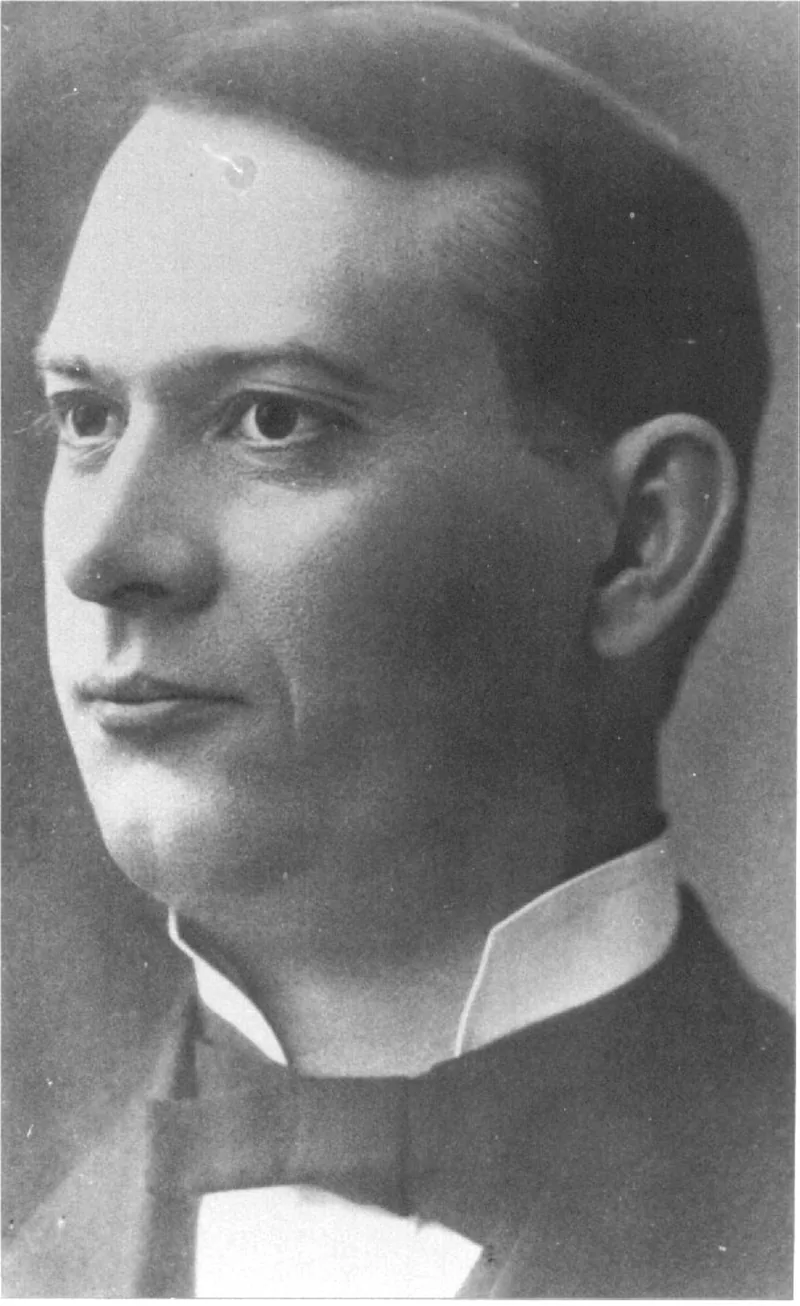
Under Nathan H. Knorr (president 1942–1977) the emphasis moved from the personality of the leader to organisation and training. The Gilead missionary school opened in 1943, every Witness was trained to preach, and the New World Translation of the Holy Scriptures, completed in 1961, became the movement's Bible; it renders the divine name as "Jehovah" throughout and has been criticised by many biblical scholars for passages bearing on the deity of Christ. In the 1970s authority passed to a Governing Body of senior men, which directs the movement today from its headquarters at Warwick, New York, to which it moved from Brooklyn in the 2010s.
Core Beliefs: Jehovah, Jesus and the Kingdom§
Witnesses teach that Jehovah is the one true God and that using his name is a mark of true worship. Jesus is God's first creation, through whom all else was made; he is identified with the archangel Michael, and his death was a ransom that opens the way to everlasting life. Witnesses say he died on an upright "torture stake" rather than a cross and do not use the cross as a symbol. The holy spirit is understood as God's active force, not a person. The Trinity, in their view, is a post-biblical doctrine shaped by Greek philosophy, a claim set out in many of their publications and debated by other Christians; the formation of the Christian canon and creeds is discussed in The Christian Bible and Its Canon.
At death, Witnesses believe, a person simply ceases to exist until the resurrection. In 1914 Christ began to rule as King in heaven and Satan was cast down to the earth, explaining the wars and troubles of the twentieth century. Soon God will destroy the present wicked system at Armageddon. A limited number of 144,000 anointed Christians, gathered since Pentecost, will rule with Christ in heaven; the "other sheep" of John 10:16 will survive Armageddon or be resurrected to live forever on an earth restored to paradise during Christ's thousand-year reign. Interpretations of prophetic dates have been revised over time; expectations that 1975 might mark the end of six thousand years of human history led to disappointment and a temporary fall in numbers, a pattern familiar from the earlier history described in Adventist and Restorationist Movements.
Meetings, Preaching and the Kingdom Hall§
Congregations meet in plain buildings called Kingdom Halls, without altars, statues or crosses, usually twice a week: a midweek meeting for Bible study and training in the ministry, and a weekend meeting with a public talk and a study of an article from The Watchtower. There is no paid clergy; appointed elders and ministerial servants lead each congregation. Larger assemblies and conventions gather thousands, and many local Kingdom Halls are built by volunteers in a few days.

The one annual celebration is the Memorial of Christ's death, held on the evening that corresponds to the Jewish date of Nisan 14. Unleavened bread and red wine are passed among those present, but only those who believe they belong to the anointed 144,000 partake; in recent years some twenty million people have attended worldwide. Witnesses do not celebrate Christmas, Easter or birthdays, which they regard as having pagan origins or as unscriptural.
Every baptised Witness is a "publisher" who reports time spent in the public ministry: calling at homes, offering literature and Bible studies, and in recent decades staffing literature carts in public places. Full-time "pioneers" devote many more hours. Literature, printed in hundreds of languages and now published on the official website, is central to the movement's identity. The organisation reports more than eight million active publishers in over two hundred lands.
Blood, Neutrality and Separation from the World§
Witnesses aim to be "no part of the world". They do not vote, hold political office, serve in the military, salute flags or sing national anthems, regarding these as forms of worship owed only to God. Since 1945 they have refused transfusions of whole blood and its major components, citing Acts 15:29, Genesis 9:4 and the law of Leviticus. Hospital Liaison Committees work with doctors on non-blood treatments, and the movement has contributed to the spread of "bloodless" surgery; fractions derived from blood are left to individual conscience. The refusal has led to court cases, particularly involving children.
Members who commit serious sins and are judged unrepentant are removed from the congregation (formerly called disfellowshipping), and other Witnesses limit contact with them. Supporters see this as protecting the congregation's moral purity; former members describe it as painful shunning that divides families. In recent years the Governing Body has adjusted several policies, including the guidance on greeting removed persons who attend meetings.
Persecution, Courts and Criticism§
Witnesses' refusal to compromise brought severe persecution. In Nazi Germany they were banned from 1933; several thousand were imprisoned and many died in concentration camps, where they wore a purple triangle, and some were executed for refusing military service. In the United States children expelled from school for refusing to salute the flag lost their case in 1940, and a wave of mob violence followed, before the Supreme Court reversed itself in West Virginia State Board of Education v. Barnette (1943). Dozens of American cases brought by Witnesses helped to define freedoms of speech and religion. In the Soviet Union thousands of Witnesses were deported to Siberia in 1951, and in 2017 Russia's Supreme Court banned the organisation as extremist, leading to prison sentences for members.
Critics, including former members such as Raymond Franz, a member of the Governing Body who left in 1980 and wrote Crisis of Conscience (1983), have challenged the movement's authority and its revisions of prophecy. Its handling of child sexual abuse allegations, examined by Australia's Royal Commission into Institutional Responses to Child Sexual Abuse in 2015, has drawn sustained criticism, especially the rule that wrongdoing be established by two witnesses in congregational proceedings. Sociologists such as James Penton, Andrew Holden and George Chryssides have studied the movement's growth, its sectarian boundaries and its changes over time, themes discussed more generally in Studying New Religious Movements. Its relationship with its Adventist cousins is explored in Ellen G. White and Seventh-day Adventism.
Frequently asked questions§
Do Jehovah's Witnesses believe in Jesus?§
Yes. They believe Jesus is God's Son, the Messiah and the Saviour whose death ransoms humanity, and they pray in his name. They do not believe he is equal to God or part of a Trinity, regarding him instead as God's first creation.
Why don't Jehovah's Witnesses accept blood transfusions?§
They understand biblical commands to "abstain from blood", given to Noah and repeated to the early church in Acts 15, as applying to taking blood into the body by any means. They accept many alternative medical treatments and leave decisions about minor blood fractions to individual conscience.
Why don't Jehovah's Witnesses celebrate birthdays or Christmas?§
They regard Christmas and Easter as customs of pagan origin and note that the only birthday celebrations mentioned in the Bible were held by rulers and associated with executions. Their only annual observance is the Memorial of Christ's death.
What does the number 144,000 mean for Jehovah's Witnesses?§
Following Revelation 7 and 14, Witnesses believe that 144,000 faithful Christians are chosen to rule with Christ in heaven. All other faithful people hope to live forever on a paradise earth.
Sources and further reading§
- Studies in the Scriptures — Charles Taze Russell, 1886
- Apocalypse Delayed: The Story of Jehovah's Witnesses — M. James Penton, 1985
- Crisis of Conscience — Raymond Franz, 1983
- Judging Jehovah's Witnesses: Religious Persecution and the Dawn of the Rights Revolution — Shawn Francis Peters, 2000
- Jehovah's Witnesses: Portrait of a Contemporary Religious Movement — Andrew Holden, 2002
- Between Resistance and Martyrdom: Jehovah's Witnesses in the Third Reich — Detlef Garbe, 2008
- Jehovah's Witnesses: Continuity and Change — George D. Chryssides, 2016