Liber XIX · Judaism · Chapter V: Jewish Law & Ethics
Kashrut: The Jewish Dietary Laws and What Makes Food Kosher
Kashrut, the Jewish dietary laws: permitted animals, meat and milk, shechitah and salting, kosher certification, and how Jews have explained the rules.

Kashrut is the body of Jewish law that governs which foods may be eaten and how they must be prepared; food that meets its requirements is kosher, "fit" or "proper". Its main rules — which animals are permitted, how they are slaughtered, the prohibition of blood and the separation of meat and milk — rest on passages of the Torah, developed in great detail by the rabbis of the Talmud and later codes. Observance varies widely today, from strict Orthodox practice to selective or symbolic observance in liberal movements.
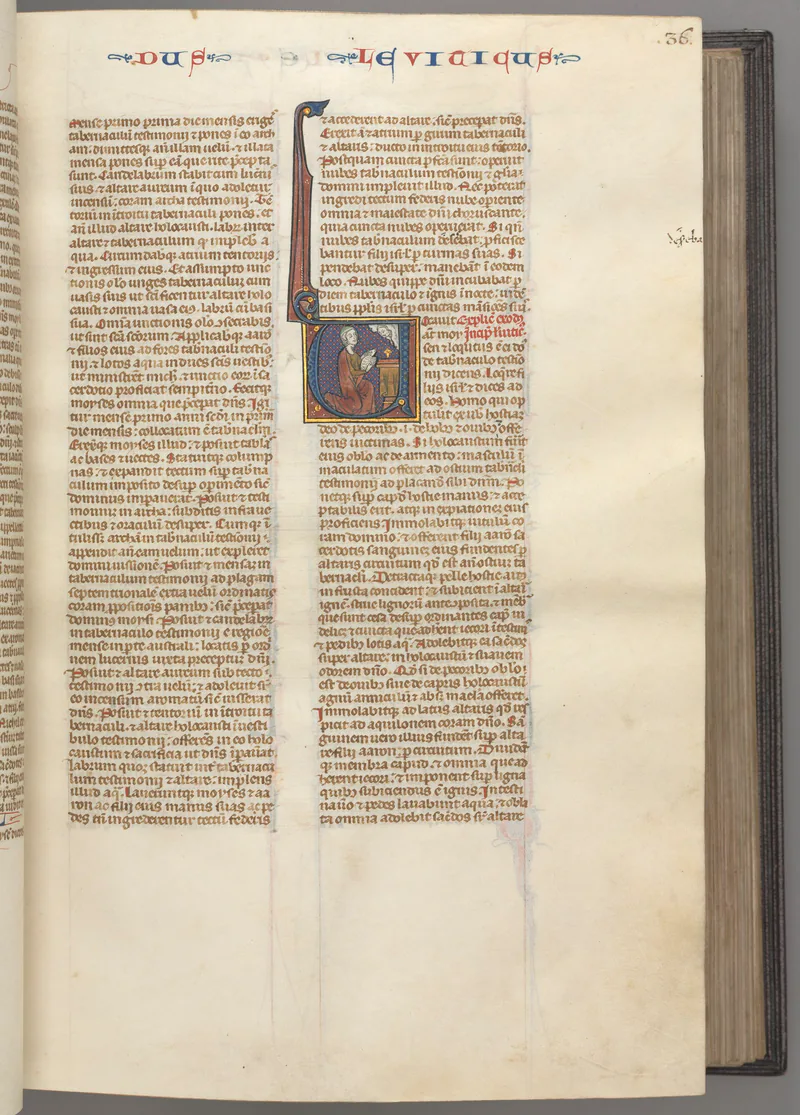
Biblical Foundations of Kashrut§
The Torah's dietary laws are set out chiefly in Leviticus 11 and Deuteronomy 14. Land animals are permitted if they both chew the cud and have fully split hooves — cattle, sheep, goats and deer qualify, while the pig (split hooves, no cud), the camel, the hare and the hyrax are named as forbidden. Water creatures must have both fins and scales, which excludes shellfish, eels and catfish. For birds the Torah gives no criterion but a list of about twenty forbidden species, mostly birds of prey and scavengers; because the identification of many names became uncertain, later law permits only birds with an established tradition of being eaten, such as chickens, ducks, geese and turkeys. Most insects are forbidden; some kinds of locust are allowed, and Yemenite Jews preserved a tradition of eating them.
Several other biblical rules are added. The prohibition of blood, already given to Noah ("flesh with the life thereof, which is the blood thereof, shall ye not eat", Genesis 9:4), is repeated with emphasis in Leviticus 17. Certain fats of cattle and sheep (chelev), once burned on the altar, are forbidden, as is the sciatic nerve (gid ha-nasheh), in memory of Jacob's wrestling with the angel. An animal that died of itself (nevelah) or was torn by beasts (terefah) may not be eaten; terefah, in the Yiddish form treyf, became the everyday word for any non-kosher food. The Levitical passages tie these rules to holiness: Israel is to distinguish between clean and unclean because God is holy.
Meat and Milk§
Three times the Torah says "thou shalt not seethe a kid in his mother's milk" (Exodus 23:19 and 34:26, Deuteronomy 14:21). The rabbis read the triple repetition as a prohibition of cooking meat with milk, eating such a mixture and deriving benefit from it, and they extended it to the meat of all mammals and, as a rabbinic safeguard, of poultry. Fish and eggs are neither meat nor dairy but pareve, "neutral".
In practice observant households keep separate sets of dishes, cutlery and cookware for meat and dairy, and often separate sinks or dishwashers. After eating meat one waits before eating dairy: the most common custom, based on the view of Maimonides, is about six hours; German Jewish custom is often three hours, and Dutch Jewish custom one hour. After dairy the wait before meat is short, usually requiring only rinsing the mouth and eating something neutral, though some customs prescribe longer intervals for hard cheeses. These differences illustrate how halakha, Jewish law, combines biblical text, rabbinic interpretation and regional custom (minhag).
Shechitah, Inspection and Salting§
Meat from a permitted animal is kosher only if the animal was slaughtered by shechitah, performed by a trained and observant slaughterer (shochet). The shochet severs the trachea and oesophagus with a single swift stroke of an extremely sharp, perfectly smooth knife (chalaf), which is checked for nicks before and after use. The rabbis held that this method, properly done, causes rapid loss of consciousness, and they disqualified any slaughter involving pressing, pausing or tearing. After slaughter the carcass is inspected (bedikah), above all the lungs, for lesions or adhesions that would render it terefah. Meat from animals whose lungs are completely free of adhesions is called glatt, "smooth", a term now often used loosely to mean "strictly kosher".
The forbidden fats and the sciatic nerve must then be removed, a skilled process called nikkur; because removing the sciatic nerve from the hindquarters is laborious, in many countries the hindquarters are sold to the general market. Finally the blood is drawn out by soaking the meat in water, covering it with coarse salt for about an hour and rinsing it (melichah); liver, which is rich in blood, is broiled over a flame instead. In several European countries the debate over slaughter without prior stunning has produced legal restrictions on shechitah, which Jewish communities have contested on grounds of religious freedom.
Wine, Bread and Food Prepared by Non-Jews§
The rabbis added laws designed partly to prevent idolatry and partly to limit social intimacy that might lead to intermarriage. Wine poured as a libation to idols (yayin nesekh) was forbidden, and the prohibition was extended to ordinary wine handled by non-Jews (stam yeinam). Kosher wine is therefore produced and handled by observant Jews, unless it is mevushal (heated), in which case later handling no longer affects it. Further rules govern bread baked by non-Jews (pat akum), food cooked by non-Jews (bishul akum) and milk not supervised by Jews (chalav Yisrael); Jewish authorities have differed greatly over how strictly to apply them. During Passover an additional, stricter layer of law forbids all leavened food made from grain.
Why Keep Kosher? Explanations Old and New§
The Torah gives few reasons for these rules, and Jewish thinkers have offered many. In the Hellenistic period the Letter of Aristeas and Philo of Alexandria read the laws allegorically: animals that chew the cud represent people who ruminate on wisdom, and the forbidden birds of prey warn against violence. The rabbis of the Talmud classed many dietary laws among the chukkim, divine statutes whose reasons are not disclosed, and a famous midrash teaches that one should not say "I do not want pork" but "I would like it, but my Father in heaven has forbidden it".
Medieval philosophers looked for rational purposes. Maimonides argued in the Guide for the Perplexed that forbidden foods are unhealthy and that the law of meat and milk may oppose idolatrous practices, while also stressing the laws' role in disciplining appetite. Nachmanides and others emphasised the spiritual effect of food on the soul, a theme developed by the kabbalists, who taught that eating with the right intention raised sparks of holiness. Modern scholars have proposed anthropological explanations. Mary Douglas, in Purity and Danger (1966), argued that forbidden animals were those that did not fit the categories of the Israelite classification of creation — creatures "out of place" — and later refined her view in studies of Leviticus; Jacob Milgrom saw the system as an ethical discipline expressing reverence for life, permitting meat only under conditions that honour the animal's blood. Many observant Jews regard such explanations as illuminating but secondary to the commandment itself.
Kashrut in Modern Judaism§
The modern movements divided over kashrut, as described in modern Judaism. Classical Reform Judaism declared in its Pittsburgh Platform of 1885 that the Mosaic dietary laws were not binding on modern Jews; an 1883 banquet in Cincinnati at which non-kosher food was served, later dubbed the "Trefa Banquet", became a symbol of the break with tradition. Orthodox Judaism maintains the full law; Conservative Judaism also holds it binding while permitting some leniencies; Reform and Reconstructionist Jews today often adopt selective practices, such as avoiding pork and shellfish, for reasons of identity, ethics or spirituality. Since the 1970s writers associated with the Jewish Renewal movement have proposed an "eco-kashrut" that applies ethical and environmental criteria to food.
Industrial food production transformed kashrut supervision. Agencies certify factories and ingredients and print symbols on packaging; the Orthodox Union, which began certifying products in the 1920s, is the best known of many. Scholars of law have described this system as a remarkably effective form of private regulation, and the kosher market is used by many non-Jews, including Muslims, vegetarians and people with allergies, although Islamic halal law, which has its own rules, is not identical to kashrut.
Frequently asked questions§
What does kosher mean?§
Kosher means "fit" or "proper" in Hebrew. Applied to food, it means that the food complies with the Jewish dietary laws, including the type of animal, the method of slaughter, the removal of blood and the separation of meat and milk.
Why can't Jews eat pork?§
Leviticus and Deuteronomy permit only land animals that both chew the cud and have split hooves. The pig has split hooves but does not chew the cud, so the Torah names it as forbidden. The prohibition became a strong marker of Jewish identity, especially under Hellenistic persecution.
Is kosher food blessed by a rabbi?§
No. Kosher status depends on ingredients and preparation, not a blessing. A rabbi or certifying agency supervises production to verify that the laws are followed, and a certification symbol records that supervision.
Do all Jews keep kosher?§
No. Orthodox and many Conservative Jews keep kashrut fully, while many Reform, Reconstructionist and secular Jews observe it partially or not at all. Levels of observance vary greatly between countries, families and individuals.
Sources and further reading§
- Purity and Danger: An Analysis of Concepts of Pollution and Taboo — Mary Douglas, 1966
- Leviticus 1–16 — Jacob Milgrom, 1991
- The Jewish Dietary Laws — Samuel H. Dresner, 1959
- Kosher: Private Regulation in the Age of Industrial Food — Timothy D. Lytton, 2013
- To Be a Jew: A Guide to Jewish Observance in Contemporary Life — Hayim Halevy Donin, 1972
- The Guide for the Perplexed — Moses Maimonides, 1963