Liber XIX · Judaism · Chapter II: Festivals & the Sabbath
Rosh Hashanah and Yom Kippur: The Jewish High Holy Days
Rosh Hashanah and Yom Kippur explained: the shofar, the Days of Awe, the Temple scapegoat, Kol Nidre and the fast of atonement in history and practice.

Rosh Hashanah, the Jewish New Year, and Yom Kippur, the Day of Atonement, are the High Holy Days (Yamim Noraim, "Days of Awe") that open the Jewish year in the autumn month of Tishri. Rosh Hashanah, marked by the blowing of the ram's-horn shofar, is understood as the day on which God judges the world; ten days later Yom Kippur, a twenty-five-hour fast spent in prayer and confession, seals that judgement and offers atonement to those who repent. Together they form the most solemn season of the Jewish calendar, observed even by many Jews who keep few other customs.
The High Holy Days in the Torah§
The Torah does not call the first day of the seventh month a "new year". Leviticus 23 describes it as a "memorial of blowing of trumpets", a day of rest and holy convocation, and Numbers 29 calls it "a day of blowing the trumpets". The Hebrew word teruah refers to a sounding or shout, which rabbinic tradition identified with the shofar. The name Rosh Hashanah ("head of the year") comes from the Mishnah, which lists several new years for different purposes — kings, tithes, trees — and fixes the first of Tishri as the new year for the counting of years and for judgement.
Yom Kippur, on the tenth of the month, is in the Torah a "day of atonement" on which Israel must "afflict your souls" and do no work, on pain of being cut off from the people. Its central ritual, described at length in Leviticus 16, belonged to the sanctuary: the purification of the holy place and of the people from the impurities and sins of the year.
Yom Kippur in the Temple: The High Priest and the Scapegoat§
According to Leviticus and the detailed account in the Mishnah tractate Yoma, the high priest prepared for a week before Yom Kippur. On the day itself he changed from his golden vestments into plain white linen and offered a bull for himself and his household. Lots were then cast over two goats: one "for the Lord", which was sacrificed, and one "for Azazel". Carrying incense, the high priest entered the Holy of Holies — the only time in the year anyone did so — and sprinkled the blood of the offerings there. He confessed the sins of the people over the second goat, which was led into the wilderness; the Mishnah says it was taken to a cliff and pushed over. Three times in the day he pronounced the divine name, which was otherwise not uttered, and the people prostrated themselves when they heard it.
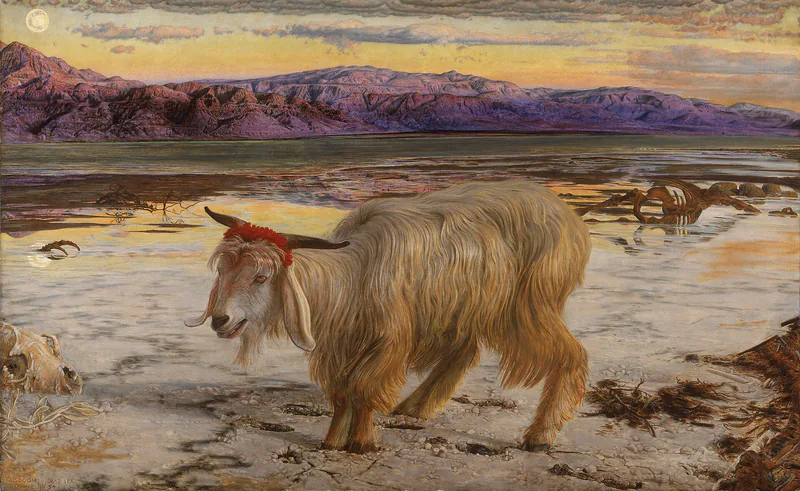
The meaning of Azazel was debated already in antiquity. Some understood it as the name of a rugged place, others as "the goat that departs" — the source of the English word "scapegoat", coined by William Tyndale. In the Book of the Watchers in 1 Enoch, Asael (Azazel) is a fallen angel who taught humanity metalworking and sorcery and is bound in the desert, and many modern scholars think Leviticus preserves an older idea of sending impurity back to a wilderness demon. With the destruction of the Temple in 70 CE (see ancient Israel and the Temple) the sacrifices ended, and the rabbis taught that prayer, repentance and charity now atoned in their place.
Rosh Hashanah: Judgement, Kingship and the Shofar§
The Mishnah teaches that on Rosh Hashanah "all who come into the world pass before Him like sheep". The Talmud elaborates the image of three books opened on that day: the wholly righteous are inscribed for life, the wholly wicked for death, and those in between have until Yom Kippur to tip the balance. Hence the traditional greeting Shanah tovah ("a good year") and the wish to be "inscribed and sealed for a good year".
The day's liturgy proclaims God as king of the world. The additional (Musaf) prayer contains three distinctive sections — Malkhuyot (kingship), Zikhronot (remembrance) and Shofarot (shofar blasts) — each built from biblical verses, and the shofar is sounded in sequences of three kinds of note: tekiah, a long blast; shevarim, three broken notes; and teruah, a series of short staccato blasts, for a total of a hundred sounds in many communities. Maimonides read the shofar as a wake-up call: "Awake, you sleepers, from your sleep."
The Torah readings tell of the birth of Isaac and, on the second day, of the binding of Isaac (Genesis 22); the ram caught in the thicket is linked to the ram's horn. At festive meals, apples dipped in honey, round loaves of challah and other foods whose names suggest blessing are eaten, a custom of "omens" (simanim) already mentioned in the Talmud. On the first afternoon many communities perform tashlikh, reciting verses from Micah beside flowing water and symbolically casting their sins into it — a medieval Ashkenazi custom first recorded in the fifteenth century and initially opposed by some rabbis as superstitious.
The Days of Awe, Repentance and Customs of Preparation§
The season of repentance begins earlier. Through the preceding month of Elul the shofar is blown on weekday mornings, and penitential prayers (selichot) are recited before dawn — Ashkenazim from the Saturday night before Rosh Hashanah, Sephardim throughout the month. The Ten Days of Repentance from Rosh Hashanah to Yom Kippur add further confessions and the litany Avinu Malkenu ("Our Father, our King").
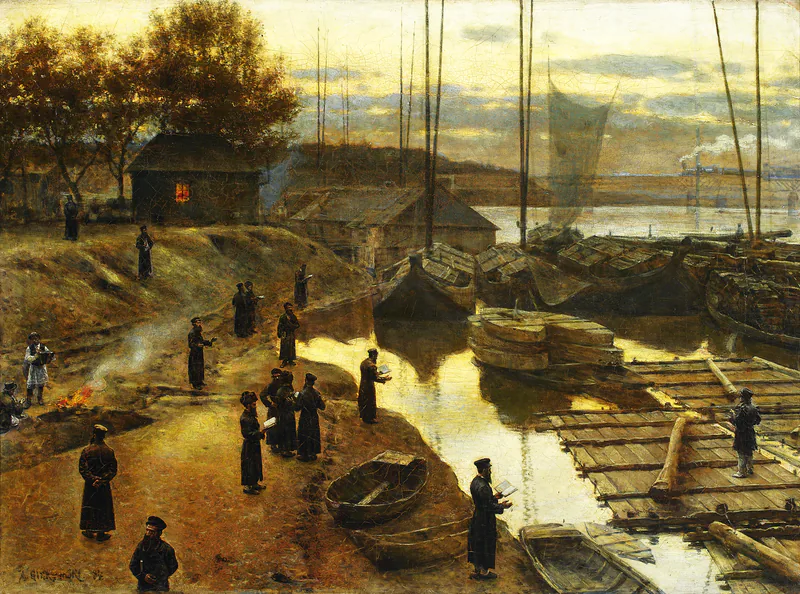
The idea at the centre of the season is teshuvah, literally "return". Maimonides' Laws of Repentance defines it as recognising a sin, abandoning it, confessing it before God and resolving never to repeat it, so that the penitent, faced with the same situation, would act differently. Jewish teaching insists that Yom Kippur atones only for sins between a person and God; wrongs done to another person require that one first seek that person's forgiveness and make amends. On the eve of Yom Kippur it is customary to ask pardon of family and friends, give charity, eat a festive meal and visit the ritual bath.
A more controversial custom is kapparot ("atonements"), recorded from the geonic period, in which a chicken was swung over the head and then slaughtered and given to the poor or its value donated. Rabbi Joseph Karo, author of the Shulchan Arukh, called it a foolish custom to be stopped, while Rabbi Moses Isserles defended it as long-established Ashkenazi practice. Today many Jews perform it with coins placed in a cloth and given to charity.
Yom Kippur Today: Fasting, Kol Nidre and Ne'ilah§
Rabbinic law interprets "afflicting the soul" as five abstentions from sunset to nightfall the next day: eating and drinking, washing, anointing with oil, wearing leather shoes and marital relations. Those whose health would be endangered are required to eat; the principle that saving life overrides the commandments is fundamental to halakha. Many worshippers wear white, and Ashkenazi men a white robe (kittel), recalling both the high priest's linen and burial shrouds.
The evening opens with Kol Nidre ("All vows"), an Aramaic declaration annulling vows made rashly to God, chanted three times before the open ark to a haunting Ashkenazi melody that inspired Max Bruch's Kol Nidrei for cello and orchestra (1881). The formula was criticised by some medieval authorities, and Christian polemicists used it to claim that Jewish oaths could not be trusted; the rabbis explained that it never applied to obligations toward other people. Several nineteenth-century Reform communities dropped it, though most later restored it.
The day itself is spent largely in the synagogue (see Jewish prayer and the synagogue). Confession is made communally in the plural, through the alphabetical Ashamnu ("We have trespassed") and the long Al chet ("For the sin which we have sinned"). The Avodah service re-enacts in poetry the high priest's Temple ritual, and the congregation bows to the ground as he once did. The memorial prayer Yizkor is said for departed relatives. In the afternoon the Book of Jonah is read, a story of repentance accepted even from the city of Nineveh. The closing service, Ne'ilah ("locking"), is said as the gates of heaven are imagined closing at sunset; it ends with the Shema, the cry "The Lord, He is God" seven times, and a single long blast of the shofar. The medieval poem Unetaneh Tokef, said on both holy days, asks "who shall live and who shall die"; a legend credits it to the martyr Rabbi Amnon of Mainz, but versions of it are now known from much earlier sources in the Land of Israel.
Interpretations, Mysticism and Modern Memory§
The kabbalists read the season as a cosmic drama of judgement and mercy, in which the shofar confuses the accuser and repentance raises the divine sparks, and they added intentions (kavvanot) to the shofar blasts and prayers; their ideas are explained in what is Kabbalah. Philosophers stressed the moral side of teshuvah. Franz Rosenzweig, on the verge of converting to Christianity in 1913, decided after attending Yom Kippur services in Berlin to remain a Jew — a story much retold by his biographers.
In modern times the holy days have kept a hold on Jewish life beyond strict observance. Synagogues fill as at no other time, and in Israel road traffic largely stops on Yom Kippur. The surprise attack on Israel on Yom Kippur in 1973 gave the day a further layer of national memory. For Jews of every movement the season remains an annual reckoning of the soul (cheshbon ha-nefesh), in which the individual's conduct is examined before God and before other people.
Frequently asked questions§
What is the difference between Rosh Hashanah and Yom Kippur?§
Rosh Hashanah, on the first and second of Tishri, is the New Year and the day of divine judgement, marked by the shofar and festive meals. Yom Kippur, on the tenth, is the Day of Atonement, a solemn fast spent in prayer and confession. The ten days between them are the Days of Awe or Ten Days of Repentance.
Why is the shofar blown on Rosh Hashanah?§
The Torah calls the day one of teruah, a sounding, which the rabbis understood as the blowing of a ram's horn. The shofar is interpreted as a coronation fanfare for God as king, a reminder of the ram sacrificed in place of Isaac and a call to repentance.
What is Kol Nidre?§
Kol Nidre is the Aramaic formula that opens the evening of Yom Kippur, annulling personal vows made to God. Despite its legal form it has become the most emotionally charged moment of the year, chanted before the open ark to a traditional melody.
Sources and further reading§
- Days of Awe — S. Y. Agnon, 1948
- Entering the High Holy Days: A Guide to the Origins, Themes, and Prayers — Reuven Hammer, 1998
- The Jewish Holidays: A Guide and Commentary — Michael Strassfeld, 1985
- The Jewish Way: Living the Holidays — Irving Greenberg, 1988
- All These Vows: Kol Nidre — Lawrence A. Hoffman (ed.), 2011
- Leviticus 1–16 — Jacob Milgrom, 1991