Liber XVIII · Jainism · Chapter I: Ahimsa & the Vows
Sallekhana and Santhara: The Jain Ritual of Fasting to Death
Sallekhana, or santhara, is the Jain vow of a calm death by gradual fasting: its texts, conditions, history, memorials and the modern legal debate.

Sallekhana, also called santhara or samadhi-marana ("death in equanimity"), is the Jain practice in which a person who is near the end of life gradually gives up food and then water, with the aim of meeting death calmly, free of fear and passion. Jain texts present it not as suicide but as the culmination of a religious life, undertaken only in specific circumstances, with the consent of a teacher and under the watch of the community.
This article describes a religious practice historically and from the point of view of those who observe it. It is not guidance of any kind; anyone who is thinking about ending their life should contact local emergency or crisis services.
The Meaning of Sallekhana and Its Names§
The Sanskrit word sallekhana is usually explained as sat ("properly") plus lekhana ("scraping" or "thinning"). Jain authors stress that what is to be thinned is not only the body but the inner passions (kashayas) of anger, pride, deceit and greed which, in Jain teaching, bind karma to the soul. The aim is a death in which the mind remains clear and the soul departs with as little new karmic bondage as possible, as explained in Jain Teachings: Soul, Karma and Many-Sidedness.
Other names emphasise different aspects. Santhara, common among Shvetambara Jains of Rajasthan and Gujarat, originally refers to the bed of straw or grass on which the person lies. Samadhi-marana stresses inner composure. Older canonical texts speak of pandita-marana, "the death of the wise," and contrast it with bala-marana, "the death of the fool," which takes the soul unawares, in distraction or terror.
Sallekhana in the Jain Scriptures§
Early canonical sources§
The Shvetambara Acaranga Sutra, one of the oldest Jain texts, describes ways in which ascetics may meet death by renunciation. Commentators list three classic forms: bhakta-pratyakhyana, the renunciation of food while still allowing oneself to move and be cared for; ingini-marana, in which the ascetic also restricts movement to a small area; and padapopagamana, the most rigorous, in which the renouncer lies still "like a fallen tree" until death. Later tradition regarded the stricter forms as suited only to exceptional ascetics of earlier ages.

Umasvati and Samantabhadra§
The Tattvartha Sutra of Umasvati, accepted by both major Jain traditions, states briefly that a householder should willingly observe sallekhana at the end of life. Its commentators, beginning with Pujyapada in the Sarvarthasiddhi, explain why this is not self-killing: a merchant does not want his house to burn, but if it catches fire and cannot be saved, he rescues what is most precious. The body, likewise, is not hated; but when it can no longer be preserved, the person protects the soul's religious progress.
The Ratnakaranda Shravakachara, a Digambara manual for laypeople attributed to Samantabhadra (its date is debated, with proposals from the second to the sixth century CE), gives the definition most often quoted. Sallekhana is the giving up of the body for the sake of dharma when there is calamity, famine, old age or disease for which there is no remedy. The same text lists the faults to be avoided during the vow: wishing to live longer, wishing to die sooner, fear, remembering friends with attachment and longing for pleasures in a future birth.
How Sallekhana Is Undertaken§
Jain sources and modern ethnographies describe the vow as a public and supervised religious act rather than a private decision. In outline:
- Conditions. The person should be facing death that cannot reasonably be averted. Teachers usually require the agreement of a monk, nun or acharya, and of the family.
- Reconciliation. Before taking the vow, the person asks forgiveness of all beings and of family and community, and grants forgiveness in return, using the formula familiar from the annual festival described in Paryushana and Jain Festivals.
- Gradual renunciation. Food is reduced step by step and then given up, usually followed later by water. The renunciation is formally declared and may be taken for a limited period and renewed.
- Religious support. Relatives, monks and nuns sit with the person, reciting the Navkar Mantra, reading scripture and encouraging equanimity. The person meditates, as described in Jain Meditation, and confesses faults.
Because the purpose is a mind free of passion, a sallekhana undertaken in anger, despair, shame or under pressure from others is regarded by Jain authorities as invalid — not religious death but the very kind of passion-driven act the practice is meant to exclude. The duration varies from a few days to, in reported cases of very elderly people, several weeks. Among ascetics, a longer graduated programme of fasting may precede the final vow; texts mention preparatory periods of up to twelve years for the most rigorous renouncers.
Sallekhana and the Question of Suicide§
The central argument of Jain writers is that suicide (atmaghata) and sallekhana differ in motive and state of mind. In Jain ethics, violence (himsa) is defined by the presence of passion and carelessness; killing oneself out of grief, rage or hopelessness is therefore an act of violence against a living being, and it binds heavy karma. Sallekhana, by contrast, is meant to be undertaken only when death is already approaching, without any wish to hasten it, in a state of calm and detachment. The faults listed by Samantabhadra make the same point: even wishing for death to come sooner spoils the vow.
The practice also expresses the Jain conviction that dying is itself a spiritual event. Since the state of mind at death is held to shape the next birth, a deliberate and composed death is seen as a final opportunity for the self-discipline cultivated throughout life, the last of the vows discussed in Ahimsa and the Jain Vows.
Critics, including some Jains, respond that the line between voluntary religious death and suicide is hard to police in practice; that elderly people, especially widows, may be subject to subtle family or social pressure; and that medical treatment may sometimes be refused too readily. Supporters reply that the safeguards of consent, supervision and spiritual purpose are integral to the practice, and they have often compared it to the refusal of life-prolonging treatment recognised in modern medical ethics.
Sallekhana in History: Kings, Ascetics and Memorials§
Chandragupta and Shravanabelagola§
Digambara tradition holds that the Mauryan emperor Chandragupta, having become a disciple of the teacher Bhadrabahu, followed him south during a famine and ended his life by sallekhana on the hill now called Chandragiri at Shravanabelagola in Karnataka. Historians treat the story as a tradition rather than established fact, but it shows how closely the practice was tied to ideals of royal renunciation.
The nishidhi inscriptions§
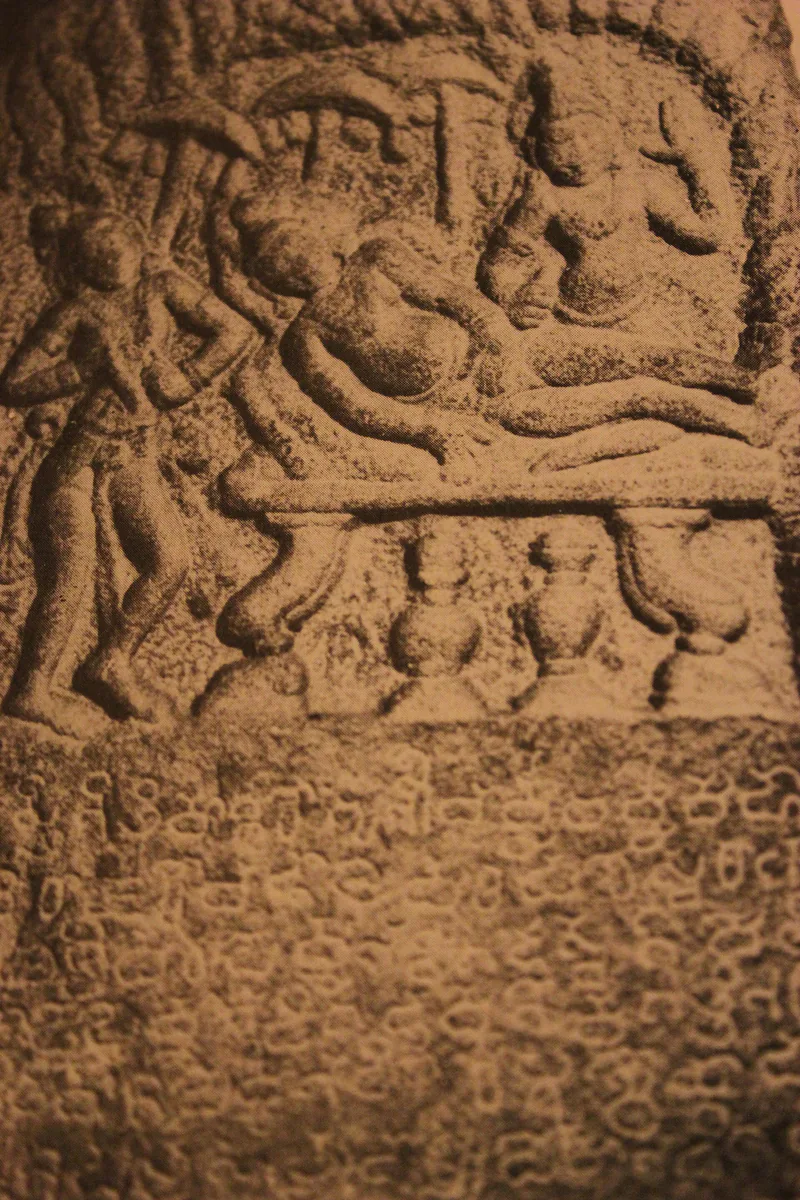
The best historical evidence comes from memorial stones called nishidhis or nisidhis, found in large numbers in Karnataka, above all on Chandragiri hill. Dated mostly between about the seventh and twelfth centuries, they commemorate monks, nuns, lay men and lay women who died by sallekhana, sometimes naming their teachers and the length of their fast. The historian S. Settar studied these inscriptions in detail and showed that the practice was a recognised and honoured institution across social classes, including members of royal and warrior families. The site and its pilgrimage traditions are described in Jain Temples and Pilgrimage.
Modern examples§
In the twentieth century the Digambara reformer Acharya Shantisagar, who revived the order of naked monks, died by sallekhana in 1955. In February 2024 Acharya Vidyasagar, one of the most widely followed Digambara monks of recent decades, died at Chandragiri in Dongargarh, Chhattisgarh, after taking the vow. Shvetambara communities in Rajasthan regularly announce cases of santhara among elderly laypeople, which are marked by visits, processions and, after death, a funeral procession of a celebratory character. Reliable figures do not exist; community estimates commonly speak of a few hundred cases a year.
Santhara and the Law in Modern India§
In 2006 a public-interest petition before the Rajasthan High Court argued that santhara should be treated as suicide. In August 2015 the court agreed, ruling that the practice was not an essential part of Jainism and could be prosecuted under the provisions of the Indian Penal Code on attempted suicide and abetment of suicide. The judgment provoked large silent protest marches by Jains across India. Within weeks the Supreme Court of India stayed the ruling, allowing the practice to continue while appeals were heard; at the time of writing the case has not been finally decided.
The debate raised wider questions: the boundaries of religious freedom under the Indian Constitution, the right of a dying person to refuse food and treatment, and the relation between sallekhana and the legal recognition of passive euthanasia and advance directives by the Supreme Court in 2018. Scholars of religion have generally urged that the practice be understood in its own terms, while acknowledging the importance of protecting vulnerable individuals from coercion.
Frequently asked questions§
Is sallekhana the same as suicide?§
Jains say it is not. Suicide is understood as an act of passion such as despair or anger, whereas sallekhana is undertaken only when death is near and unavoidable, with consent and supervision, and in a state of calm. Critics argue that the distinction is difficult to guarantee in practice, and Indian courts have been asked to decide the question.
What is the difference between sallekhana and santhara?§
They refer to the same practice. Sallekhana is the classical Sanskrit term used in texts and among Digambaras, while santhara is the name more common among Shvetambara Jains in Rajasthan and Gujarat.
Who can take the vow of sallekhana?§
Both ascetics and laypeople may take it. Jain texts limit it to situations such as terminal illness, extreme old age, famine or calamity, and community practice normally requires the approval of a monk, nun or acharya and the knowledge of the family.
Is santhara legal in India?§
In 2015 the Rajasthan High Court ruled that santhara was punishable as suicide, but the Supreme Court stayed that judgment shortly afterwards. The practice therefore continues while the case remains pending.
Sources and further reading§
- Inviting Death: Indian Attitude Towards the Ritual Death — S. Settar, 1989
- Sallekhana Is Not Suicide — T. K. Tukol, 1976
- The Jaina Path of Purification — Padmanabh S. Jaini, 1979
- That Which Is: Tattvartha Sutra — Umasvati, 1994
- The Jains — Paul Dundas, 1992
- Riches and Renunciation: Religion, Economy, and Society among the Jains — James Laidlaw, 1995