Liber XVIII · Jainism · Chapter II: Digambara & Shvetambara
Jain Monks and Nuns: Diksha, Daily Life and the Ascetic Orders
Jain monks and nuns explained: diksha initiation, hair-plucking, alms, wandering, the rainy-season retreat and the Digambara and Shvetambara orders.

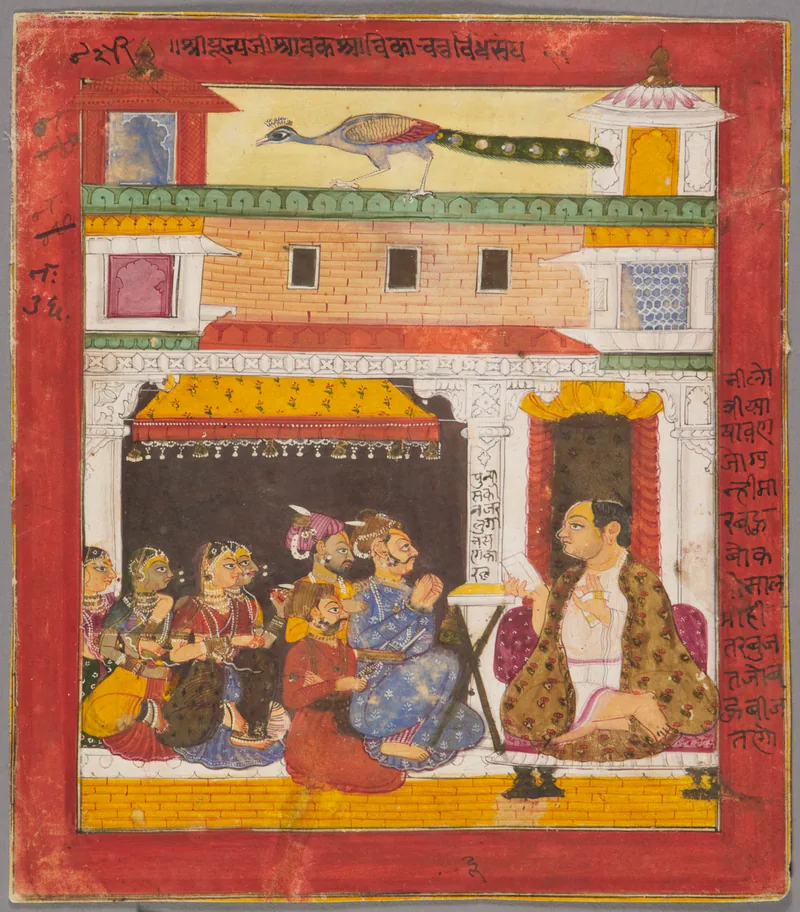
Jain monks and nuns are men and women who have taken the five great vows of non-violence, truthfulness, non-stealing, celibacy and non-possession, and who live without home, money or family, wandering on foot and depending entirely on lay Jains for food. For Jains the ascetic is the living model of the path to liberation, and the relationship between renouncers and householders forms the backbone of the religion.
The Ascetic Ideal in Jainism§
From its earliest texts, Jainism has held that liberation requires the complete renunciation of the household life. The model is Mahavira himself, who left his family, gave away his possessions and spent twelve years in wandering austerity before attaining omniscience, as told in Mahavira and the 24 Tirthankaras. The Jain community is described as a fourfold sangha of monks (sadhus or munis), nuns (sadhvis, or aryikas among Digambaras), laymen (shravakas) and laywomen (shravikas).
The ascetic's life is governed by the five great vows (mahavratas), which are total versions of the partial vows taken by laypeople. They are explained in Ahimsa and the Jain Vows; in daily life they translate into an extraordinary vigilance about harm to even the smallest living things. Ascetics observe further rules known as the five samitis ("carefulnesses") — in walking, speaking, receiving food, handling objects and disposing of bodily waste — and three guptis ("restraints") of body, speech and mind.
Diksha: Becoming a Jain Monk or Nun§
Preparation and procession§
A candidate for initiation, called a mumukshu ("one who desires liberation"), usually lives for a period with an ascetic group, studying, learning the rules and accompanying the renouncers on their journeys. The teacher and family must consent. Among Shvetambaras, the days before a diksha are marked by public celebrations: the candidate, dressed as a bride or prince, is carried in procession and throws rice, coins or other gifts to the crowd, a symbolic giving away of possessions modelled on the year-long giving of the Tirthankaras before their renunciation.
The initiation§
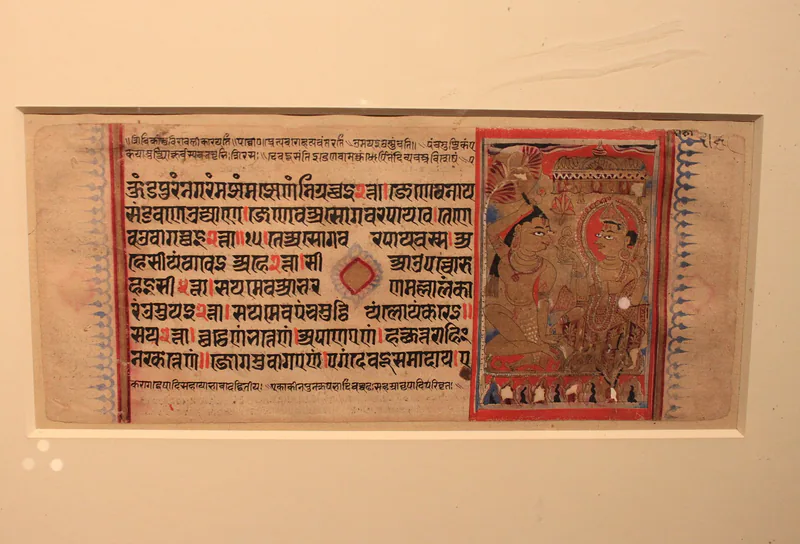
At the ceremony the candidate exchanges lay clothing for the ascetic's garments, receives the implements of the order and a new name, and takes the vows before the presiding acharya. A defining act is keshlochan or kesh-lunchan, the plucking out of the hair of the head and face by hand, which renouncers repeat periodically for the rest of their lives as an exercise in endurance. Shvetambara ascetics receive a woollen whisk (rajoharan or ogho) for gently brushing insects from their path and a mouth-cloth (muhpatti). Digambara monks receive a whisk of naturally shed peacock feathers (picchi) and a water gourd (kamandalu).
Large diksha ceremonies can draw thousands of spectators. The initiation of children and young adolescents, which some orders permit, has occasionally attracted public criticism and legal challenge; Jain authorities respond that candidates are carefully examined and that early training was traditional.
Daily Life: Wandering, Alms and Study§
On foot, without a home§
Jain ascetics do not use vehicles, since travel by cart, car or train would cause harm to living beings; they walk, often many kilometres a day, from village to village. They have no permanent residence and stay in rest-houses or lodges built by laypeople, called upashrayas among Shvetambaras. Ascetics traditionally do not use fire or electricity themselves, and many orders avoid telephones and other devices, though practice varies.
The rainy-season retreat§
During the four months of the monsoon, chaturmas, when the ground teems with insects and new growth, ascetics remain in one place. A town that hosts a respected monk or nun for chaturmas regards it as an honour, and the period coincides with the most intensive religious activity of the Jain year, including the festival described in Paryushana and Jain Festivals.
Food and alms§
Shvetambara ascetics collect food in bowls in a round called gochari, "grazing like a cow," taking a little from several households so as to burden no one and to receive only food not prepared specially for them. Digambara monks eat once a day, standing, from their cupped hands, at a single household which must formally invite them; if any rule is broken during the meal, the monk stops eating for that day. Neither tradition eats after sunset. Giving food to ascetics (dana) is one of the most meritorious acts open to the laity, and households prepare carefully in case a renouncer should call.
Discipline and teaching§
The ascetic day is structured by the obligatory duties (avashyakas), especially pratikramana, a ritual of confession and repentance performed morning and evening, and by meditation, study of scripture and teaching. Monks and nuns give sermons (pravachan), counsel laypeople and administer vows. Fasting is a constant feature, and the most austere end their lives by the vow described in Sallekhana and Santhara.
Digambara and Shvetambara Ascetics Compared§
The two great traditions, whose history is told in Digambara and Shvetambara Jainism, differ most visibly in their ascetics.
| Shvetambara | Digambara | |
|---|---|---|
| Monks' dress | White robes | Naked ("sky-clad") |
| Nuns' dress | White robes | White sari |
| Implements | Woollen whisk, bowls, staff, mouth-cloth | Peacock-feather whisk, water gourd |
| Food | Collected in bowls from several homes | Eaten once daily from the hands in one home |
| Women's status | Nuns can attain liberation | Nuns must be reborn as men before liberation |
Digambaras also recognise intermediate grades of renouncers — the kshullaka, who wears two pieces of cloth, and the ailaka, who wears only a loincloth — as steps towards full nudity. For much of the medieval and early modern period, naked Digambara monks were rare, and institutional life was led by bhattarakas, clothed and settled clerics who ran temples, libraries and seats of learning. The full order of naked monks was revived in the early twentieth century, above all by Acharya Shantisagar (1872–1955), and has grown considerably since.
Orders, Lineages and Hierarchy§
Jain ascetics are organised into lineages rather than a single church. Among image-worshipping Shvetambaras (Murtipujakas), the main lineages are called gacchas, of which the Tapa Gaccha is now the largest, alongside the Kharatara Gaccha and others; each contains many groups led by acharyas. The Sthanakvasi tradition, which rejects image worship, has numerous independent groups as well as a union formed in the twentieth century. The Terapanth, founded by Acharya Bhikshu in 1760, is notable for being led by a single acharya at a time; its current head, Acharya Mahashraman, succeeded in 2010. In 1980 the Terapanth also created a category of samanis and samanas, novices permitted to use transport and travel abroad, who teach Jainism and meditation in the diaspora.
Within each group there are recognised offices: the acharya, the head; the upadhyaya, the preceptor responsible for teaching scripture; and senior nuns with titles such as pravartini. These ranks are reflected in the Navkar Mantra, which salutes acharyas, upadhyayas and all sadhus.
Jain Nuns and Women Renouncers§
Women have always been prominent among Jain ascetics. Shvetambara sources hold that Mahavira's community included many more nuns than monks, and today Shvetambara nuns outnumber monks by roughly three to one. Anthropologists such as Anne Vallely and Manisha Sethi have shown that renunciation offers women a respected religious career, opportunities for study and authority as teachers, while also binding them to rules of seniority in which, by tradition, even a senior nun shows deference to a newly initiated monk.
Digambara nuns (aryikas) are fewer, and Digambara doctrine holds that women cannot achieve liberation in a female body, because they cannot practise complete nudity; the question is discussed in Digambara and Shvetambara Jainism. Nonetheless several Digambara aryikas, such as Ganini Gyanmati, have become influential scholars and builders of pilgrimage sites. Comparisons with other renunciant traditions are drawn in Buddhist Monastic Life and Christian Monasticism.
Frequently asked questions§
Why do Jain monks pluck out their hair?§
Plucking the hair by hand (keshlochan) shows indifference to the body and to pain, and avoids the use of razors and the harm to tiny creatures that might live in uncut hair. It is performed at initiation and then repeated periodically.
Why do Jain monks cover their mouths?§
The mouth-cloth (muhpatti) is worn or carried to protect tiny airborne beings and to remind the ascetic to speak carefully. Sthanakvasi and Terapanthi ascetics wear it continuously, while image-worshipping Shvetambaras usually hold it before the mouth when speaking.
Can Jain monks and nuns travel by car or plane?§
Fully initiated Jain ascetics walk everywhere and do not use vehicles. The Terapanth's samanis and samanas are an exception created in 1980 so that trained renouncers could teach outside India.
How do Jain monks get food?§
They receive alms from lay Jain households. Shvetambaras collect small amounts from several homes in bowls, while Digambara monks accept one meal a day in a single home, eating standing from their hands.
Sources and further reading§
- Guardians of the Transcendent: An Ethnography of a Jain Ascetic Community — Anne Vallely, 2002
- Escaping the World: Women Renouncers among Jains — Manisha Sethi, 2012
- The Jaina Path of Purification — Padmanabh S. Jaini, 1979
- Gender and Salvation: Jaina Debates on the Spiritual Liberation of Women — Padmanabh S. Jaini, 1991
- Jains in the World: Religious Values and Ideology in India — John E. Cort, 2001
- The Jains — Paul Dundas, 1992