Liber IV · Buddhism · Chapter VII: Monastic Life
Buddhist Monastic Life: Monks, Nuns, the Vinaya and the Sangha
Buddhist monastic life explained: the Sangha, the Vinaya rules, novice and full ordination, the daily round, nuns' ordination, and monasteries across Asia.

Buddhist monastic life is the life of monks (bhikkhus or bhikshus) and nuns (bhikkhunis or bhikshunis) who have "gone forth from home into homelessness" to follow the Buddha's path full-time, living by a code of discipline called the Vinaya. For more than two thousand years the monastic community, the Sangha, has preserved the scriptures, taught the Dharma, performed rituals for lay people and served as the institutional backbone of Buddhism across Asia.
The Sangha and Its Fourfold Assembly§
The Buddha's earliest followers were wandering renunciants, part of a wider shramana culture in which seekers abandoned family and property to pursue liberation. According to the texts, the Sangha began when the five companions who heard the first sermon became his disciples, as told in the life of the Buddha. Before long, gifts of parks and buildings from kings and merchants allowed the wandering community to settle, at first during the three months of the monsoon rains and gradually for longer periods, and monasteries (viharas) developed.
Buddhist texts describe a "fourfold assembly": monks, nuns, laymen and laywomen. The monastic orders are the core, but they cannot exist without the laity, who provide food, robes, lodging and medicine. In return the monastics offer teaching, ritual services and an opportunity for the laity to make merit, since gifts to virtuous monastics are considered especially fruitful. This reciprocity has shaped Buddhist societies everywhere.
The Vinaya: Rules of Monastic Discipline§
The Vinaya, one of the three "baskets" of Buddhist scripture, sets out the rules of monastic life together with the stories of how each came to be made. Its core is the Pratimoksha (Pali Patimokkha), a list of rules recited at a fortnightly assembly on the new- and full-moon days, at which monastics acknowledge any breaches.
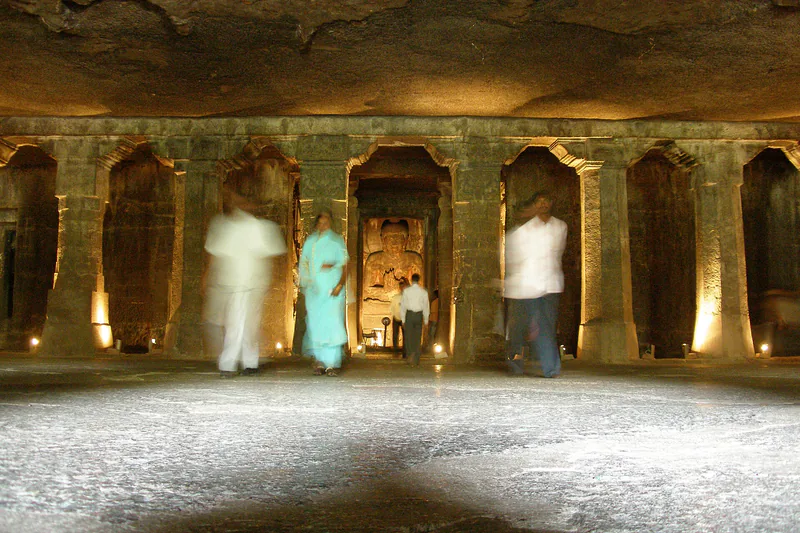
The number of rules differs among the surviving Vinayas: the Theravada code has 227 rules for monks and 311 for nuns; the Dharmaguptaka code followed in China, Korea, Vietnam and Taiwan has 250 for monks and 348 for nuns; and the Mulasarvastivada code used in Tibet has about 253 for monks. They are arranged by seriousness. The four gravest offences, called parajika ("defeat"), entail permanent expulsion from the order: sexual intercourse, theft of something of value, deliberately killing a human being, and falsely claiming spiritual attainments. Lesser rules govern dress, food, behaviour toward lay people and the use of property, and many minor rules concern etiquette and decorum.
The Vinaya also regulates the community as a body: how decisions are taken by consensus in a formal assembly, how disputes are resolved, and how communal property is managed. Monastics own only a few requisites — traditionally three robes, an alms bowl, a belt, a needle, a razor and a water strainer to avoid harming small creatures.
Ordination: Going Forth and Higher Ordination§
Entry into the order has two stages. The first is "going forth" (pravrajya, Pali pabbajja): the candidate shaves the head, puts on robes and becomes a novice (shramanera or shramanerika), taking ten precepts that include abstaining from sexual activity, from eating after midday, from entertainment and adornment, and from handling money. The second is higher ordination (upasampada), normally from the age of twenty, conferred by a quorum of fully ordained monastics — traditionally ten, or five in remote regions — who confirm that the candidate is free of impediments.
In principle ordination is not a vow for life: in most traditions a monk or nun may return to lay life honourably. In Thailand and Myanmar many young men ordain temporarily, and the Burmese shinbyu ceremony, in which a boy becomes a novice for a short time, is a major family occasion. In Tibet, by contrast, the monasteries historically housed a very large proportion of the male population, many entering as children.
The Daily Round: Alms, Study, Ritual and Meditation§
In the Theravada countries of Southeast Asia, the day traditionally begins with the morning alms round (pindapata), in which monks walk barefoot in silence through village or town, receiving food from lay people who kneel or stand to give it. Monks in this tradition do not cook, store food or eat after noon. Much of the rest of the day is given to chanting, study, teaching, meditation and the ritual services that lay people request: blessings, protective chanting and, above all, funerals and memorial rites. Each year the three-month rains retreat (vassa) is a period of intensified practice, ending with the kathina ceremony at which lay people present cloth for new robes.
In China, monasteries developed their own codes, known as "pure rules" (qinggui), later attributed to the Chan master Baizhang Huaihai (749–814). Chinese monastics typically received food from the monastery kitchen rather than begging, worked in the fields and kitchens, and adopted a strict vegetarian diet. The saying attributed to Baizhang, "a day without work, a day without food", expresses the ideal of communal labour that also shaped Zen and Chan monasteries. The routine of Chinese monasteries in the early twentieth century was described in detail by Holmes Welch.
Contrary to the modern impression, intensive meditation has historically been the occupation of a minority of monastics. Many have devoted themselves chiefly to study, ritual, administration or service. Theravada traditions distinguish between "village-dwelling" monks, devoted to learning and pastoral work, and "forest-dwelling" monks, devoted to meditation and austerity, and periodic revivals of forest monasticism have renewed the tradition.
Nuns and the Bhikkhuni Ordination§
The texts relate that the Buddha agreed to ordain women at the request of his foster-mother Mahaprajapati, after the intervention of his attendant Ananda, on condition that nuns accept eight "heavy rules" (garudharmas) placing them under the guidance of monks. Many modern scholars regard these rules, and the story's prediction that admitting women would shorten the life of the Dharma, as later additions, though the question remains debated. The Therigatha, a collection of verses attributed to early nuns, is one of the oldest bodies of religious poetry by women anywhere.

The full ordination lineage for nuns was carried from Sri Lanka to China in the fifth century, where it continues in the Dharmaguptaka tradition and is flourishing today, especially in Taiwan. In Sri Lanka it died out around the eleventh century, and it seems never to have been formally established in Tibet. Since the late twentieth century, ordinations conducted with the help of East Asian nuns have restored the order of bhikkhunis in Sri Lanka and elsewhere, and in 2022 a full ordination for Tibetan-tradition nuns was held in Bhutan. These revivals are welcomed by many and contested by some conservative monastic authorities. Meanwhile, many women live as renunciants with novice or eight- or ten-precept status, such as the mae chi of Thailand and the thilashin of Myanmar.
Monasteries Across Asia: India, Tibet, Japan and Korea§
Buddhist monasteries have taken very different forms. In India, great institutions such as Nalanda (flourishing from about the fifth to the twelfth century) and Vikramashila were centres of learning that attracted students from across Asia. In Tibet, the great Gelug monasteries around Lhasa — Drepung, Sera and Ganden, founded in the early fifteenth century — housed thousands of monks and ran long curricula of philosophical debate leading to the geshe degree, as described in Tibetan Buddhism.
In Japan, monastic life took a distinctive course. From the time of Shinran in the thirteenth century, Jodo Shinshu clergy married openly, and in 1872 the Meiji government decriminalised clerical marriage and meat-eating for all Buddhist clergy, after which most Japanese priests of every school married; temples are often passed from father to son. In Korea, the celibate Jogye Order coexists with the smaller Taego Order, which permits married clergy. In Theravada countries, by contrast, celibacy and the alms round remain the visible signs of monastic identity.
Frequently asked questions§
How many rules do Buddhist monks follow?§
It depends on the tradition. Theravada monks follow 227 rules in the Pali Pratimoksha, East Asian monks 250 in the Dharmaguptaka code, and Tibetan monks about 253 in the Mulasarvastivada code. Nuns follow more rules in each tradition, and there are many further procedures and customs beyond the core list.
Can Buddhist monks leave the monastery?§
Yes. In most Buddhist traditions ordination is not a lifelong vow, and a monk or nun may formally return to lay life without disgrace. Temporary ordination is common in Thailand and Myanmar.
Why do Buddhist monks shave their heads?§
Shaving the head is part of "going forth" from household life. It symbolises the renunciation of vanity and worldly identity and follows the example the texts attribute to the Buddha, who cut off his hair when he left home.
Sources and further reading§
- Buddhist Monastic Life According to the Texts of the Theravada Tradition — Mohan Wijayaratna, 1990
- The Buddhist Monastic Code — Thanissaro Bhikkhu, 1994
- Buddhist Monks and Monasteries of India — Sukumar Dutt, 1962
- Bones, Stones, and Buddhist Monks — Gregory Schopen, 1997
- The Practice of Chinese Buddhism, 1900–1950 — Holmes Welch, 1967
- The Forest Monks of Sri Lanka: An Anthropological and Historical Study — Michael Carrithers, 1983
- Therigatha: Poems of the First Buddhist Women — Charles Hallisey (trans.), 2015