Liber XVIII · Jainism · Chapter II: Digambara & Shvetambara
Sthanakvasi and Terapanth: Jain Reform Movements Explained
Sthanakvasi and Terapanth Jainism explained: Lonka Shah's critique of images, Acharya Bhikshu, the Anuvrat movement and the reform sects of the Digambaras.

The Sthanakvasis and the Terapanthis are the two main reform traditions within Shvetambara Jainism. Both reject the worship of images in temples, which they hold is not taught in the scriptures, and meet instead in plain halls for sermons, study and meditation. The Sthanakvasis grew out of a fifteenth-century critique of image worship by the Gujarati layman Lonka Shah; the Terapanth was founded in 1760 by Acharya Bhikshu as a stricter offshoot of the Sthanakvasis and is distinguished by its single acharya and its modern Anuvrat and Preksha Dhyana movements.
Reform and Renewal in Jain History§
Jainism has repeatedly renewed itself through movements that call the community back to what they see as the original standards of scripture and ascetic discipline. The pattern is visible from early times in disputes over the monastic rules, and it shaped the division of the community described in Digambara and Shvetambara Jainism.
By the late medieval period many Shvetambara temples and libraries were managed by yatis (also called chaityavasis, "temple-dwellers"), clerics who lived in fixed residences, handled property and performed rituals and astrology for patrons. Among Digambaras, a similar role was played by the bhattarakas, clothed clerics who presided over seats of learning and temple endowments. Reformers in both traditions objected that this settled, property-holding religious life departed from the wandering poverty prescribed for monks, and some went further, questioning the elaborate temple cult itself.
Lonka Shah and the Critique of Image Worship§
The most radical challenge came from Lonka Shah (Lonkashah), a layman of the fifteenth century, usually associated with Ahmedabad, who is said to have worked as a copyist of manuscripts. Reading the canonical texts closely, he concluded that they nowhere command the worship of images, and that temple ritual, with its offerings of flowers, water and lamps, causes harm to living beings and so conflicts with ahimsa. His teaching, probably formulated in the 1450s or 1460s, gave rise to the Lonka Gaccha, a lineage of ascetics who rejected images.
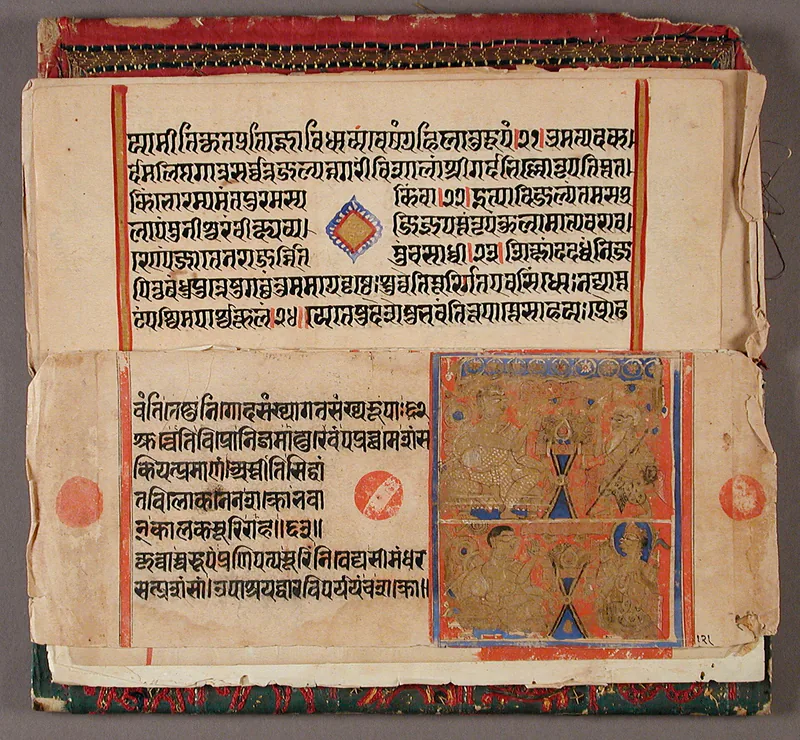
The details of Lonka Shah's life are known mainly from later and partisan sources, and his writings survive only partially. Over the following generations parts of the Lonka Gaccha themselves returned to image worship or became settled yatis. But the principle he articulated — that the scriptures, not custom, define religious practice — remained powerful.
The Sthanakvasi Tradition§
The sadhumargis§
In the seventeenth century several ascetics in Gujarat and Rajasthan, among them Lava, Dharmasimha and Dharmadasa, left the existing lineages to pursue a stricter discipline based on the scriptures. Opponents called them Dhundhiyas, "searchers" (some say because they lodged in ruined buildings); they preferred names such as Sadhumargi, "followers of the ascetic path". In time they came to be known as Sthanakvasis, after the plain meeting halls (sthanaks) used for religious gatherings in place of temples. The disciples of Dharmadasa are traditionally said to have formed twenty-two lineages, and the movement was long known as the "twenty-two groups".
Practice and organisation§
Sthanakvasis accept thirty-two texts as canonical, rejecting those Agamas and commentaries of the Murtipujaka canon that discuss images (see The Jain Agamas). Their monks and nuns wear white and keep the muhpatti, the cloth over the mouth that protects tiny beings in the air, tied in place at all times, whereas Murtipujaka ascetics usually hold it in the hand while speaking. Lay religious life centres on the living ascetics rather than on images: on hearing sermons, performing samayika and pratikramana in the hall, fasting and honouring the monks and nuns, whose way of life is described in Jain Monks and Nuns.
Many Sthanakvasi lineages joined together in 1952, at a conference in Sadri in Rajasthan, to form the Shramana Sangha under a single acharya, Atmaram; other lineages remained independent. Sthanakvasis are strongest in Punjab, Rajasthan, Gujarat, Maharashtra and Madhya Pradesh.
Acharya Bhikshu and the Founding of the Terapanth§
A schism over discipline§
Bhikshu (also known as Bhikhanji, 1726–1803) was born in Marwar and initiated as a Sthanakvasi monk under Acharya Raghunath. He came to believe that the monks of his order had grown lax — accepting lodgings built specially for them, for example, and gathering personal disciples — and that some of their teachings on compassion were mistaken. After failing to persuade his teacher, he left with a small group and in 1760 formally began a new order at Kelwa in Mewar.
The name Terapanth is explained in two ways. A Jain official is said to have noticed that the new group had thirteen (tera) monks and thirteen laymen; Bhikshu accepted the name but reinterpreted it as "O Lord, this is your (tera) path".
The doctrine of compassion and gift§
Bhikshu distinguished sharply between worldly duty (laukika dharma) and spiritual religion (lokottara dharma). Only actions that directly lessen the karmic bondage of the soul — renunciation, self-restraint, austerity, giving to ascetics — count, he argued, as religious acts. Saving one creature by harming another, or giving food to those who are not ascetics, may be socially good but is not in itself spiritual merit. Critics, including many Sthanakvasis and Murtipujakas, accused the Terapanth of discouraging charity; Terapanthis reply that the teaching clarifies motives rather than forbidding kindness.
One acharya§
Bhikshu's most lasting innovation was organisational. All Terapanthi monks and nuns belong to a single order headed by one acharya, who alone initiates disciples, assigns ascetics to their rainy-season residences and appoints his own successor. Bhikshu set out these rules in a written constitution (maryada patra) in 1802. The fourth acharya, Jayacharya (1803–1881), elaborated the order's administration and established the annual Maryada Mahotsav, a festival at which the ascetics gather around the acharya to reaffirm the constitution. The unified structure has given the Terapanth unusual discipline and cohesion.
The Modern Terapanth: Anuvrat, Preksha and the Saman Order§
The ninth acharya, Tulsi (1914–1997), who led the order from 1936, made the Terapanth a force in public life. In 1949 he launched the Anuvrat movement, inviting people of every religion to take small ethical vows (anuvratas) against violence, dishonesty, adulteration of goods, addiction and electoral corruption. The movement drew the attention of national leaders and remains active.
Tulsi's successor, Mahaprajna (1920–2010), a prolific author, developed Preksha Dhyana, a system of meditation drawing on Jain sources and modern physiology, described in Jain Meditation. The order also founded the Jain Vishva Bharati at Ladnun in Rajasthan (1970), later recognised as a university. In 1980 Tulsi created a new category of semi-ascetics, the samans and samanis, who keep most monastic vows but may use vehicles and travel abroad, allowing them to teach in the Jain diaspora and at universities. Since 2010 the order has been led by Acharya Mahashraman. Anne Vallely's ethnography of Terapanthi nuns, Guardians of the Transcendent, gives a detailed picture of the order's life.
Reform Among the Digambaras and the Murtipujaka Revival§
Digambara Jainism produced its own reform movements, which happen to share some names with Shvetambara groups but are entirely separate:
- Digambara Terapanth. Emerging in the seventeenth century in the region of Agra and Jaipur, partly inspired by the lay adhyatma circle around the poet Banarsidas and the writings of Kundakunda, it rejected the authority of the bhattarakas, the worship of guardian deities and offerings of fresh flowers and fruit. The older practice is called Bispanth.
- Taranpanth. Founded by Taran Svami (1448–1515) in central India, it venerates scriptures in place of images.
- Kanji Svami's movement. In the twentieth century the former Sthanakvasi monk Kanji Svami founded a lay Digambara movement centred on Kundakunda's Samayasara.
The image-worshipping Shvetambaras also renewed themselves. In the nineteenth century reformers revived the wandering samvegi monks at the expense of the settled yatis. A leading figure was Atmaram, later Vijayanandasuri (1837–1896), a former Sthanakvasi monk who became an image-worshipping acharya; he recommended the lay scholar Virchand Gandhi to represent the Jains at the 1893 World's Parliament of Religions in Chicago. The independent lay teacher Shrimad Rajchandra (1867–1901), a spiritual guide to the young Mohandas Gandhi, inspired yet another devotional following. Together these movements show that Jainism's diversity is not static but the product of continuing argument about how best to follow the path of the Tirthankaras.
Frequently asked questions§
What is the difference between Sthanakvasi and Murtipujaka Jains?§
Murtipujakas worship images of the Tirthankaras in temples, while Sthanakvasis reject image worship and gather in plain halls. Sthanakvasis also accept a smaller canon of thirty-two scriptures, and their ascetics keep the mouth-cloth tied on at all times.
Who founded the Terapanth?§
The Shvetambara Terapanth was founded by Acharya Bhikshu, a former Sthanakvasi monk, at Kelwa in Rajasthan in 1760. It is led by a single acharya, currently Acharya Mahashraman.
What is the Anuvrat movement?§
Anuvrat is an ethical movement launched by the Terapanthi leader Acharya Tulsi in 1949. It invites people of any faith to take small vows of non-violence, honesty and self-restraint in daily life.
Are the Digambara and Shvetambara Terapanths related?§
No. They arose independently, in different centuries and for different reasons, and simply share a name. The Digambara Terapanth is a reform of temple ritual; the Shvetambara Terapanth is an aniconic ascetic order.
Sources and further reading§
- The Jains — Paul Dundas, 1992
- Guardians of the Transcendent: An Ethnography of a Jain Ascetic Community — Anne Vallely, 2002
- Studies in Jaina History and Culture: Disputes and Dialogues — Peter Flügel, 2006
- Jains in the World: Religious Values and Ideology in India — John E. Cort, 2001
- Absent Lord: Ascetics and Kings in a Jain Ritual Culture — Lawrence A. Babb, 1996
- The Jaina Path of Purification — Padmanabh S. Jaini, 1979