Liber XVIII · Jainism · Chapter I: Ahimsa & the Vows
Jain Meditation: Samayika, Kayotsarga and Preksha Dhyana
Jain meditation explained: the four kinds of dhyana, the twelve reflections, samayika and kayotsarga, Hemachandra's Yogashastra and Preksha Dhyana.

Jain meditation (dhyana) is a discipline of concentration and inner detachment aimed at stopping the influx of karma and wearing away karma already bound to the soul. Classical Jain texts treat meditation as the highest of the internal austerities, practised through the daily equanimity of samayika, the motionless posture of kayotsarga and the contemplation of twelve reflections; in the twentieth century, reformers developed systematic methods such as Preksha Dhyana for modern practitioners.
Meditation in Early Jainism§
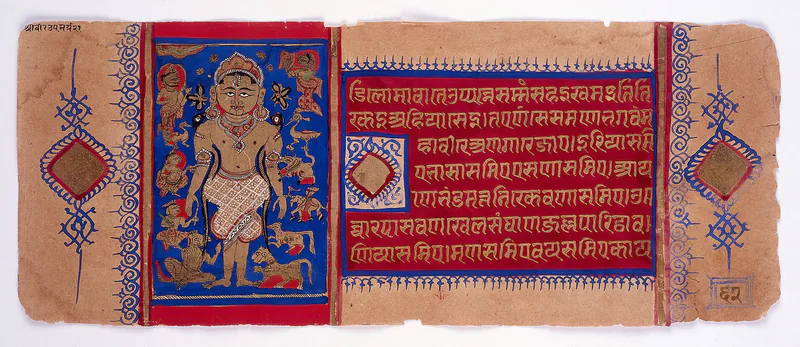
The earliest Jain texts portray Mahavira as a great meditator. The Acaranga Sutra describes him standing for long periods in the open, in heat and cold, fixing his gaze on a single point and meditating day and night, indifferent to insects, weather and hostile villagers. The Tirthankaras are always represented either seated in deep meditation or standing in kayotsarga, arms hanging at their sides, as described in Mahavira and the 24 Tirthankaras.
The Indologist Johannes Bronkhorst has argued that early Jain meditation belonged to an ascetic current of ancient India that sought to suppress bodily and mental activity altogether, in contrast to the cultivation of insight that characterised early Buddhist practice. In Jain theory, activity of body, speech and mind is what draws karma into the soul, as explained in Jain Teachings; stilling that activity is therefore a direct means of stopping karmic influx (samvara) and of burning off past karma (nirjara).
The Four Kinds of Dhyana in the Tattvartha Sutra§
The Tattvartha Sutra of Umasvati defines meditation as the concentration of thought on a single object, and says that it can be sustained for no longer than one antarmuhurta, a period of less than forty-eight minutes. It places dhyana among the six internal austerities, with expiation, humility, service, study and the abandonment of the body. It then distinguishes four kinds:
- Arta dhyana, "mournful" or "afflicted" concentration — brooding on loss, pain, unpleasant things or the desire for pleasures;
- Raudra dhyana, "cruel" concentration — dwelling with pleasure on violence, falsehood, theft or the protection of possessions;
- Dharmya dhyana, "virtuous" concentration — reflection on the teaching, on the misery of beings, on the results of karma and on the structure of the universe;
- Shukla dhyana, "pure" or "white" concentration — the highest meditation, whose final stages are attainable only by those approaching omniscience.
The first two are not meditation in the modern sense but obsessive states of mind that bind karma; Jain teachers include them to show that concentration itself is morally neutral, and that what matters is its object and its emotional colour. Practical teaching focuses on dharmya dhyana, which prepares the ground for shukla dhyana.
The Twelve Reflections (Anupreksha)§
Closely linked to meditation are the twelve anupreksha or bhavanas, "reflections" or "contemplations," which Jains are encouraged to cultivate continually. They are reflections on:
- impermanence (anitya);
- the absence of any refuge but the dharma (asharana);
- the cycle of rebirth (samsara);
- the solitude of the soul, which is born and dies alone (ekatva);
- the separateness of soul and body (anyatva);
- the impurity of the body (ashuci);
- the influx of karma (asrava);
- the stopping of influx (samvara);
- the shedding of karma (nirjara);
- the nature of the universe (loka);
- the rarity of enlightenment (bodhi-durlabha);
- the truth of the dharma taught by the Jinas.
The Digambara teacher Kundakunda devoted a short Prakrit work to them, and they remain a favourite subject of sermons and devotional poetry. Their purpose is to weaken attachment and fear and to strengthen the resolve for renunciation, including at the end of life, as in the vow described in Sallekhana and Santhara.
Samayika, Kayotsarga and the Daily Obligations§
Samayika: equanimity for 48 minutes§
Samayika, from sama ("equal" or "balanced"), is the practice of equanimity. For laypeople it is one of the twelve vows described in Ahimsa and the Jain Vows: for a period of forty-eight minutes the householder renounces all harmful activity and behaves, in effect, as a temporary ascetic. Practitioners traditionally sit on a woollen mat, often with a mouth-cloth and a small brush for removing insects, and spend the time in recitation, study, prayer and meditation — commonly using the Navkar Mantra. For monks and nuns, samayika is not a period but a lifelong condition.
Kayotsarga: abandoning the body§
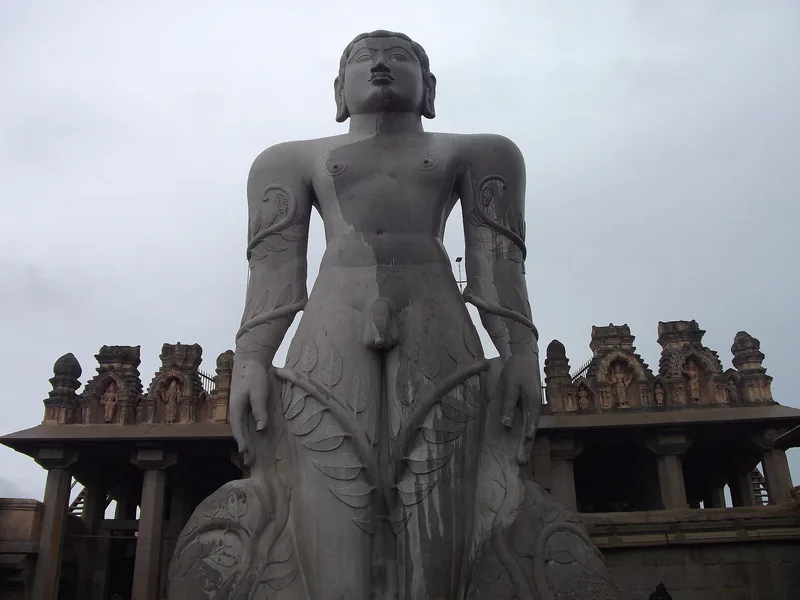
Kayotsarga, "abandonment of the body," is a posture of complete stillness, usually standing upright with arms hanging loosely, in which the practitioner withdraws attention from the body and its discomforts. Its emblematic figure is Bahubali, the son of Rishabha, who according to tradition stood so long in meditation that vines grew around his limbs — the subject of the colossal statue at Shravanabelagola described in Jain Temples and Pilgrimage. Shorter kayotsargas, measured by a fixed number of recitations, punctuate Jain rituals.
The six obligatory duties§
Samayika and kayotsarga belong to the six avashyakas, the "necessary" daily duties of ascetics, which pious laypeople also practise: equanimity, praise of the twenty-four Tirthankaras, veneration of the teacher, pratikramana (repentance for faults), kayotsarga, and pratyakhyana (resolutions to renounce particular foods or activities). In practice much Jain meditation has been embedded in these liturgical forms rather than taught as a separate technique.
Medieval Jain Yoga: Haribhadra, Shubhachandra and Hemachandra§
From the eighth century onwards Jain authors engaged with the wider Indian literature on yoga. Haribhadra, in works such as the Yogadrishtisamuccaya, compared the Jain path with the stages of Patanjali's yoga and with Buddhist and Hindu systems, describing eight "views" of progressive insight — a notably open-minded comparison discussed by Christopher Key Chapple. The Digambara Shubhachandra's Jnanarnava (probably eleventh century) and the Shvetambara Hemachandra's Yogashastra, written in the twelfth century for King Kumarapala of Gujarat, set out detailed techniques.
Both describe four types of virtuous meditation: pindastha, meditation on the body, with visualisations of the elements of earth, fire, wind and water purifying the self; padastha, meditation on sacred syllables and mantras, often placed on imagined lotuses; rupastha, meditation on the form of the Jina; and rupatita, meditation on the formless, liberated soul. These methods share much with contemporary Hindu tantric practice, discussed in Tantra: History and Practice, and show how Jain teachers adapted widely used techniques to their own goals. Hemachandra also discusses breath control, while warning that forced practice disturbs the mind.
Modern Jain Meditation and Preksha Dhyana§
In the nineteenth and twentieth centuries interest in meditation revived. The Gujarati lay thinker Shrimad Rajchandra (1867–1901), remembered also as a mentor of Gandhi, and later the Digambara-inspired movement of Kanji Swami (1890–1980) emphasised direct inner realisation of the pure soul, drawing on Kundakunda's Samayasara.
The most systematic modern method is Preksha Dhyana ("meditation of perception"), developed in the 1970s by Muni Nathmal, later Acharya Mahaprajna (1920–2010), under the Terapanth leader Acharya Tulsi. It combines relaxation in kayotsarga, perception of the breath, perception of bodily sensations, concentration on "psychic centres" (chaitanya kendras) that Mahaprajna linked with the endocrine glands, colour meditation based on the Jain doctrine of leshyas, and the twelve reflections. These centres invite comparison with the Hindu chakras discussed in History of the Chakras, though Preksha teachers present their system as rooted in Jain sources. Preksha Dhyana is taught in India and, through the Terapanthi samanis, abroad, often in a non-sectarian form focused on health and well-being.
As with any meditative practice, people with a history of mental illness are generally advised to learn from experienced teachers and to consult a doctor where appropriate. A wider survey of contemplative methods is given in Meditation and Yoga Philosophy and Samadhi.
Frequently asked questions§
What is Jain meditation called?§
The general term is dhyana. Specific forms include samayika (equanimity), kayotsarga (abandonment of the body) and modern methods such as Preksha Dhyana.
What is samayika in Jainism?§
Samayika is a period of forty-eight minutes during which a person renounces harmful activity and devotes the time to equanimity, prayer, study and meditation. It is one of the twelve vows of lay Jains and the permanent condition of the ascetic.
What is Preksha Dhyana?§
It is a method of meditation developed in the 1970s by Acharya Mahaprajna of the Terapanth sect. It combines relaxation, breath and body awareness, concentration on psychic centres, colour meditation and reflection.
How is Jain meditation different from Buddhist meditation?§
Classical Jain meditation emphasises stilling the activity of body, speech and mind to stop the inflow of karma and reveal the eternal soul. Buddhist traditions generally emphasise insight into impermanence and not-self, although the two traditions have influenced each other.
Sources and further reading§
- The Two Traditions of Meditation in Ancient India — Johannes Bronkhorst, 1986
- Reconciling Yogas: Haribhadra's Collection of Views on Yoga — Christopher Key Chapple, 2003
- That Which Is: Tattvartha Sutra — Umasvati, 1994
- The Jaina Path of Purification — Padmanabh S. Jaini, 1979
- Guardians of the Transcendent: An Ethnography of a Jain Ascetic Community — Anne Vallely, 2002
- Jainism: An Introduction — Jeffery D. Long, 2009