Liber XX · Kabbalah · Chapter X: The Zohar
Idra Rabba: The Zohar's Great Assembly and the Divine Face
The Idra Rabba, the Zohar's Greater Holy Assembly: Shimon bar Yochai's gathering, Arikh Anpin and Ze'ir Anpin, the kings of Edom and the Idra Zuta.

The Idra Rabba ("Great Assembly"), in full Idra Rabba Qaddisha, the "Greater Holy Assembly", is one of the most celebrated sections of the Zohar. It describes a gathering at which Rabbi Shimon bar Yochai and nine companions expound, limb by limb, the mystical "face" and beard of God in two aspects, the Long-Suffering Ancient One and the Short-Faced One. With its sequel, the Idra Zuta, it is the boldest anthropomorphic text of medieval Kabbalah and the foundation of the Lurianic doctrine of the partzufim.
What the Idra Rabba Is and Where It Appears§
The Zohar, discussed more fully in the Zohar article, is not a single book but a large collection of units written in a distinctive literary Aramaic and attributed to the circle of the second-century sage Shimon bar Yochai. Within it, three related texts form a group. The Sifra di-Tseni'uta, a few pages long and printed in the portion Terumah, sets out in riddling sentences the "balance" and features of the divine configurations. The Idra Rabba and the Idra Zuta ("Lesser Assembly") are narrative expositions of that book, presented as revelations given at two great gatherings.
The word idra is Aramaic for a threshing floor or a chamber, and by extension an assembly. The Zohar also contains a shorter Idra de-Vei Mashkena ("Assembly of the Tabernacle"). In the printed Zohar the Idra Rabba stands within the commentary on the portion Naso of Numbers, and the Idra Zuta within the commentary on Ha'azinu of Deuteronomy. Daniel Matt's annotated translation in the Pritzker Edition of the Zohar provides the standard English version of both, with the Idra Rabba in its eighth volume.
The Gathering in the Field: Narrative and Drama§
The Idra Rabba opens with Shimon bar Yochai summoning his companions, among them his son Eleazar, Abba, Judah, Yose bar Ya'akov, Isaac, Hizkiyah bar Rav, Hiyya, Yose and Yeisa. He applies to their situation the verse "It is time for thee, Lord, to work: for they have made void thy law" (Psalm 119:126), signalling that the hour demands the revelation of secrets normally kept hidden. They go out to a field and sit in a circle among the trees, and Shimon warns them that whoever reveals these mysteries must be fit to do so.
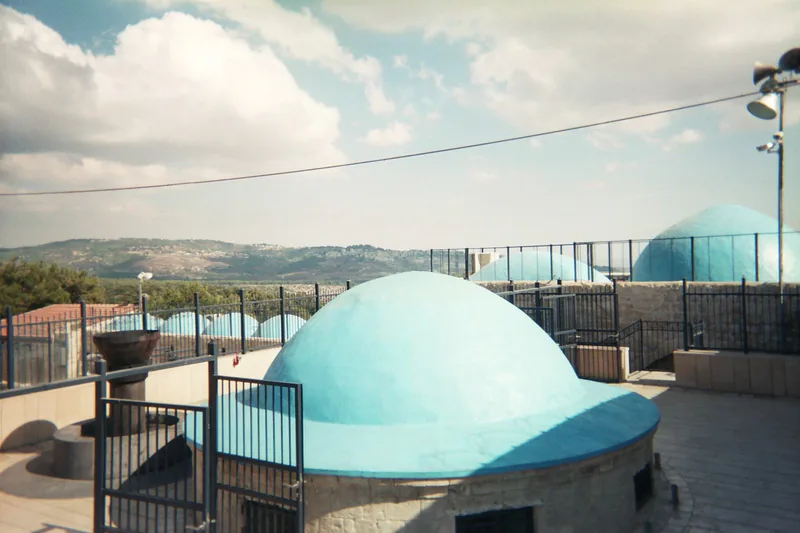
Each companion in turn expounds a feature of the divine form, and Shimon praises, completes or corrects him. The atmosphere is charged: the text describes the heavens gathering to listen, fire surrounding the companions, and joy mixed with dread. At the close, three of the companions, Yose bar Ya'akov, Hizkiyah and Yeisa, die, their souls departing in a kiss, while the others weep. Shimon interprets their deaths as a sign of their perfection: they were drawn into the supernal light. This dramatic frame, as Melila Hellner-Eshed has shown in Seekers of the Face (2021), is not decoration but part of the teaching: knowledge of the divine face is presented as an experience that transforms, and can overwhelm, those who receive it.
Arikh Anpin: The Ancient Holy One and the Thirteen Arrangements§
The first great subject is Arikh Anpin, the "Long Face", also called Atika Qaddisha ("the Holy Ancient One") and Attika Yomin ("Ancient of Days", after Daniel 7). Arikh Anpin can also be read as "long-suffering", the patient aspect of God in which there is no judgement. The companions describe his skull filled with a dew of crystalline light, which will revive the dead; his white hair, each strand a channel; his forehead, called "Will", whose revelation brings favour to all the worlds; his ever-open eyes, which never sleep; and his nose, from which life breathes forth.
The centrepiece is the beard, expounded in thirteen tikkunim ("arrangements" or "rectifications"). These are linked with the thirteen attributes of mercy, which the Idra reads in the closing verses of Micah (7:18–20) and in the divine self-description of Exodus 34. Each tress, curl and path of the beard becomes a channel through which mercy descends. The language is intensely physical, yet the Idra repeatedly reminds its readers that these images are tikkunim, arrangements through which the hidden God becomes knowable, not literal limbs. In terms of the ten sefirot, Arikh Anpin is usually identified with Keter, the crown, the highest aspect of the divine.
Ze'ir Anpin, the Kings of Edom and the Balance§
The second subject is Ze'ir Anpin, the "Short Face" or "Impatient One", the aspect of God in which mercy and judgement are mixed and which governs the world more directly. His features are described in parallel: black hair, a face that can burn with anger, eyes that sometimes sleep, a beard with nine arrangements. In sefirotic terms Ze'ir Anpin corresponds broadly to the six sefirot from Hesed to Yesod, centred on Tiferet, and his female partner, described in the Idra as well, corresponds to Malkhut, the Shekhinah. Their face-to-face union is the goal toward which the cosmos and Israel's worship are directed.

The Idra Rabba also interprets the list of "the kings that reigned in the land of Edom, before there reigned any king over the children of Israel" (Genesis 36:31). These kings, who reigned and died one after another, are understood as earlier worlds that God created and destroyed because they lacked "balance" (matkela), the proper pairing of male and female, mercy and judgement. Only when the divine configurations were arranged in balance could a world endure. This passage, together with the Sifra di-Tseni'uta's teaching on the balance, became one of the main sources for the Lurianic doctrine of the shattering of the vessels.
The Idra Zuta and the Death of Shimon bar Yochai§
The Idra Zuta is set on the day of Shimon bar Yochai's death. The surviving companions gather at his house, and he declares that he will now reveal what he had not revealed before, so that he may enter the world to come without shame. He reviews and extends the teaching of the Idra Rabba, with special attention to the union of the male and female aspects of the divine. As he speaks the word "life", his soul departs. Fire surrounds the house; when it lifts, the companions find him dead, and at his funeral his bier rises into the air and a voice proclaims his greatness.
This narrative became the basis of popular devotion. From the sixteenth century the kabbalists of Safed associated Shimon bar Yochai's death with Lag ba-Omer, and the pilgrimage to his tomb at Meron on that day, with bonfires and song, grew into one of the largest gatherings in Jewish religious life. The Idra Zuta thus links the most esoteric passages of the Zohar with a widely practised folk celebration.
Authorship, Interpretation and Lurianic Readings§
Gershom Scholem included the Idrot within the main body of the Zohar, which he attributed to Moses de León in late-thirteenth-century Castile. Later scholars, notably Yehuda Liebes, argued that the Zohar was the work of a circle of kabbalists and that the Idrot have their own distinct style, theology and possibly authorship. Liebes's essay "The Messiah of the Zohar", collected in Studies in the Zohar, read the Idra Rabba as reflecting the self-understanding of that circle, with Shimon bar Yochai as a messianic figure. The relation between the Idrot and the rest of the Zohar remains debated.
In sixteenth-century Safed the Idrot became central. Moses Cordovero interpreted them in his commentary Or Yakar, and Isaac Luria built his system of partzufim, the divine "faces" of Arikh Anpin, Abba, Imma, Ze'ir Anpin and Nukva, largely on their imagery, as described in Lurianic Kabbalah. Tradition relates that Luria seated his disciples in the places of the companions of the Idra, re-enacting the assembly. Through Luria the Idrot shaped the meditative intentions of later kabbalistic prayer.
The Idrot in Latin and English: From Kabbala Denudata to Mathers§
The Idrot reached Christian Europe through Christian Knorr von Rosenroth's Kabbala Denudata (1677–1684), whose second volume printed Latin translations of the Sifra di-Tseni'uta, the Idra Rabba and the Idra Zuta. In 1887 S. L. MacGregor Mathers translated these three texts from Knorr's Latin into English as The Kabbalah Unveiled, using the Latin terms Macroprosopus for Arikh Anpin and Microprosopus for Ze'ir Anpin. Through Mathers and the Golden Dawn these terms entered Hermetic Qabalah, where they are still used; see Christian and Hermetic Qabalah.
Frequently asked questions§
What does Idra Rabba mean?§
Idra Rabba is Aramaic for "the Great Assembly" or "Great Threshing Floor". Its full name, Idra Rabba Qaddisha, means "the Greater Holy Assembly". It names the gathering of Shimon bar Yochai and his companions at which the secrets of the divine face are revealed.
What are Arikh Anpin and Ze'ir Anpin?§
They are two aspects or "faces" of God described in the Idrot. Arikh Anpin, the Long Face, is the patient, wholly merciful Ancient One, linked with Keter. Ze'ir Anpin, the Short Face, combines mercy and judgement and governs the world, linked with the central sefirot around Tiferet.
What is the difference between the Idra Rabba and the Idra Zuta?§
The Idra Rabba describes a gathering of ten companions in a field at which three of them die in ecstasy. The Idra Zuta describes the day of Shimon bar Yochai's death, when he reveals his final teachings and dies. Both expound the Sifra di-Tseni'uta.
Is there an English translation of the Idra Rabba?§
Yes. Daniel Matt's annotated translation appears in the Pritzker Edition of the Zohar. An older English version, made from Latin, is S. L. MacGregor Mathers's The Kabbalah Unveiled (1887), which is still widely read in esoteric circles.
Sources and further reading§
- The Zohar: Pritzker Edition, Volume Eight — Daniel C. Matt (trans.), 2014
- Seekers of the Face: Secrets of the Idra Rabba (The Great Assembly) of the Zohar — Melila Hellner-Eshed, 2021
- Studies in the Zohar — Yehuda Liebes, 1993
- The Wisdom of the Zohar: An Anthology of Texts — Isaiah Tishby, 1989
- Reading the Zohar: The Sacred Text of the Kabbalah — Pinchas Giller, 2001
- The Kabbalah Unveiled — S. L. MacGregor Mathers, 1887
- Major Trends in Jewish Mysticism — Gershom Scholem, 1941