Liber XXIX · Superstitions · Chapter XII: Superstitions of the Americas
La Llorona: History of the Weeping Woman Legend
La Llorona, the Weeping Woman of Mexico: the legend, Aztec omens in Sahagún, La Malinche, parallels with Medea, regional forms and modern films.

La Llorona, "the Weeping Woman", is a ghost of Mexican and wider Latin American folklore: a woman in white who wanders by rivers and canals at night, crying for the children she drowned. In the most common telling she killed them in despair or revenge after being abandoned by their father, and was condemned to search for them forever; children are warned that she may carry off anyone she finds near the water after dark. The legend is told from Mexico and Central America to the United States Southwest, and scholars have linked it to Aztec omens, colonial history and the figure of La Malinche.
The Legend in Its Common Form§
There are hundreds of versions of La Llorona, but most share a core. A beautiful young woman of humble background, often named María, attracts the love of a wealthy or high-born man. She bears him children, but he abandons her, sometimes to marry a woman of his own class. In grief or fury she drowns the children in a river. Realising what she has done, she dies, by her own hand or of sorrow, and at the gate of heaven she is refused entry until she finds them. She returns as a ghost, dressed in white, her face sometimes veiled or skull-like, and walks along rivers, lakes, canals and irrigation ditches crying out for her lost children.
The ghost is dangerous. Many tellings say that she seizes children who wander near water at night, mistaking them for her own, or that anyone who hears her cry close by will suffer misfortune. In a widely repeated detail, her cry sounds far away when she is near and close when she is far, a motif also found in other folk traditions of night creatures. Parents use the story to keep children indoors after dark and away from dangerous water. General Latin American folk belief is surveyed in Superstitions of the Americas.
Omens of the Conquest: Weeping Women in the Florentine Codex§
Scholars and storytellers have often looked for La Llorona's roots in pre-conquest Mexico. The most cited source is the twelfth book of the General History of the Things of New Spain, the great encyclopedia of Nahua culture compiled under the Franciscan Bernardino de Sahagún in the mid-sixteenth century and preserved in the manuscript known as the Florentine Codex. It lists eight omens said to have appeared in the years before the Spaniards arrived. The sixth is a woman heard weeping and crying out in the night, lamenting for her children and asking where she can take them, since they must go far away.
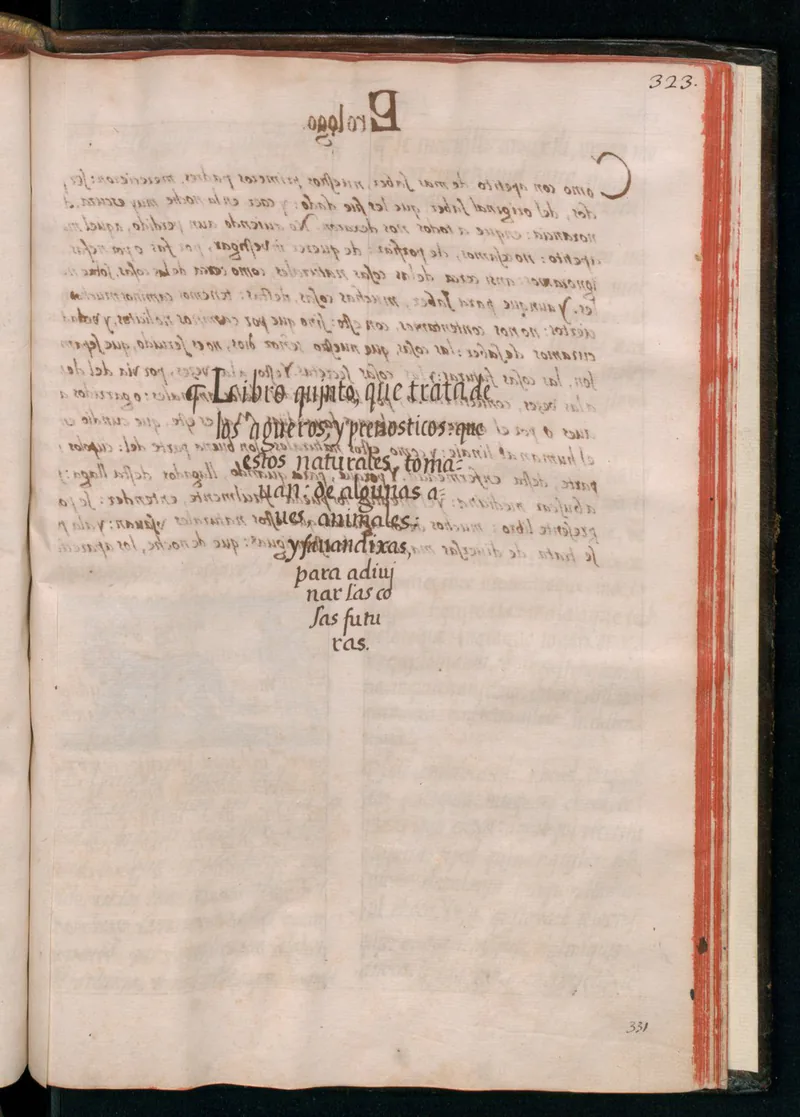
Sahagún's informants also described the goddess Cihuacoatl, "Snake Woman", as appearing at night and weeping and wailing as a sign of war. Another possible precursor is the cihuateteo, the spirits of women who had died in childbirth, who were honoured as warriors but were also feared, because they were believed to descend on certain days to crossroads where they could harm children. These beings belong to the religious world described in Mesoamerican Religion.
Folklorists are cautious about drawing a straight line from these sources to the modern legend. The Florentine Codex was compiled after the conquest, by Indigenous scholars working with a missionary, and the omen narratives may themselves have been shaped by hindsight. What the sources show is that the image of a weeping woman at night, mourning her children, carried deep meaning in Nahua culture at the moment of conquest. The folklorist Bacil Kirtley, writing in 1960, argued that the modern legend combines such Indigenous elements with European motifs.
La Llorona, La Malinche and the Colonial City§
In versions popular since at least the nineteenth century, La Llorona walks the streets of colonial Mexico City, passing through the main square at the hour of curfew and vanishing towards the old lake. The setting ties her to the city built on the ruins of Tenochtitlan and to the trauma of conquest.
In the twentieth century many writers identified La Llorona with La Malinche, also called Malintzin or Doña Marina, the Nahua woman who served as interpreter and adviser to Hernán Cortés and bore him a son. Mexican nationalist writing often cast Malinche as a traitor to her people, and Octavio Paz's influential essay The Labyrinth of Solitude (1950) made her a symbol of violated origins. In this reading, La Llorona is Malinche weeping for the children of mixed descent, or for a people betrayed. The novelist Rudolfo Anaya retold the story in this form in The Legend of La Llorona (1984). There is no early evidence for the identification, and historians stress that it says more about modern national identity than about the legend's origin, but it has become one of the most powerful interpretations.
Medea, Lilith and the Banshee: Parallels and Differences§
Stories of a mother who kills her children, or of a female spirit who threatens them, are widespread. In Greek tragedy, Euripides' Medea (431 BCE) shows a woman abandoned by her husband Jason who kills their children in revenge, a plot very close to the core of La Llorona. Spanish settlers brought European legends of white ladies and wandering souls in purgatory, and Christian teaching about the unbaptised and the restless dead shaped the motif of the mother refused entry to heaven.
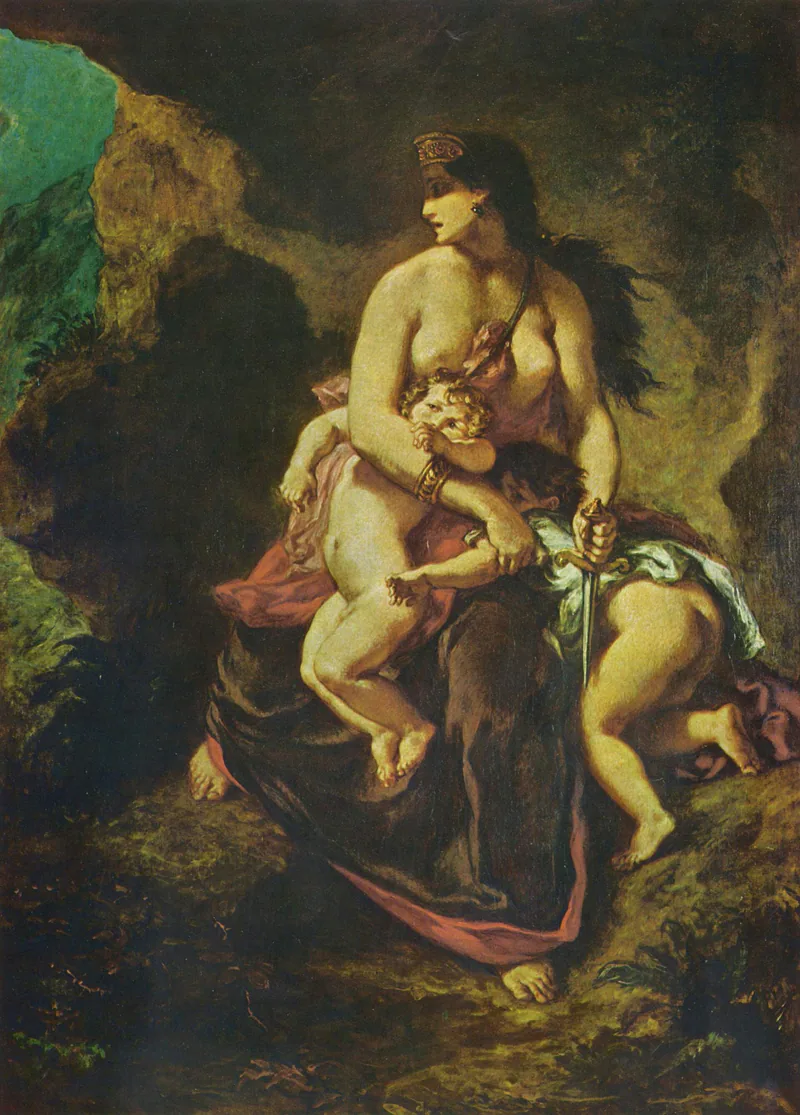
Other traditions supply child-threatening female spirits, from the Greek Lamia to the Jewish Lilith, discussed in Lilith in Jewish Folklore. The Irish banshee is another weeping woman heard at night, but the contrast is instructive: the banshee laments a death that is coming in a family she belongs to, while La Llorona weeps for a crime she has committed; see The Banshee. Folklorists generally conclude that La Llorona is a New World creation built from several streams, Indigenous, Spanish and Catholic, rather than a direct import of any one of them.
A Cautionary Tale: Rivers, Children and Regional Forms§
Above all, La Llorona is a story told to children. Its settings, the river, the canal, the acequia or irrigation ditch of New Mexico, the arroyo of Texas, are real dangers, and its warning is practical: stay away from the water at night. It also carries warnings for young women about trusting men of higher status, and for parents about the consequences of neglect, as well as an image of grief that never ends.
The legend has many regional relatives. In Venezuela La Sayona, a woman in white, is said to appear to unfaithful men; in Panama La Tulivieja is a woman punished for losing or abandoning her child; and Guatemala, Honduras and El Salvador all have their own weeping women. In the United States, Mexican American communities from California to Texas tell local versions, and places along rivers and bridges have acquired their own Llorona sightings. Folklorists such as Domino Renee Perez have documented how families adapt the story to their own landscape, so that La Llorona is always local. The psychology of such warning stories is discussed in The Psychology of Superstition.
From Ballad to Cinema: La Llorona in Modern Culture§
La Llorona was one of the first subjects of Mexican sound cinema: Ramón Peón's La Llorona (1933) is often counted as the first Mexican horror film with sound, and many remakes followed. A traditional song also called "La Llorona", a son from the Isthmus of Tehuantepec in Oaxaca, has been recorded by singers such as Chavela Vargas and Lila Downs; its lyrics are a love lament rather than a retelling of the ghost story, but the shared name links them in popular imagination.
Chicana writers have reclaimed the figure. In Sandra Cisneros's story "Woman Hollering Creek" (1991), a woman escaping an abusive marriage transforms the image of the weeping woman into one of a woman who shouts with joy. The Guatemalan director Jayro Bustamante's La Llorona (2019) uses the legend to address the genocide of Maya people during the civil war, presenting the weeping woman as an avenging spirit of the murdered. Hollywood's The Curse of La Llorona (2019) brought a horror version to global audiences. Through all these forms the legend keeps its central image, a mother's grief that cannot be consoled, and the related Mexican customs for honouring the dead are described in Día de los Muertos.
Frequently asked questions§
What is the story of La Llorona?§
La Llorona is the ghost of a woman who drowned her children, usually after being abandoned by their father, and is condemned to wander by rivers at night crying for them. She is said to take children who stray near the water after dark.
Is La Llorona an Aztec legend?§
Not directly. Sahagún's Florentine Codex records a weeping woman among the omens before the conquest and describes the goddess Cihuacoatl wailing at night, and these may have contributed to the legend. The modern story, however, combines Indigenous elements with Spanish and Catholic motifs.
Is La Llorona the same as La Malinche?§
Many modern retellings identify them, presenting La Llorona as Malinche weeping for her children or her people. There is no early evidence for this link; it developed mainly in nineteenth- and twentieth-century nationalist and literary interpretation.
Why do parents tell the story of La Llorona?§
The legend works as a warning to keep children away from rivers and canals after dark. It also carries moral lessons about seduction, abandonment and parental responsibility.
Sources and further reading§
- There Was a Woman: La Llorona from Folklore to Popular Culture — Domino Renee Perez, 2008
- Florentine Codex: General History of the Things of New Spain — Bernardino de Sahagún, 1577
- The Labyrinth of Solitude — Octavio Paz, 1950
- The Legend of La Llorona — Rudolfo Anaya, 1984
- Woman Hollering Creek and Other Stories — Sandra Cisneros, 1991
- Mexican-American Folklore — John O. West, 1988