Liber XXIX · Superstitions · Chapter X: The Psychology of Superstition
The Psychology of Superstition: Why We Still Knock on Wood
The psychology of superstition: Skinner's pigeons, the illusion of control, magical thinking, lucky-charm studies and Stuart Vyse on why we believe.

Psychologists explain superstition as the product of ordinary mental habits: we learn from coincidences, we feel more in control when we act, and we intuitively treat objects and words as if they carried hidden connections. From B. F. Skinner's "superstitious" pigeons in 1948 to modern research on the illusion of control and magical thinking, the field has found that superstitious behaviour is common, rises with uncertainty and stress, and persists even in people who say they do not believe in it.
What Psychologists Mean by Superstition§
Stuart Vyse, whose Believing in Magic (1997, revised 2014) is the standard psychological survey, defines superstitions roughly as beliefs or practices that attribute causal power to things that have none, usually in order to obtain good luck or avoid bad. Psychologists distinguish superstitious behaviour, such as knocking on wood or carrying a charm, from superstitious belief, and they note that the two often come apart. Many people perform rituals while denying that they believe in them, "just in case".
This is not a new observation. Gustav Jahoda's The Psychology of Superstition (1969) already argued that superstition is not a sign of stupidity or a relic of primitive thought but an outgrowth of normal mental processes. That is also the starting point of this article. For the history of the word and of the beliefs themselves, see What Is Superstition?; for anthropological theories of magic, see Theories of Magic.
Skinner's Pigeons and Accidental Reinforcement§
In 1948 the behaviourist B. F. Skinner published a short paper with a memorable title, "'Superstition' in the Pigeon". He placed hungry pigeons in a box where a food hopper appeared at fixed intervals, about every fifteen seconds, regardless of what the birds did. Six of the eight birds developed a distinctive repeated behaviour: one turned anticlockwise between feedings, another thrust its head into an upper corner of the cage, others bobbed or swung their heads. Skinner's explanation was accidental reinforcement. Whatever a bird happened to be doing when food arrived became more likely, so it was repeated, and so was more likely to coincide with the next delivery. He compared this to a bowler who twists his body after releasing the ball, as if to steer it.
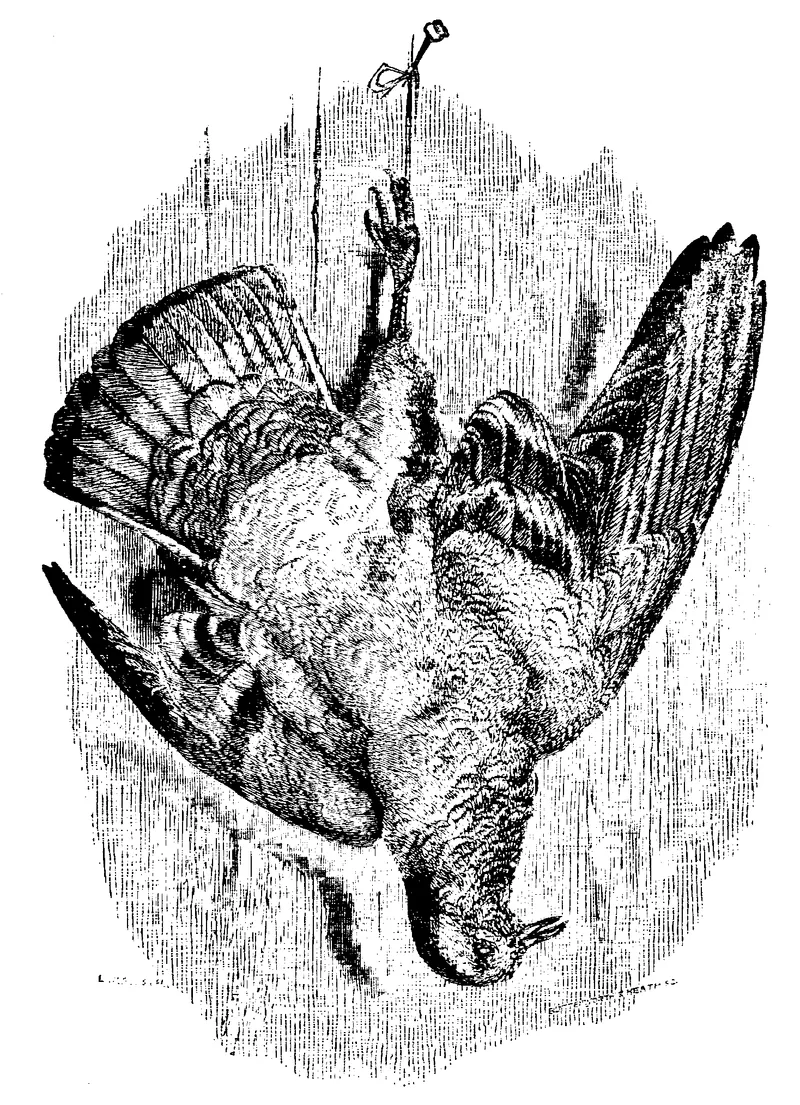
The experiment became famous, but later researchers questioned it. In 1971 John Staddon and Virginia Simmelhag repeated the procedure with closer observation and found that the behaviours near feeding time were mostly pecking and other food-related actions common to all the birds, while the idiosyncratic behaviours tended to occur between feedings. They argued that the pattern reflected the species' natural foraging repertoire more than chance reinforcement. Skinner's account is now seen as part of the story rather than the whole of it.
Human studies followed. In 1987 the Japanese psychologist Koichi Ono gave students levers and a counter that awarded points on a schedule unrelated to their actions. Several developed elaborate patterns of lever pulling, and one participant ended up repeatedly jumping to touch the ceiling after a point happened to arrive when she touched it. The study shows how quickly people infer causation from coincidence.
Uncertainty, Stress and the Illusion of Control§
Long before laboratory psychology, Bronisław Malinowski observed that Trobriand Islanders used magic for dangerous open-sea fishing but not for safe lagoon fishing. Modern research supports the general idea that superstition clusters where outcomes are uncertain and important, as the beliefs of sailors, actors and gamblers illustrate.
In 1975 the Harvard psychologist Ellen Langer described the "illusion of control", the tendency to behave as if one can influence chance events. In one of her studies, office workers who chose their own lottery ticket asked several times as much to sell it back as those who had been handed one, though the odds were identical. Sociological observation of craps players found them throwing the dice softly for low numbers and hard for high ones.
Stress strengthens these tendencies. Giora Keinan studied Israelis during the 1991 Gulf War and found more magical beliefs among those living in areas under missile attack; in a later experiment, people asked stressful questions knocked on wood more often. Jennifer Whitson and Adam Galinsky reported in 2008 that people made to feel a lack of control were more likely to see patterns in noise and to endorse superstitions, though later attempts to replicate such findings have produced mixed results.
Magical Thinking: Contagion, Similarity and Tempting Fate§
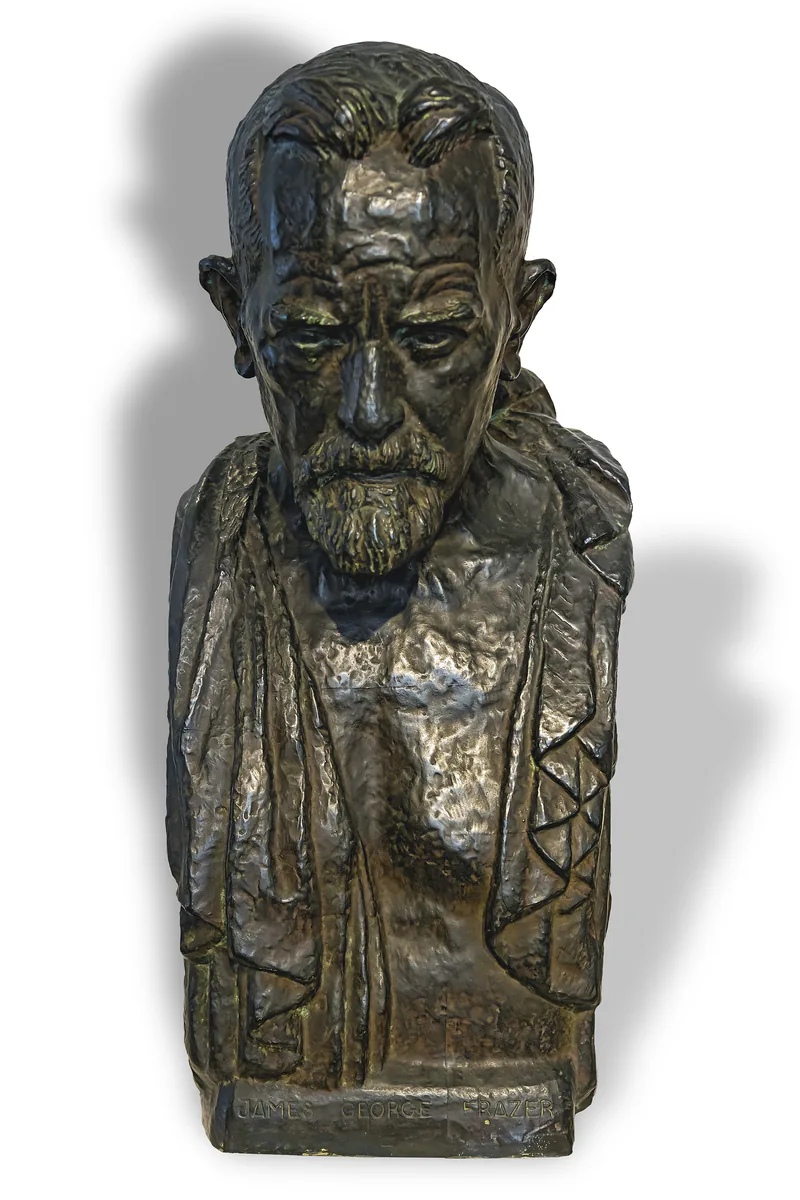
Paul Rozin and Carol Nemeroff tested whether educated Americans follow the "laws of sympathetic magic" that the anthropologist James Frazer had attributed to traditional peoples: contagion (things once in contact remain connected) and similarity (the image equals the object). In studies from the 1980s onwards, participants were reluctant to drink juice in which a sterilised cockroach had briefly been dipped, to eat chocolate fudge shaped like dog faeces, or to drink from a bottle they themselves had labelled "cyanide", although they knew it contained sugar. The developmental psychologist Bruce Hood found that audiences recoil from wearing a cardigan said to have belonged to a murderer, an aversion he explains in SuperSense (2009) as part of an intuitive tendency to see hidden essences in objects.
Jane Risen and Thomas Gilovich showed that people think it more likely that something bad will happen after they have "tempted fate", for instance by not reading a course assignment and then imagining being called on in class. Risen later proposed that superstitious intuitions arise quickly and automatically, and that people often detect that they are irrational but "acquiesce" to them anyway. This dual-process account explains why someone can know that walking under a ladder is harmless and still step around it.
Children's thinking was the original model. Jean Piaget described magical thinking as a stage of early childhood, and later research by Eugene Subbotsky and others found that adults, too, behave magically when the stakes feel real. A related cultural history is traced in Myths and Misconceptions.
Do Lucky Charms and Rituals Work?§
In 2010 Lysann Damisch, Barbara Stoberock and Thomas Mussweiler reported that participants told they were using a "lucky" golf ball sank more putts, and that those allowed to keep their personal charm did better at memory tasks, apparently because they felt more confident. The study was widely reported, but a careful replication by Robert Calin-Jageman and Tracy Caldwell in 2014 found no such effect, and the claim is now treated with caution.
The evidence on rituals is more encouraging, though still modest. Studies by Alison Wood Brooks, Michael Norton, Francesca Gino and colleagues suggest that performing a ritual before an anxious task, such as singing in public, can reduce anxiety and slightly improve performance, and that rituals help some people cope with loss. These effects, where they exist, work through the mind of the performer, not through any influence on chance. Studies of personal luck by Richard Wiseman similarly suggest that people who consider themselves lucky tend to be more relaxed and to notice opportunities that anxious people miss.
Superstitions can also cost money. Gamblers who believe a number is "due" are making the gambler's fallacy, and the illusion of control can keep people playing; anyone whose gambling feels out of control should seek specialist help rather than rely on luck. A famous debate about the basketball "hot hand" shows the subtlety of the subject: an influential 1985 study concluded it was an illusion, but later statisticians found a bias in that analysis, and some streak effects may be real after all.
Why Superstition Persists: Evolution, Intuition and Personality§
Evolutionary modellers such as Kevin Foster and Hanna Kokko have argued that a tendency to link events will be favoured whenever the cost of a false belief is small and the cost of missing a real connection is large. A creature that wrongly avoids a harmless rustle in the grass loses little; one that ignores a real predator loses everything. Superstition, on this view, is the price of a useful pattern-detecting mind.
Individual differences matter too. Research by Marjaana Lindeman and colleagues links superstitious and paranormal belief with an intuitive thinking style and with confusions between mental and physical properties, while findings on age, education and gender vary between studies and cultures. Cultural context plays a large role: the Fire Horse birth dip of 1966 in Japan, described in Asian Superstitions, shows how a shared belief can affect behaviour on a national scale. Psychologists also distinguish everyday superstition from the distressing, repetitive rituals of obsessive-compulsive disorder, which call for professional assessment.
Vyse's own conclusion, in Superstition: A Very Short Introduction (2019), is that most superstitions are harmless and sometimes comforting, but that the habits of mind behind them deserve understanding, because the same tendencies can lead people astray in medicine, money and public life.
Frequently asked questions§
What did Skinner's pigeon experiment show?§
Skinner fed pigeons at fixed intervals regardless of their behaviour, and most developed repeated actions such as turning or head-bobbing, as if these produced the food. He called this superstition based on accidental reinforcement. Later studies suggested the behaviours also reflected pigeons' natural foraging patterns.
What is the illusion of control?§
It is the tendency to believe that one can influence outcomes that are actually determined by chance, described by Ellen Langer in 1975. It appears in choosing lottery numbers, throwing dice in particular ways and many other gambling behaviours.
Do lucky charms really improve performance?§
A 2010 study suggested that they could, by boosting confidence, but a later replication found no effect. Rituals may reduce anxiety for some people, but there is no evidence that charms change the outcome of chance events.
Are superstitious people less intelligent?§
No. Superstition is found at every level of education and intelligence, and psychologists see it as the product of normal mental habits such as pattern seeking and intuitive reasoning. Researchers do find links with thinking style, but the differences are modest.
Sources and further reading§
- Believing in Magic: The Psychology of Superstition — Stuart A. Vyse, 1997
- Superstition: A Very Short Introduction — Stuart Vyse, 2019
- The Psychology of Superstition — Gustav Jahoda, 1969
- SuperSense: Why We Believe in the Unbelievable — Bruce Hood, 2009
- How We Know What Isn't So: The Fallibility of Human Reason in Everyday Life — Thomas Gilovich, 1991
- The 7 Laws of Magical Thinking — Matthew Hutson, 2012
- The Luck Factor — Richard Wiseman, 2003
- Science and Human Behavior — B. F. Skinner, 1953
- Magic, Science and Religion and Other Essays — Bronisław Malinowski, 1948