Liber XXVIII · Superstitions · Chapter III: Asian Superstitions
Asian Superstitions: Beliefs of China, Japan, Korea and India
Asian superstitions explained: Chinese number and gift taboos, Japanese unlucky ages and the Fire Horse year, Korean fan death, Indian nazar charms and more.
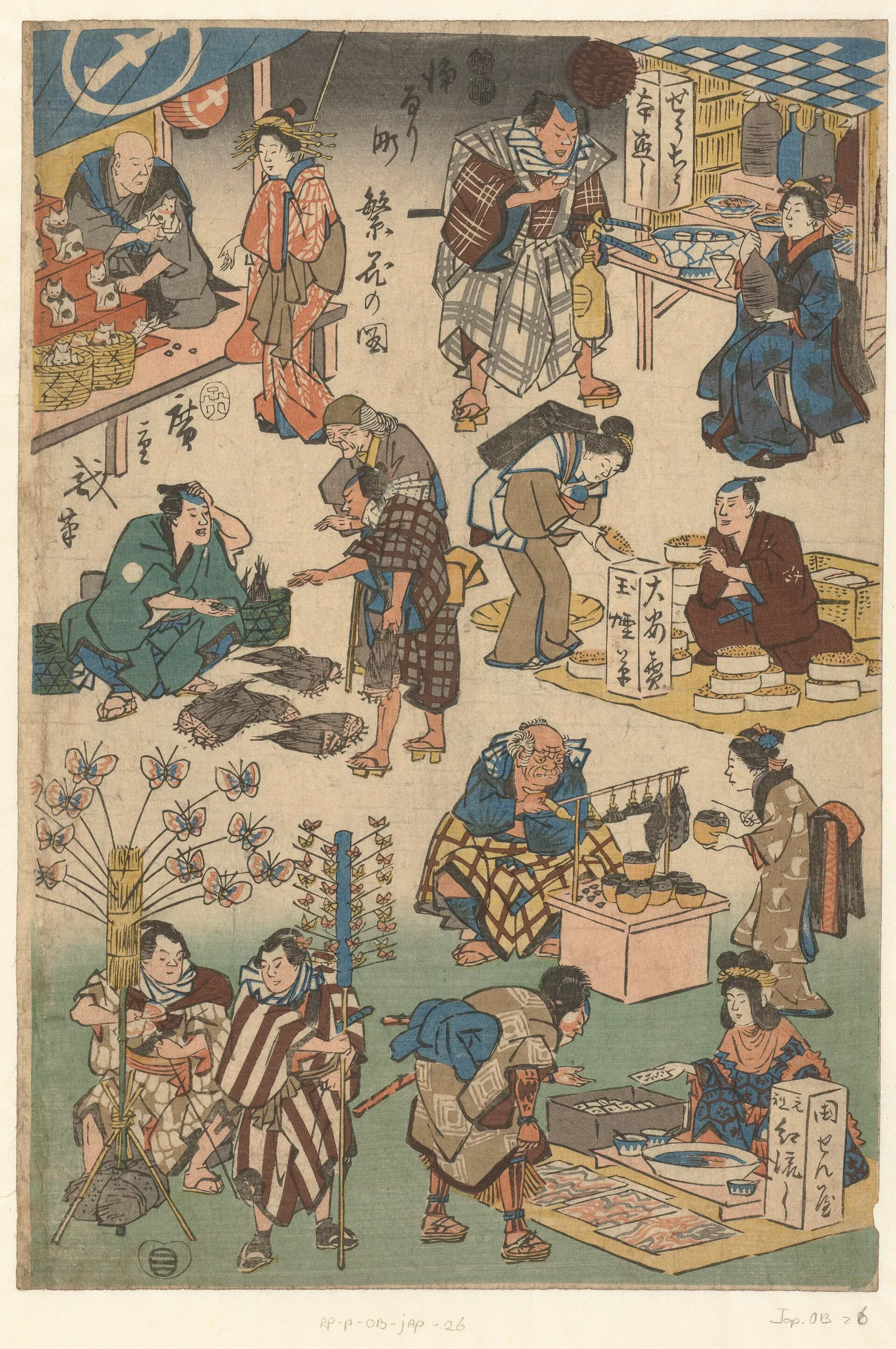
Asian superstitions range from the Chinese avoidance of the number four, whose name sounds like "death", to Japanese unlucky ages, Korean exam taboos, Indian charms against the evil eye and the Thai spirit houses that stand outside homes and offices. Many are rooted in wordplay, in calendars of auspicious and inauspicious days and in respect for ancestors and spirits, and in much of Asia the line between "superstition" and religion is drawn very differently from the way it is drawn in the West.
Superstition, Religion and the Politics of a Word§
Asian societies did not traditionally divide belief into "religion" and "superstition". Offerings to ancestors, consulting an almanac, wearing a temple amulet and choosing a lucky date were all part of a single fabric of practice. The word that now translates "superstition" in Chinese, mixin, was borrowed from the Japanese meishin around the turn of the twentieth century, when reformers in both countries adopted Western categories in order to modernise.
The word then became a weapon. Meiji Japan separated Shinto from Buddhism and suppressed many folk practitioners as purveyors of meishin. In China the Nationalist government launched campaigns against "superstitious" temples and specialists in the late 1920s, a history examined by Rebecca Nedostup, and the Communist state attacked them even more fiercely, above all during the Cultural Revolution. Scholars therefore use the label with care. What outsiders call superstition is often, for practitioners, an ordinary and respectful way of living with gods, ancestors and fate, as discussed in What Is Superstition?.
China: Homophones, Colours and the Calendar§
Lucky and unlucky sounds§
Chinese is rich in words that sound alike, and many taboos follow from this. The number four (sì) resembles the word for death (sǐ), so buildings in China, Hong Kong and Taiwan, and Chinese-owned buildings abroad, often skip fourth floors and room numbers. Eight (bā) suggests prosperity (fā), which is why the Beijing Olympic Games opened at 8 p.m. on 8 August 2008 and why number plates and telephone numbers full of eights command high prices. A clock should not be given as a present because "giving a clock" (sòng zhōng) sounds like attending a deathbed; pears are not divided between friends or lovers because lí also means separation.
Table, colour and festival taboos§
Chopsticks should never be stuck upright in a bowl of rice, since this recalls the incense sticks placed before the dead. Red is the colour of joy and protection, worn at weddings and New Year, while white is the colour of mourning. During the Lunar New Year many families avoid sweeping on the first days, so as not to sweep out good fortune, and avoid breaking dishes or speaking of death.
Ghost Month and the almanac§
The seventh lunar month is widely known as Ghost Month, when the gates of the underworld are believed to open and hungry ghosts wander; the fifteenth day is the Zhongyuan or Yulan festival. Many people avoid weddings, moving house or night-time swimming during this month. The traditional almanac, the Tongshu or Huangli, still sold in large numbers in Hong Kong, Taiwan and Southeast Asia, lists for each day what is suitable and what should be avoided. These practices are intertwined with Chinese ancestor veneration and popular religion, feng shui and Chinese astrology.
Japan: Directions, Lucky Days and Unlucky Ages§
Japanese folk belief owes much to Onmyōdō, the court tradition of yin-yang divination that regulated directions and days. The northeast is the kimon, the demon gate, and traditional houses avoid placing entrances or toilets in that direction; temples such as Enryakuji on Mount Hiei were famously sited to guard Kyoto's northeast. Sleeping with one's head to the north, kita-makura, is avoided because the dead are laid out that way, following the posture attributed to the Buddha at his death.
The six-day calendar§
Many Japanese calendars still mark the rokuyō, a cycle of six days of varying fortune. Taian ("great peace") is the favourite day for weddings, while funerals are avoided on tomobiki ("pulling a friend"), lest the dead draw a companion after them, and many crematoria close that day. Butsumetsu, the day associated with the Buddha's death, is considered the least auspicious of all.
Unlucky ages and the Fire Horse§
The yakudoshi are ages of heightened danger, traditionally counted in the older system in which a child is one year old at birth: for men 25, 42 and 61, for women 19, 33 and 37. Forty-two can be read shi-ni, "to death", and thirty-three sanzan, "hardship". People in these years commonly visit shrines and temples for purification, a practice of the kind studied by Ian Reader and George Tanabe in their work on Japanese "worldly benefits".
The most striking evidence of a superstition's power comes from the year of the Fire Horse (hinoeuma), which recurs every sixty years. Women born in such years were said to be headstrong and dangerous to their husbands. In 1966 the number of births in Japan fell by roughly a quarter compared with the year before, before recovering in 1967, a dip demographers attribute to parents avoiding the sign. The cycle returned in 2026, and demographers have watched whether it would have any comparable effect in a very different Japan.
Lucky objects, engimono, include the beckoning cat (maneki-neko) in shop windows and the daruma doll, whose blank eyes are painted in when a wish is made and when it is fulfilled. Warnings that whistling at night summons snakes belong to the same everyday lore as the spirits in Yōkai: Japanese Folklore and Spirits.
Korea: Fan Death, Red Ink and Exam Taboos§
Korea shares the aversion to the number four, and lift buttons often show "F" instead of 4. Writing a living person's name in red ink is avoided, because the names of the dead were traditionally written in red. Before important examinations, students avoid seaweed soup, since its slipperiness suggests "slipping" or failing, and receive sticky rice cakes and taffy (yeot), because the Korean word for sticking also means passing.

The best-known modern Korean belief is "fan death", the idea that sleeping in a closed room with an electric fan running can kill. Fans sold in Korea long featured timers. Medical researchers have found no evidence for the danger in healthy people, and the belief is a good example of a modern superstition that has acquired a pseudo-scientific justification. Korean popular religion, including the shamanic rites studied by Laurel Kendall, provides the wider context in which ancestors and household gods were honoured; see also Shamanism.
India and South Asia: Nazar, Auspicious Time and Everyday Omens§
Across South Asia, protection against nazar or drishti, the evil eye, is part of daily life. Mothers put a small dot of black kohl on a baby's cheek or forehead to spoil its perfection and deflect envious glances; shopkeepers hang a lemon threaded with green chillies above the door, renewed weekly; and houses under construction display a grotesque black face, the nazar battu, to absorb attention. Similar eye-protection customs are found from the Mediterranean to Central Asia, as Clarence Maloney's comparative volume shows, and are discussed in Protective Magic.
Time is carefully weighed. Many Hindu families consult a priest or almanac for a muhurta, an auspicious moment, before weddings, journeys or house-warmings, and in South India the daily Rahu kalam, a period of about ninety minutes ruled by the shadow planet Rahu, is avoided for new ventures. Such reckonings belong to the religious science of Vedic astrology rather than to superstition in the Western sense. Everyday omens include a sneeze as someone leaves the house, a black cat crossing the path, and the custom of giving gifts of money in sums ending in one, such as 101 or 501 rupees, so that the amount is not "finished".
The subject is also a matter of public debate in India. After the murder of the rationalist campaigner Narendra Dabholkar in 2013, Maharashtra passed a law against exploitative "black magic" and fraudulent practices, and Karnataka followed in 2017. These laws target harm and fraud, not ordinary religious observance.
Southeast Asia: Spirit Houses, Wakes and First Visitors§
In Thailand and neighbouring countries, small shrines on pillars, the san phra phum, house the guardian spirit of the land and receive daily offerings of flowers, food and drinks. In the Philippines many people say tabi tabi po, "excuse me", when passing places where spirits may dwell; avoid going straight home after a wake, stopping somewhere first so that no spirit follows them (pagpag); and fear usog, an illness caused by a stranger's greeting to a child. In Vietnam, as in Scotland, the first visitor of the New Year sets the household's luck: families invite a person of suitable age and character to perform the xông đất.
For comparison with European customs see European Superstitions; for why people keep them see The Psychology of Superstition.
Frequently asked questions§
Why is the number four unlucky in China, Japan and Korea?§
In Chinese the word for four sounds very like the word for death, and the same near-homophone exists in Japanese (shi) and Sino-Korean (sa). As a result many buildings skip the fourth floor, and gifts in sets of four are avoided. Japan also avoids nine, which can be read ku, "suffering".
What is the Fire Horse year?§
It is a year combining the fire element with the horse in the sixty-year cycle of the East Asian calendar. Japanese folklore held that women born then would be ill-fated wives, and the 1966 birth rate fell sharply. The cycle came round again in 2026.
Is fan death real?§
There is no scientific evidence that an electric fan in a closed room can kill a healthy sleeper. The belief is a modern Korean folk idea that drew on half-understood ideas about suffocation and body temperature.
Why do Indian shops hang lemons and chillies?§
The threaded lemon and green chillies, called nimbu-mirchi, are believed to ward off the evil eye and bad luck. A popular explanation connects them with Alakshmi, the goddess of misfortune, who is said to be satisfied by the sour and pungent offering and pass by.
Sources and further reading§
- A Dictionary of Chinese Symbols — Wolfram Eberhard, 1986
- Superstitious Regimes: Religion and the Politics of Chinese Modernity — Rebecca Nedostup, 2009
- Popular Religion in China: The Imperial Metaphor — Stephan Feuchtwang, 2001
- Practically Religious: Worldly Benefits and the Common Religion of Japan — Ian Reader and George J. Tanabe Jr., 1998
- The Invention of Religion in Japan — Jason Ānanda Josephson, 2012
- The Book of Yokai: Mysterious Creatures of Japanese Folklore — Michael Dylan Foster, 2015
- Shamans, Housewives, and Other Restless Spirits: Women in Korean Ritual Life — Laurel Kendall, 1985
- The Evil Eye — Clarence Maloney (ed.), 1976