Liber XXIX · Superstitions · Chapter II: Animals & Birds
Superstitions About Animals and Birds: Black Cats to Ravens
Superstitions about animals and birds explained: black cats, magpies, the Tower ravens, owls, robins, hares, spiders and bees, with their documented history.

Superstitions about animals and birds are among the oldest and most widespread of all: a black cat crossing one's path, a single magpie, an owl hooting by day, a robin entering the house or a hare running across the road have all been read as signs of luck or death. Some of these beliefs have documented roots in classical augury and medieval ideas of witchcraft, while others, such as the legend of the Tower of London's ravens, are much more recent than they claim to be.
Why Animals Became Omens§
Animals were natural bearers of signs. Their movements are sudden and unexplained, they appear at doors and on roads where human journeys begin, and they seem to perceive storms, earthquakes and death before people do. Ancient diviners therefore watched them closely. Roman augurs interpreted the flight and cries of birds, and the Greek superstitious man of Theophrastus would not continue his journey if a weasel crossed his path. Mesopotamian omen lists recorded the meaning of dogs, snakes and ants in the house (see Luck, Omens and Portents).
Folk belief added a second principle, the "first meeting": the first creature, or person, met on a journey or on a special day was thought to set the luck that followed. Many animal superstitions are of this kind. A third principle came from Christian demonology, which held that witches kept animal familiars and could take animal shape, making cats, hares and toads suspect.
Black Cats: Sacred, Diabolical and Lucky§
Cats were honoured in ancient Egypt, where the goddess Bastet was represented as a cat or cat-headed woman and vast numbers of mummified cats were offered at her sanctuary at Bubastis. Herodotus reports that when a cat died a natural death, the household shaved their eyebrows in mourning, and Diodorus Siculus says that a Roman who accidentally killed a cat in Egypt was lynched. Donald Engels's Classical Cats follows the cat from these heights into the Middle Ages.
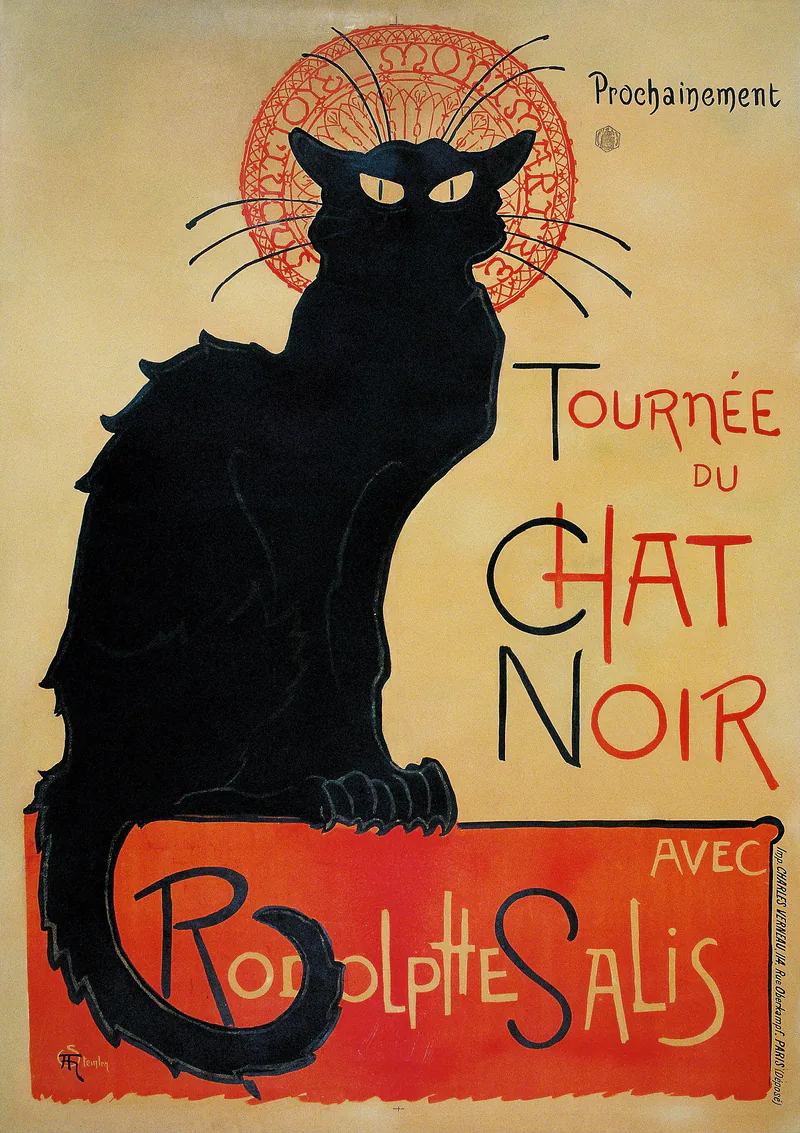
In medieval Christian polemic the cat acquired a sinister reputation. The twelfth-century courtier Walter Map described heretics at whose meetings a black cat descended and was kissed, and Alan of Lille derived the name "Cathar" from the cat they supposedly venerated, an invented etymology. Pope Gregory IX's letter Vox in Rama (1233) described a heretical rite involving a black cat. It is often claimed that this letter ordered the extermination of cats, so that rats multiplied and spread the Black Death a century later; the letter contains no such order and the story is a modern myth.
In English witch trials, animal familiars were a distinctive feature. At Chelmsford in 1566 Elizabeth Francis confessed to receiving a cat called Sathan from her grandmother, though it was described as white-spotted rather than black. The ritual killing of cats in festive contexts also occurred; Robert Darnton's essay The Great Cat Massacre analyses a mock trial and execution of cats by Parisian print workers in the 1730s.
Today the meaning of a black cat varies sharply. In Britain and Ireland a black cat crossing one's path or coming to the house has often been considered lucky, and black cats appear on Victorian and Edwardian good-luck postcards; in the United States and much of continental Europe it is more often unlucky. Both meanings are recorded, sometimes in the same region. The black cat's prominence in Halloween imagery dates largely from the late nineteenth and twentieth centuries. Witch familiars are discussed further in European Witch Trials.
Magpies, Crows and Ravens§
The magpie is the most omen-laden bird in British folklore. The counting rhyme "One for sorrow, two for mirth, three for a wedding, four for death" is first recorded in the late eighteenth century in John Brand's notes on popular antiquities, and many later versions exist, the best known ending "seven for a secret never to be told". People who meet a single magpie still greet it, salute it or ask after its family to avert bad luck. A common explanation, that the magpie refused to enter Noah's Ark or to mourn at the Crucifixion, is a folk legend recorded only in modern times.
Crows and ravens were omen birds in classical augury, and the raven, as a carrion bird of the battlefield, was associated with death and with the gods of war; in Norse myth Odin's two ravens, Huginn and Muninn, bring him news from the world. A raven croaking over a house was widely taken as a sign of death in the house.
The ravens of the Tower of London are often said to have been protected by Charles II after he was warned that the kingdom would fall if they left. There is no contemporary evidence for the story. Boria Sax's City of Ravens shows that ravens at the Tower are not clearly documented before the late nineteenth century, and that the legend in its present form may be as late as the twentieth century; the custom of keeping a fixed number of captive ravens with clipped wings is likewise modern.
Owls, Robins and Other Birds of Ill Omen§
The owl's association with death is genuinely ancient. Pliny the Elder called the eagle owl a funereal bird and recorded that when one entered the Capitol in Rome the city was ritually purified. In Virgil's Aeneid a solitary owl on the rooftop foretells Dido's death. Medieval bestiaries described the owl as a bird that loves darkness and stood for those who rejected Christ, and in British folklore an owl hooting by day or near a house foretold death or misfortune. In Athens, by contrast, the little owl was Athena's bird and appeared on the city's coins.
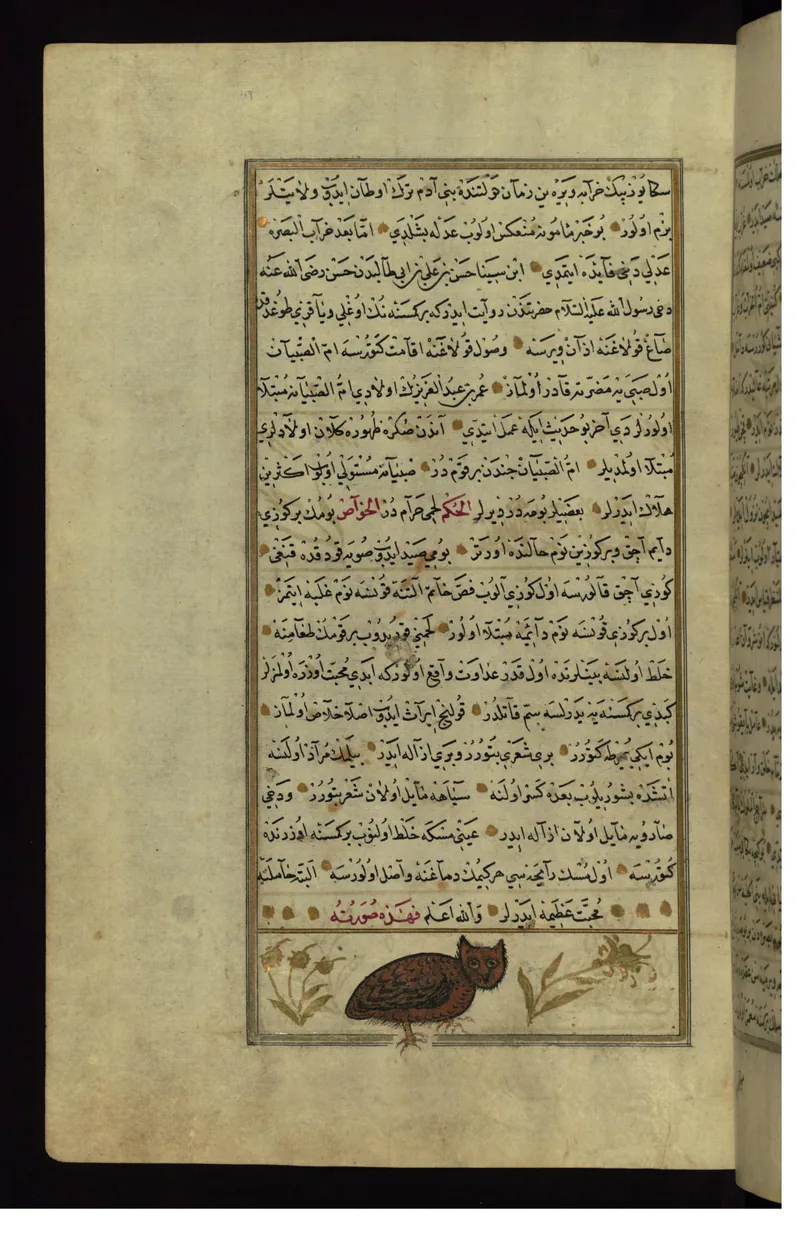
The robin carried a double meaning. Killing a robin or taking its eggs was unlucky, protected by rhymes such as "The robin and the wren are God Almighty's cock and hen", but a robin entering the house or tapping at a window could foretell a death. More generally, any bird flying into a house was an omen of death in many parts of Britain and Ireland. Swallows and house martins nesting under the eaves were lucky, and destroying their nests unlucky. Hearing the first cuckoo of spring was the moment to turn the money in one's pocket, a belief recorded from the nineteenth century. Edward Armstrong's The Folklore of Birds and Francesca Greenoak's British Birds survey these traditions.
Hares, Dogs and the Creatures of the Road§
The hare was the classic unlucky creature to meet on a journey: a hare crossing one's path, especially when setting out, was a sign to turn back. Julius Caesar noted that the Britons did not think it right to eat the hare, the hen or the goose, though they kept them, an observation often linked with later taboos but impossible to connect directly. The hare's association with witches is well documented: Gerald of Wales reported tales of women in hare form stealing milk, and in 1662 the Scottish woman Isobel Gowdie described in her confessions a charm for turning into a hare. Witch-hare stories remained common in British and Irish folklore into the twentieth century.
A dog howling at night, especially near a house where someone was ill, was widely taken as a sign of approaching death. A strange black dog seen on a road could be a supernatural creature, as in the many English and Welsh traditions of spectral black dogs. Meeting a white horse was lucky in some areas, if one spat or made a wish. The rabbit's foot as a charm is treated in Luck, Omens and Portents.
Insects and Small Creatures: Spiders, Bees and Beetles§
Small creatures carried their own beliefs. The rhyme "If you wish to live and thrive, let a spider run alive" protected house spiders, and a tiny "money spider" found on one's clothes promised money. The ladybird, a name that refers to Our Lady, was coaxed to fly away with a rhyme recorded from the mid-eighteenth century. Crickets on the hearth were lucky, and their sudden departure an ill sign.
The death-watch beetle, whose larvae bore into old timber, makes a ticking sound by striking its head against the wood; the tapping, heard in quiet rooms at night, was taken as counting down to a death. It is in fact a mating signal. Bees were considered sensitive members of the household who had to be told of births, marriages and especially deaths, a custom described in Superstitions of Birth, Marriage and Death.
Frequently asked questions§
Is a black cat lucky or unlucky?§
It depends on the country and sometimes on the region. In Britain and Ireland black cats have often been considered lucky, while in the United States and much of Europe they are more often unlucky. Their link with witches comes from medieval polemic and early modern witch trials.
Where does the "one for sorrow" magpie rhyme come from?§
It is first recorded in the late eighteenth century, in John Brand's notes on English popular customs, and many versions followed. Greeting a lone magpie is a common way of averting its bad luck.
Is the Tower of London ravens legend old?§
No reliable evidence links it to Charles II. Ravens at the Tower are not clearly recorded before the late nineteenth century, and historians such as Boria Sax think the legend in its present form is Victorian or twentieth-century.
Why are owls seen as omens of death?§
Romans already considered the owl a funereal bird, and medieval bestiaries linked it with darkness. Its night cry and habit of haunting old buildings and churchyards kept the association alive in folklore.
Sources and further reading§
- The Folklore of Birds — Edward A. Armstrong, 1958
- British Birds: Their Folklore, Names and Literature — Francesca Greenoak, 1997
- City of Ravens: London, Its Tower, and Its Famous Birds — Boria Sax, 2011
- Classical Cats: The Rise and Fall of the Sacred Cat — Donald W. Engels, 1999
- The Great Cat Massacre and Other Episodes in French Cultural History — Robert Darnton, 1984
- The Histories — Herodotus, c. 430 BCE
- A Dictionary of Superstitions — Iona Opie and Moira Tatem, 1989
- The Penguin Guide to the Superstitions of Britain and Ireland — Steve Roud, 2003