Liber XVII · Islam · Chapter VII: The Qur'an & Hadith
The Mysterious Letters of the Qur'an: Alif Lam Mim and Beyond
The mysterious letters of the Qur'an (al-huruf al-muqatta'at) explained: the 29 suras that open with them, classical and Sufi readings and modern theories.

The mysterious letters of the Qur'an, in Arabic al-ḥurūf al-muqaṭṭaʿāt ("the disconnected letters"), are groups of one to five Arabic letters, such as Alif Lām Mīm, that stand at the opening of twenty-nine of the Qur'an's 114 suras and are recited letter by letter. Their meaning has never been settled: many Muslim scholars hold that it is known to God alone, while exegetes, mystics, letter-magicians and modern philologists have proposed abbreviations of divine names, numerical codes, sura titles and editorial markers.
The Twenty-Nine Suras and Their Letters§
The letters appear only at the very beginning of suras, never elsewhere. Using the names by which they are pronounced, the fourteen combinations are:
- Alif Lam Mim: suras 2, 3, 29, 30, 31 and 32, beginning with al-Baqara.
- Alif Lam Mim Sad: sura 7, al-A'raf.
- Alif Lam Ra: suras 10, 11, 12, 14 and 15.
- Alif Lam Mim Ra: sura 13, al-Ra'd.
- Kaf Ha Ya 'Ayn Sad: sura 19, Maryam.
- Ta Ha: sura 20, Ta Ha.
- Ta Sin Mim: suras 26 and 28; Ta Sin: sura 27.
- Ya Sin: sura 36, Ya Sin.
- Sad: sura 38; Qaf: sura 50; Nun: sura 68, al-Qalam.
- Ha Mim: suras 40 to 46, the seven Ḥawāmīm, of which sura 42 adds 'Ayn Sin Qaf.
The fourteen letters used are alif, ḥāʾ, rāʾ, sīn, ṣād, ṭāʾ, ʿayn, qāf, kāf, lām, mīm, nūn, hāʾ and yāʾ. Commentators were struck that they make up half the twenty-eight letters of the alphabet and include representatives of every class of sound the grammarians distinguished. All but a few of the suras concerned are classed as Meccan, and in all but a handful the next words refer to the scripture itself, as in "That is the Book, wherein is no doubt" after the opening of al-Baqara.
Several suras take their names from their letters: Ta Ha, Ya Sin, Sad, Qaf and, by a traditional name, Nun. In popular devotion Ṭā Hā and Yā Sīn also became names of the Prophet Muhammad and are common personal names, and Sura Ya Sin, often called "the heart of the Qur'an", is widely recited for the dying.
How the Letters Are Recited and Written§
In the written Qur'an the letters are joined together as though forming words, for instance ALM written as a single unit, but in recitation each is pronounced by its full name, with the long vowels lengthened according to the rules of tajwīd: alif-lām-mīm, kāf-hā-yā-ʿayn-ṣād. This mismatch between the written and the spoken form was itself taken as a sign that the letters belong to a different order from ordinary speech.

The early schools of verse counting treated them inconsistently. In the Kufan count that underlies most printed Qur'ans today, some openings, such as Alif Lam Mim and Ta Ha, form a verse of their own, while others, such as Alif Lam Ra and Qaf, are counted as part of the following verse. Such details, preserved by the reciters, are part of the textual history discussed in The Qur'an and Hadith.
Classical Interpretations: Secret, Abbreviation or Name§
The great collections of commentary record a wide range of views, and al-Tabari (d. 923) set many of them side by side. One position, attributed to several early authorities and widely held ever since, is that the letters belong to the "ambiguous" passages (mutashābihāt) whose interpretation is reserved to God (Al 'Imran 3:7). A saying attributed to Abu Bakr, among others, expresses this idea: every scripture has a secret, and the secret of the Qur'an lies in the openings of its suras.
A second family of interpretations treats the letters as abbreviations. Reports ascribed to Ibn 'Abbas explain Alif Lām Mīm as "I am God, I know best" (anā Allāhu aʿlam), and read Kaf Ha Ya 'Ayn Sad as the initials of divine attributes such as the Sufficient, the Guide, the Knowing and the Truthful. Others took each letter as standing for a name of God: the alif for Allah, the lam for His grace (luṭf), the mim for His glory (majd). Others again saw the letters as names of the suras, as oaths sworn by God on the letters of revelation, or as names of the Qur'an itself.
A third, grammatical-theological line, developed especially by al-Zamakhshari (d. 1144) and Fakhr al-Din al-Razi, connected the letters with the Qur'an's challenge to its hearers to produce something like it. The Book, on this view, is composed of the same letters the Arabs used every day, and by sounding them separately God draws attention both to the ordinary material of the revelation and to its unmatched composition.
Letters, Numbers and the Search for Codes§
The letters also invited calculation. The early biography of the Prophet by Ibn Ishaq reports that Jewish scholars in Medina, hearing Alif Lām Mīm, added up the abjad values of the letters, 1, 30 and 40, and concluded that the new community would last seventy-one years, only to find their sum growing as further combinations were revealed. Whatever its historical value, the story shows that numerical reading of letters was familiar at an early date, as it was in Jewish gematria.
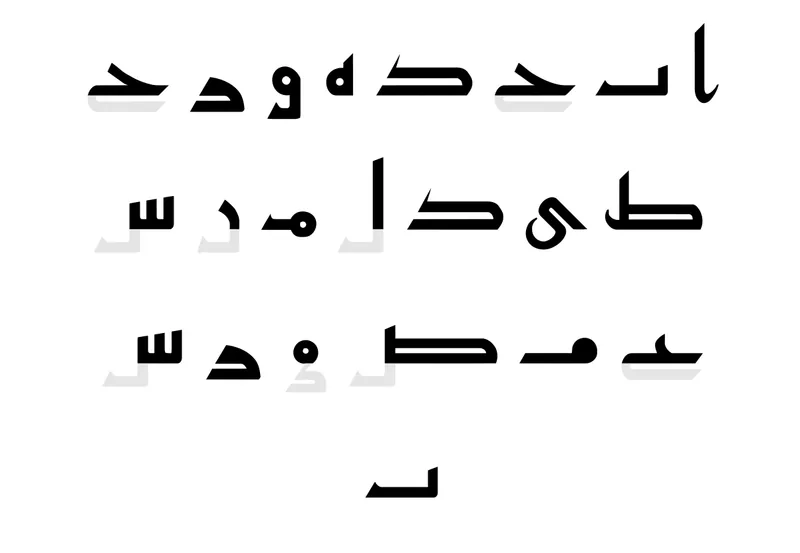
In later centuries astrologers and apocalyptic writers used the values of the opening letters to predict the duration of dynasties or the coming of the Mahdi, a practice condemned by many scholars and discussed critically by Ibn Khaldun in his Muqaddima. In the twentieth century the Egyptian-American biochemist Rashad Khalifa used computer counts of the letters in the suras they open to argue for a mathematical structure based on the number nineteen, citing al-Muddaththir 74:30. His claims attracted wide popular interest, but mainstream scholars rejected both his method and his later theological conclusions, and the theory remains marginal.
Mystical and Esoteric Readings of the Letters§
For Sufis the letters were a privileged place where the divine speech shows its hidden side. Commentaries attributed to the Imam Ja'far al-Sadiq, transmitted in Sufi circles, read them as signs of divine attributes and spiritual stations. Ibn 'Arabi devoted part of his Meccan Revelations to the letters and their properties, treating the openings of the suras as keys to the levels of existence and to the relation between the divine breath and the articulated world. The science of letters (ʿilm al-ḥurūf) associated with al-Buni and the Shams al-Ma'arif used the combinations, especially Kaf Ha Ya 'Ayn Sad and Ha Mim 'Ayn Sin Qaf, in prayers, amulets and magic squares, as described in Islamic Occult Sciences.
Protective use had an early precedent. Hadith collections report that the Prophet gave his followers the watchword "Ha Mim, they will not be helped" for a night battle, and the Hawamim suras acquired a reputation for blessing and protection. A well-known Shi'i saying finds a hidden sentence in the fourteen letters, read as "the path of 'Ali is truth; we hold fast to it", while Sunni writers composed rival phrases from the same letters.
The most radical letter mysticism belonged to the Hurufis, the movement founded by Fadlallah Astarabadi, who was executed in 1394. Hurufis held that the twenty-eight letters of Arabic and the thirty-two of Persian were inscribed in the human face and body and that the disconnected letters revealed the manifestation of God in the human form. Their ideas, persecuted by the authorities, survived in the Bektashi order and in Ottoman and Persian poetry. Comparable letter speculation in Judaism is described in The Hebrew Letters in Kabbalah.
Modern Scholarly Theories§
Western scholarship has produced its own hypotheses. Theodor Nöldeke suggested in 1860 that the letters might be the initials or monograms of the owners of the written collections used when the Qur'an was compiled, a view he later abandoned. Others proposed that they were abbreviations of words or phrases, including the basmala, the formula "In the name of God", as the Arabist James Bellamy argued in 1973; that they marked groups of suras in an early arrangement, since suras sharing a combination tend to stand together; or that they served as mnemonic or liturgical signals.
Recent work tends to emphasise the literary and rhetorical function of the letters within the text, noting their consistent link with references to the Book and their role in grouping related suras. Most scholars, Muslim and non-Muslim, conclude that no proposed solution explains all the evidence, which is why the traditional confession that their full meaning is known to God alone remains the most widely held position among Muslims.
Frequently asked questions§
What does Alif Lam Mim mean?§
Its meaning is uncertain. Many Muslim scholars say it is known only to God; others report early interpretations such as "I am God, I know best", or read it as an abbreviation of divine names. It opens six suras, including al-Baqara.
How many suras begin with the mysterious letters?§
Twenty-nine of the 114 suras begin with them. They use fourteen letters in fourteen different combinations, from single letters such as Sad, Qaf and Nun to five-letter groups.
Are the disconnected letters part of the Qur'an?§
Yes. They are recited as part of the sacred text, letter by letter, and in many cases they count as a verse of their own in the standard numbering.
What is the Hurufi interpretation of the letters?§
The Hurufis, followers of Fadlallah Astarabadi in the fourteenth century, believed the letters of the alphabet were inscribed in the human face and body. They read the disconnected letters as signs of God's manifestation in the human form.
Sources and further reading§
- The Study Quran: A New Translation and Commentary — Seyyed Hossein Nasr (ed.), 2015
- The History of the Qur'an — Theodor Nöldeke, Friedrich Schwally, Gotthelf Bergsträsser and Otto Pretzl, 2013
- Bell's Introduction to the Qur'an — W. Montgomery Watt, 1970
- Fazlallah Astarabadi and the Hurufis — Shahzad Bashir, 2005
- Islamic Occultism in Theory and Practice — Liana Saif, Francesca Leoni, Matthew Melvin-Koushki and Farouk Yahya (eds.), 2020
- Mystical Dimensions of Islam — Annemarie Schimmel, 1975