Liber XVII · Islam · Chapter VII: The Qur'an & Hadith
Ayat al-Kursi: The Throne Verse, Its Meaning and Protective Use
Ayat al-Kursi, the Throne Verse (Qur'an 2:255): its text and meaning, the debate over the Kursi, its virtues in hadith and its use in prayer, art and amulets.

Ayat al-Kursi, the "Throne Verse", is verse 255 of the second sura of the Qur'an, al-Baqara. It proclaims the oneness, life and self-subsistence of God, His sovereignty over heaven and earth and His all-encompassing knowledge, and hadith reports call it the greatest verse of the Qur'an. Muslims recite it after the daily prayers and before sleep, use it for protection against harm and the jinn, and have inscribed it on buildings, objects and amulets for more than a thousand years.
The Text and Structure of the Throne Verse§
The verse is a single, closely built statement about God. In Pickthall's public-domain translation it opens: "Allah! There is no deity save Him, the Alive, the Eternal. Neither slumber nor sleep overtaketh Him." It continues that everything in the heavens and the earth belongs to Him; that no one intercedes with Him except by His permission; that He knows what is before and behind His creatures, while they grasp nothing of His knowledge except what He wills. Then comes the image that gives the verse its name: "His throne includeth the heavens and the earth, and He is never weary of preserving them." It ends with two divine names, the Sublime (al-ʿAliyy) and the Tremendous (al-ʿAẓīm). The full passage can be read in the reading room at al-Baqara 2:255.
Commentators counted the verse's clauses and noted that almost every one names or describes God. Its two opening names, al-Ḥayy, the Living, and al-Qayyūm, the Self-Subsisting who sustains all things, are among the most important of the names of God. Several modern scholars have also pointed to the verse's balanced, almost concentric arrangement, in which statements about God's life and power frame the central claims about intercession and knowledge, though such structural readings are an interpretation rather than part of the classical tradition.
The verse sits in a long Medinan sura, between passages on spending in God's way and the famous declaration that "there is no compulsion in religion" (2:256). Many Muslims recite the following verses, 256 and 257, together with it, and some traditions treat all three as a unit.
Kursi and 'Arsh: The Footstool and the Throne in Exegesis§
The Qur'an uses two words that English renders as "throne". The ʿarsh is the great Throne mentioned in many verses, above which God is said to have "established Himself". The kursī, which is attributed to God only here, literally means a chair or footstool. Exegetes from the earliest period offered different readings. Reports transmitted from Ibn 'Abbas, the Prophet's cousin and the patron of Qur'anic interpretation, explain the Kursi as God's knowledge; others describe it as the place of His feet, or as a created body beneath the 'Arsh; others again take it as a figure of His sovereignty and power. The great commentator al-Tabari (d. 923) collected these views side by side.
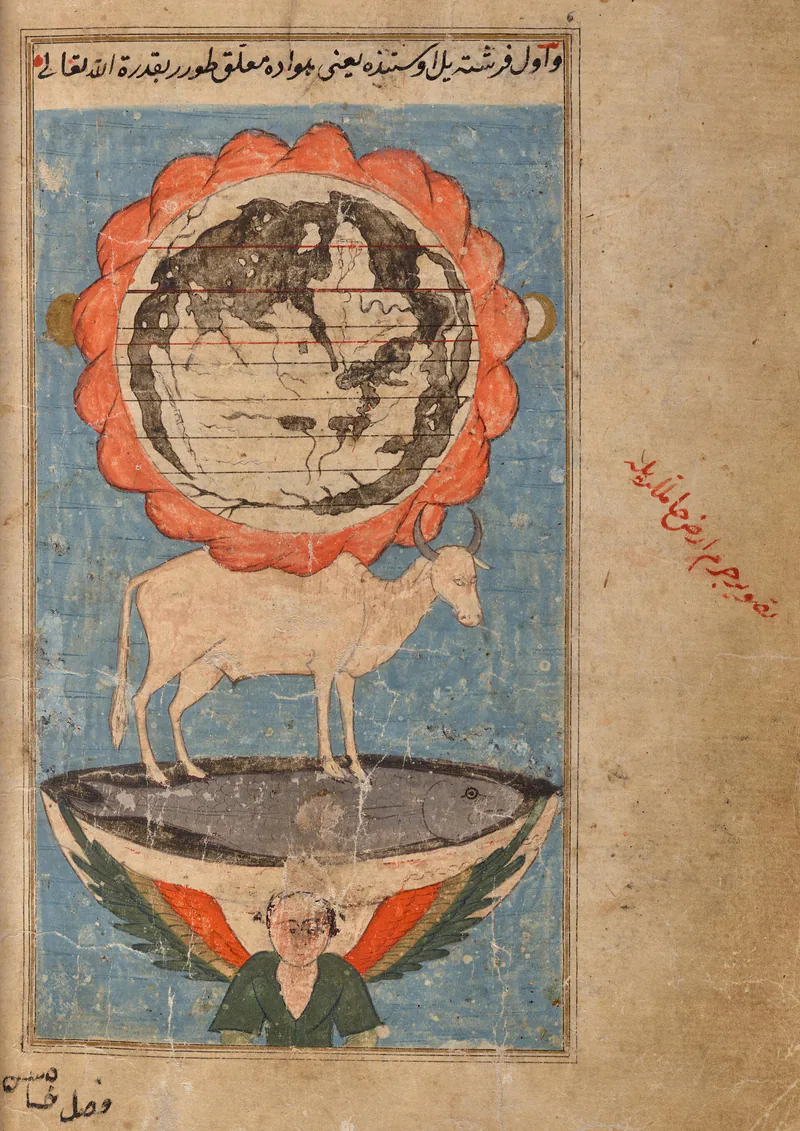
A report attributed to the Companion Abu Dharr, whose reliability hadith critics debated, illustrates the scale of creation: the seven heavens compared with the Kursi are like a ring thrown into a desert, and the Kursi compared with the 'Arsh is like such a ring again. Cosmological works and later Sufi writers used this picture to describe a hierarchy of created spheres, often placing the 'Arsh and the Kursi above the eighth and ninth heavens of the astronomers.
The verse also became a test case in theology. Literalist traditionists affirmed the Kursi as God had described it, without asking "how" (bi-lā kayf); the Mu'tazilite rationalists read it figuratively to avoid any suggestion that God occupies space; Ash'arite theologians such as Fakhr al-Din al-Razi (d. 1210) discussed both options at length in his vast commentary. These debates are part of the wider history of kalām described in Islamic Law and Theology.
The Greatest Verse in the Hadith Literature§
The verse's special status rests largely on hadith. In a report included in the Ṣaḥīḥ of Muslim, the Prophet asked the Companion Ubayy ibn Ka'b which verse of God's Book was the greatest. When Ubayy answered with the opening words of Ayat al-Kursi, the Prophet struck him on the chest and congratulated him on his knowledge. Commentators explained the answer by the verse's content: it speaks of nothing but God's names and attributes.
A second, more narrative report, recorded by al-Bukhari, tells how Abu Hurayra was guarding the food collected for the poor at the end of Ramadan and caught a man stealing from it on three nights. On the third night the intruder bargained for his freedom by teaching him that whoever recites Ayat al-Kursi on going to bed will have a guardian from God and no devil will approach him until morning. The Prophet told Abu Hurayra that the visitor had told the truth although he was a liar, and that he had been a devil (shayṭān). This story is the main textual basis for the verse's protective use against the beings described in Jinn and the Unseen in Islam.
Other reports, of varying strength, promise that whoever recites it after each obligatory prayer will have nothing between him and Paradise but death, and a tradition recorded by Ibn Maja says God's "greatest name" is found in al-Baqara, Al 'Imran and Ta Ha. Many scholars identified that name with al-Ḥayy al-Qayyūm, which occurs in all three suras, beginning with this verse.
Recitation in Daily Devotion and Ruqya§
Ayat al-Kursi is part of the daily devotional life of countless Muslims. It is commonly recited after each of the five prayers, in the morning and evening litanies (adhkār), before sleep and when leaving the house. Prayer manuals, such as those surveyed by Constance Padwick in Muslim Devotions, place it alongside the Fatiha and the last two suras of the Qur'an, al-Falaq and al-Nas (113 and 114), which are themselves prayers for refuge from evil.
The verse is also a standard element of ruqya, healing and protective recitation over the sick or over someone believed to be troubled by the evil eye, magic or jinn. Sunni scholars generally accept ruqya that uses the Qur'an, the names of God and well-attested prayers, in an understandable language and with the conviction that only God heals; reformist movements in the twentieth century promoted a "lawful ruqya" (ruqya sharʿiyya) based on these criteria, in contrast to practices they condemned as sorcery. Families commonly recite the verse over children, in a new house or before a journey. As with any form of prayer, believers are encouraged to see it as a complement to medical care, not a replacement for it.
Ayat al-Kursi in Calligraphy, Amulets and Talismans§
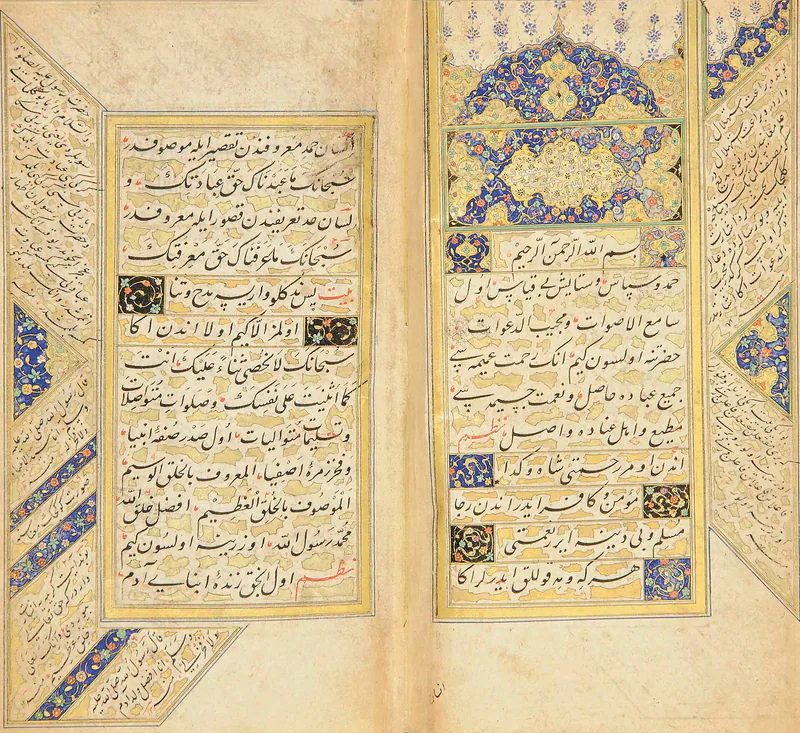
Few Qur'anic passages were written out as often. The verse runs in bands of inscription around mosque domes and mihrabs, on the tombs of Mamluk, Ottoman and Mughal notables, on the blades of swords and the brows of helmets, on tiles, lamps, textiles and the lintels of houses. Calligraphers composed it in elaborate forms, including mirror-writing and figures shaped like birds or boats, and in the Ottoman world it was a favourite text for framed panels (levha). Today it is printed on posters, car pendants and jewellery.
It was also one of the most common texts in protective objects. Small cases of silver or leather containing a written copy were worn on the body, and Ottoman and Safavid "talismanic shirts" combined it with other verses, the divine names and magic squares. In the letter-science traditions associated with al-Buni and the Shams al-Ma'arif, verses such as this one were broken into letters, counted by their abjad values and arranged in grids, a practice discussed in Islamic Occult Sciences and, from a comparative angle, in Amulets and Talismans.
Muslim scholars disagreed about such objects. Some Companions and later jurists, citing reports against hanging amulets (tamāʾim), rejected all of them; many others allowed amulets containing only Qur'anic text and recognised prayers, while condemning unknown names, symbols or reliance on the object itself. That debate continues among Muslims today, alongside the near-universal acceptance of reciting the verse aloud.
Frequently asked questions§
Where is Ayat al-Kursi in the Qur'an?§
It is verse 255 of the second sura, al-Baqara ("the Cow"), in the third of the Qur'an's thirty parts. It is the only verse in which the Qur'an speaks of God's kursī.
Why is it called the Throne Verse?§
Its name comes from the phrase stating that God's kursī, His seat or footstool, encompasses the heavens and the earth. Exegetes interpreted the Kursi as God's knowledge, His dominion or a vast created body beneath the great Throne, the 'Arsh.
When do Muslims recite Ayat al-Kursi?§
Commonly after each of the five daily prayers, in the morning and evening devotions and before going to sleep. It is also recited for protection when travelling or entering a new home, and over the sick as part of ruqya.
Is it permissible to wear Ayat al-Kursi as an amulet?§
Muslim scholars differ. Many have allowed a written copy of Qur'anic verses to be carried, provided it is treated with respect and trust is placed in God, while others forbid all amulets as a form of reliance on objects.
Sources and further reading§
- The Meaning of the Glorious Koran — Marmaduke Pickthall, 1930
- The Study Quran: A New Translation and Commentary — Seyyed Hossein Nasr (ed.), 2015
- Muslim Devotions: A Study of Prayer-Manuals in Common Use — Constance E. Padwick, 1961
- Islamic Calligraphy — Sheila S. Blair, 2006
- Word of God, Art of Man: The Qur'an and its Creative Expressions — Fahmida Suleman (ed.), 2007
- Islamic Occultism in Theory and Practice — Liana Saif, Francesca Leoni, Matthew Melvin-Koushki and Farouk Yahya (eds.), 2020