Liber XVII · Islam · Chapter II: Islamic Law & Theology
The 99 Names of God in Islam: al-Asma al-Husna Explained
The 99 Names of God in Islam (al-Asma al-Husna): their Qur'anic basis, the hadith lists, theology, Sufi devotion, the Greatest Name and use in art.

The Ninety-Nine Names of God, al-asmāʾ al-ḥusnā or "the Most Beautiful Names", are the names and epithets by which Muslims call upon God, such as the Merciful (al-Raḥmān), the Holy (al-Quddūs) and the Living (al-Ḥayy). They are drawn from the Qur'an and from a famous hadith stating that God has ninety-nine names; Muslims recite them in prayer and remembrance, theologians analysed what they reveal about God, and Sufis made them the ladder of the spiritual path.
The Most Beautiful Names in the Qur'an§
The phrase "the most beautiful names" occurs four times in the Qur'an. "To God belong the most beautiful names, so call on Him by them," says al-A'raf 7:180; another verse adds that whether one calls on Him as Allah or as the Merciful, the most beautiful names are His (al-Isra 17:110). The densest cluster of names closes the sura al-Hashr (59:22–24), which lists among others the King, the Holy, Peace, the Guardian, the Mighty, the Compeller, the Creator, the Maker and the Fashioner. Many other names are scattered through the text, often in pairs at the end of verses, such as "the Forgiving, the Merciful" or "the Hearing, the Knowing"; the Throne Verse contains several of the most important.
The name Allāh, related to the Arabic word for "god", is understood as God's proper name, which gathers all the others. Al-Raḥmān, the All-Merciful, has a special rank: it is applied only to God, and it is joined with al-Raḥīm, the Compassionate, in the formula that opens almost every sura, "In the name of God, the Merciful, the Compassionate."
The Hadith of the Ninety-Nine and Its Lists§
The number comes from a hadith transmitted by Abu Hurayra and included in the collections of al-Bukhari and Muslim: God has ninety-nine names, one hundred less one, and whoever "enumerates" them will enter Paradise; God is one and loves what is odd. The report itself does not list the names. The list that most Muslims know, which begins with al-Raḥmān and al-Raḥīm and ends with al-Ṣabūr, the Patient, appears in al-Tirmidhi's collection through a particular chain of transmitters, while Ibn Maja preserves a noticeably different list.
Hadith critics observed these discrepancies early. Many, including the Hanbali theologian Ibn Taymiyya (d. 1328), held that the lists were compiled by transmitters from the Qur'an rather than spoken by the Prophet, and some later scholars produced their own lists using only names found verbatim in the Qur'an. Most also held that ninety-nine is not a limit. A prayer ascribed to the Prophet asks God by every name He has given Himself, revealed in His Book, taught to any of His creatures "or kept in the knowledge of the unseen with Yourself", which was taken to show that God has names beyond human knowledge. "Enumerating" the names was correspondingly explained not as mere memorising but as understanding them and living by them.
Names, Attributes and the Theologians§
For the theologians of kalām, the names raised basic questions. Do they denote real attributes, distinct from God's essence, or are they simply ways of speaking about one undivided God? The Mu'tazilites, anxious to protect divine unity, denied eternal attributes distinct from the essence; the Ash'arites and Maturidis affirmed attributes such as knowledge, power, will, life, hearing, sight and speech, which are "neither He nor other than He". Traditionists insisted that names describing God's hand, face or settling on the Throne be affirmed as revealed without asking how.
Most scholars held that God's names are tawqīfī, fixed by revelation, so that believers should not invent new ones, however pious. Theologians also classified the names: names of the essence (such as the Holy), names of attributes (the Knowing, the Powerful) and names of acts (the Creator, the Provider). Another classification, very popular in Sufi and Persian literature, divides them into names of majesty (jalāl), such as the Avenger and the Compeller, and names of beauty (jamāl), such as the Gentle and the Loving, with a hadith teaching that God's mercy precedes His wrath. Personal names built with ʿAbd, "servant of", such as 'Abd al-Rahman or 'Abd al-Karim, apply this theology to daily life, since the bearer is called a servant of a particular divine name.
Al-Ghazali, Ibn 'Arabi and Taking On the Character of the Names§
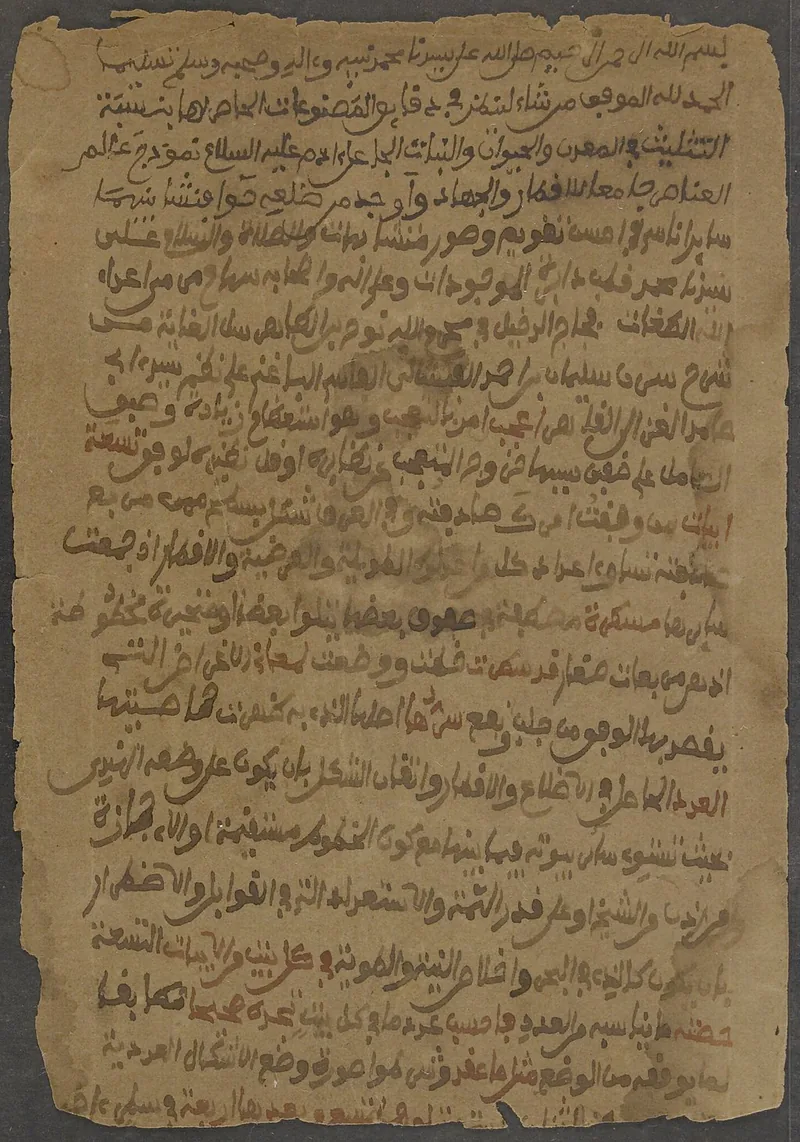
The classic commentary is The Highest Goal in Explaining the Beautiful Names of God (al-Maqṣad al-asnā) by al-Ghazali. For each name he explains its meaning, distinguishes it from similar names and then asks what share the human being can have in it. His principle, often summed up as "taking on the character traits of God" (al-takhalluq bi-akhlāq Allāh), is that the believer cannot share God's attributes but can reflect them in human measure: the Merciful teaches mercy to the needy, the Forbearing teaches patience under injury, the Veiler teaches covering the faults of others. Earlier, al-Qushayri had written a Sufi commentary on the names, and a long line of later authors followed in Arabic, Persian and Turkish.
Ibn 'Arabi gave the names a cosmological role. For him the names are the relationships between God and the world: the world exists because the names seek manifestation, every creature is a locus where certain names appear, and the "Perfect Human" is the being in whom all the names are gathered in balance. His interpreters, and later Henry Corbin in modern times, read the divine names as the hidden structure of all existence (see Henry Corbin).
The Greatest Name and the Practice of Dhikr§
Several hadith speak of God's "greatest name" (al-ism al-aʿẓam), by which every prayer is answered. Its identity was disputed. Candidates included Allāh itself; al-Ḥayy al-Qayyūm, the Living and Self-Subsisting; the pronoun Huwa, "He"; and a combination of names from particular verses. Many held that it was deliberately hidden, as the Night of Power is hidden in Ramadan, so that believers would call on God by all His names. Stories of saints who knew it, and of the miracles it worked, circulated widely in hagiography and popular lore.
The names are the substance of dhikr, the remembrance of God. Muslims count the names, or the formulas of praise recited after prayer, on strings of beads (subḥa or misbaḥa) of thirty-three or ninety-nine beads. In the Sufi orders a shaykh may prescribe a particular name for a disciple to repeat thousands of times according to his or her spiritual state, and some orders teach a sequence of names, such as the seven names used in several Khalwati lineages, each corresponding to a stage of the soul's purification. The general principles of this path are described in Sufism in Islam.
The Divine Names in Letter Science, Talismans and Art§
Because the names were believed to carry divine power, they became central to the Islamic science of letters. Authors in the tradition of al-Buni and the Shams al-Ma'arif assigned to each name its "special properties" (khawāṣṣ), calculated its abjad value and set it in magic squares for talismans, practices discussed in Islamic Occult Sciences. Jurists and theologians were divided: invoking God by His names was praised, but their use in talismans for worldly ends was often condemned as presumptuous or as a form of sorcery. Comparable traditions of sacred names developed in Judaism, as described in The Seven Names of God and The 72 Names of God.
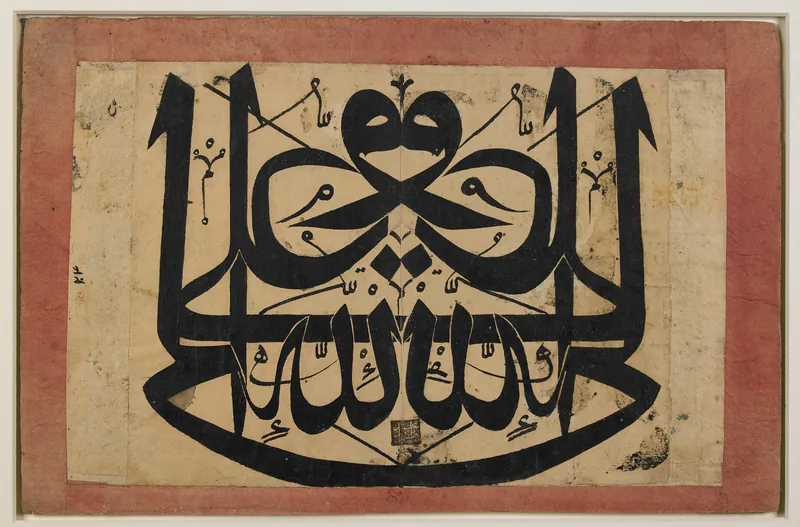
In art the names appear in medallions, friezes and tile panels, in calligraphic compositions where a single name fills a circle or is mirrored upon itself, and in printed devotional booklets. Lists of the ninety-nine names in decorative frames hang in homes and mosques around the world, and recitations and songs of the names are among the most familiar forms of Muslim devotional music.
Frequently asked questions§
Are there exactly 99 names of God in Islam?§
The hadith gives the number ninety-nine, but most scholars held that God has many more names, some known only to Him. The familiar list was compiled by early transmitters, and other lists with slightly different names also exist.
What does it mean to "enumerate" the names?§
Scholars explained that it means more than memorising them: understanding their meanings, calling on God by them and allowing them to shape one's character. Al-Ghazali's commentary is the classic guide to this.
What is the greatest name of God?§
Muslim tradition speaks of a "greatest name" by which prayers are answered, but its identity is debated. Common suggestions are Allah, al-Hayy al-Qayyum ("the Living, the Self-Subsisting") and Huwa ("He"); many held it was deliberately concealed.
Why do many Muslim names begin with Abd?§
"'Abd" means "servant", and names such as 'Abd al-Rahman or 'Abd al-Latif mean "servant of the Merciful" or "servant of the Gentle". They express the bearer's relationship to God through one of His names.
Sources and further reading§
- The Ninety-Nine Beautiful Names of God — Abu Hamid al-Ghazali, 1992
- The Sufi Path of Knowledge: Ibn al-'Arabi's Metaphysics of Imagination — William C. Chittick, 1989
- Mystical Dimensions of Islam — Annemarie Schimmel, 1975
- Muslim Devotions: A Study of Prayer-Manuals in Common Use — Constance E. Padwick, 1961
- Allah: God in the Qur'an — Gabriel Said Reynolds, 2020
- The Study Quran: A New Translation and Commentary — Seyyed Hossein Nasr (ed.), 2015