Liber XXVII · Sikhism · Chapter V: Sikh Beliefs
Sikh Beliefs: Ik Onkar, Nam Simran, Hukam, Seva and Equality
Core Sikh beliefs explained: Ik Onkar and the Mul Mantar, hukam and grace, ego and the five thieves, nam simran, liberation in this life, seva and equality.

Sikh beliefs centre on one God, Ik Onkar, the formless creator present in all things, and on a path of liberation through loving remembrance of the divine Name (nām simran), lived by a householder who works honestly, shares with others and serves without self-interest. Sikhs believe that ego (haumai) separates the soul from God, that God's grace and the Guru's teaching overcome it, and that liberation is possible in this life. The scripture also teaches the equality of all human beings regardless of caste, religion or sex.
Ik Onkar and the Mul Mantar§
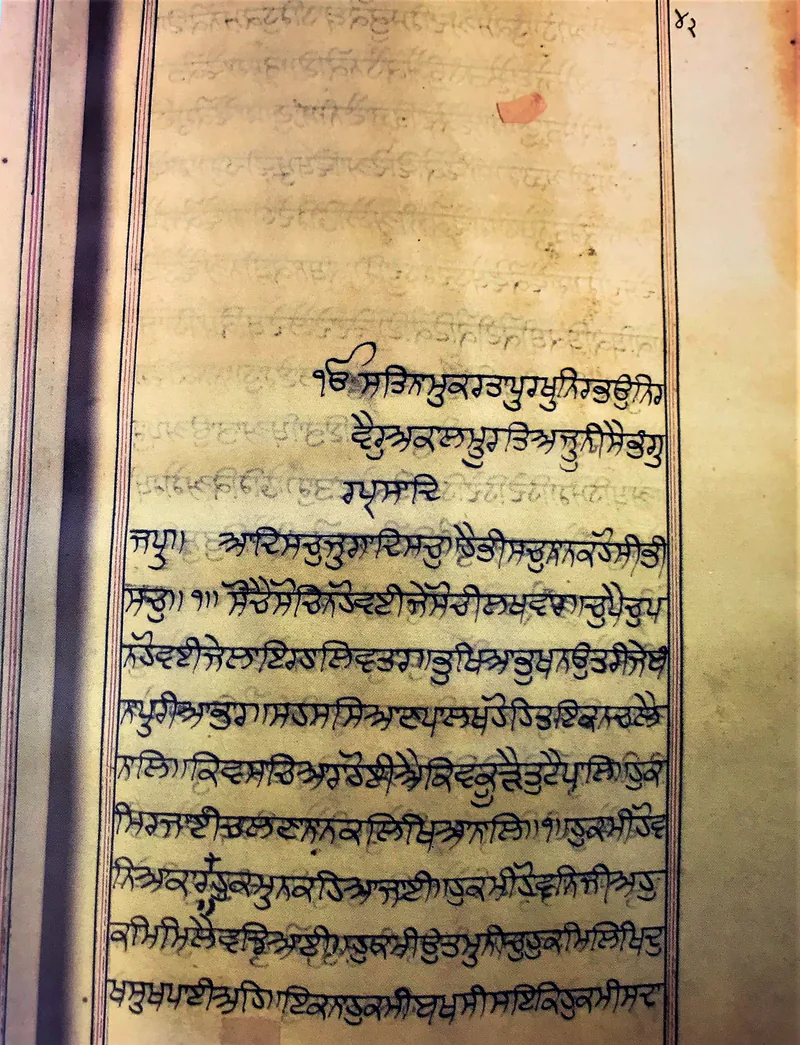
The Guru Granth Sahib begins with the Mūl Mantar, "root formula", composed by Guru Nanak and regarded as a summary of Sikh theology. It opens with the figure ੴ, combining the numeral one with the syllable Oaṅkār: Ik Onkar, "there is One Creator". It continues with a series of epithets, which may be rendered: whose name is Truth, the creating Being, without fear, without enmity, whose form is timeless, beyond birth, self-existent, known by the Guru's grace. The symbol Ik Onkar is displayed in gurdwaras and Sikh homes and is one of the two great visual emblems of the faith, beside the khaṇḍā.
Sikh teaching insists on the absolute oneness of God, but its scripture uses many names for Him: Hari, Rām, Gobind and Prabhu from Indian traditions, Allāh, Khudā and Rabb from Islamic ones, and above all Vāhigurū, "Wonderful Lord", which became the characteristic Sikh name for God and the word repeated in remembrance. God is described as both nirguṇ, beyond all qualities, and sarguṇ, manifest in creation; He is transcendent yet pervades everything "as fragrance in the flower". Sikhs reject the belief that God becomes incarnate in human form and the worship of images.
God's Order: Hukam, Creation and Grace§
Hukam, an Arabic word meaning "command" or "order", denotes the divine will through which the universe is created and sustained. In the Japjī, Guru Nanak teaches that all forms come into being through hukam, that all are within it and none outside it, and that one who understands it is freed from ego. The universe is not illusory but real and good, the "play" of its creator. A famous hymn of Guru Nanak in the Maru measure describes the aeons before creation as a primal void in which God alone existed in absolute contemplation, before He chose to manifest the worlds.
Human beings cannot earn liberation by their own merit. It comes through God's grace (nadar, kirpā, gurprasād), which is received through the Guru's Word. Sikh theology thus holds together divine sovereignty, human effort and grace: the devotee strives, but the decisive gift comes from God.
Haumai, the Five Thieves and the Gurmukh§
The fundamental human problem in Sikh teaching is haumai, literally "I-I", the self-centredness that makes a person see himself as separate from God and from others. It is called a chronic disease that contains its own cure: the same faculty that asserts the self can be turned toward God. From haumai arise the "five thieves" that rob the soul: kām (lust), krodh (anger), lobh (greed), moh (attachment) and ahaṅkār (pride). Against them stand the virtues of truth, contentment, compassion, humility and love.
The scripture contrasts two kinds of person. The manmukh, "facing the self", follows his own mind and remains caught in māyā, attachment to the transient world, and in the cycle of birth and death. The gurmukh, "facing the Guru", orients life by the Guru's teaching and becomes, in a phrase much used by Sikhs, one who lives in God's will. Sikhs accept karma and rebirth, inherited from Indian thought, and speak of the soul's passage through countless forms of life; human birth is a rare opportunity to meet God. The comparative history of these ideas is surveyed in Reincarnation and the Afterlife.
Nam Simran: Remembering the Divine Name§
The central Sikh practice is nām simran, "remembrance of the Name". Nām means more than a word; it stands for the whole revealed reality of God. Remembrance takes several forms: repetition of Vāhigurū, alone or with others, sometimes in time with the breath; the daily recitation of set prayers (nitnem); singing and listening to hymns (kīrtan); and the constant, inward awareness of God during ordinary work. The Gurus criticised mechanical ritual, but they valued repetition when performed with love, and they recommended the early-morning hours, the "ambrosial hours" (amrit velā) before dawn, as the best time for meditation.
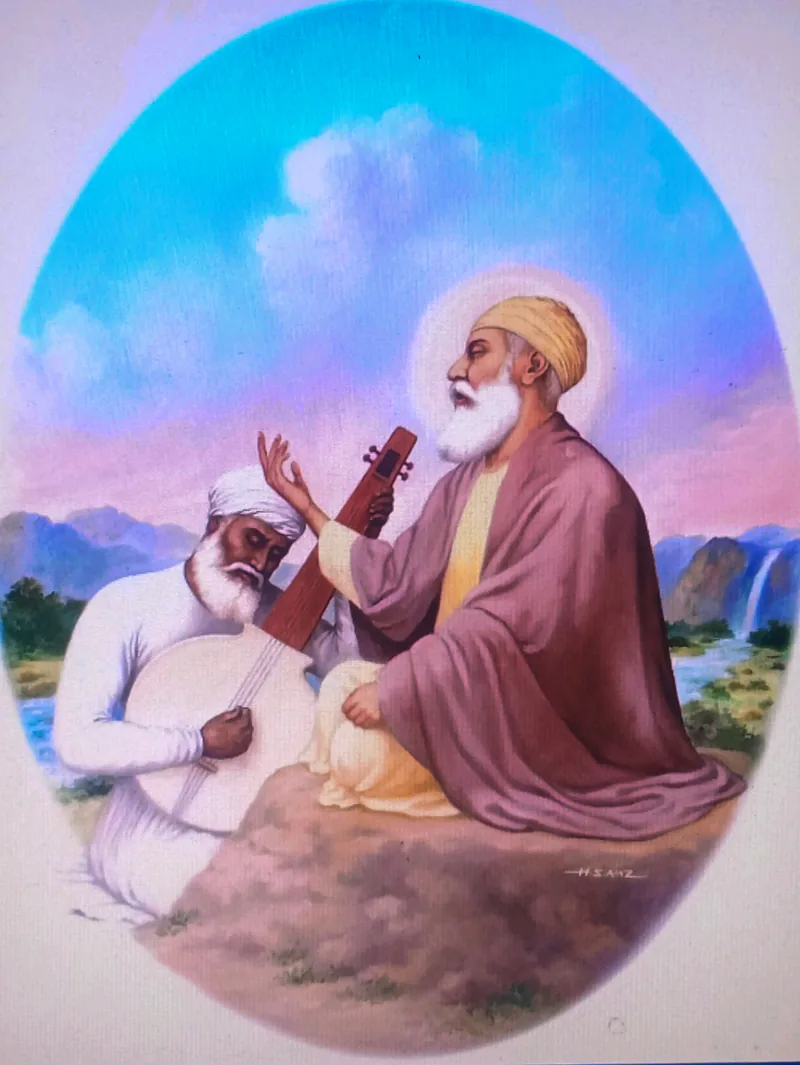
Sikh writers describe the fruits of nām as a state of equipoise (sahaj), bliss (anand) and fearlessness. Although outwardly similar to the mantra and breath practices of yoga discussed in Meditation: A Complete Guide, the Gurus rejected the austerities, withdrawal and occult powers sought by the Nath yogis of their time, insisting that liberation is found through devotion and grace while living in the world.
The Five Realms and Liberation in This Life§
At the end of the Japjī Guru Nanak describes the soul's ascent through five khaṇḍ, "realms". Dharam khaṇḍ, the realm of duty, is the earth, where all are judged by their deeds. Giān khaṇḍ, the realm of knowledge, reveals the vastness of creation. Saram khaṇḍ, interpreted as the realm of effort or of beauty, refines the mind. Karam khaṇḍ, the realm of grace, is the dwelling of the spiritually victorious. Sach khaṇḍ, the realm of truth, is where the formless One dwells and watches over creation. Sikh commentators read these realms as stages of inner development rather than as places in space.
The goal is mukti, liberation, understood not as escape from the world but as union with God and release from the cycle of rebirth. Sikhs speak of the jīvan mukt, one liberated while still alive, who continues to work and serve others. Hence the Gurus rejected celibacy and renunciation and taught that the householder's life (grihast) is the right setting for spiritual life.
Equality, Seva and the Ethics of the Householder§
Sikh ethics flows from the conviction that the same divine light is present in everyone. The Gurus rejected caste as a basis of religious worth, and the institutions of saṅgat (the congregation) and paṅgat (sitting in rows to eat in the langar) embodied this principle. Guru Nanak defended the dignity of women in a well-known verse that asks why one should call woman inferior when kings are born of her, and women participate fully in Sikh worship. Sikhs acknowledge that caste distinctions have persisted in their own society, and their removal is a continuing concern.
Sevā, selfless service, is an essential expression of faith: cooking and serving in the langar, cleaning the gurdwara, caring for the poor and helping in disasters. Sikh ethics also includes the ideal of the "saint-soldier" (sant-sipāhī), who combines devotion with readiness to defend the oppressed, described in The Khalsa and the Five Ks. Initiated Sikhs abstain from tobacco, alcohol and other intoxicants. The Sikh Rahit Maryādā also asks Sikhs not to rely on omens, auspicious times or astrological calculations, a deliberate break with practices common in the Punjab of the Gurus' time. The communal prayer Ardās ends by asking for the welfare of all humanity (sarbat dā bhalā) and for chaṛhdī kalā, an ever-rising spirit of optimism in adversity.
Frequently asked questions§
What does Ik Onkar mean?§
Ik Onkar means "One Creator" or "there is one God". It combines the numeral one with Oaṅkār, a term for the divine creative principle, and stands at the opening of the Guru Granth Sahib as the foundation of Sikh belief.
Do Sikhs believe in reincarnation?§
Yes. Sikhs believe that the soul passes through many lives according to its karma until it is liberated by God's grace. Human life is regarded as a precious opportunity to break the cycle through remembrance of God and righteous living.
What is Waheguru?§
Vāhigurū, often spelt Waheguru, means "Wonderful Lord" or "Wonderful Enlightener". It is the most common Sikh name for God, used in greetings and as the principal word repeated in nām simran.
Sources and further reading§
- Guru Nanak and the Sikh Religion — W. H. McLeod, 1968
- Sikhism: A Guide for the Perplexed — Arvind-Pal Singh Mandair, 2013
- The Feminine Principle in the Sikh Vision of the Transcendent — Nikky-Guninder Kaur Singh, 1993
- The Guru Granth Sahib: Canon, Meaning and Authority — Pashaura Singh, 2000
- Sikhism: A Very Short Introduction — Eleanor Nesbitt, 2005
- Textual Sources for the Study of Sikhism — W. H. McLeod, 1984